Which Design Details Affect the Manufacturing Cost of Custom Silicone Sunglasses Pouch Cases?
- Share
- publisher
- FromRubber
- Issue Time
- Oct 26,2026
Summary
Silicone is rarely the biggest line in a moulded case quotation. Tooling, cycle time, the number of post-molding touches, inspection scope and yield usually are. A cost breakdown by design decision, with the changes that actually reduce cost and the ones that only move it.

Two silicone pouch cases, both about 150 mm wide, both single colour, both quoted against 5,000 pieces. One price is roughly double the other, and the drawings look almost the same at a glance. The difference is rarely the silicone. It is how many times the part has to be touched between the press and the carton.
How Does Product Geometry Affect the Cost of a Custom Silicone Case?
A molded silicone part costs money in four places: the tool, the press time, the handling after molding, and the failures along the way. Geometry is what moves all four. Material is the smallest and most visible of the four, which is why buyers who focus on material volume often miss where the money actually went.
Wall Thickness and Overall Material Volume
Thicker walls do increase compound consumption, but the material is usually not the dominant line. What a thick wall really changes is cure time. Compression molding cures from the outside in, and cycle time follows the thickest section, so a generous boss or a solid rim can slow every cycle for the life of the tool.
The reverse mistake is just as expensive. Thinning a wall to save compound can push the design outside a stable process window, and instability shows up later as flash, short shots or dimensional drift - costs that arrive after the quotation was accepted, not before.
This is where tolerance class matters. ISO 3302-1:2014 sets dimensional tolerance classes for moulded solid rubber products, and the class you specify determines what the factory has to control and inspect to hold it (ISO 3302-1:2014). A tighter class is not a document change. It is more tool maintenance, more inspection, and often more rejected parts.
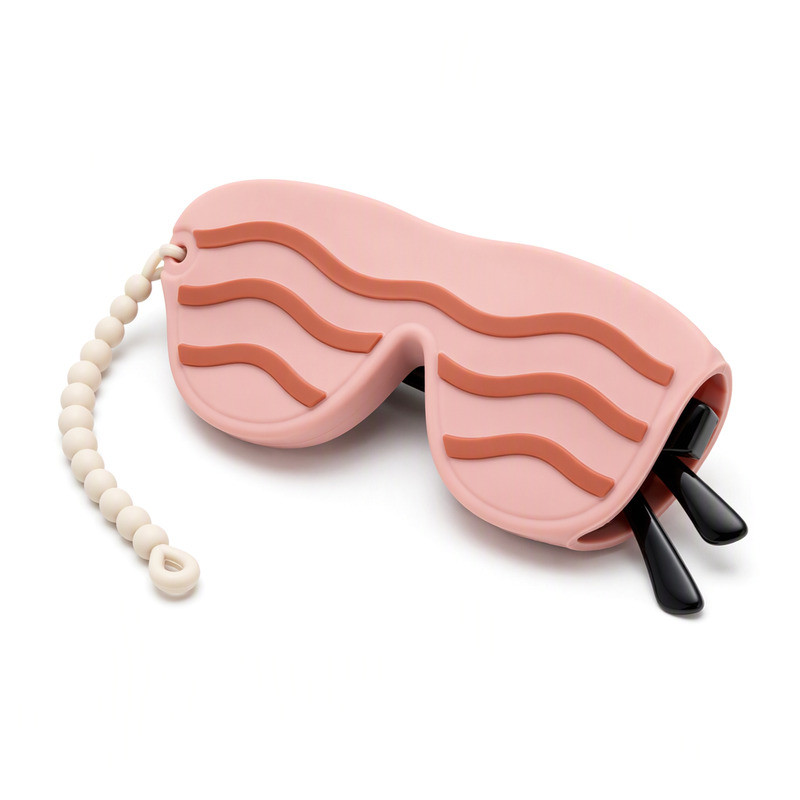
Undercuts and Features That Make Demolding More Difficult
An undercut is any shape that cannot be pulled straight out of the mold. In silicone, small undercuts are sometimes strippable - the part stretches over the core - but "sometimes" is doing a lot of work in that sentence. Strip too far and the rim whitens, tears, or permanently deforms, and you find out at inspection rather than at design review.
Where an undercut cannot be stripped, the tool needs a split, a slider or a manual insert. All three add tooling cost, add cycle time, and add the operator time to place and remove the insert. That manual step is the most expensive kind of cost in this list, because it scales with every unit rather than once.
Complex Shapes and Uneven Wall Sections
Sharp transitions and uneven walls create two problems that feed each other: compound flow and cure consistency. Material reaches thin sections later, and the thin section may cure before the thick one has finished. The result is a part that passes a visual check and fails a dimensional one.
The practical answer is not to avoid variation - a good case needs thick and thin zones. It is to design the transition. A taper that spreads the change over roughly three times the thickness difference costs nothing in tooling and removes most of the process risk.
How Do Material and Hardness Choices Affect the Quotation?

The Difference Between Material Grade and Material Quantity
Grade and quantity are separate conversations that frequently get merged. Grade is about which compound - its purity, its mechanical profile, its suitability for the environment the product lives in. Quantity is about how many grams each part consumes.
Choosing a grade on price alone is a false economy in a consumer product, because the failure modes that follow - yellowing, surface tack, poor tear strength - appear months after delivery. Choosing a grade you cannot name is worse: it cannot be reordered consistently.
Silicone Hardness Should Match the Intended Function
Hardness affects flexibility, shape retention, insertion force and how the part releases from the cavity. Moving from a soft compound to a firm one is not a material substitution - it changes the whole structural behaviour of the case, and may require the wall or the opening to be redesigned around it.
It also has a cost angle that is easy to miss: a firmer compound may release more cleanly and need less manual work, while a very soft compound may need more care to demold without distortion. Neither is automatically cheaper.
Special Material Requirements Need to Be Defined Early
Colour, surface, flame behaviour, food contact, skin contact, low volatility, cold flexibility - every special requirement narrows the compound list and sometimes the supplier list. Those requirements should be confirmed against the actual product and the destination market rather than assumed.
An ordinary sunglasses pouch does not automatically need food-contact approval, and adding one adds documentation and material cost without adding value to the customer. Conversely, omitting a requirement that the market does impose is a much more expensive mistake, because it is discovered at import.
When Do Logos, Textures, and Multicolor Designs Add Cost?
Molded Logos and Fine Decorative Details
A molded logo is cut into the cavity once and then costs nothing per part. That is the argument for it. The counter-argument is that every detail has to be machined, polished and maintained, and fine detail near the limit of what silicone can hold drives tool cost up quickly and yields down.
The cheapest good logo is usually a simple silhouette at a size where it reads from a metre. The most expensive is a detailed mark at 3 mm, because it needs a more precise tool and a stricter inspection, and it still may not read.
Multicolor Designs and Color Boundaries
Colour adds cost through three separate channels: tooling complexity (the shut-off), process complexity (two shots, each with its own cure), and inspection (boundary quality, contamination). A second colour is rarely just a second material line on the invoice.
The cheapest multicolour design is the one where colour reaches the edge of the part and runs out at the parting line. The most expensive is a small isolated island of colour in the middle of a curved surface.
Surface Texture and Special Finishes
Texture is cut into steel, so it adds tooling time and changes release behaviour. It can also hide defects - a fine matte texture conceals flow marks that a gloss surface would show - which is a legitimate reason to choose it even when it costs a little more.
Finishes applied after molding, such as a sprayed coating or a printed layer, add an operation, a fixture, a cure step and an inspection point. Each of those is a chance for a part to be handled and rejected. If the finish is not doing a functional job, deleting it is often the single largest cost reduction available.
How Do Mold Design and Tooling Affect the Initial Investment?
Mold Complexity Matters More Than the Product Name
Tooling cost follows geometry, cavity count, parting line, undercuts and the tolerance the tool must hold - not the product category. Two parts both described as a silicone pouch can sit at opposite ends of that range, which is why a tooling price without a defined design is a placeholder rather than a number.
Cavity count is worth understanding even if you never see the tool. More cavities reduce press time per part but increase tool cost and increase the consequence of any single cavity being out of tolerance. Shrinkage compensation is settled at the same stage, and a tool built around the wrong allowance is expensive to correct later.
A Design Change After Tooling Can Add Development Work
Some changes are cheap after a tool exists: a colour, a printed graphic, a small adjustment to a non-critical surface. Others are not: moving an opening, changing a colour boundary, resizing a logo that is already cut into steel, or altering the parting line.
The dividing line is whether the change touches the mold's geometry. Anything that does costs machining time and often a re-trial; anything that does not is a production change.
Ask What Is Included in the Tooling Quotation
Does the figure cover mold design, fabrication, trial samples, revision rounds, and maintenance? Is the mold owned by the buyer, and can it be moved? Mold maintenance is usually the line nobody asks about until a cavity starts producing flash. These questions do not reduce the price, but they prevent the surprise of discovering a second charge after approval.
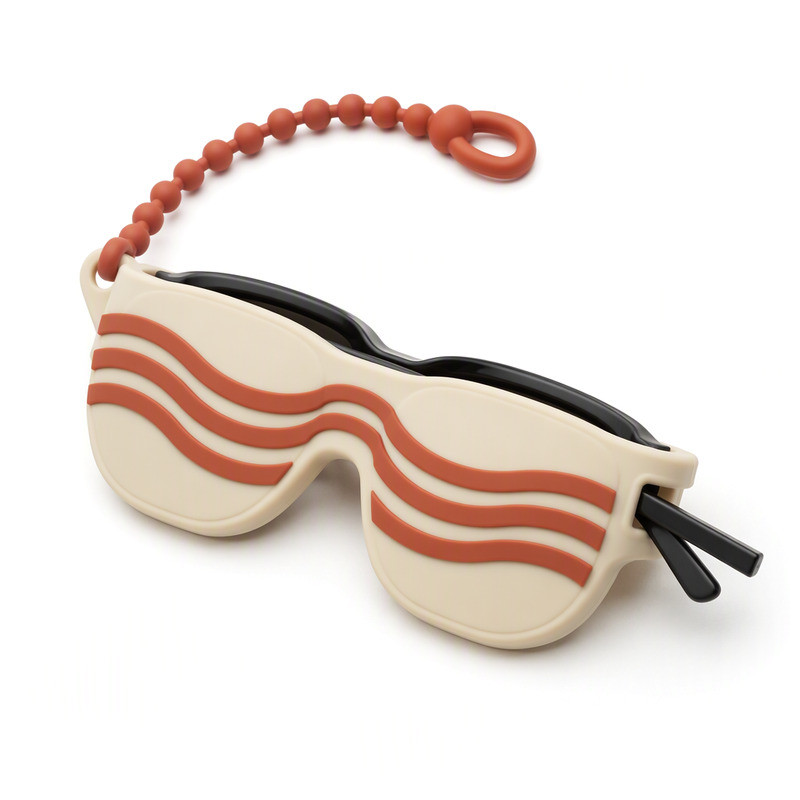
Which Production and Finishing Requirements Affect Unit Cost?
Molding Time, Part Complexity, and Production Yield
Cycle time is set by the thickest section, the compound, and how much of the cycle is spent loading and unloading. A part with a manual insert adds operator time to every cycle; a part that sticks to the cavity adds demolding time and the risk of tearing.
Yield is the quiet multiplier. A design that produces a small percentage of parts with flash at the rim, or with a boundary witness line, converts directly into sorting labour. The unit price may not change, but the cost per good unit does.
Assembly and Secondary Operations
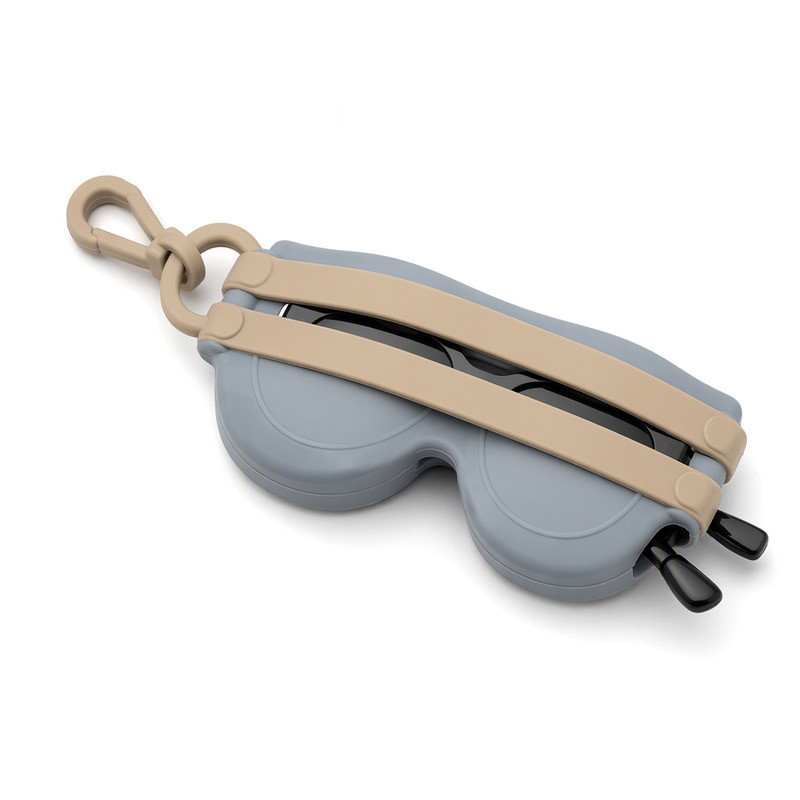
Every operation after molding - trimming, deflashing, assembling a strap, applying a label, inserting a card - is a touch. Each touch adds labour, a fixture, and a rejection opportunity. This is the reason two similar cases can sit far apart in cost: one leaves the press and goes into a bag, the other passes through five stations first.
If a feature can be molded in instead of assembled on, it usually pays for itself at volume. If it can be deleted without losing function, it pays for itself immediately.
Inspection Requirements and Packaging
Inspection scope is a cost line that buyers often create by accident, usually by writing "no defects" instead of a measurable criterion. A clear standard - where flash is and is not permitted, how a colour boundary is judged, what the acceptable dimensional band is - lets a supplier inspect to a limit instead of arguing about a feeling.
Packaging follows the same logic. Individual polybags, printed sleeves, rigid boxes, labels and inserts are separate specifications, and each one adds material, labour and a new failure mode. Bulk packing is cheaper; retail-ready packing sells better. The only wrong answer is leaving it unstated.
Why Does Order Quantity Change the Cost Per Unit?
Tooling Costs and Production Costs Should Be Compared Separately
Tooling is a one-time investment. Production is a recurring charge. Blending them into a single unit price hides both numbers and makes it impossible to see what happens when volume changes.
A simple way to think about it: the tool cost is spread across however many acceptable units you produce. Increase the run and the tool contribution per unit falls; decrease it and the same tool becomes a larger share of every piece. That is arithmetic, not a discount policy.
Small Orders and Repeat Orders Have Different Cost Structures
A small first order carries setup, minimum compound purchase and short-run packaging costs that do not scale down gracefully. A repeat order avoids most of that, provided the specification has not changed and the tool has been maintained.
This is why a supplier will ask about your reorder plan. It is not only about volume - it is about whether the tool should be built for a few thousand cycles or many more, and those are different tools.
How Can Buyers Reduce Unnecessary Cost Without Weakening the Design?
The cheapest changes are almost never "make the wall thinner". They are deletions and simplifications:
- Remove decorative features that fail the grip, locate, and read-at-a-distance test.
- Move colour boundaries to the part edge so they can run out at the parting line.
- Replace a small moulded logo with a printed or etched mark where detail is fine.
- Convert an assembled component into a molded feature if the geometry allows it.
- Fix the tolerance class to what the product actually needs rather than defaulting to the tightest.
- Define inspection criteria in measurable terms so sorting labour is not priced in as insurance.
- State packing requirements precisely instead of leaving room for an upgraded assumption.
Cost reduction that comes from clearer requirements is durable. Cost reduction that comes from removing material without review tends to return as a quality claim.
Where the money usually is
| Design decision | Main cost channel | Typical direction |
|---|---|---|
| Thicker walls | Cycle time, material | Higher |
| Undercut needing a split | Tooling, cycle, labour | Higher |
| Second colour, edge boundary | Tooling, process control | Moderate |
| Second colour, small island | Tooling, yield, inspection | Higher |
| Molded logo | Tooling only | One-time |
| Printed logo | Per-part operation | Recurring |
| Assembled strap | Labour, alignment, yield | Higher |
| Retail-ready packing | Material, labour | Higher |
Conclusion
The manufacturing cost of a custom silicone sunglass pouch case is the sum of design, tooling, material, operations, quantity and quality requirements - and the operations line is usually larger than buyers expect. A part that is simple to mold but complicated to finish will always cost more than its drawing suggests.
FromRubber has been making custom silicone parts in Dongguan since 2010, with mold making, molding, printing and assembly under one roof, which means a cost review can cover the whole route from cavity to carton rather than one stage of it. Send your drawing, target quantity and decoration requirements to our team or to nani@fromrubber.com, and we will separate the one-time and recurring parts of the number for you.
FromRubber is the brand of Dongguan Bohao Electronic Technology Co., Ltd., a custom silicone manufacturer based in Dongguan, China, molding since 2010. The company holds IATF 16949:2016, ISO 9001:2015 and ISO 14001:2015 certification, runs two plants with 32 compression molding presses, and has completed more than 6,500 custom projects.
FAQ
What affects the cost of a custom silicone sunglasses case?
Tooling complexity, cycle time, the number of post-molding operations, inspection scope, packing and order quantity - in roughly that order for a typical case. Material volume matters, but it is rarely the largest line.
Does a more complicated design always require a more expensive mold?
Not always. Complexity that stays inside a simple open-close tool can be inexpensive, while a geometrically simple part with one undercut can require a split and cost more. It is the mold's pulling direction, not the part's visual complexity, that usually decides.
How do logos and multicolor features affect manufacturing cost?
A molded logo is a one-time tooling cost. A printed logo is a recurring per-part operation. A second colour adds tooling complexity and process control, and the cost depends heavily on where the boundary sits rather than on the number of colours alone.
Should mold cost and unit price be quoted separately?
Yes. Separating them lets you see the real recurring cost and understand how volume changes the total. A blended price hides both numbers and makes comparison between suppliers almost impossible.
Can simplifying a silicone case design reduce cost without compromising function?
Usually, yes - provided the simplification removes decoration rather than structure. Deleting a feature that does not grip, locate or read is nearly free. Removing wall from a load-bearing zone is not a saving; it is a transfer of cost to the returns department.
Sources
ISO 3302-1:2014, Rubber - Tolerances for products - Part 1: Dimensional tolerances. iso.org/standard/62492.html