Why Factories Recommend Soft Silicone Blow Balls for Computer Internal Dusting?
- Share
- publisher
- Suey
- Issue Time
- May 8,2026
Summary
Why do factories prefer soft silicone blow balls for computer dusting? FromRubber explains ESD safety, scratch-free design, and reusability. Custom anti-static blowers for PCBA lines and IT refurbishment.
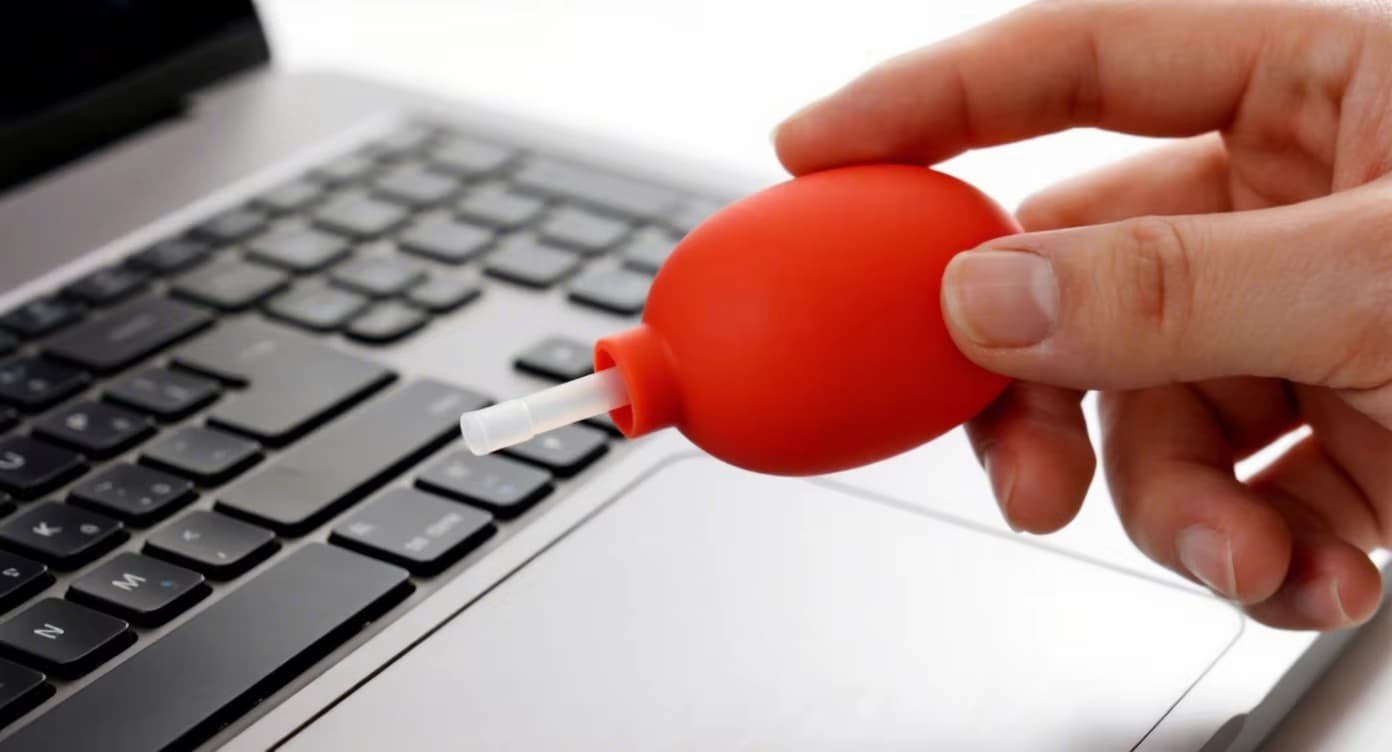
Industrial-Grade Cleaning Insight
Why Factories Recommend Soft Silicone Blow Balls for Computer Internal Dusting?
FromRubber explains the engineering behind anti-static, non-marring silicone blowers — the preferred dusting tool for PCBA workshops, server rooms, and electronics assembly lines.
Walk into any professional electronics manufacturing facility, PCBA repair center, or server maintenance depot, and you'll likely spot a familiar tool: a soft, squeezable silicone blow ball. Unlike canned air, electric dusters, or hard-tipped brushes, these unassuming blowers have earned a trusted place on factory floors worldwide. But why do industrial engineers and quality control managers consistently recommend soft silicone blow balls for computer internal dusting? The answer lies in material science, static control, and damage prevention — areas where FromRubber has specialized for over 15 years.
As a leading silicone manufacturer, FromRubber produces millions of soft blower balls annually for OEM clients ranging from electronics tool brands to IT asset disposition companies. In this comprehensive guide, we'll explore the technical reasons behind the industry's preference, compare silicone to alternative dusting methods, and explain how custom-engineered silicone blowers protect sensitive computer components while improving workflow efficiency.
The Hidden Dangers of Computer Dust – Why Factories Take It Seriously
Dust inside computers isn't just unsightly; it's a functional liability. Accumulated particles act as thermal insulation, causing CPUs, GPUs, and VRM components to overheat. Conductive dust (containing metallic fragments or carbon) can create unintended electrical paths, leading to shorts or intermittent failures. In cleanroom-dependent industries like medical device assembly or semiconductor testing, even microscopic dust can scrap entire batches. Factories that refurbish enterprise servers, gaming PCs, or networking gear know that thorough, safe dusting is non-negotiable — and the tools used must never introduce new risks.
Why Soft Silicone Blow Balls Outperform Alternative Dusting Methods
Let's examine the common dusting tools and their industrial drawbacks, then see why silicone blowers address each pain point.
Compressed Air Cans – Prohibited in Many Factories
Canned "air" typically contains hydrofluorocarbons (HFCs) or difluoroethane. When sprayed, these chemicals can condense into a freezing liquid that damages plastic connectors, warmsensitive sensors, or leaves a sticky residue. Furthermore, the forceful blast can spin fans beyond their rated RPM, damaging bearings or generating back-EMF that harms motherboards. For these reasons, major electronics manufacturers including Foxconn and Flex have banned canned air from their assembly lines. Soft silicone blow balls produce no condensate and deliver controllable, lower-velocity air that dislodges dust without collateral damage.
Electric Data Vacuum / Blowers – Risk of ESD and Overpressure
Electric blowers provide continuous air, but they generate electromagnetic interference (EMI) and can produce electrostatic discharge (ESD) from their plastic nozzles or high-speed airflow. In ESD-sensitive environments (common in computer internal assembly), uncontrolled static can destroy MOSFETs, controllers, or memory modules. Soft silicone, especially anti-static formulations offered by FromRubber, dissipates charge safely. Additionally, electric blowers often exceed 30,000 RPM, creating air velocities that can bend heatsink fins or dislodge tiny SMD components — a risk no factory wants.
Brushes and Cloths – Particle Redistribution
Even anti-static brushes can scrape component coatings or leave behind fibers. Cloths may deposit lint, and neither method reaches into crevices between PCIe slots, RAM DIMMs, or under chipset heatsinks. A soft silicone blow ball directs focused air into these tight spaces without physical contact, lifting dust out rather than pushing it around.
Key Properties That Make Silicone the Factory-Favorite Material
Not all blowers are created equal. Here's why silicone, particularly medical-grade or anti-static silicone, is the superior choice for computer internal dusting.
1. Non-Abrasive and Non-Marring Surface
Silicone's Shore hardness can be tuned from 20A (very soft) to 70A (firm). For computer dusting, FromRubber recommends 30A–40A soft durometer blowers. The pliable nozzle cannot scratch PCB solder masks, gold-plated contacts, or polycarbonate side panels — even if accidentally bumped against a component. This softness is critical when dusting around delicate ribbon cables or CPU socket pins.
2. Anti-Static and Static-Dissipative Grades
Standard silicone can generate triboelectric charge when rubbed. However, advanced manufacturers like FromRubber offer anti-static (surface resistivity 10⁹–10¹¹ Ω/sq) and static-dissipative (10⁶–10⁹ Ω/sq) silicone compounds. These formulations prevent static buildup during squeezing and air expulsion, meeting ANSI/ESD S20.20 standards for electronics workstations. For factories handling bare PCBs or ESD-sensitive server components, this is non-negotiable.
3. Chemically Inert and Outgas-Free
Over time, some rubbers and plastics release plasticizers or volatile organic compounds (VOCs) that can fog optical sensors or corrode contacts. Silicone (platinum-cured, not peroxide-cured) is exceptionally stable, emitting virtually no outgassing. This makes silicone blowers safe for use inside cleanrooms, data center servers with optical transceivers, and high-reliability computing equipment.
4. Precision Nozzle Design and Airflow Control
A generic rubber bulb may have a thick, short nozzle that lacks directionality. FromRubber engineers custom nozzles — tapered, angled, or extended — to reach specific areas like fan hubs, heat exchanger fins, or PSU interiors. The silicone material holds its shape without kinking, and the soft tip prevents damage if contacting live components. Factories value this ergonomic precision for batch processing hundreds of units.
5. Washable, Reusable, and Long Service Life
Unlike canned air (single-use) or electric blowers (motor wear), a silicone blower ball can be rinsed with mild detergent, sanitized, and reused for years. FromRubber's blowers withstand autoclaving (for cleanroom use) or simple soap-and-water cleaning. For a factory maintaining thousands of computers, this translates to lower consumables cost and less waste.
Industrial Applications: Where Soft Silicone Blowers Are Standard Equipment
FromRubber supplies silicone dusting blowers to diverse industrial sectors. Here are typical use cases.
PCBA and Electronics Assembly Lines
Before wave soldering or conformal coating, boards must be free of dust and debris. Soft silicone blowers gently remove particles without static discharge, protecting sensitive SMD components.
IT Asset Disposition (ITAD) and Refurbishment Centers
Companies that wipe and resell enterprise servers, laptops, and workstations need fast, safe dust removal from heatsinks, fans, and chassis. Silicone blowers are standard tools in every refurb tech's kit, often alongside ESD-safe vacuums.
Data Center Maintenance
Live server maintenance prohibits conductive tools or liquids. ESD-safe silicone blowers allow technicians to clear dust from air filters, PCIe slots, and drive bays without powering down racks (though care must be taken). Major cloud providers specify anti-static silicone blowers in their maintenance manuals.
Cleanroom and Laboratory Environments
ISO 5–ISO 7 cleanrooms require low-particulate tools. Platinum-cured silicone blowers can be laundered and autoclaved, emitting negligible particles. They're used for dusting sensitive instrumentation, optical benches, and computer systems inside clean zones.
Step-by-Step: How Factories Train Staff to Use Silicone Blowers Safely
Even the best tool needs correct technique. FromRubber provides these guidelines to industrial clients.
Step 1 – Ground the Workstation
Use an ESD mat and wrist strap. Although anti-static silicone blowers minimize charge, proper grounding eliminates residual risk.
Step 2 – Hold the Blower Correctly
Grip the bulb body, not the nozzle. Squeeze gently for low-velocity dust removal; use full compression for stubborn particles. Never aim the nozzle directly at fan hubs or exposed wire bonds.
Step 3 – Dust in a Logical Order
Start from the cleanest area (e.g., top of motherboard) and work downward so dislodged dust doesn't resettle on cleaned zones. Angle the airflow toward exhaust vents or open chassis edges.
Step 4 – Clean the Blower Itself
After each shift, wipe the exterior with isopropyl alcohol and inspect the nozzle for trapped debris. FromRubber blowers can be fully disassembled for deep cleaning.
FromRubber: Custom Silicone Blowers Engineered for Electronics Dusting
FromRubber isn't just a component supplier — we're a solution partner. Our engineering team collaborates with factory maintenance managers, electronics OEMs, and tool distributors to design silicone blowers that fit exact specifications. Capabilities include:
- Custom durometer (20A to 60A) – match your preferred softness for specific tasks
- Anti-static / ESD-safe compounds – surface resistivity tailored to your ESD program
- Nozzle geometry – length, diameter, angled tips, or interchangeable nozzles
- Color coding – assign different colors for cleanroom vs. general workshop use
- Logo imprinting and retail packaging – ready for your brand
Our factory produces over 800,000 silicone blower balls monthly for global clients. All products are made from platinum-cured, food-grade or ESD-grade silicone, compliant with REACH, RoHS, and FDA regulations. For large-volume orders, we offer competitive pricing and just-in-time delivery.
FromRubber Industrial Advantage
Every batch of silicone blowers undergoes air pressure uniformity testing (≤5% variance), static decay testing (≤2 seconds from 5kV to 0V for anti-static grades), and nozzle tensile strength verification. We back our products with a 2-year manufacturing warranty. Request a sample kit for your factory trial.
Frequently Asked Questions by Factory Engineers
Can soft silicone blowers damage CPU or GPU fans?
When used correctly (not directing air to spin fans at extreme speed), silicone blowers are safe. To prevent over-spin, hold fan blades stationary with a soft tool or use short, gentle puffs. Alternatively, remove fans before dusting.
Are anti-static silicone blowers necessary for non-ESD areas?
While standard silicone already generates less static than rubber, ESD-sensitive computer internals (e.g., RAM modules, NVMe drives, chipsets) benefit from certified anti-static blowers. FromRubber can supply either grade.
How do I clean a silicone blower that's used in dusty environments?
Rinse with warm water and mild detergent, then air-dry thoroughly. For cleanroom use, autoclave at 121°C for 20 minutes (platinum-cured silicone only). Avoid UV exposure for extended periods.
Can silicone blowers replace compressed air entirely in a factory?
For routine dusting and maintenance, yes. However, for blowing out thick debris or cleaning large heatsink farms, some facilities pair blowers with filtered compressed air at regulated pressure. Silicone blowers excel for precision, localized dust removal.
Summary: From assembly lines to data centers, soft silicone blow balls have become the factory-recommended standard for computer internal dusting because they eliminate ESD risk, prevent physical damage, offer chemical inertness, and provide long-term reusability. As a custom silicone manufacturer, FromRubber helps industrial clients deploy these tools effectively — with materials and designs optimized for their unique workflows.
FromRubber — OEM Silicone Blower Manufacturer
Custom ESD-safe, soft durometer, and precision nozzle designs for electronics dusting. Trusted by factories in 30+ countries.
- ✓ ISO 9001:2025
- ✓ Anti-static grades
- ✓ 15+ years exp
FromRubber Soft Silicone Blow Balls · Engineered for electronics dusting · ESD-safe & factory-direct · World shipping available