Why Silicone Keyboards Are Becoming The Preferred Choice Across Industries
- Share
- publisher
- karl
- Issue Time
- Jun 19,2024
Summary
Why a silicone keyboard is specified in medical, food, industrial and kiosk equipment: sealed interfaces, washdown tolerance, backlit legends and low part count, plus the cases where another interface is the better choice.

A silicone keyboard is a one-piece moulded interface: keys, legends, sealing lip and switch contacts produced as a single flexible part. Equipment designers specify it when the interface has to survive cleaning, contamination or frequent use by different operators.
The reason it keeps displacing other interfaces is not comfort. It is that the keyboard stops being an assembly of parts with tolerances and becomes one part with one drawing.
What a Silicone Keyboard Solves That Other Interfaces Do Not
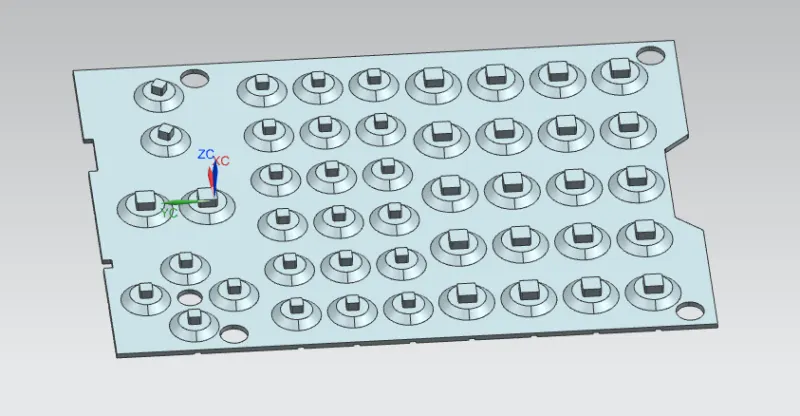
Three problems disappear at once. The gap between key and housing, which is where liquid and dust enter, can be eliminated with a moulded perimeter lip. The legend becomes part of the part rather than an applied foil that lifts at the edge. And the switch contact can be a carbon pill moulded under each key, so no separate dome or membrane is needed.
Those three changes reduce part count, which reduces both assembly labour and the number of tolerance interfaces that can fail. For an equipment builder assembling a few thousand units a year, that is usually the decisive argument.
Where a Silicone Keyboard Is Specified Today
| Sector | Driver | Typical construction |
|---|---|---|
| Medical and laboratory | Surface disinfection, fluid ingress | Sealed mat, laser-etched backlit legends |
| Food processing | Washdown, food-contact adjacency | Sealed lip, smooth surface, no exposed fixings |
| Industrial machinery | Coolant, dust, gloved operation | High-force keys, sealed panel, IP-rated interface |
| Kiosks and access control | Vandal resistance, outdoor UV | Thick mat, moulded relief legends |
| Test and measurement | Repeatability, compact layout | Short travel, crisp snap, printed legends |
Why a silicone keyboard wins in washdown environments
Stainless panels with mechanical switches look clean, but every switch is a penetration. A silicone keyboard is a single flexible sheet clamped under a bezel, so the only sealing interface is the perimeter, where it can be designed as a compression lip with a known range. That is why the specification usually names the cleaning chemistry and the frequency rather than a vague requirement to be waterproof.
How a Silicone Keyboard Is Built
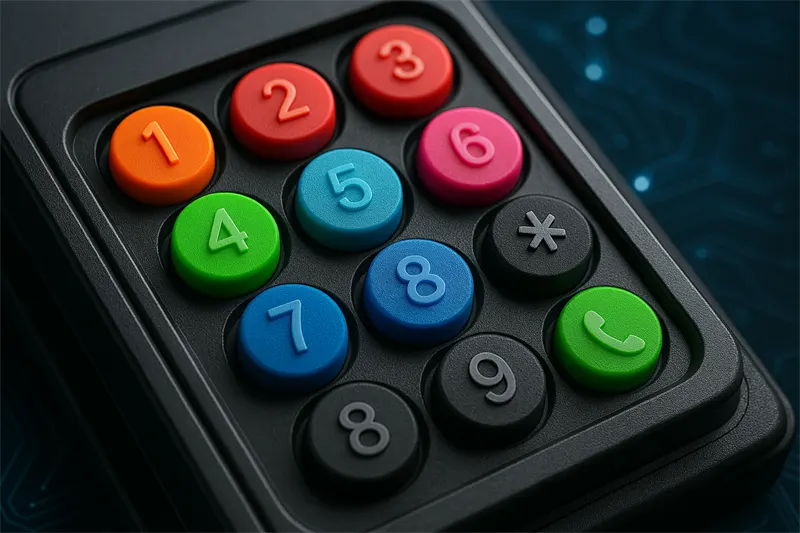
The substrate is solid silicone, typically 50 to 70 Shore A. Each key is a raised body on a thin web; pressing it collapses the web, releasing it returns the key. Under the key sits either a carbon pill against PCB tracks or a cavity that actuates a metal dome on a membrane.
Legends are moulded in relief, screen printed, or laser etched through a coating. Backlighting, where required, uses a translucent body with an opaque coating so that light escapes only through the etched legend. Multi-colour layouts use separate key bodies or a two-shot process.
Because all of these features come from the same tool, changing one usually means changing the tool. That is the main design constraint, and the reason the force curve, the legend process and the sealing lip should be agreed together rather than in sequence.
Where a Silicone Keyboard Is the Wrong Choice
It is the wrong choice when the interface needs high-resolution graphics, when keys must be individually replaceable, or when the product needs a metal click loud enough to be heard across a room. Thin membrane switches are cheaper at high volume with simple layouts; mechanical keys give a crisper click and a longer travel.
It is also a poor fit for very small volumes with many layout variants, because each variant needs its own tool or at least its own artwork programme. In that case a membrane switch and a printed overlay is usually the rational choice.
Being explicit about those limits is what makes the recommendation credible. Our comparison of flexible rubber keyboards covers the same trade-off from the product side.
Specifying a silicone keyboard for an OEM product
- Layout drawing with key positions, key heights and the bezel opening.
- Force and travel per key, with the tolerance band and the press rate.
- Cleaning chemistry and frequency, which set the compound and the legend process.
- Backlight requirement: colour, brightness uniformity and which areas must stay dark.
- Panel interface: clamped lip, adhesive or captured under a bezel, with the compression range.
Is a silicone keyboard the same as a rubber keyboard?
In practice yes. Both describe a moulded elastomer keyboard with integrated keys. Silicone is the material normally used for equipment because of its temperature range, UV stability and cleaning resistance; cheaper elastomers appear in low-duty consumer products.
Can a silicone keyboard be repaired?
It can be replaced, not repaired. The part is moulded as one piece, so a damaged key means a new keyboard. That is why the legend process and the compound are worth specifying properly at the start.
A silicone keyboard is an interface reduced to one part: keys, legends, seal and switch in a single moulding. Specify the layout, the force curve, the cleaning chemistry and the panel interface together, and it will outlast an assembly of switches. Ask us to review a layout against a similar build before the tool is cut.