Will Silicone Keypads Fade from Smart Homes by 2030?
- Share
- publisher
- Suey
- Issue Time
- Sep 3,2026
Summary
Will silicone keypads disappear from smart homes by 2030? Interface research and ageing demographics say no: physical keys keep the jobs that need sealing, tactile feel, and eyes-free operation.
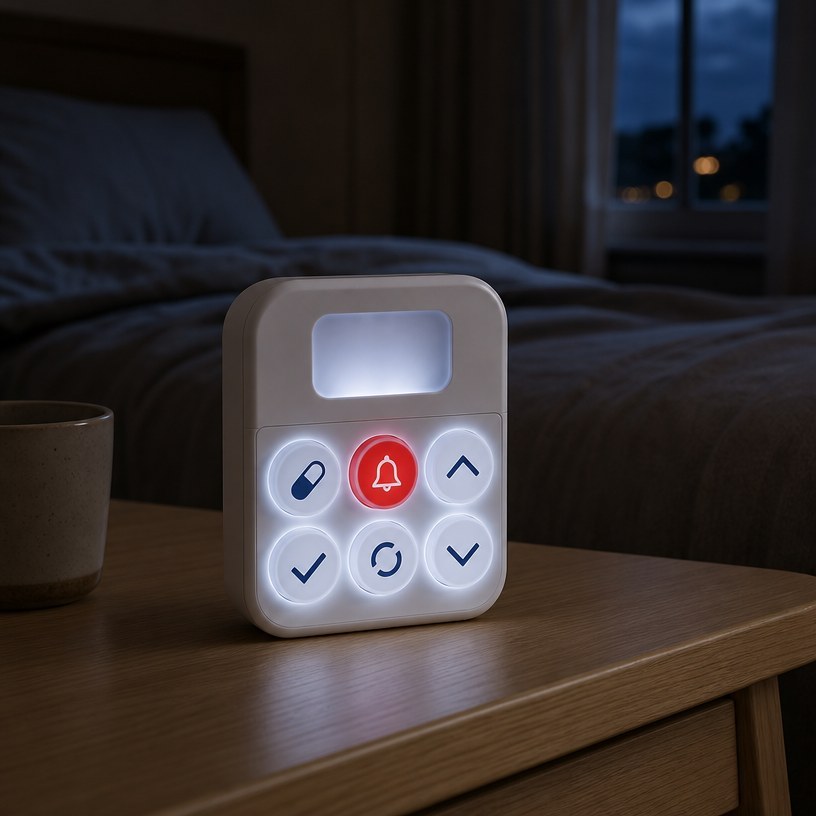
Every few months, a product manager asks some version of this: "If everything in the house becomes voice- and touch-controlled, why would a 2030 smart home still have physical silicone buttons?" It is a fair question, and it is usually asked right before someone designs a capacitive-only panel that fails the rain test, the greasy-hands test, or the 75-year-old-user test. The short answer: silicone keypads will not fade from smart homes by 2030 — they will move to the places where touch and voice are structurally weak. This article walks through the evidence and the engineering reasons.
Where the "buttons are dying" story comes from
The prediction that physical controls disappear comes from watching phones and tablets, where a glass screen replaced a keyboard. Smart homes are different in three ways. First, much of the interaction happens without looking: you reach for a switch while walking into a dark room, or press a doorbell button with groceries in both arms. Second, the devices sit in kitchens, bathrooms, entryways, and outdoor walls where water, steam, and temperature extremes are normal. Third, the users include children, older adults, and visitors who will never install the app and should not have to.
The medical and industrial instrument world already ran this experiment. Screens did not remove buttons there; they moved them. Medical monitors still use silicone keypads over touchscreens for reasons of gloved operation, hygiene wipe-down, and unambiguous tactile confirmation, and factory-floor instruments keep physical keypads because touch panels fail under moisture, vibration, and gloved hands. Smart homes inherit the same physics, not the same marketing.
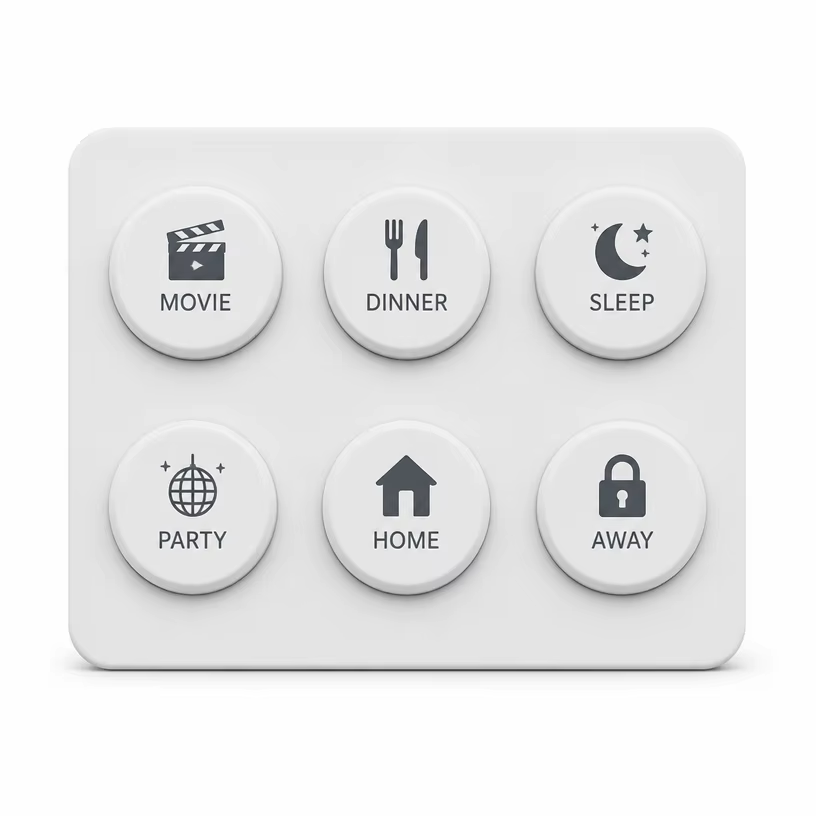
Scene keys are pressed in the dark, not in an app
Think about how a scene control is actually used. Someone walks into a living room at night, one hand full, and wants Movie mode without fumbling for a phone. Silicone keys give that user a locatable button with travel and a snap they can feel. Studies of smart home interfaces keep coming back to the same usability point: button size, contrast, and tactile distinctiveness decide whether an interface works for real households — not whether it is digital or physical. A peer-reviewed study of smart home interface button design found that button size, icon style, and text-to-graphic ratio significantly influence how people find and use smart home controls, and the research on interfaces for older adults reaches the same conclusion from a different angle: predictable, legible, tactile controls are what let people who did not grow up with screens operate a home confidently.
The 2030 home is not a phone — it is an ecosystem
Forecasts for the next decade point to more devices per household, not fewer surfaces. If the number of controllable endpoints in a home rises, the number of moments where a screen is the wrong tool rises with it. Voice handles the "turn on the lights" request well, but it fails at selection, confirmation, and anything that needs a quiet answer at 2 a.m. Touch handles a clean panel well but fails with wet hands, at low light, and for users with reduced dexterity. Physical keys own the remaining third of interactions, and that third is exactly the silicone keypad's territory: short travel, sealed construction, and a life measured in hundreds of thousands of presses.
Two demographic facts make this stickier, not less relevant. The World Health Organization projects that the proportion of the global population over 60 will nearly double by 2050, from about 12 percent to 22 percent, and most of those years will be lived at home. Aging in place pushes the market toward devices that are operable without reading a manual or an app store — and the evidence on age-friendly silicone keypad design shows that larger, higher-contrast, tactile keys are the concrete design response. A 2030 smart home that ignores a quarter of its users' hands is not a vision of the future; it is a returns problem.
Where silicone keys outperform the alternatives structurally
Walk through the 2030 home room by room and the pattern repeats. Entry points — door locks, intercoms, doorbells — sit outdoors or in drafty vestibules; a silicone keypad seals the opening (IP67-style protection is standard practice for silicone keypad and enclosure waterproofing) and keeps working when capacitive sensing reads rain as a finger. Kitchens get steam, oils, and hands that are never quite clean; silicone wipes down and survives what a glass panel collects. Bathrooms add humidity and wet switches. Even in the living room, the trend toward thin, "dead-front" panels does not remove silicone — it hides it, with the pad moulded as a sealed, tactile layer under a flush surface so the device looks like glass but presses like a button.
None of this is a claim that silicone belongs everywhere. It is a claim about boundaries: silicone keypads keep the jobs that need sealing, feel, and eyes-free operation, while displays and voice take the informational jobs. That division of labour is already visible in how differently consumer and industrial keypads are specified and live.
What changes by 2030: thinner pads, hybrid inputs, better materials
Silicone keypads in smart homes will not look like 2010 remote controls. The realistic directions are:
- Hybrid input surfaces. Capacitive sensing under a silicone overlay, where the rubber supplies the seal and the tactile dome while the electrode layer does the detecting. The pad is still a silicone keypad — it just stops pretending to be a mechanical-only part. Designers who want to understand the interface options between silicone and electronics can start with silicone versus membrane switch constructions.
- Thinner, lower-profile pads for flush panels, which puts more pressure on backlight and legend quality — the exact failure modes we analysed in our article on backlight failure in thin smart home keypads.
- Better long-term materials. Low-compression-set compounds and UV-stabilised masterbatches, so a wall panel that is installed once and forgotten still snaps cleanly in 2035. Longevity becomes a selling point when devices are expected to serve a home for a decade or more.
- Fewer keys, bigger keys. Layouts shrink toward the four to eight controls people actually use, and each surviving key gets better legend contrast and more generous spacing.
What a 2030 product plan should actually specify
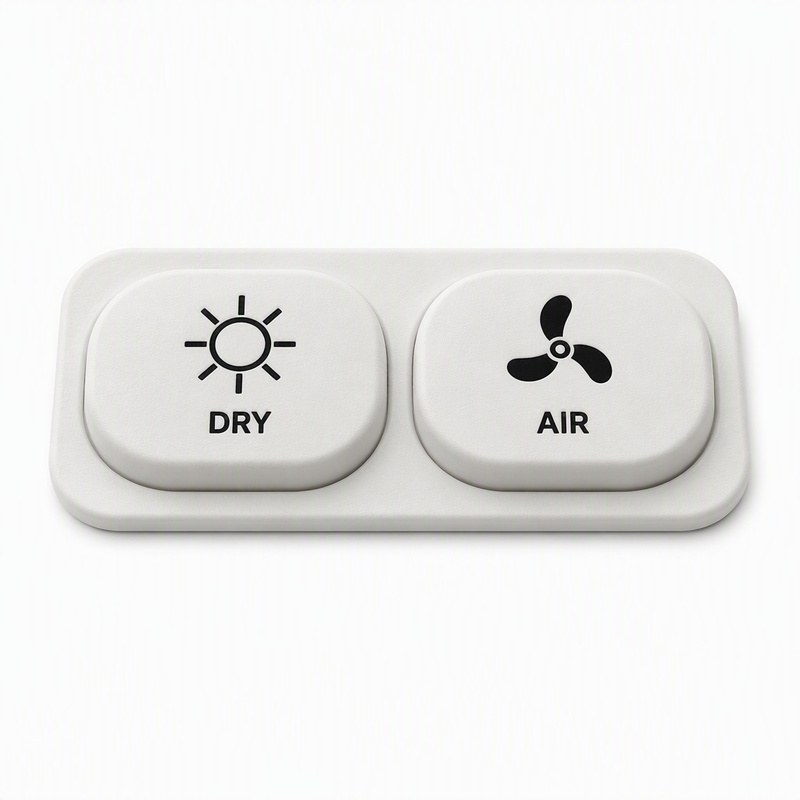
If you are planning a smart home product for 2028-2030, the question is not "buttons or no buttons." It is: which controls must work eyes-free, in water, or for ten years, and what material survives that duty. Silicone answers the sealing and feel part of that question; the electronics answer the sensing part. On recent projects we have seen OEMs move back toward physical keys for exactly this reason — after field returns from touch-only door locks and bathroom panels, several programmes added silicone keypads back on the next revision, not as a downgrade but as the fix for the failure mode their pilot ignored. The devices that fade from smart homes by 2030 will be the ones with the wrong interface for their location, and no material choice can save those.
Sources and further reading:
- PMC — Effects of smart home interface button design on usability and preference (physical button feature research for smart home UIs)
- JMIR Aging — Development of a smart home interface with older adults (interface design evidence for ageing users)
- World Health Organization — Ageing and health fact sheet (global ageing projections that shape home interface demand)
About FromRubber. FromRubber is a full-process silicone keypad manufacturer serving smart home, appliance, medical, and instrument OEMs. We formulate compounds, build the moulds, and mould and finish the keypads ourselves, so durability questions — sealing, compression set, UV ageing, legend wear — are answered with test data, not sales talk. If you are deciding whether a 2030 product needs silicone keys, send us your housing and environmental requirements and we will give you an honest answer with the test evidence behind it.