Silicone Keypad Actuation Force & Travel: Complete Specifications Guide
Technical FAQ by FromRubber – Your Expert Silicone Keypad Manufacturer
As a leading silicone keypad manufacturer, FromRubber is often asked about the fundamental technical parameters that define keypad performance—actuation force and travel. These two specifications are critical for determining the tactile feel, durability, and application suitability of any silicone rubber keypad. This comprehensive FAQ details standard specifications, measurement methodologies, design considerations, and how FromRubber engineers these parameters to meet precise client requirements.
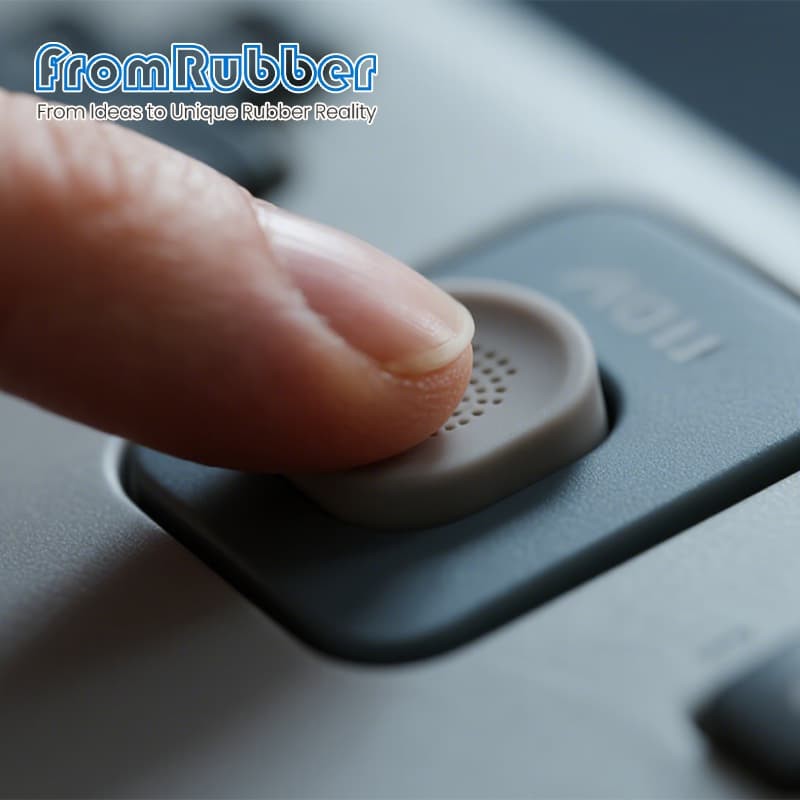
Understanding Actuation Force
Actuation force, measured in grams-force (gf) or Newtons (N), is the minimum downward pressure required to register a keypress. It is the primary factor defining keypad "stiffness" or "softness."
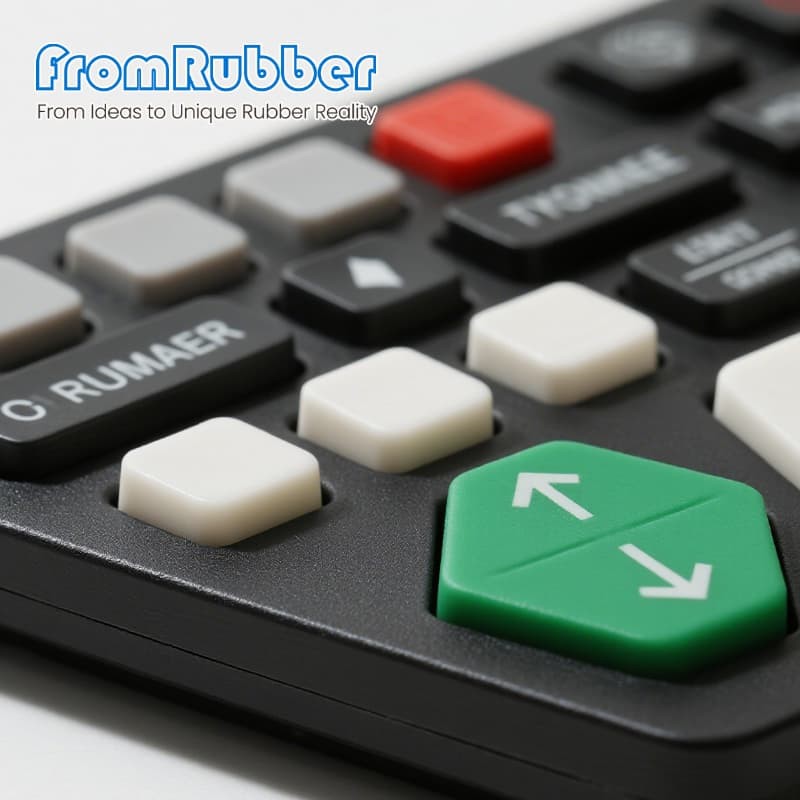
Understanding Key Travel
Key travel (or stroke) is the distance a key button moves from its rest position to the point of contact closure, typically measured in millimeters (mm). It influences typing speed and tactile feedback.
Standard Specification Ranges
| Application Category |
Standard Actuation Force (gf) |
Standard Travel (mm) |
Typical Tactile Profile |
| Consumer Electronics (Remote Controls, Toys) |
150 - 350 gf |
0.3 - 0.6 mm |
Light, crisp, short travel |
| Industrial Controls (Medical, Automotive, Machinery) |
350 - 750 gf |
0.5 - 1.5 mm |
Firm, pronounced tactile bump, longer travel |
| High-Frequency Keypads (POS, Calculators, Keyboards) |
180 - 400 gf |
0.4 - 0.8 mm |
Balanced, responsive, medium travel |
| Sealed / Waterproof Keypads |
250 - 600 gf |
0.2 - 0.5 mm |
Snappy, very short travel |
Detailed FAQ
Q1: What is the industry-standard method for measuring actuation force?
The most common method uses a force gauge (often digital) with a plunger tip that applies gradual pressure to the center of the key button until the electrical circuit closes (actuation point). At FromRubber, we perform this test using calibrated equipment, typically taking an average of 5-10 presses per key for statistical accuracy. The standard is to measure at the key center, but edge force measurement is also critical for large keys.
Q2: How does dome shape and material thickness affect these specs?
These are core design variables we manipulate at FromRubber:
- Dome Shape: Conical domes offer a sharper tactile bump and lower travel. Spherical or lenticular domes provide a softer, more gradual press with potentially longer travel.
- Silicone Thickness: Thicker silicone rubber (e.g., 0.5mm vs 0.3mm) generally increases actuation force and can reduce travel slightly due to greater material resistance.
- Dome Wall Angle & Height: Steeper walls increase force; taller domes allow for longer pre-travel before collapse.
Q3: What are the consequences of specifying force/travel outside standard ranges?
While FromRubber can engineer custom specs, deviations have implications:
| Too Low Force (<100 gf) |
Risk of accidental actuation, reduced tactile feedback, potential durability concerns. |
| Too High Force (>800 gf) |
User fatigue, slower typing speed, increased stress on PCB and mounting points. |
| Too Short Travel (<0.2mm) |
Mushy feel, difficult to achieve reliable contact, user may not perceive keypress. |
FromRubber Custom Engineering Capabilities
| Design Factor |
How We Adjust It |
Impact on Force/Travel |
| Dome Design & Tooling |
Precision mold engineering of dome shape, wall thickness, and collapsible angle. |
Directly defines the force curve and travel distance. Conical for sharp click, shallow for soft press. |
| Silicone Compound Formulation |
Adjusting polymer blend and Shore hardness (typically 40-70 Shore A). |
Higher hardness increases actuation force; softer compounds can reduce it. |
| Carbon Pillar / PCB Contact Design |
Optimizing carbon pill size, shape, and PCB pad layout. |
Affects contact reliability at the end of travel. Larger pills can slightly increase travel. |
| Actuation Feedback Mechanisms |
Integrating metal domes, poly-domes, or tactile switches under silicone. |
Combines silicone travel with secondary switch force, creating complex tactile profiles. |
Conclusion & Recommendation
There is no universal "best" specification. The optimal actuation force and travel depend entirely on the end-use environment, user expectations, and product lifecycle requirements. As a standard starting point, a force of 250-450 gf and a travel of 0.4-0.7 mm suit a wide range of general-purpose applications.
FromRubber recommends collaborating early in your design process. By providing us with your application context, user interface goals, and any environmental challenges (like gloves, moisture, or extreme temperatures), we can engineer a silicone keypad with precisely tuned force and travel specifications. We provide full prototype testing reports, including force-displacement curves, to validate performance before mass production.
Contact the FromRubber engineering team today to discuss your specific keypad requirements and receive customized sample keypads for evaluation.