What are the key differences between silicone and EPDM for outdoor gasket applications?
- Share
- Issue Time
- Feb 24,2026
1. Chemical & Temperature Boundaries
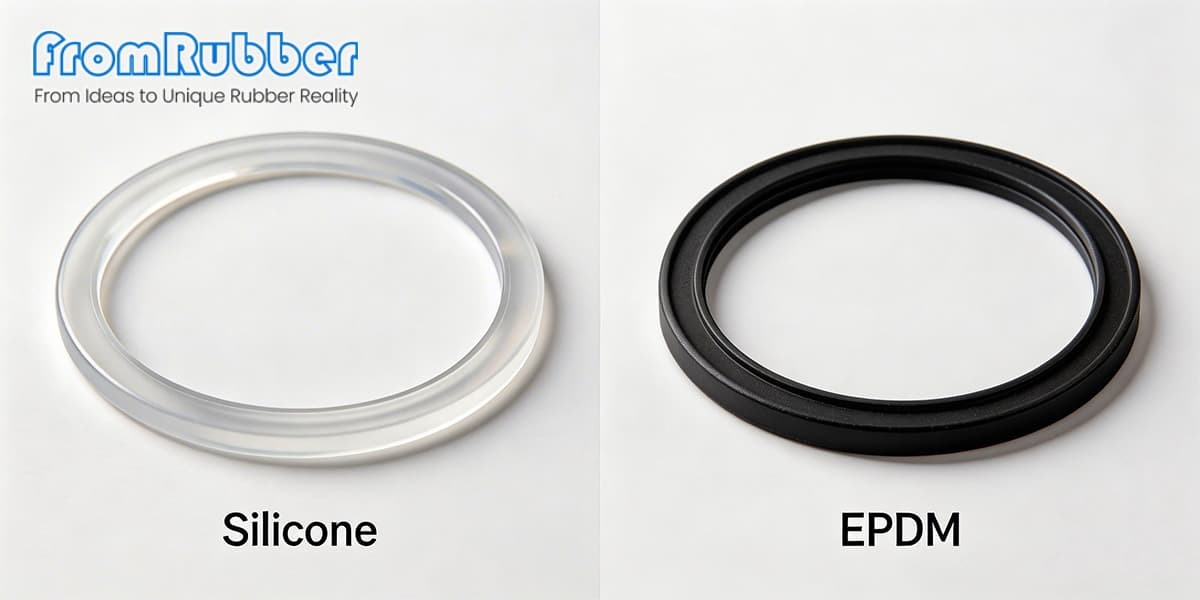
Silicone (VMQ) – extreme tolerance
Silicone's inorganic siloxane backbone provides unmatched stability from -60°C up to 230°C continuous. It resists UV and ozone almost indefinitely without embrittlement, making it ideal for solar, LED, and high-altitude applications. However, silicone swells in hydrocarbons and has lower tear strength than EPDM.
✔ best for: wide temp ranges, UV exposure, food contact
EPDM – the water & weather warrior
EPDM (ethylene propylene diene monomer) exhibits excellent resistance to steam, hot water, and polar fluids. It withstands outdoor aging, ozone, and UV very well (though slightly less UV longevity than silicone). Temperature range: -50°C to +150°C. It outperforms silicone in mechanical strength, abrasion resistance, and compression set at moderate temps.
✔ best for: water systems, braking fluids, dynamic seals
2. Mechanical & Environmental Durability
| Property | Silicone (VMQ) | EPDM |
|---|---|---|
| Temperature range | -60°C to +230°C (peak +280°C) | -50°C to +150°C (special down to -55°C) |
| UV & ozone resistance | Excellent – virtually no degradation | Very good – surface may chalk after decades |
| Tensile strength | 4–10 MPa (lower, more tear susceptible) | 8–15 MPa (tough, abrasion resistant) |
| Compression set | Good (high consistency grades stable at 150°C) | Excellent (low permanent deformation) |
| Water / steam resistance | Moderate (hydrolysis possible) | Superior – exceptional for hot water |
| Oil / fuel resistance | Poor (severe swelling) | Poor to fair (not recommended for mineral oil) |
3. Cost, Certification & Application Fit
| Factor | Silicone | EPDM |
|---|---|---|
| Relative cost (material) | $$$ (high, especially fluorosilicone) | $$ (economical, high volume) |
| FDA / food contact | Widely certified (NSF 51, FDA 21 CFR 177.2600) | Limited (some formulations certified) |
| Flame retardancy | Self-extinguishing, UL94 V-0 possible | Standard EPDM flammable, requires additives |
| Typical outdoor life | 15–25 years (UV stable) | 10–20 years (depends on formulation) |
Industry-specific recommendations
Silicone is preferred for module junction boxes and frame seals due to 25-year UV warranty and wide temperature cycling.
EPDM dominates single-ply roofing and window seals where water resistance and cost efficiency are critical. Silicone used for high-temp flue seals.
EPDM for door seals (abrasion, compression set). Silicone for turbocharger hoses, sensor gaskets underhood.
Compression set & long-term sealing force
Outdoor gaskets must maintain sealing force over years. EPDM generally exhibits lower compression set at moderate temperatures (70h/100°C <20%). Silicone can achieve similar values with high-consistency (HCR) grades but at higher cost. For dynamic outdoor applications (hatches, doors), EPDM's mechanical toughness reduces extrusion risk.
However, for static seals exposed to continuous UV (like streetlight enclosures), silicone's permanent flexibility eliminates stress cracking. The choice often hinges on whether the assembly experiences movement or purely static weathering.
Final recommendation matrix
Choose silicone when: temperature extremes beyond 150°C, continuous UV in desert/altitude, need for flame retardance or food contact, and when flexibility at -50°C is mandatory. Choose EPDM when: exposure to water/steam, dynamic movement requiring tear strength, moderate climate, and budget sensitivity are primary drivers. Many OEMs now use co-extruded profiles combining an EPDM core with a silicone outer skin for the best of both worlds – but that's a topic for another deep dive.
Still unsure? Our engineers provide free material testing with your specific outdoor environment. Simulate your conditions today.