How to Choose the Right Durometer (Hardness) for Your Exhaust Hose Plug Application?
- Share
- Issue Time
- Mar 20,2026
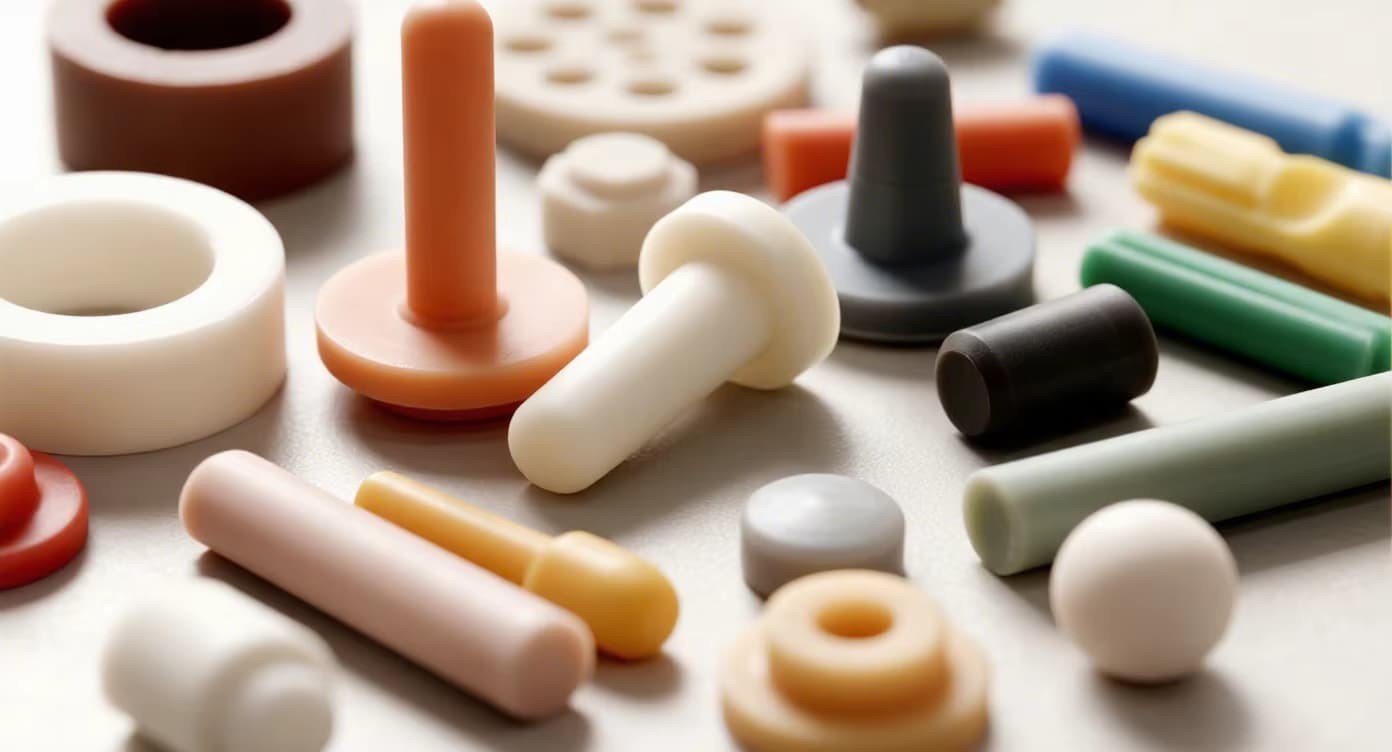
Choosing the correct durometer (hardness) for your exhaust hose plug is not a guess—it is an engineering decision that directly impacts sealing reliability, insertion ergonomics, and service life. At FromRubber, we manufacture custom silicone exhaust plugs designed to withstand extreme temperatures while delivering the exact Shore A hardness your application demands.
What Is Durometer and Why Does It Define Sealing Success?
Durometer measures the indentation resistance of elastomeric materials, most commonly using the Shore A scale for flexible rubber and silicone components. For exhaust hose plugs—whether used in automotive exhaust ports, EGR tubes, turbocharger test points, or industrial masking—the durometer value dictates how the plug interacts with the mating surface. A plug that is too soft may extrude under pressure or wear out after a few cycles; one that is too hard may not conform to irregular ports, leading to leaks or even damage to thin-walled tubing. The optimal hardness balances conformability, retention force, reusability, and thermal stability. FromRubber’s silicone compounds maintain their durometer consistency even after hundreds of thermal cycles, ensuring predictable sealing performance from the first use to the five-hundredth.
The Science of Silicone Hardness in High-Heat Environments
Exhaust systems generate extreme temperatures—often exceeding 200°C (392°F) and spiking beyond 260°C (500°F) near turbochargers and diesel aftertreatment components. Conventional rubber plugs (nitrile, neoprene, EPDM) harden, crack, or take a permanent compression set under such conditions. Silicone, by contrast, retains elasticity across a wide temperature range. However, durometer selection still requires careful consideration: softer silicone (40–50 Shore A) remains flexible and conforms to rough cast surfaces but may soften slightly at peak temperatures; harder silicone (70–80 Shore A) provides superior blowout resistance and maintains its shape under pressure. FromRubber’s engineering team uses advanced thermal modeling to recommend the precise hardness that compensates for thermal softening while preserving sealing force. This science-driven approach ensures that your exhaust plug performs reliably whether the engine is cold-starting at -20°C or running at full load for hours.
Durometer Selection Quick Reference Guide
| Shore A Hardness | Sealing Characteristics | Ideal Exhaust Hose Plug Applications |
|---|---|---|
| 30 – 40 A | Ultra-soft, highly conformable, minimal insertion force, excellent gap filling | Delicate plastic or thin-wall tubes, irregular cast ports, low-pressure masking (0–10 psi), powder coating protection |
| 45 – 55 A | Soft yet resilient, good compression set resistance, easy manual handling | EGR valve ports, general exhaust masking, diesel test ports (moderate pressure), reusable shop plugs |
| 60 – 65 A | Balanced hardness, moderate insertion force, excellent blowout resistance up to 30 psi | Exhaust manifold ports, O2 sensor bungs, turbocharger test points, high-cycle assembly lines |
| 70 – 80 A | Firm, high structural integrity, superior pressure retention (40–80 psi), minimal wear | High-pressure leak testing, threaded exhaust ports, heavy-duty industrial exhaust, frequent insertion/removal |
Key Factors That Influence Your Durometer Choice
Selecting the correct Shore A value requires evaluating four critical parameters: operating temperature, sealing pressure, port surface condition, and cycle frequency. Below we explore each factor in detail.
1. Operating Temperature & Thermal Softening
Silicone experiences a slight, reversible reduction in hardness at elevated temperatures—typically 5 to 10 points on the Shore A scale when exposed to 200–260°C. This means a 60A plug at room temperature may function similarly to a 50–55A plug under full exhaust heat. FromRubber recommends selecting a durometer 5–10 points higher than your room-temperature target to compensate for this thermal effect. For continuous exposure above 250°C, our high-temp formulations maintain structural integrity with minimal modulus loss, ensuring consistent sealing force throughout the duty cycle.
2. Sealing Pressure & Blowout Resistance
Exhaust systems can experience backpressure ranging from a few psi in naturally aspirated engines to over 40 psi in turbocharged or diesel configurations with DPF regeneration cycles. Softer plugs (below 50A) may extrude or blow out under pressures exceeding 20 psi. For pressure testing or high-boost applications, a hardness of 70A or higher is essential. FromRubber’s 75A high-retention silicone plugs are engineered to withstand up to 80 psi without deformation, making them ideal for turbocharger validation and leak-down testing.
3. Port Surface Finish & Geometry
Cast iron exhaust manifolds often have rough surfaces, weld spatter, or minor porosity. A softer plug (40–55A) conforms to these irregularities, creating a leak-proof seal where harder materials would leave microscopic gaps. Conversely, machined stainless steel or aluminum ports with smooth finishes allow harder plugs (60–80A) to seal effectively with less reliance on deformation. For threaded ports or knurled surfaces, harder compounds resist tearing and maintain grip without collapsing into thread valleys.
4. Reusability & Cycle Frequency
If your operation requires plugs to be inserted and removed hundreds or thousands of times—such as in assembly line masking or repeated testing—harder durometers (60–80A) offer superior abrasion resistance and retain their shape longer. Softer plugs may show edge wear after 200–300 cycles. FromRubber’s custom compounds are optimized for high-cycle applications, with some customers reporting over 1,000 successful uses per plug when using our 70A silicone formulation.
FromRubber’s Custom Approach: Beyond Off-the-Shelf Solutions
While standard durometer plugs work for many applications, complex exhaust geometries and specialized processes often require custom-engineered solutions. As a dedicated silicone manufacturer, FromRubber provides end-to-end support: from material selection and prototype sampling to full-scale production. Our capabilities include:
- Custom Durometer Formulations: We can produce any Shore A value between 30 and 80, with tolerances as tight as ±3A for critical applications.
- Dual-Durometer Designs: A firm core (70A) for blowout resistance combined with a soft sealing lip (45A) for conformability—ideal for threaded or irregular ports.
- Color-Coding for Hardness: Assign specific colors to different durometers (e.g., red=50A, blue=70A) for instant visual identification on the shop floor.
- High-Temperature Stabilizers: Our advanced silicone compounds maintain hardness stability even after prolonged heat aging (tested at 225°C for 168 hours with less than 10% change).
With ISO 9001:2015 certified facilities and over 15 years of experience in automotive and industrial sealing, FromRubber delivers precision-molded exhaust plugs that meet the most demanding specifications.
Case Study: Solving a High-Pressure Diesel Test Challenge
A major diesel engine manufacturer faced repeated failures with their exhaust port plugs during DPF differential pressure testing. The original 50A nitrile plugs would blow out at 35 psi and degrade after just 15 cycles due to heat exposure (180°C continuous). FromRubber engineers analyzed the application and recommended a 75A high-temp silicone plug with a custom tapered design. The result: zero blowouts, over 600 successful test cycles per plug, and a 45% reduction in consumable costs. The customer also adopted color-coded plugs (blue for high-pressure, red for low-pressure) to eliminate assembly errors.
Frequently Asked Questions About Durometer Selection
To help you make an informed decision, we’ve compiled the most common questions from engineers, purchasers, and shop managers.
For powder coating applications, a 50–60 Shore A silicone plug is typically ideal. This hardness provides enough flexibility to seal irregular ports while maintaining non-stick release after the curing cycle. Softer plugs (40A) may be preferred for delicate surfaces to avoid marking.
Yes, but you may need to compensate for thermal softening. If the plug will be exposed to high temperatures after installation, select a durometer 5–10 points higher than what performs well at room temperature. FromRubber can provide thermal characterization data for your specific compound.
Insertion force increases proportionally with durometer. A 40A plug may require 5–10 lbs of force, while a 70A plug may need 20–30 lbs. For high-volume assembly lines, ergonomic considerations may favor softer compounds or designs with pull tabs and tapered lead-ins.
Threaded ports benefit from 65–75 Shore A silicone. The firmer material maintains its shape within the thread grooves, preventing extrusion while providing a positive seal. Softer plugs may collapse into threads and become difficult to remove.
Durometer itself does not change chemical resistance, but compound formulation does. FromRubber’s standard high-temp silicone resists oils, coolants, and fuels. For aggressive chemical exposure, we can formulate specialty compounds that maintain hardness while enhancing chemical compatibility.
You can send a sample to FromRubber for ASTM D2240 durometer testing. Our lab will provide the exact Shore A value and can replicate or refine the hardness based on your performance feedback. We also offer sample kits with multiple hardnesses for hands-on evaluation.
Industry standards (ASTM D2000, SAE J200) allow ±5 Shore A. FromRubber maintains a tighter ±3 Shore A tolerance for most custom orders, with ±2 A available for precision-critical applications. Every batch is tested to ensure consistency.
Absolutely. Dual-durometer molding is one of our specialties. We can produce plugs with a firm 70–80A core for blowout resistance and a soft 40–50A outer layer for conformability and easy insertion—ideal for rough ports or high-pressure applications.
Conclusion: Precision Durometer Selection Maximizes Performance
Choosing the right durometer for your exhaust hose plug is a critical step in ensuring reliable sealing, operational efficiency, and long component life. By considering temperature, pressure, port condition, and cycle frequency, you can specify a hardness that delivers consistent results. FromRubber’s engineering team is ready to assist with material recommendations, prototyping, and full-scale production of custom silicone exhaust plugs tailored to your exact requirements.
With our deep expertise in high-temperature silicone molding and commitment to quality, we help customers across automotive, marine, industrial, and aerospace sectors achieve sealing solutions that perform where others fail.
Need help selecting the optimal durometer for your exhaust hose plug application? Contact FromRubber today for a free consultation, sample evaluation, or custom design quote.
Request a Durometer Consultation →📧 nani@fromrubber.com | 🌐 www.fromrubber.com | Custom silicone exhaust plugs – Fast prototyping & production
© FromRubber — Precision silicone exhaust hole rubber hose plugs. All specifications are for reference; consult our engineers for application-specific guidance.