ABS, PC, or Reinforced Nylon? How to Select the Right Material for Detector Probe Plastic Enclosure?
- Share
- Issue Time
- May 4,2026
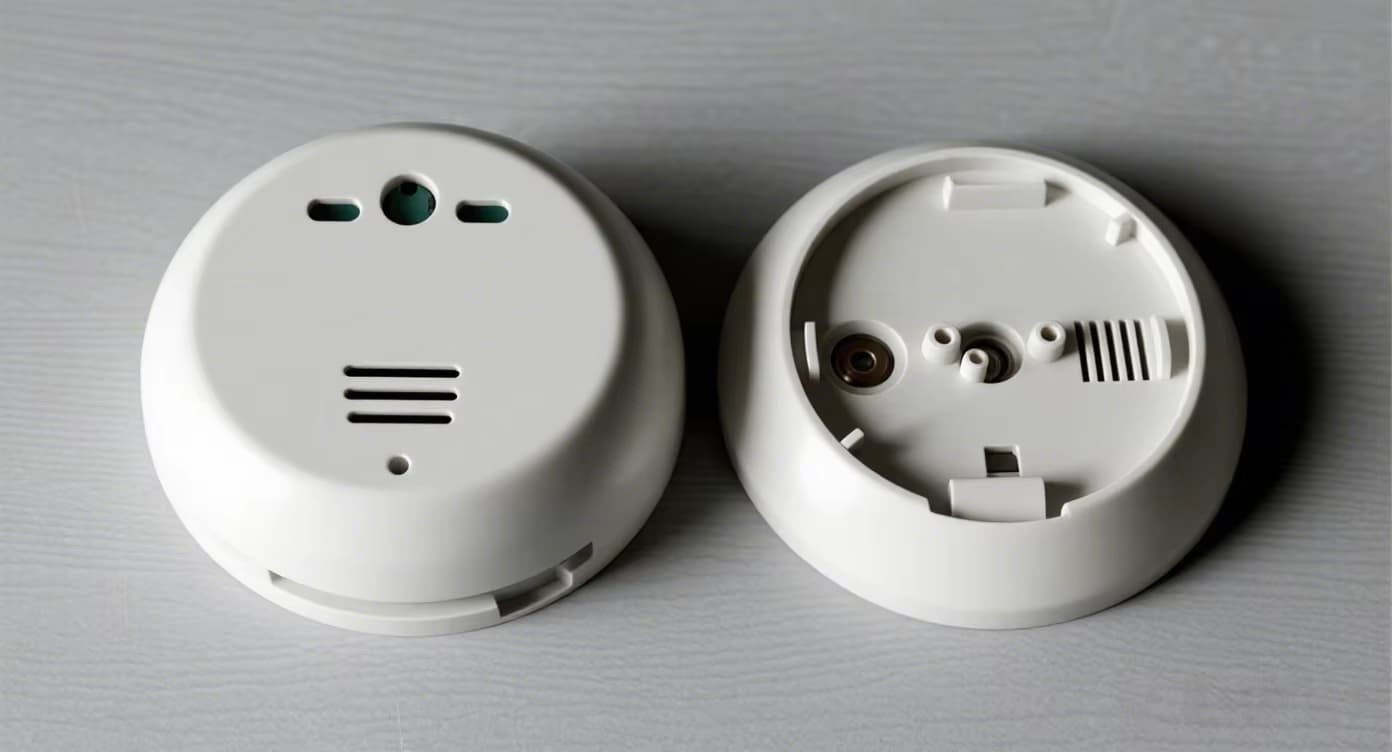
ABS, PC, or Reinforced Nylon? How to Select the Right Material for Detector Probe Plastic Enclosure
Expert engineering guide for precision probe housings — durability, EMI/RFI shielding, thermal resistance and cost efficiency.
When designing a detector probe plastic enclosure, material selection is not merely about rigidity or appearance — it defines signal integrity, long-term reliability under extreme temperatures, chemical exposure, and even regulatory compliance. ABS, PC, and reinforced nylon each offer distinct advantages but also specific limitations. As a specialized injection molding manufacturer, FromRubber helps OEMs and medical device innovators decide the optimal polymer for handheld probes, industrial sensors, gas detectors, and biomedical monitoring devices. In this comprehensive guide (2000+ words), we break down mechanical, thermal, dielectric, and economic factors to empower your next project.
1. Why Material Science Defines Probe Performance
Detector probes operate in demanding environments: portable gas analyzers face drops on concrete; medical ultrasound probes require sterilization resistance; industrial NDT probes need electrical insulation and rugged housings. The right enclosure material must satisfy:
- Impact strength: withstanding repeated drops (IK rating).
- Temperature range: from sub-zero outdoor use to autoclave cycles.
- Chemical resistance: oils, solvents, cleaning agents.
- Dimensional stability: precise fit for internal PCBs and sensors.
- EMI/RFI shielding ability (if required).
FromRubber leverages over 15 years of experience in precision tooling, material testing, and high-cavitation molding to help you navigate ABS, PC, and reinforced nylon — plus custom blends when needed.
2. ABS (Acrylonitrile Butadiene Styrene) – The Cost-Effective Workhorse
ABS is widely used for detector probe enclosures due to its excellent balance of toughness, rigidity, and surface finish. It offers good impact resistance even at low temperatures (-20°C) and can be easily painted, EMI-coated, or ultrasonically welded.
✔️ Advantages for Probe Housings
- High gloss or textured finishes — ideal for handheld ergonomic grip.
- Good electrical insulation (dielectric strength up to 15-20 kV/mm).
- Low shrinkage (0.4-0.7%) ensures tight tolerance for snap-fits.
- Compatible with metal insert molding for threaded inserts or shielding.
- Cost-efficient for medium-to-high volume production (10k+ units).
⚠️ Limitations
- Poor UV resistance without stabilizers — outdoor probes need UV-grade ABS.
- Limited chemical resistance against strong solvents (acetone, MEK).
- Heat deflection temperature (HDT) around 85-95°C, not for high-power electronics.
FromRubber recommendation: Choose ABS for general-purpose gas detectors, environmental monitoring probes, or consumer-grade diagnostic devices where cost and esthetics are primary. We offer UV-stabilized and flame-retardant (UL94 V-0) ABS compounds.
3. Polycarbonate (PC) – Unmatched Impact & Transparency
When your detector probe requires optical windows, see-through housings, or must survive extreme impact (e.g., mining or firefighting equipment), polycarbonate is the superior engineering plastic. PC has withstood hammer blows that would shatter ABS or nylon.
Key properties for detector enclosures
- Exceptional impact resistance — up to 900 J/m (Izod notched) vs ABS ~300 J/m.
- High heat resistance: HDT 120-140°C, suitable for lead-free soldering reflow.
- Optical clarity (light transmittance 88-90%) — ideal for light/LED sensor windows.
- Flame-retardant grades (UL94 V-0/5VA) available without halogens.
- Excellent dimensional stability with low creep under load.
Considerations
- Higher raw material cost (typically 30-50% more than ABS).
- Susceptible to stress cracking when in contact with certain hydrocarbons.
- More demanding injection molding process (drying before molding is critical).
FromRubber successfully molds PC enclosures for radiological detectors, high-voltage probes, and medical imaging devices. We also offer PC+ABS blends (Bayblend® type) to combine processability with toughness.
4. Reinforced Nylon (PA6/PA66 + GF) – Strength & Chemical Superiority
For industrial probes exposed to lubricants, fuels, or extreme mechanical loads — such as automotive diagnostic sensors or oil&gas leak detectors — glass-fiber reinforced nylon delivers outstanding tensile strength, stiffness, and wear resistance.
Reinforced Nylon Highlights
- 30-50% glass fiber increases flexural modulus up to 10,000 MPa.
- Excellent continuous use temperature (120-150°C) and heat aging.
- Superb resistance to oils, greases, diesel, and most solvents.
- Low coefficient of friction for dynamic components (e.g., sliding probe caps).
- High dielectric strength, good arc resistance.
Possible Drawbacks
- Moisture absorption leads to dimensional changes — requires conditioning or modified grades.
- GF-filled nylon can cause anisotropic shrinkage, challenging for ultra-tight tolerances.
- Surface finish may show glass fiber "read-through" — requires textured molds.
FromRubber’s edge: We custom compound reinforced nylon with impact modifiers and lubricants. Our team designs molds with optimized gate location to minimize warpage. For high- stress detector probe clips or load- bearing flanges, 30% GF nylon is the go-to choice.
5. Direct Comparison Table: ABS vs PC vs Reinforced Nylon
| Property | ABS | Polycarbonate (PC) | Reinforced Nylon (PA66+30%GF) |
|---|---|---|---|
| Tensile Strength (MPa) | 40-50 | 60-70 | 150-210 |
| Impact Strength (Izod, J/m) | 250-350 | 800-950 | 100-160 (brittle after GF) |
| HDT @ 1.82 MPa (°C) | 85-95 | 125-140 | 230-250 |
| Chemical Resistance | Moderate | Limited | Excellent (oils/fuels) |
| Relative Cost | $ | $$-$$$ | $$ |
6. Critical Selection Criteria for Detector Probes
Still unsure which polymer fits your specific application? Below are four decision drivers we use at FromRubber for custom injection molding projects.
Signal Transparency & Dielectric Properties
If your probe includes wireless communication (Bluetooth, LoRa, 5G) or capacitive sensors, avoid carbon-filled or high-loss materials. Both ABS and PC provide low dissipation factors (<0.01). Reinforced nylon also works well unless high humidity is present.
Operating Temperature Extremes
For industrial ovens or engine compartments, reinforced nylon or PC is mandatory. For outdoor weather stations, UV-stabilized ABS is acceptable down to -20°C.
Chemical Exposure
Gas detector probes may contact isopropanol, bleach, or petroleum vapors. Nylon offers superior resistance, whereas PC may develop cracks. We can also add protective coatings or overmolding.
Custom Requirements: EMI shielding, antistatic, flame ratings
FromRubber offers conductive ABS, PC, and nylon grades for ESD-safe enclosures. For fire safety (UL 94 V-0 or 5VA), both PC and ABS with FR additives are available.
7. Why FromRubber? – Your Partner in Precision Probe Enclosures
As a dedicated injection molding manufacturer for detector housing, FromRubber combines advanced tooling, in-house material expertise, and agile production (prototype to millions of units). We provide:
- Material selection assistance: Free consultation based on actual field conditions, including FEA simulation.
- Custom color & texture: Pantone matching, soft-touch overmolding, laser etching for logos.
- Secondary operations: Pad printing, ultrasonic welding, gasket overmolding, and assembly.
- Global supply chain: Fast 3-5 day samples, 15-25 day mass production lead time.
- Quality certifications: ISO 9001:2024, IATF 16949 for automotive probes, and biocompatibility options.
FromRubber — tailor-made ABS, PC, reinforced nylon enclosure solutions. No minimum order quantity for prototyping. Request a DFM review today.
8. Real-World Case: Choosing Right Material for Portable Methane Detector
A customer needed a compact, handheld gas probe enclosure with IP54 rating, -10°C to +50°C operation, and resistance to diesel fumes. ABS (UV-grade) satisfied impact and cost, but chemical compatibility with cleaning solvents was borderline. PC provided better toughness but cost increased. Ultimately, reinforced nylon PA66+15%GF offered the perfect trade-off: high stiffness for the latch mechanism, chemical inertness, and dimensional stability. FromRubber produced 50,000 units with zero field failures.
9. Moldability & DFM Considerations: ABS vs PC vs Nylon
Even the best material fails with poor mold design. Here is how FromRubber optimizes each polymer:
- ABS: easy flow, recommend wall thickness 1.5-3.0mm, multiple ribs for stiffness.
- PC: needs high mold temperature (80-120°C) and larger gates to avoid flow marks.
- Reinforced Nylon: abrasive to molds — we use DLC-coated tool steel and optimized venting to prevent burns.
Our engineers provide complete design for manufacturing (DFM) report within 48 hours, including material shrinkage and warpage simulation.
10. Conclusion: Make the Right Call for Your Detector Probe Project
Selecting between ABS, PC, and reinforced nylon influences product longevity, user safety, and production budget. For cost-sensitive consumer probes → ABS. For high-impact, transparent windows or medical devices → PC. For extreme environment / chemical exposure → Reinforced Nylon. At FromRubber, we don’t just mold plastic; we co-engineer solutions. Contact our team to request material grade samples, quotation, or a free consultation. Your ideal detector probe enclosure is one message away.
FromRubber — Your Global Injection Molding Partner for Detector Probes
📧 nani@fromrubber.com | 🌐 www.fromrubber.com | 📞 +86 18676210913
ISO 9001 | Short lead times | DFM support | Free design review