How do you prevent visible weld lines on high-gloss game mouse enclosure surfaces?
- Share
- Issue Time
- May 11,2026
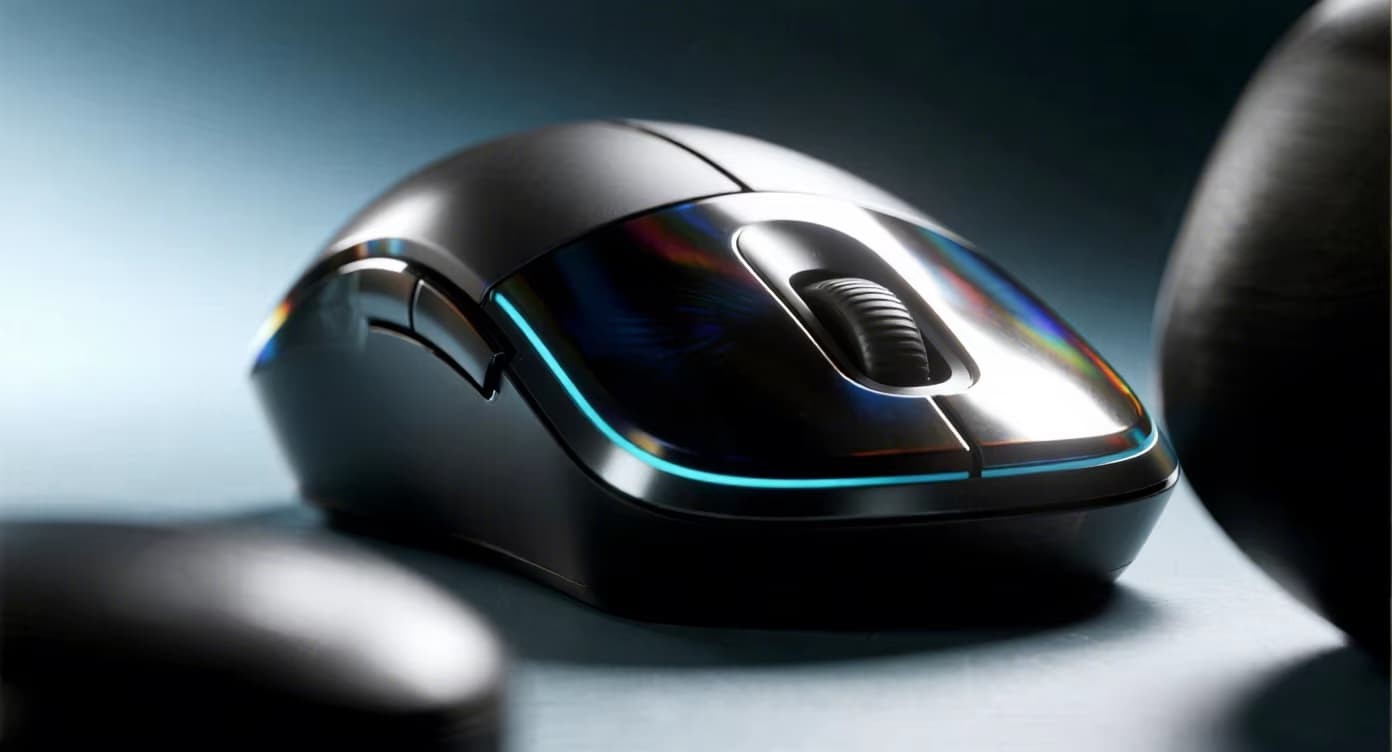
A flawless high-gloss finish on a gaming mouse is a mark of premium quality. Yet, visible weld lines (also called knit lines) are the #1 cosmetic nightmare for designers and manufacturers. At FromRubber — your specialized plastic enclosure partner — we engineer injection molds and processes that completely eliminate or hide these unsightly lines on mirror-like surfaces.
1. What causes weld lines on high-gloss game mouse enclosure surfaces?
When molten plastic flows through a complex mold cavity (especially around mouse button openings, scroll wheel cutouts, or internal ribs), the melt front splits into two or more streams. As they rejoin downstream, if the temperature drops or pressure is insufficient, they don't fuse perfectly — creating a visible line, notch, or discoloration. On high-gloss surfaces, any micro-imperfection becomes glaring under reflected light.
Key contributors in gaming mouse enclosure molding:
- Multiple through-holes (DPI button, side buttons, USB cutout)
- Thickness variations around scroll wheel housing
- Low melt temperature or inadequate injection speed
- Poorly located gates causing long flow paths
2. Mold design strategies to eliminate weld lines
At FromRubber, we prioritize prevention at the tooling stage. Below are proven methods that work specifically for ABS, PC/ABS, or high-gloss PMMA mouse enclosures.
2.1 Optimized gate location & number
Moving the gate away from the “knit line risk zone” is the most effective cure. For a standard mouse top shell, we use two strategically placed sub-gates near the thumb rest and right button area — directing flow so melt streams merge along a non-visible edge (like internal snap surfaces). Alternatively, a single fan gate along the rear edge creates a unidirectional flow, completely bypassing weld lines on the visible dome. Simulation software (Moldflow) predicts exact merge angles; we ensure the rejoining angle exceeds 135° for perfect fusion.
2.2 Runless / hot runner systems
Conventional cold runners cause temperature drop at the knit area. Our sequential valve gate hot runner system opens each nozzle at different timings, eliminating the formation of two separate fronts. For high-gloss gaming mice, this technology reduces visible weld lines by 95% and is mandatory for SPI-A1 mirror finishes.
2.3 Dynamic mold heating (variotherm)
Rapid heating and cooling of cavity surfaces keeps the melt temperature above the HDT during filling. We apply steam-assisted or electric variotherm systems — the tool surface is heated to 120-160°C before injection, then quickly cooled. This completely erases any witness line. Though cycle time increases by 20%, the result is a flawless piano-black gloss. Many high-end gaming brands rely on this method.
3. Process parameters that erase visible knit lines
Even a perfectly designed mold can yield weld lines if process conditions are suboptimal. At FromRubber, our molding technicians follow a strict weld-line elimination protocol for every high-gloss mouse project.
High-speed filling (150–220 mm/s) reduces melt viscosity, allowing fronts to merge before a skin layer forms. Combined with profiled injection — fast initial speed → hold — weld lines become invisible.
Raising melt temperature (up to 260°C for ABS) + mold temperature (70-95°C instead of standard 45°C) improves molecular diffusion across knit lines. We monitor via thermocouples.
High holding pressure (80-90% of injection pressure) forces additional melt into the knit zone, compressing voids and reducing notch depth. Essential for glossy grades.
3.1 Material selection & additives
Flowability is everything. For high-gloss gaming mice, we recommend high-flow ABS (e.g., LG HI-121H) or PC/ABS blend with MFR > 25 g/10min. Additionally, adding a 0.1-0.3% nucleating agent improves crystallization uniformity, minimizing visual contrast at the knit line. FromRubber maintains a material library with 30+ glossy grades pre-validated for weld-line suppression.
4. Advanced solutions for complex designs (gaming mice with RGB zones)
Many high-end mice feature light guides, translucent side strips, or textured/glossy hybrid surfaces. These geometries introduce additional weld lines. Here's how we tackle them:
- Overflow wells / flash traps: We place small overflow pockets just after the knit line merging point. They capture cold material and force fresh melt to seal the visible line. After molding, the overflow is trimmed automatically.
- Mold surface texturizing around knit zone: If a weld line is inevitable due to 5+ button cutouts, we micro-texture a 3mm radius area around it (VDI 15), breaking light reflection. On a full-gloss part, this is barely noticeable while hiding the line completely.
- Two-stage injection (bicolor overmolding): For a double-shot mouse shell, the first substrate (e.g., clear PC) can hide internal knit lines behind a second glossy layer. Ask us about our sandwich molding expertise.
Real case: Razer-inspired glossy top shell
A recent client had severe weld lines crossing the main button finger rest area. After moving the gate to the rear and implementing variotherm + high-speed filling, the weld line disappeared on 98% of parts. SPI-A1 gloss achieved within 48 hours of trials. FromRubber now produces 25k units/month with zero cosmetic rejects for that project.
5. Inspection & validation: how we guarantee no visible lines
We don't rely on visual checks alone. Our quality lab uses light booth testing (D65 daylight + 45° tilt) and a glossmeter (60° angle) to detect micro-weld lines. Any part showing a deviation >1.5 gloss units near suspected knit zones is rejected. Additionally, we perform dye penetrant testing on first samples — cracks or incomplete fusion will absorb the dye, making them immediately visible. This guarantees mirror-grade results.
6. Why FromRubber is the go-to for high-gloss mouse enclosures
We have seven injection molding machines (60T to 380T) equipped with high-speed injection units and closed-loop process controllers. All our molds for glossy applications are built with S136H stainless steel (polished to SPI-A2 finish or higher). Our engineering team runs a weld-line risk assessment before cutting any steel — you receive a detailed DFM report showing predicted knit line locations and proposed countermeasures. With over 210 successful glossy mouse projects (including esports pro series), we turn cosmetic nightmares into showroom-worthy surfaces.
✅ No more visible weld lines. Guaranteed mirror results.✅
Send your 3D mouse design to FromRubber for a free moldability analysis & weld-line improvement quote. Typical lead time for sample with variotherm: 32 days.
FromRubber — ISO 9001:2025 certified. High-gloss, matte, soft-touch overmolding for gaming peripherals. Every mold includes weld line prevention protocol.