What Is Post‑Cure? Why It Determines Silicone Keypad Lifespan and Odor?
- Share
- Issue Time
- Aug 4,2026
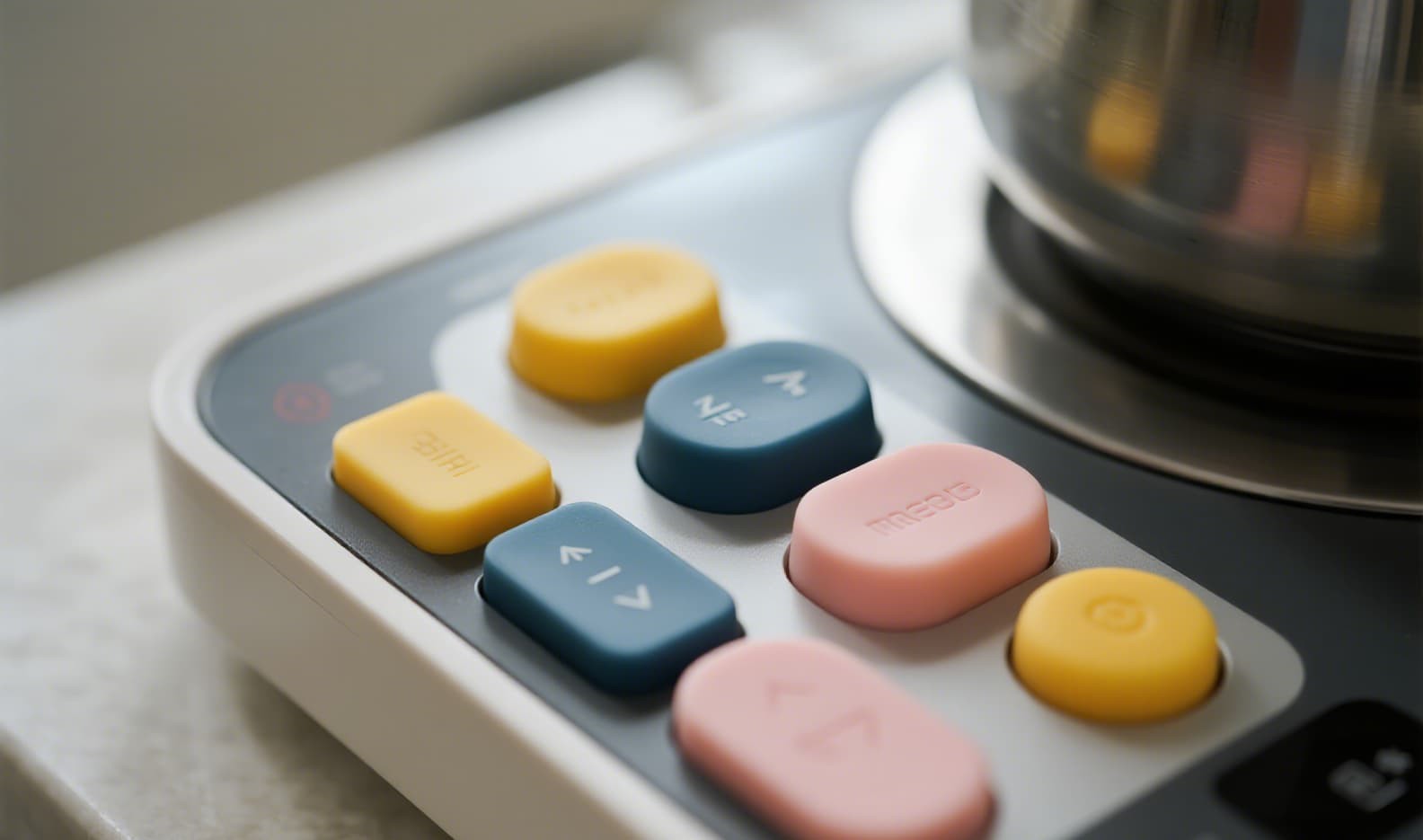
This is what happens when post‑cure is skipped — volatiles remain trapped, and the cross‑linking reaction is incomplete.
Silicone Keypad Technical Analysis
This is caused by the absence of post‑cure (secondary vulcanization). After primary molding, the cross‑linking reaction is not fully complete, and low‑molecular‑weight volatiles remain trapped inside the silicone.
According to FromRubber’s Silicone Keypad Custom Molding Best Practices, post‑cure is essential to remove volatiles and enhance performance.
What Happens During Post‑Cure?
The parts are placed in an oven at 200°C for 2–4 hours. This completes the cross‑linking reaction and drives off residual low‑molecular‑weight species.
(Press + 180°C)
(Oven 200°C × 4h)
(Odorless, Resilient)
Post‑Cure vs. No Post‑Cure
- Without post‑cure: Residual volatiles cause odor, sticky surface, sluggish rebound, and higher compression set.
- With post‑cure: Volatiles are driven off, cross‑linking is maximized, resulting in dry feel, crisp rebound, and long‑term dimensional stability.
Real‑World Case Studies
Automotive mount silicone keypads – A batch was rejected by the customer due to strong odor and sticky feel.
The factory quickly ran the batch through a 200°C×4h post‑cure process. Odor disappeared, feel became dry and snappy, and the parts passed customer acceptance.
Premium medical device keypad – The client required odorless, high‑rebound, long‑life silicone parts.
The parts consistently passed odor tests, maintained rebound over 1M cycles, and the client reported zero odor‑related complaints over 2+ years of production.

Actionable Solutions – The FromRubber Post‑Cure Protocol
Post‑cure is not optional — it is a mandatory step for any product that demands odorlessness, high rebound, or long lifespan.
-
1
Specify post‑cure on your drawing – Add a note: "Post‑cure at 200°C × 4 hours minimum." Don't assume it's included — make it explicit.
-
2
Validate with an oven profile – Ensure the oven temperature is stable across all parts. Use a thermocouple to verify actual part temperature reaches 200°C.
-
3
Require a post‑cure certificate – Ask your supplier to provide documentation confirming time, temperature, and batch traceability for every production lot.
-
4
Test for odor and rebound – After post‑cure, perform a sealed‑bag odor test (60°C×2h) and measure rebound height. These simple tests confirm the process was effective.
-
5
Don't skip to save cost – Skipping post‑cure might save a few cents per part, but the cost of returns, complaints, and lost reputation far outweighs the saving.
-
6
DFM review of post‑cure strategy – Send your quality requirements to FromRubber’s engineering team. We recommend the optimal post‑cure time, temperature, and validation method for your specific product — all within 24 hours.
The Bottom Line
Post‑cure is the invisible difference between a silicone keypad that smells, sticks, and fails early — and one that feels dry, rebounds crisply, and lasts for years.
The process is simple: 200°C × 2–4 hours in an oven. The benefits are profound: odor elimination, improved rebound, lower compression set, higher tear strength, and longer lifespan.
Skipping post‑cure to save a few cents per part is a false economy. The cost of customer complaints, returns, and lost reputation far outweighs the small oven cost.
FromRubber ensures that every silicone keypad we produce undergoes thorough post‑cure — because we believe that quality is not a luxury, it's a baseline. On your next project, let our engineering team help you build post‑cure into your process from the start.