Multimeter conductive silicone keypads lag tact switches? How to get 1M-cycle silicone key life?
- Share
- Issue Time
- Aug 20,2026
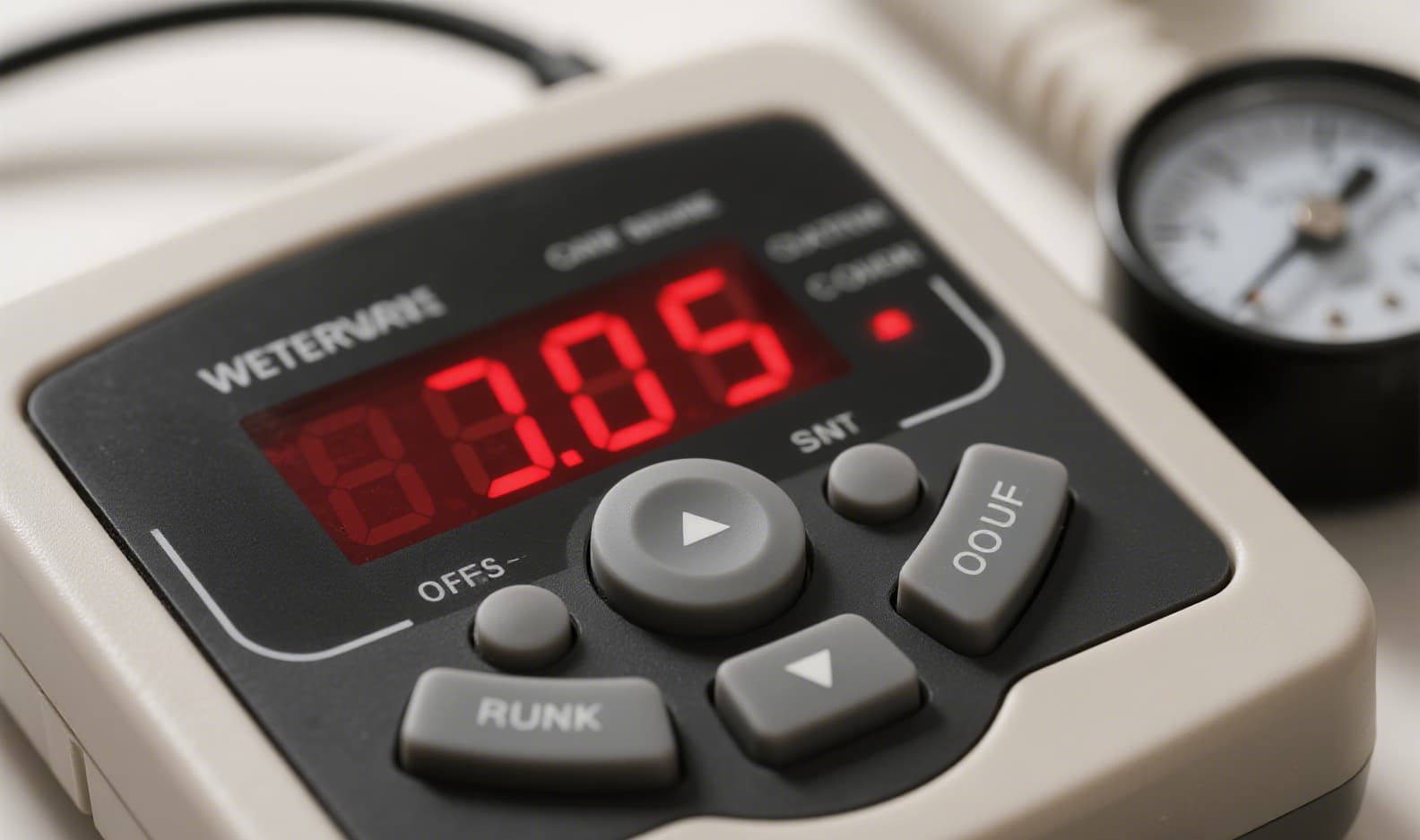
A multimeter’s rotary switch outlives the whole instrument. But the pushbuttons? That’s where the warranty claims come from. I’ve torn down units from three major brands—Fluke, Keysight, and a cheaper Chinese OEM—and the pattern is consistent: rubber keypads that feel “mushy” by year three, or tact switches that start double-triggering after a few thousand actuations in a dusty workshop.
What 1M cycles actually means for a multimeter conductive silicone keypads
Let’s be realistic about usage. A bench multimeter might see 50 presses a day—that’s about 18k a year. 1M cycles is 55 years of bench use. Nobody keeps a meter that long. But in production test lines, where a unit runs 24/7 and operators hammer the HOLD and RANGE buttons, 1M cycles gets burned through in 18 months.
So when an OEM says “we need 1M cycles,” what they usually mean is: “We need the button to feel and perform the same on month 18 as it did on day one.” And that is a very different engineering problem than just hitting a cycle count.
The failure modes of multimeter conductive silicone keypads we actually see
We have a shelf of failed samples from clients. Here is what kills conductive rubber in multimeters, in order of frequency:
The button still conducts. But instead of 100Ω, it reads 800Ω. For a logic-level input that triggers at 500Ω, you get intermittent missed presses. The root cause is usually a carbon pill that was over-compressed during molding—the carbon particles get crushed, not aligned. We see this in single-shot molded parts where the pill hardness matches the web. Bad idea.
Silicone takes a compression set. At 500k cycles, if the air vent under the dome is too small or blocked by flash, trapped air acts like a spring that fights the silicone—and the silicone loses. The stroke drops from 1.0mm to 0.5mm, and the PCB contact never fully bridges.
The pill isn’t sliding—it’s striking vertically. But the strike is never perfectly vertical. Over time, the edge of the pill mushrooms outward, especially if the plunger guide lacks a draft angle. That spreading changes the contact area, and the resistance goes non-linear.
Tact switches don't have these problems because the contact is a sealed metal dome. But tact switches have their own failure: the dome’s snap force drops by 30% after 300k cycles, and the click becomes a dull thud. Users hate that more than a soft rubber feel, because they expect a click and don’t get it.
How we got a multimeter conductive silicone keypads past 1M cycles
We worked with a handheld DMM manufacturer last year. Their existing rubber keypad was failing at 200k–300k cycles in their automated tester. They had already started qualifying a tact-switch alternative when they sent us a box of failed units.
We didn't pitch them a replacement. We asked for two weeks to run failure analysis on their parts and propose a modified design that fit their existing PCB and membrane layout.
Step one: identify the mismatch.
Their conductive pill was 75 Shore A, same as the web. That made the whole keypad stiff, but the pill had no independent compliance. When the user pressed, the web flexed, but the pill hit the PCB like a hard plastic plunger—high impact velocity, low contact dwell time. That eroded the carbon surface.
We suggested a two-durimeter approach: 50 Shore A for the web and 60 Shore A for the pill, molded together in a single shot using a transfer-molding technique we already use for medical devices. The softer web absorbs the finger energy; the slightly harder pill maintains a crisp contact geometry.
Step two: increase over-travel without changing total height.
Their PCB contact gap was 0.6mm. Total stroke was 1.0mm. That left only 0.4mm of over-travel after the dome snapped. We redesigned the dome profile to a truncated cone with a longer skirt, keeping the same 1.0mm total travel but shifting the snap point later—so actuation happened at 0.55mm and over-travel became 0.45mm. Small change, big difference in impact deceleration.
Step three: venting.
We added a micro-channel (0.1mm deep, 0.5mm wide) from under the dome to the outside of the keypad. That lets air escape instantly, so the silicone doesn't fight its own trapped pressure. Cycle 800k became the new baseline instead of the failure point.
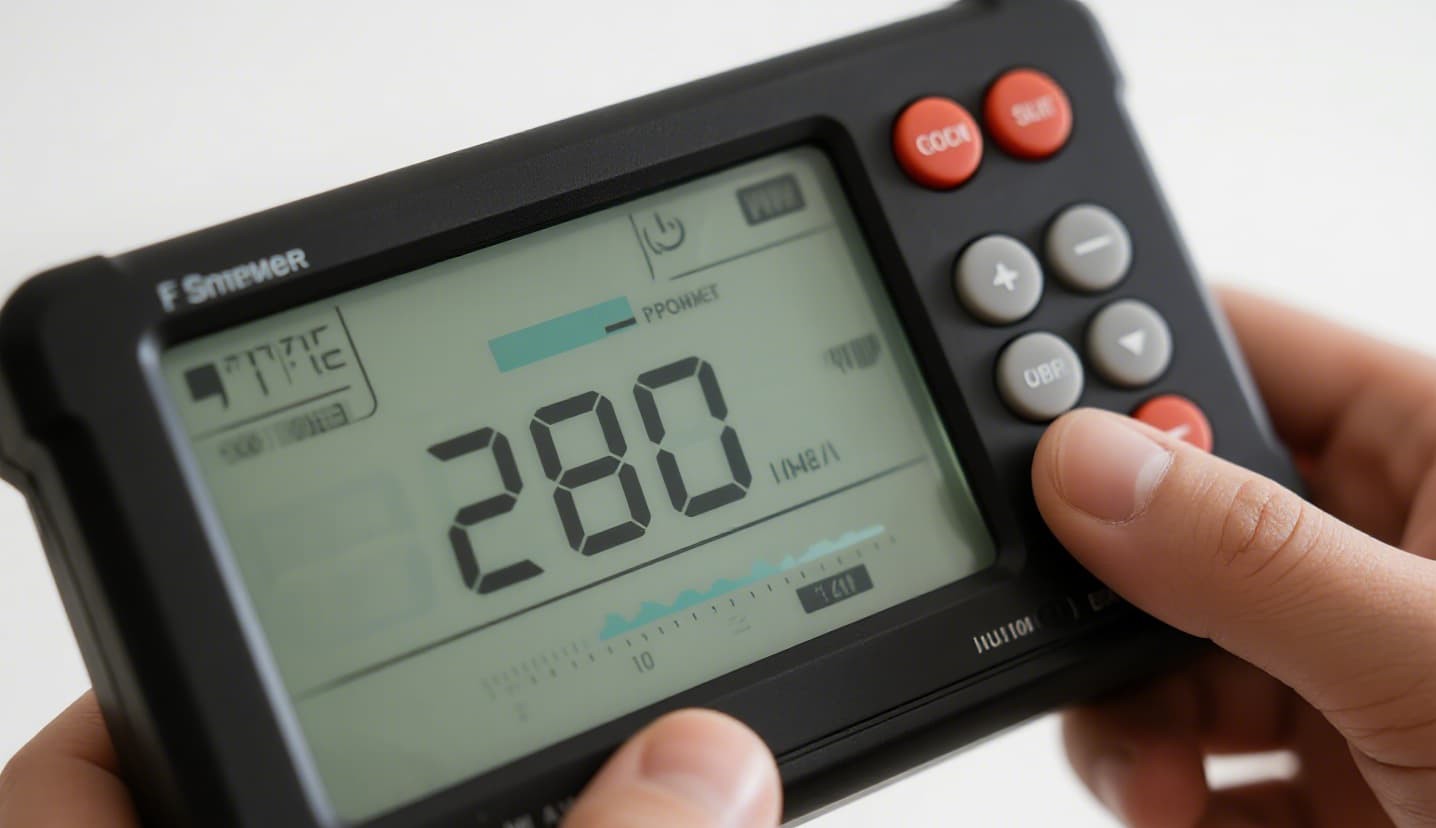
Result: We ran their modified samples on our six-station cycle tester at 2Hz, with 110% of rated actuation force. At 1.02M cycles, the contact resistance had drifted from 80Ω to 112Ω—well within their 200Ω threshold. The snap feel dropped by 12%, which was noticeable but not objectionable.
They kept the tact-switch PCB layout as a fallback, but they ordered the rubber tooling for the new design. Cost difference? The rubber keypad came out $0.14 cheaper per unit at 50k annual volume, because they no longer needed a separate silicone boot over each tact switch.
A practical checklist for your next multimeter silicone keypad
This is what we now use as our internal design rule for handheld instruments that need 1M cycles:
When we tell clients to use tact switches anyway
We are not anti-tact. If your multimeter has:
then tact with a sealed boot is the safer path.
But for the majority of handheld meters—4 to 8 buttons, IP54 or better, and a 3-to-5-year expected service life—a well-designed silicone keypad outlasts a tact switch in real-world field conditions, because it doesn't have a mechanical snap spring that fatigues, and it doesn't have an open gap that lets solder flux or talc powder creep in.