What is a P+R (plastic + rubber) keypad and what are its advantages?
- Share
- Issue Time
- Sep 9,2026
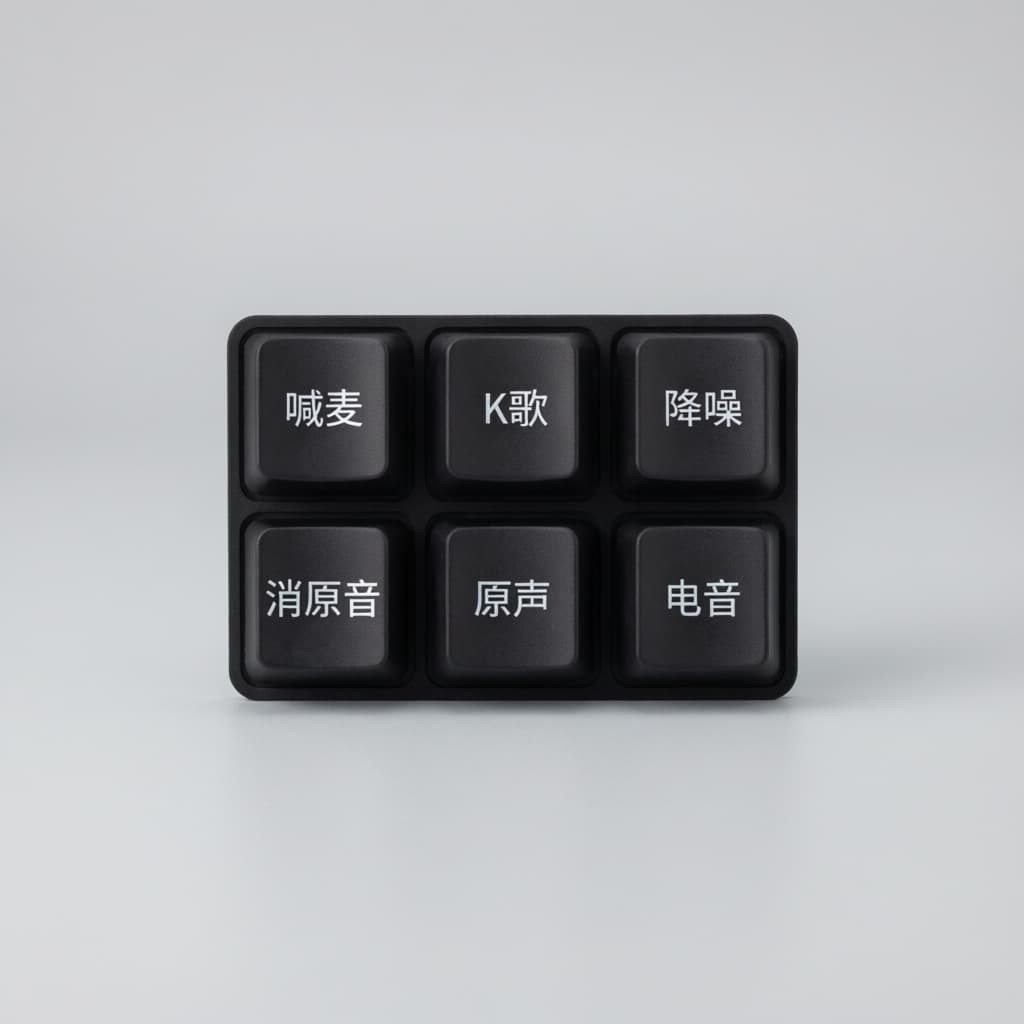
What is a P+R (plastic + rubber) keypad and what are its advantages?
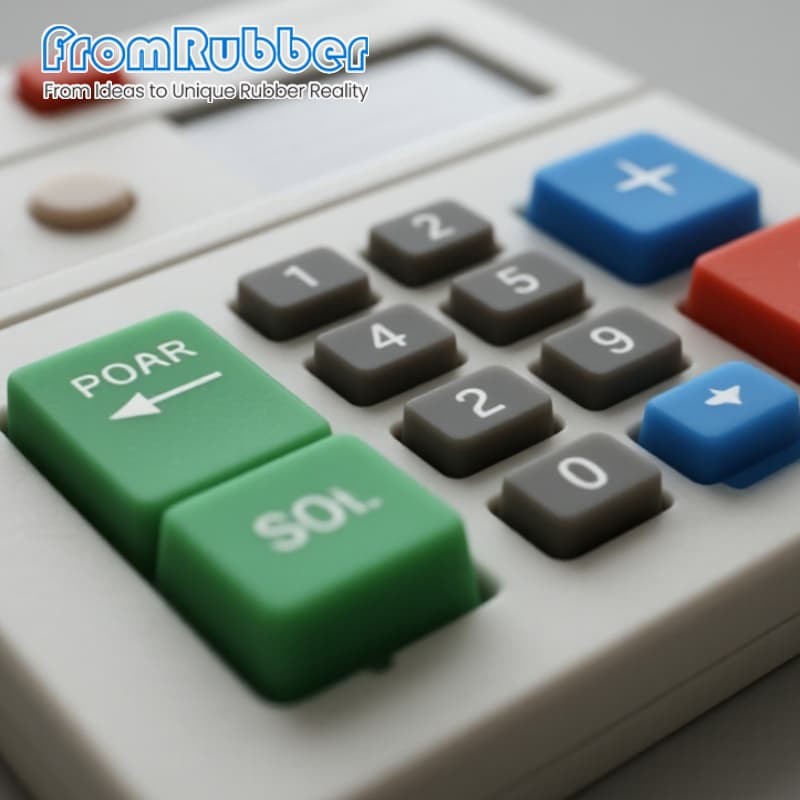
Detailed Explanation: Structure and Manufacturing
A P+R keypad is built in two material systems and then married into one component:
- Plastic keycaps. Injection-molded from ABS (cost-effective, easy plating), PC (impact and heat resistance, optical clarity for backlighting), or PBT (best wear and UV resistance, stable at automotive temperatures). The cap carries the legend - silk-screened, pad-printed, laser-etched through a spray coat, electroplated, or UV-coated - and defines the visible geometry, gloss, and color of the key.
- Silicone rubber base. Compression-molded (or LSR-injected) key bodies with engineered webbing provide travel, actuation force, return force, and the conductive pill or dome interface to the PCB. The silicone mat can be extended into an integral sealing lip for IP54–IP67 ratings.
- Joining. Caps are attached by adhesive bonding (flexible, suits multi-color and complex shapes) or by insert molding / mechanical undercut hooks (strongest, no glue line to age). FromRubber qualifies bond strength per lot with a pull-off test - a well-made P+R joint survives 1 million actuations with zero cap delamination.
Because the switching function stays in the silicone (carbon pill, gold pill, or metal dome), the plastic layer is purely cosmetic and ergonomic - which is exactly why it can be optimized for appearance without compromising electrical reliability.
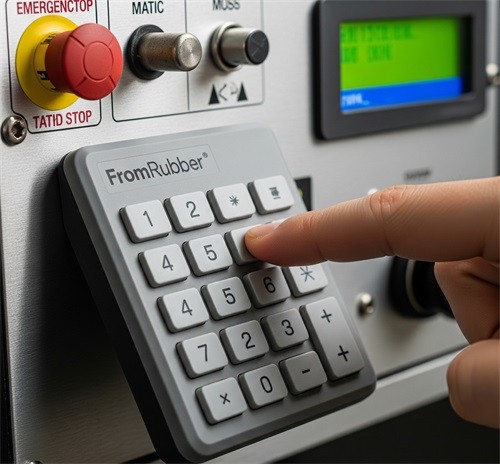
Case Study: Automotive Steering-Wheel Module Keypad
European EV steering-wheel control module, 14 keys, -40 to +85 °C
A Tier-1 supplier for a European EV program specified a steering-wheel control module with piano-black caps, backlit icons, and a 10-year / 1 million-press durability target - a cosmetic and lifecycle brief that a printed full-silicone keypad cannot meet (silk-screen legends on silicone fade under dashboard UV, and glossy deep-black silicone shows flow marks).
FromRubber engineered the module as PC caps with a hard-UV topcoat, laser-etched through a dark spray layer for backlit icons, insert-molded onto a Shore A 50 silicone base with nickel-gold conductive pills. Key pitch was held to ±0.05 mm across the curved two-row layout. Validation: 1.5 million actuations per key at -40 °C and +85 °C with no cap lift, icon contrast loss under 3% after 1,000 h UV, and snap ratio maintained between 1.4 and 1.6. The two-mold tooling investment (silicone compression tool + PC injection tool) was amortized across the program in under 11 months at an annual volume of 180,000 sets.
Data: P+R vs. Full Silicone vs. Full Plastic Keypads
| Parameter | P+R Keypad | Full Silicone Keypad | All-Plastic Keypad |
|---|---|---|---|
| Structure | Plastic caps + silicone base | One-piece molded silicone | All-plastic, mechanical scissors/dome |
| Appearance | Premium; gloss, plating, laser icons | Soft, simple, matte | Rigid, glossy, consumer look |
| Tactile feel | Balanced, responsive, consistent | Soft, elastic, rubber-like | Hard, limited feedback |
| Legend durability | Excellent (laser etch / plating on cap) | Moderate (printed ink on elastomer) | Good (printed on rigid surface) |
| Key life | > 1,000,000 cycles | 1 – 5 million (pill dependent) | 300,000 – 1 million |
| Backlight uniformity | Excellent (translucent caps + LGF) | Good (etched windows) | Limited |
| Sealing (with gasket design) | Up to IP67 | Up to IP67 | IP54 typical, hard to seal |
| Temperature range | -40 to +85 °C (PBT/PC caps) | -50 to +200 °C | -20 to +80 °C (ABS limited) |
| Tooling / unit cost | High / medium-high | Low / low | Medium / medium |
| Typical applications | Automotive, medical, POS, premium HMI | Consumer remotes, industrial, cost-sensitive | Household, computing peripherals |
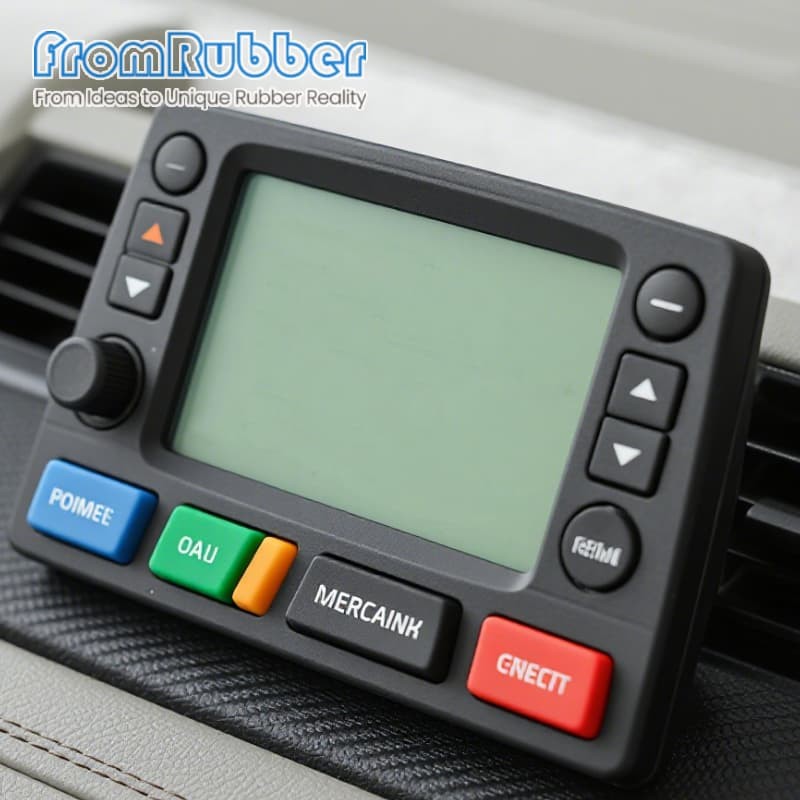
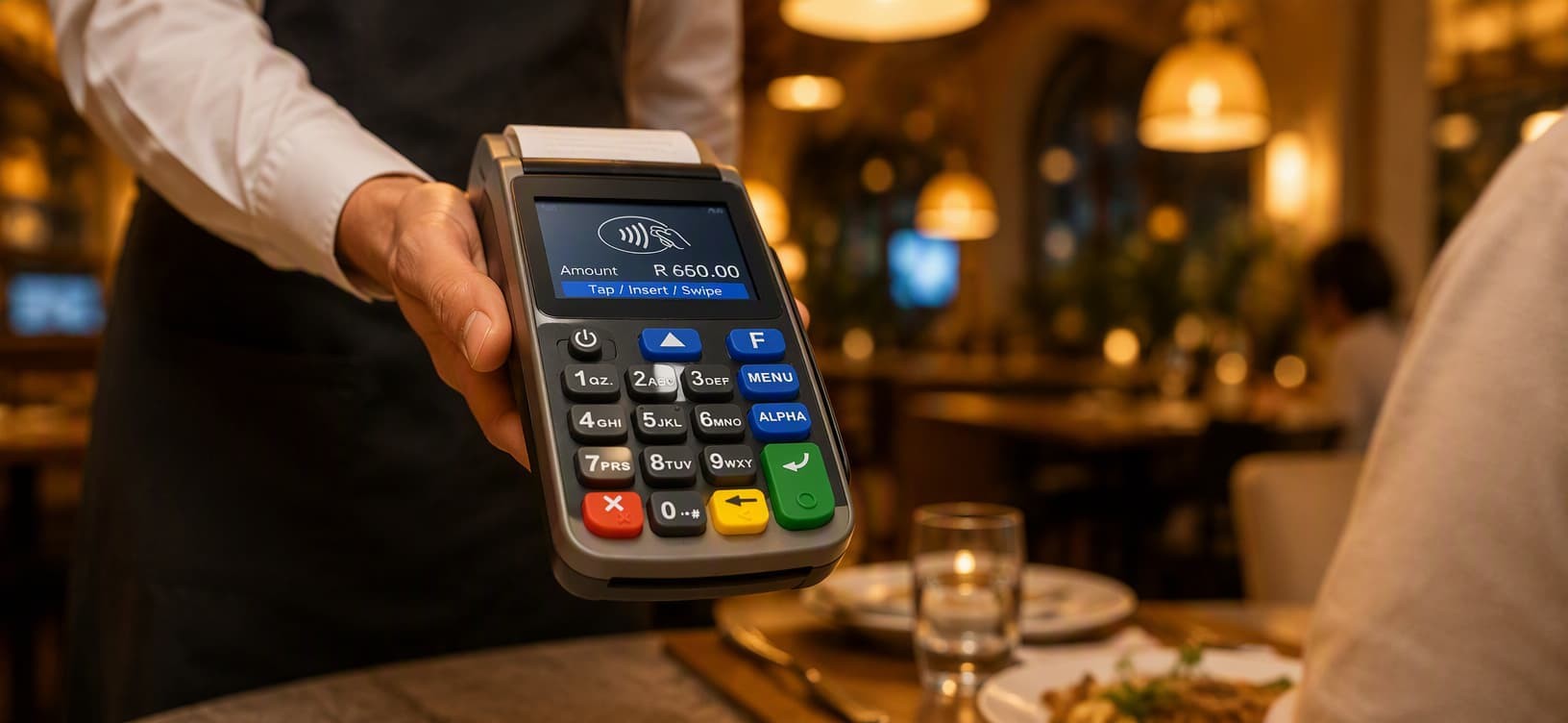
Case Study: POS Terminal Keypad Built for High-Traffic Retail
Payment terminal, 20 keys, 8 million presses over 7-year service life
A Latin-American POS terminal manufacturer was replacing worn-out full-silicone keypads every 18 months: cashier-thumb abrasion on the most-used keys (1, 4, 7, ENTER) wore legends off and polished the silicone surface shiny. FromRubber converted the design to P+R with PBT caps (1.5 mm wall) pad-printed then PU-coated, adhesive-bonded onto the existing silicone mat geometry, so the customer's PCB and enclosure stayed unchanged.
Result: Taber abrasion testing (ASTM D4060, CS-10 wheel, 1 kg) showed 92% less legend density loss than the previous silicone-print version, and a 40-cashier pilot across 6 months recorded zero cosmetic failures. The upgrade added US $0.42 per unit and extended the keypad service interval beyond the 7-year terminal life - eliminating an estimated 2.4 warranty keypad replacements per terminal over the product cycle.
When NOT to Choose P+R
P+R is not automatically the better keypad. Choose full silicone instead when: the product is cost-driven (remotes, toys, basic appliances); the annual volume is below roughly 30,000 units and cannot amortize the second mold; the key count is very high (60+ keys) making cap assembly labor dominant; or extreme temperatures above 150 °C are involved, where plastic caps deform but silicone survives. FromRubber produces both technologies in-house and quotes both options when the brief is ambiguous - many customers are surprised how close full silicone with laser etching comes to P+R cosmetics at a fraction of the tooling cost.
CONTACT US · Request a P+R vs. Silicone Sample Kit
Related Questions
P+R or Full Silicone Keypad?
A 5-factor decision framework for choosing between hybrid and all-rubber designs.
Waterproof IP67 Plastic Rubber Keypads
How sealing lips, gaskets and dome carriers reach IP67 in composite keypads.
Backlighting for Silicone Control Panels
Light guide film, LED coupling and etched windows for uniform illumination.