What is silicone compression molding and which parts suit it best?
- Share
- Issue Time
- Sep 10,2026
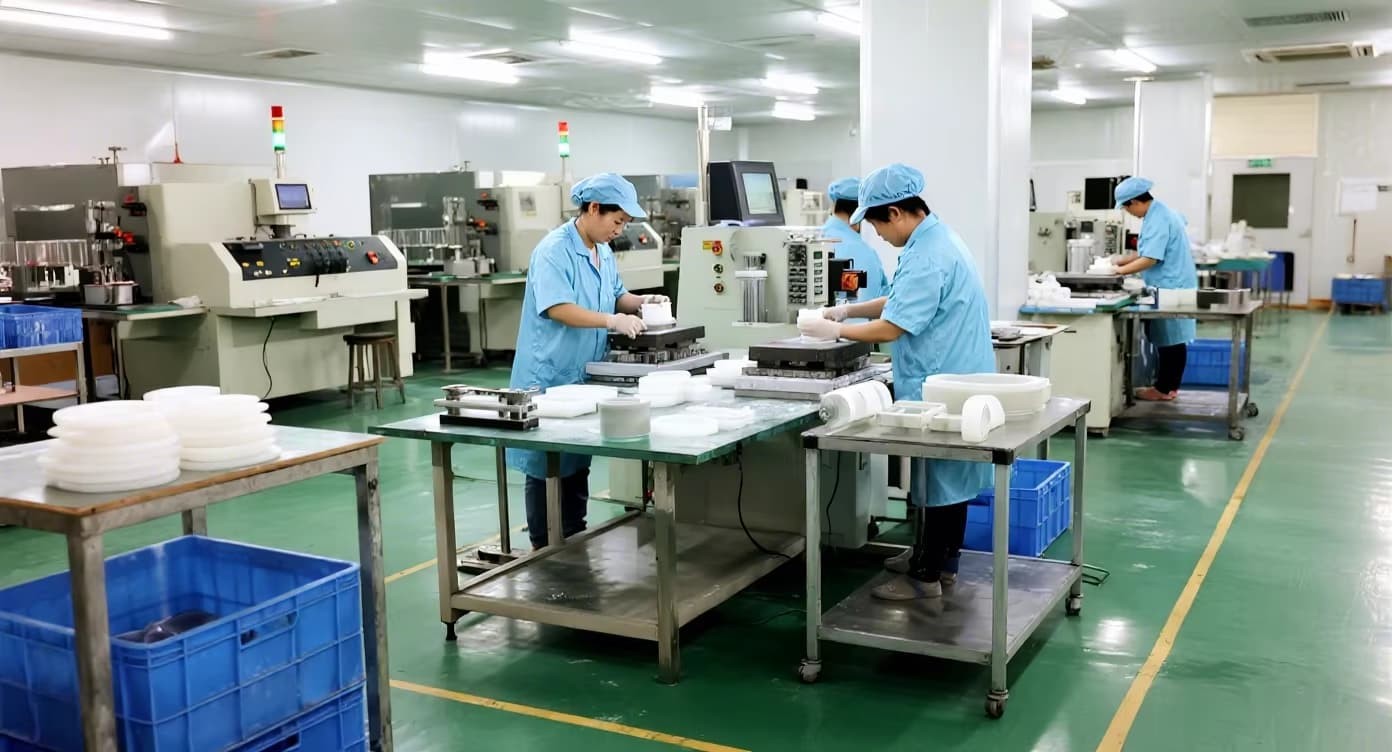
Compression molding is the foundational process for custom silicone rubber manufacturing. It predates injection molding and remains the most cost-effective and flexible method for many silicone part categories. Understanding when to choose it — and when to choose LSR injection molding instead — is a decision FromRubber makes with every new project during DFM review.
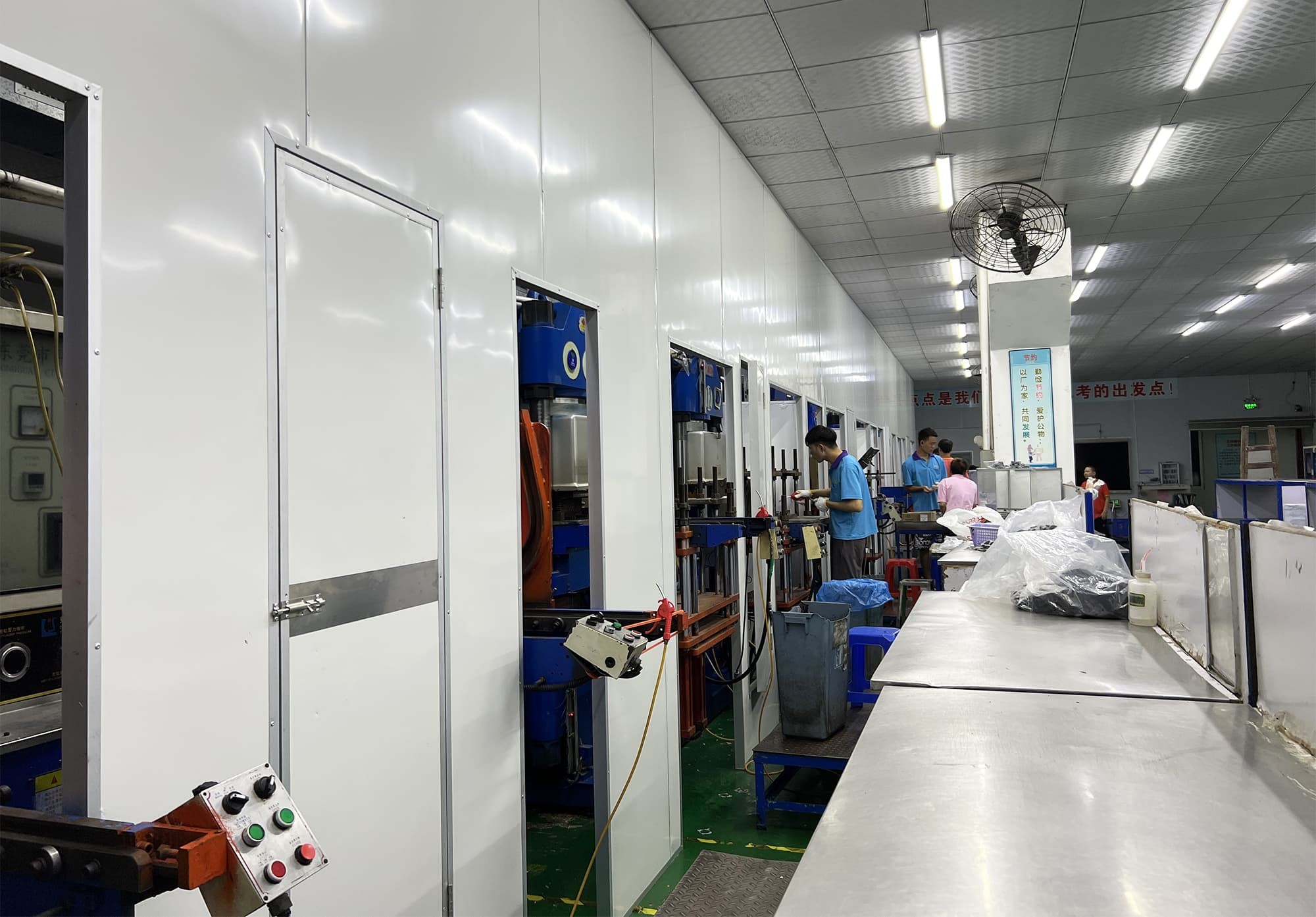
How silicone compression molding works
The process is straightforward in principle but demands precision in execution. Here is the step-by-step cycle FromRubber runs on every compression molding job:
HCR silicone is mixed with catalysts, pigments, and any fillers (e.g., conductive carbon) on a two-roll mill. The mixed compound is weighed and pre-formed into a blank sized to fill the mold cavity.
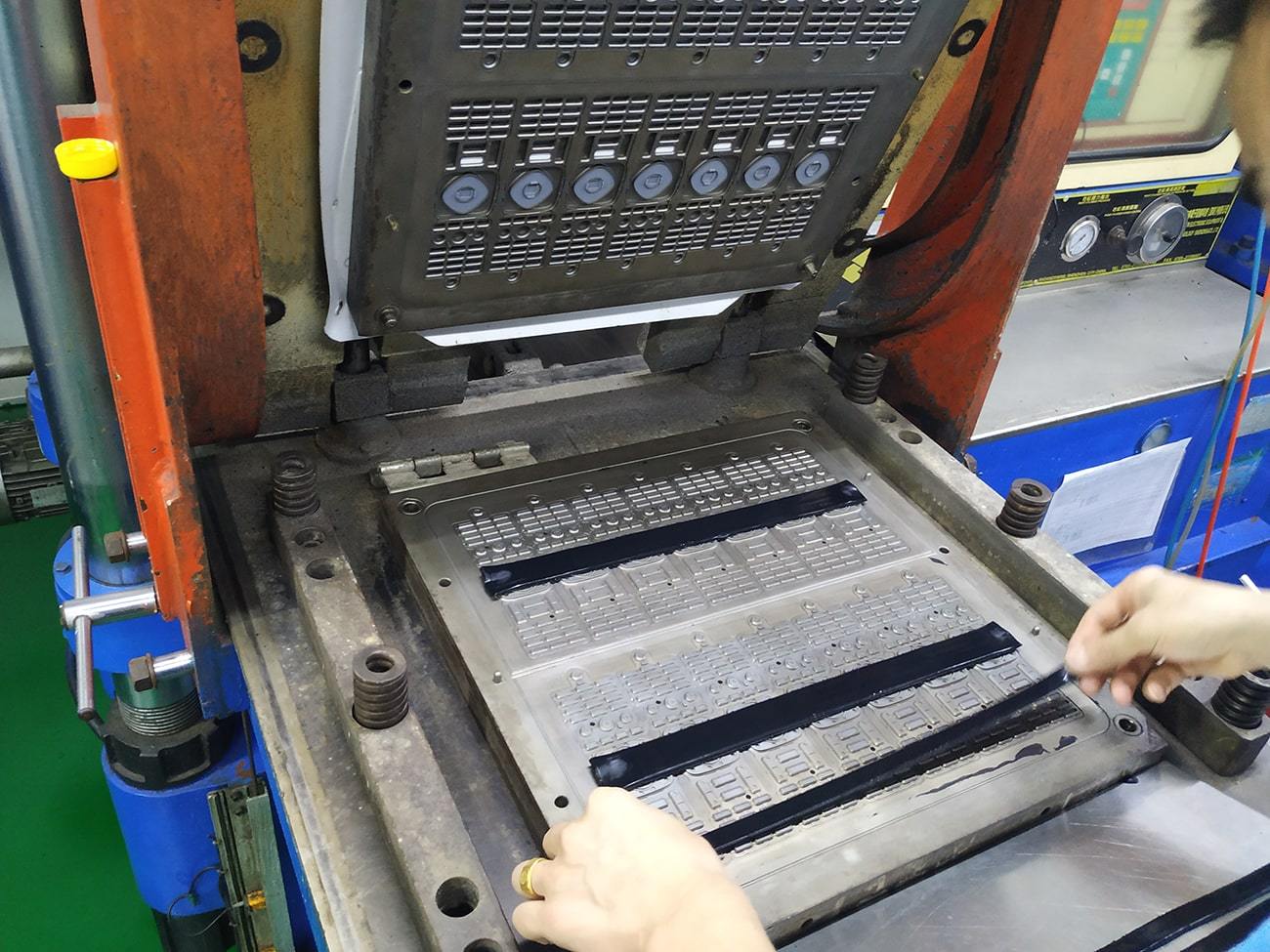
The pre-formed blank is placed into the lower half of a heated steel mold. The press closes the upper mold half onto the lower, applying 5-15 MPa of pressure. The mold temperature is held at 160-180 degrees C.
Under heat and pressure, the silicone cross-links — its polymer chains bond into a three-dimensional network. Cure time ranges from 1-10 minutes depending on part thickness, with typical cycle times of 3-6 minutes for medium parts.
The press opens and the cured part is removed. Draft angles on the mold (minimum 1 degree) allow clean release without tearing. Flash (excess material at the parting line) is trimmed manually or by cryogenic deflashing.
Parts are post-cured in an oven at 200 degrees C for 2-4 hours to remove residual peroxide byproducts and complete cross-linking. Secondary operations — printing, coating, assembly — follow as needed.
Which parts suit compression molding best
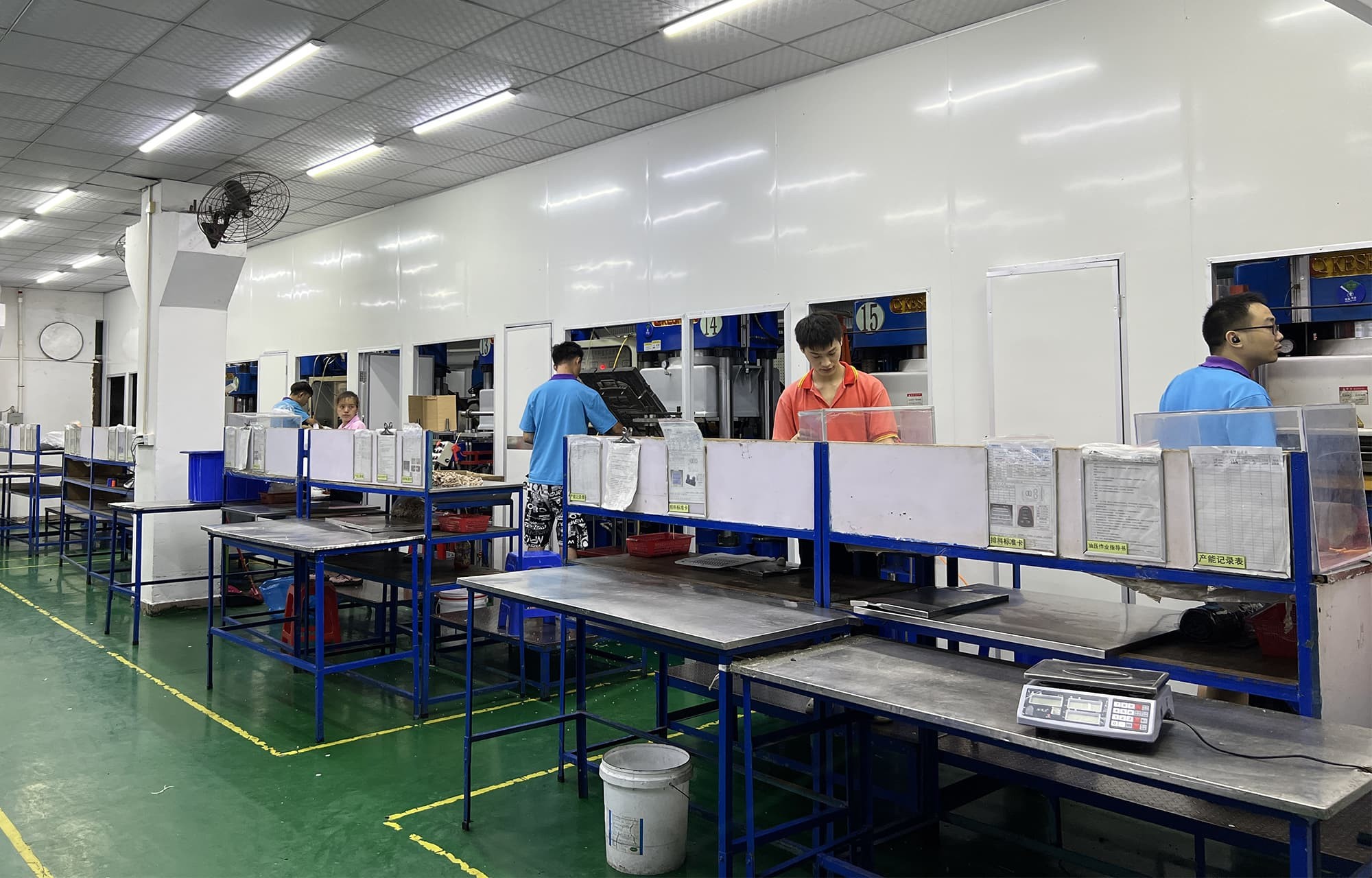
Compression molding is the right process for a specific family of silicone parts. FromRubber manufactures all of the following on compression presses:
When to choose compression molding vs LSR injection molding
Production volume is low to medium (500-50,000 pieces). Tooling cost is a primary concern (compression molds cost 40-60% less than LSR injection molds). The part uses HCR silicone rather than liquid silicone. The part is medium-to-large in size or has thick-walled sections. You need to overmold onto a substrate that cannot withstand LSR injection temperatures.
Volume is high enough (50,000+ pieces) that shorter cycle time reduces overall cost. The part has very thin walls or complex internal features. Shot-to-shot consistency across large batches is the priority. The part requires liquid silicone rubber's lower viscosity for fine detail reproduction.
Case study: compression molded enclosure gasket
An industrial equipment manufacturer needed a custom IP65-rated enclosure gasket for a new line of outdoor power distribution units. The gasket had a complex D-shaped cross-section with an integrated mounting flange — too complex for extrusion, but the projected volume of 8,000 pieces per year was too low to justify a $15,000 LSR injection mold.
FromRubber recommended compression molding with a single-cavity steel mold at $2,200 tooling cost. The material was a Shore A 50 high-tear silicone rated for continuous outdoor use. Cycle time was 4 minutes per part. At 8,000 pieces per year, the unit cost was $0.85 including post-cure and deflashing. The same part on LSR injection would have cost $0.42/unit but required $15,000 tooling — meaning compression molding was cheaper until cumulative volume exceeded 38,000 pieces (nearly 5 years of production at the projected rate). The gasket passed IP65 testing on the first submission and has been in continuous production for 18 months.
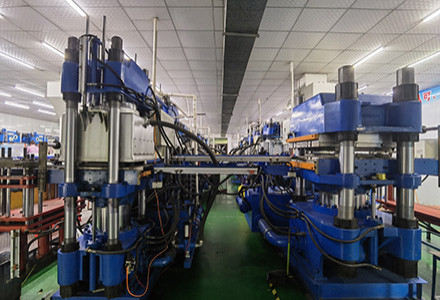
Compression molding specifications and tolerances
FromRubber runs both compression and LSR injection molding in-house. During DFM review, we recommend the process that gives you the best total cost of ownership — not the process that is easiest for us. For most custom silicone parts under 50,000 pieces per year, compression molding is the right answer.
Related questions
What is the difference between injection molding and compression molding? →
How to find a reliable custom molded silicone parts manufacturer? →
What tolerances can compression molded silicone rubber parts achieve? →