Can silicone pads be made heat resistant for kitchen appliances?
- Share
- Issue Time
- Oct 7,2026
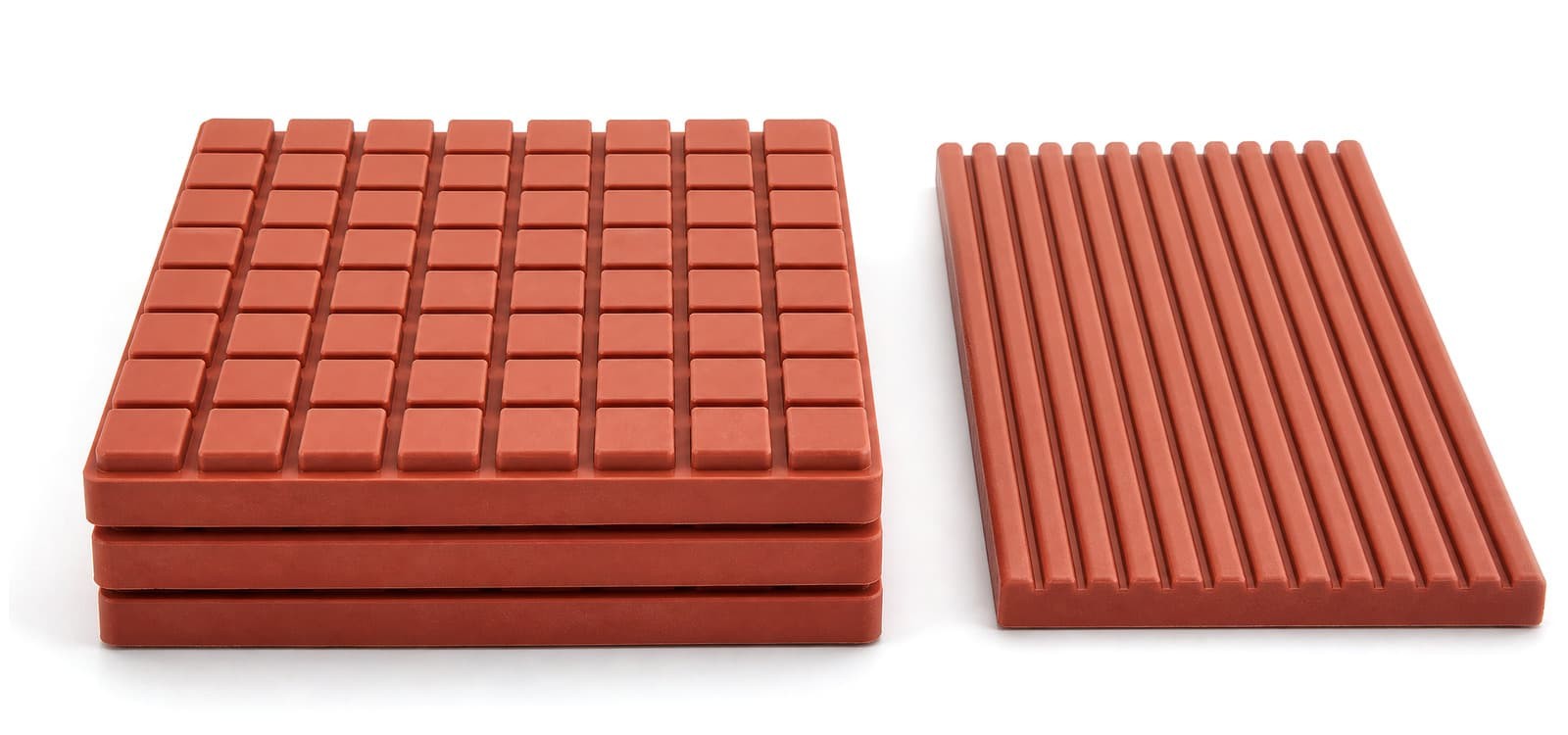
A hot air fryer basket or a pan fresh from a 220°C oven will scorch quartz, wood, and laminate countertops within seconds. That is the everyday engineering problem kitchen silicone pads solve. But "heat resistant" is not a single rating - it is a combination of compound quality, cure system, thickness, and geometry. Here is how to specify a pad that survives years of real kitchen abuse without warping, staining, or smelling.
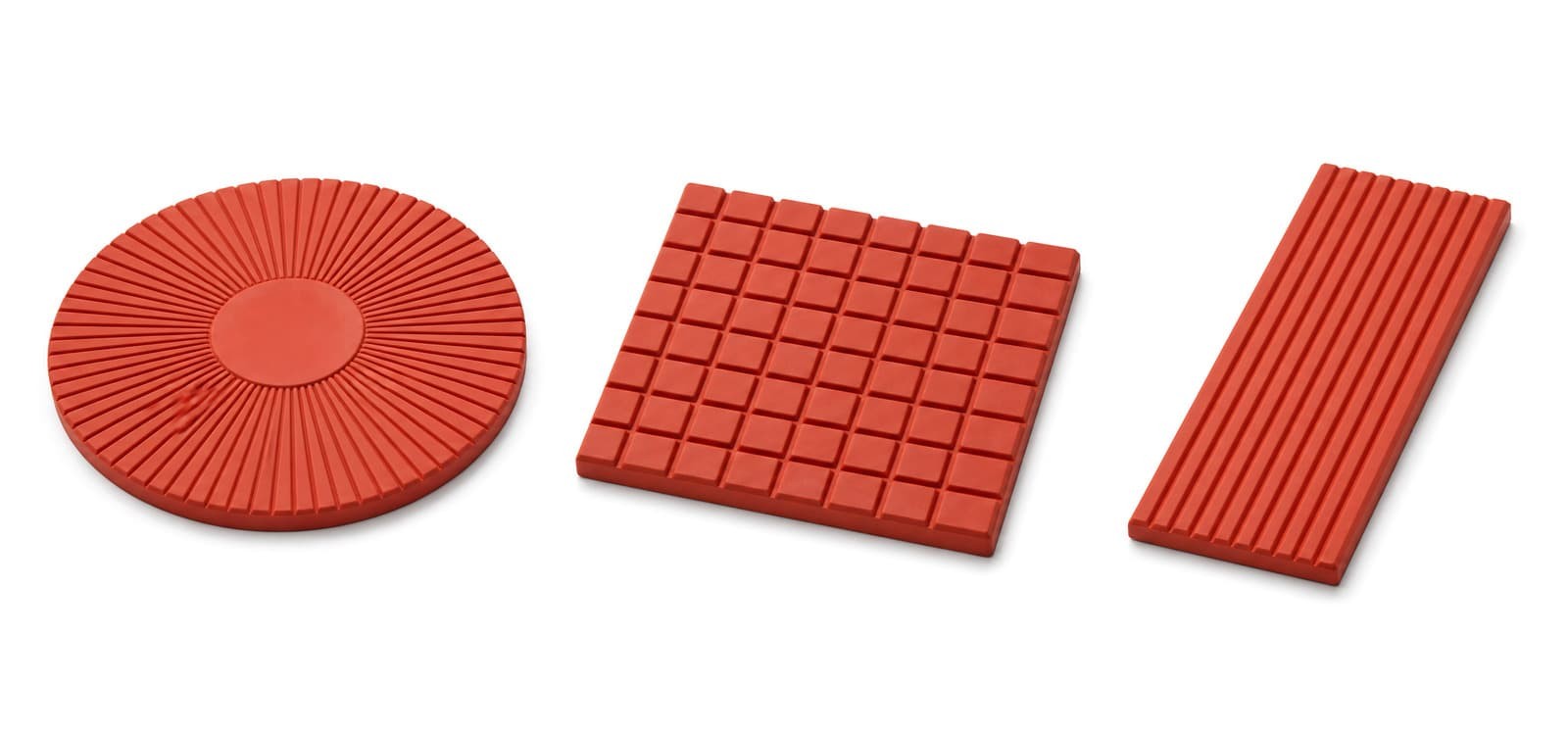
What makes a silicone pad genuinely kitchen-safe
Standard food-grade VMQ handles -40°C to +230°C continuously. High-temperature grades with optimized peroxide or platinum cure systems tolerate 260-300°C short peaks - important for pads that sit directly under broiler-adjacent cookware. Always ask for the compound's continuous rating, not just its peak.
FDA 21 CFR 177.2600 covers the US market; LFGB (German Food and Feed Code) is the stricter EU benchmark and includes a odor-transfer and overall-migration panel. BPA-free, PVC-free, and phthalate-free declarations should accompany every shipment lot.
3-4 mm suits light cookware and air fryer bases; 6-8 mm honeycomb or geometric patterns carry cast iron and stockpots without squashing flat. Air channels in the pattern also block conducted heat before it reaches the counter.
Silk-screened logos fade after months of dishwasher cycles. Embossed or debossed logos are molded into the surface and never disappear - the right choice for cookware brands and kitchenware retailers.
A proper 4-8 hour post-cure at 200°C drives off residual volatiles. Skipping it is why cheap pads smell of chemicals at 200°C and turn yellow early. Insist on a supplier with logged post-cure ovens.
Case study: trivet line that survived a retailer's 500-cycle oven test
A US kitchenware brand came to FromRubber in 2025 after two failed suppliers. Their 20 cm square trivets warped and developed a chemical odor during a retail chain's incoming audit: 500 consecutive cycles of 220°C for 30 minutes followed by room-temperature cooling. Both failed suppliers had used filler-heavy recycled compound and skipped post-cure.
We re-quoted with a platinum-cured LFGB-certified VMQ, a 6 mm honeycomb body with heat-dispersing channels, and a debossed logo. Samples passed the full 500-cycle protocol with zero warpage (measured flatness deviation under 0.3 mm), zero odor transfer in the LFGB sensory panel, and color change below ΔE 1.5. The brand launched in 12,000-piece first order; after nine months on shelf, customer returns related to the mat stand at 0.2%, and reorder volume has tripled.
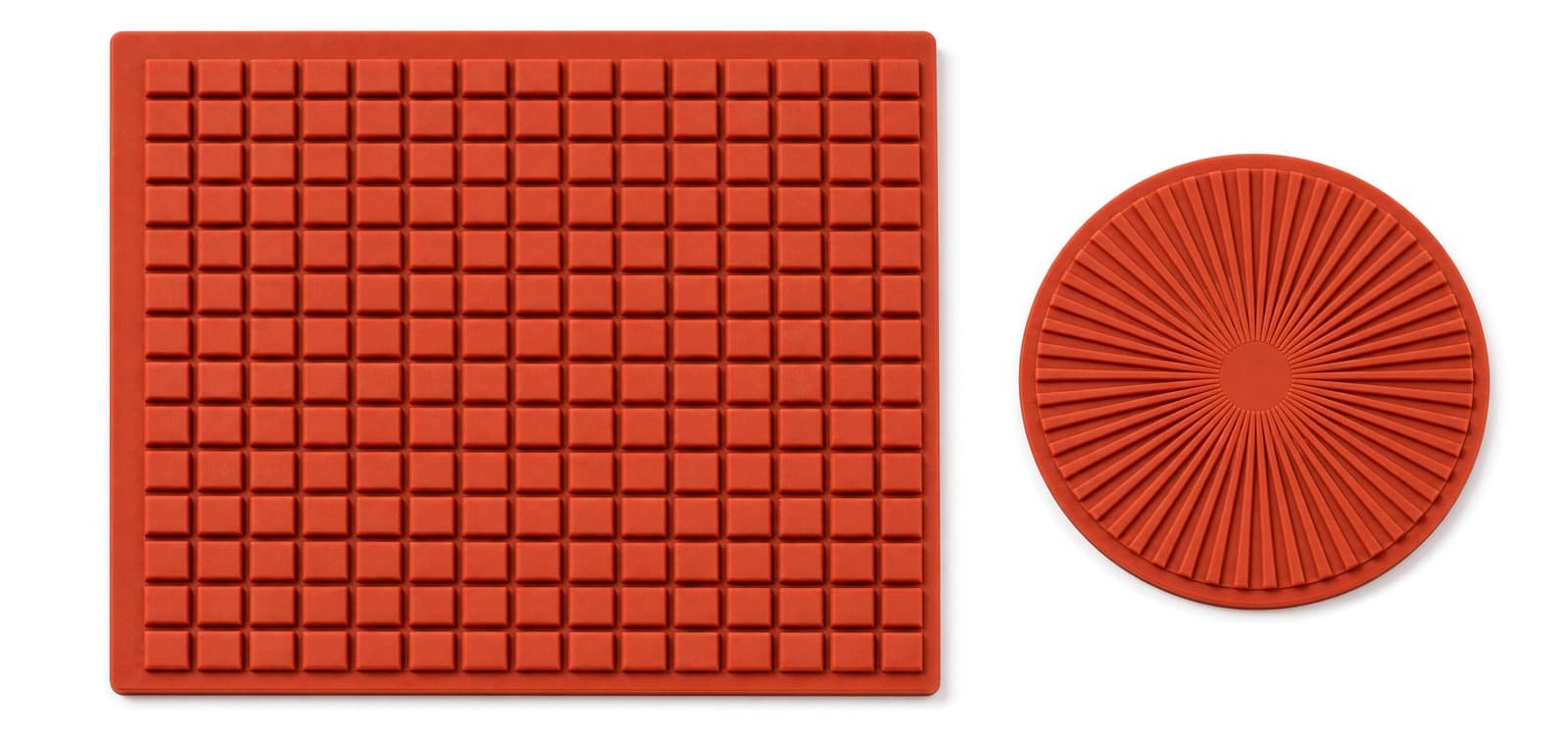
The data: heat-resistant pad options at a glance
All options above can be customized in size, Pantone color, molded logo, and packaging, and are dishwasher-safe by design. Typical OEM lead time for a custom trivet or appliance pad runs 4-7 days for samples and about 25-30 days for bulk production.