Why Does a Silicone Patch Feel Stiff on Stretch Fabric?
- Share
- Issue Time
- Oct 8,2026
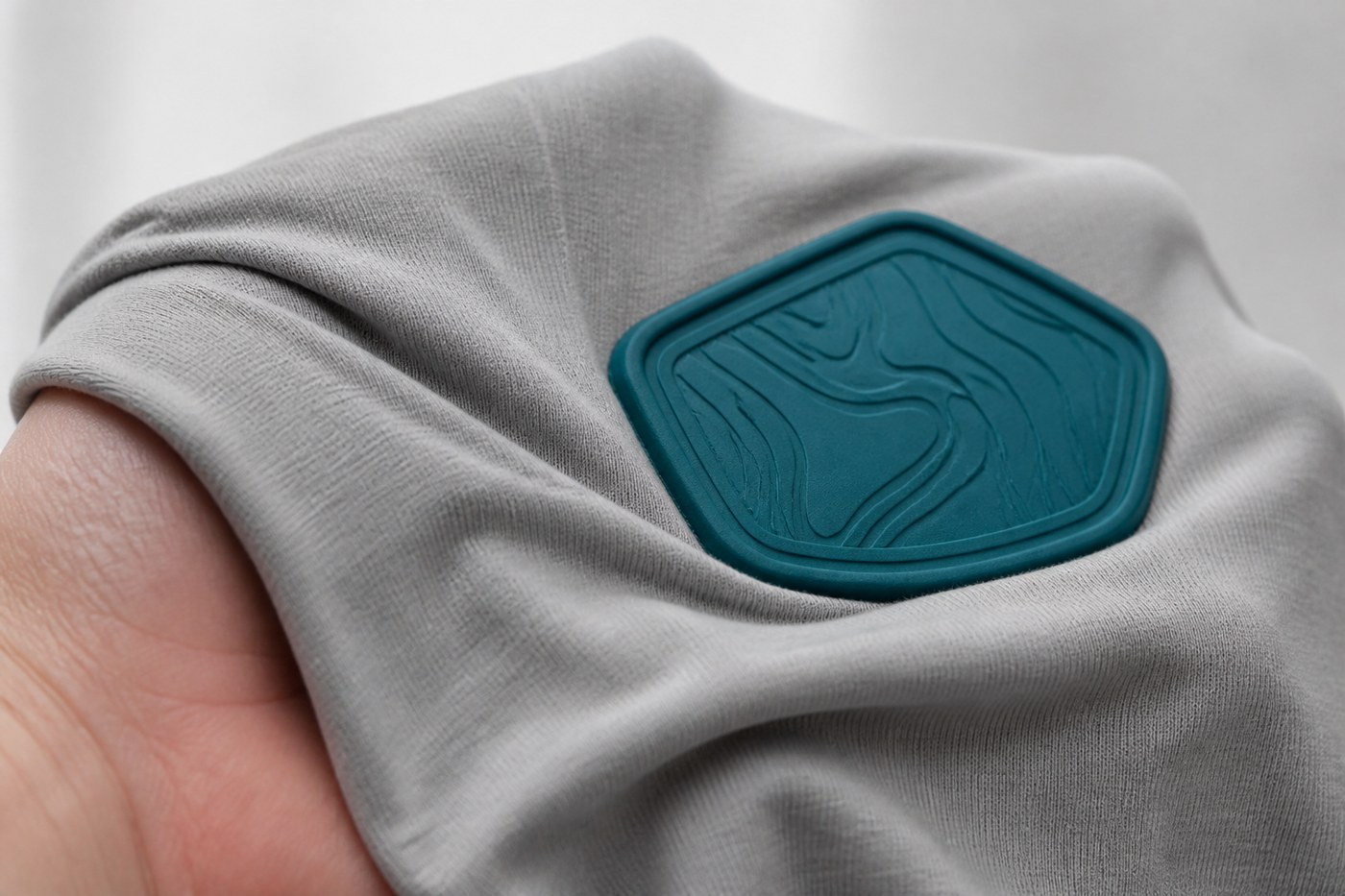
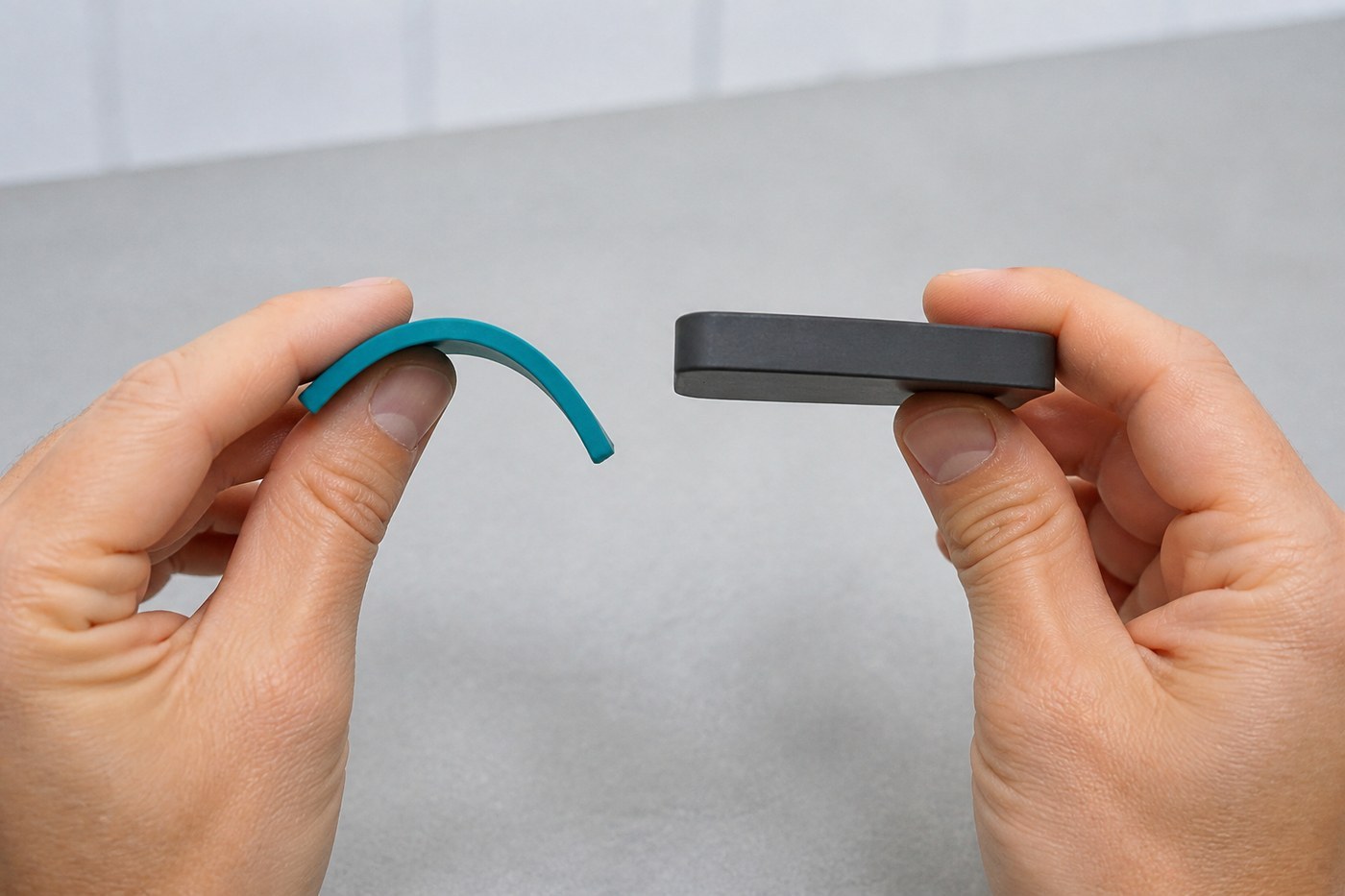
Both statements are true at once. A silicone patch can be genuinely flexible in the hand and still make a stretch garment feel rigid, because patch flexibility and garment flexibility are two different measurements.
A patch placed on a stretch knit is a small, comparatively rigid inclusion. The knit around it still extends; the patch area does not extend to the same degree. In published testing of elastic knitted fabrics, plain single jersey reached elongation at break of roughly 150–250% in the course direction and 50–150% in the wale direction. Every time the garment is worn, the fabric immediately beside the patch has to absorb the movement the patch will not take. What the wearer notices is that boundary — a crease line, a pull, or a pucker that stays after the garment comes off.
Why stretch fabric exposes it and stable fabric hides it
On a stable woven, patch and fabric behave in a broadly similar way, so the boundary stays quiet. Move towards highly elastic knits and the gap widens until the patch becomes the most noticeable feature of the panel.
- Cotton woven: low extension, little mismatch.
- Polyester woven: stable; a stiff patch is usually unremarkable.
- Polyester-elastane knit: extension in more than one direction; boundaries start to show.
- Compression knit: high extension with strong recovery, loading the patch edge continuously.
Thickness usually matters more than hardness
| Term | What it describes | Why it matters on a garment |
|---|---|---|
| Material hardness | Resistance to local indentation, measured on the Shore A scale | Sets part of the bending behaviour but not the behaviour on fabric |
| Flexibility of the part | How the patch deforms on its own when handled | Useful for packing and application; not a prediction of garment feel |
| Bending resistance in place | How patch and fabric behave together under movement | This is what the wearer actually feels |
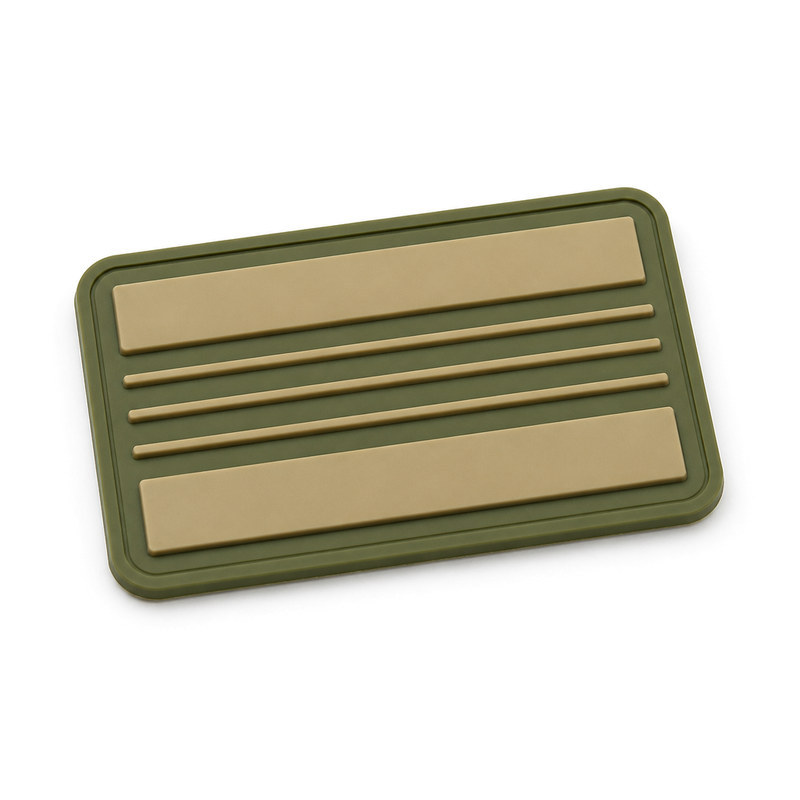
Resistance to bending rises quickly with section height, so a modest reduction in profile often changes the feel of a garment more than a noticeable change in compound. Raised elements add local height of their own: thick borders, block lettering and large three-dimensional features each resist bending in their own right, which is why a thin base layer with heavy relief can still feel rigid.
What can be adjusted to soften the effect
- Reduce overall profile height — usually the most effective single change.
- Simplify oversized raised structures, especially thick borders and heavy lettering.
- Break up large continuous solid areas where the design allows it.
- Round corners so stress does not concentrate at one point.
- Align the patch with the fabric's dominant stretch direction where the design permits.
- Review the attachment method for stiffness added by adhesive weight or press conditions.
- Reduce patch size if the brand can accept it.
Limits and how to verify
The elongation figures above are measured values from published fabric research and describe how the knit behaves, not how a specific patch will behave on it. A generic swatch from a sample box will not reproduce the problem: the fabric's composition, weight, stretch direction and recovery all change the result. Verification has to be done on the real fabric at the real position, and the question to ask afterwards is not whether the patch survived — it is whether the fabric around it recovered.
Dealing with a stiff spot on a stretch garment? FromRubber reviews profile height, compound and panel direction together — send the fabric and the patch position: nani@fromrubber.com or karl@fromrubber.com, WeChat and WhatsApp +86 18676210913. Related: custom silicone labels.
Sources
- https://www.mdpi.com/1996-1944/15/19/6512
- https://en.wikipedia.org/wiki/Flexural_rigidity
- https://en.wikipedia.org/wiki/Spandex
- https://www.astm.org/d2594-20.html