Why Does a Silicone Patch Separate from Fabric After Heat Pressing?
- Share
- Issue Time
- Oct 8,2026
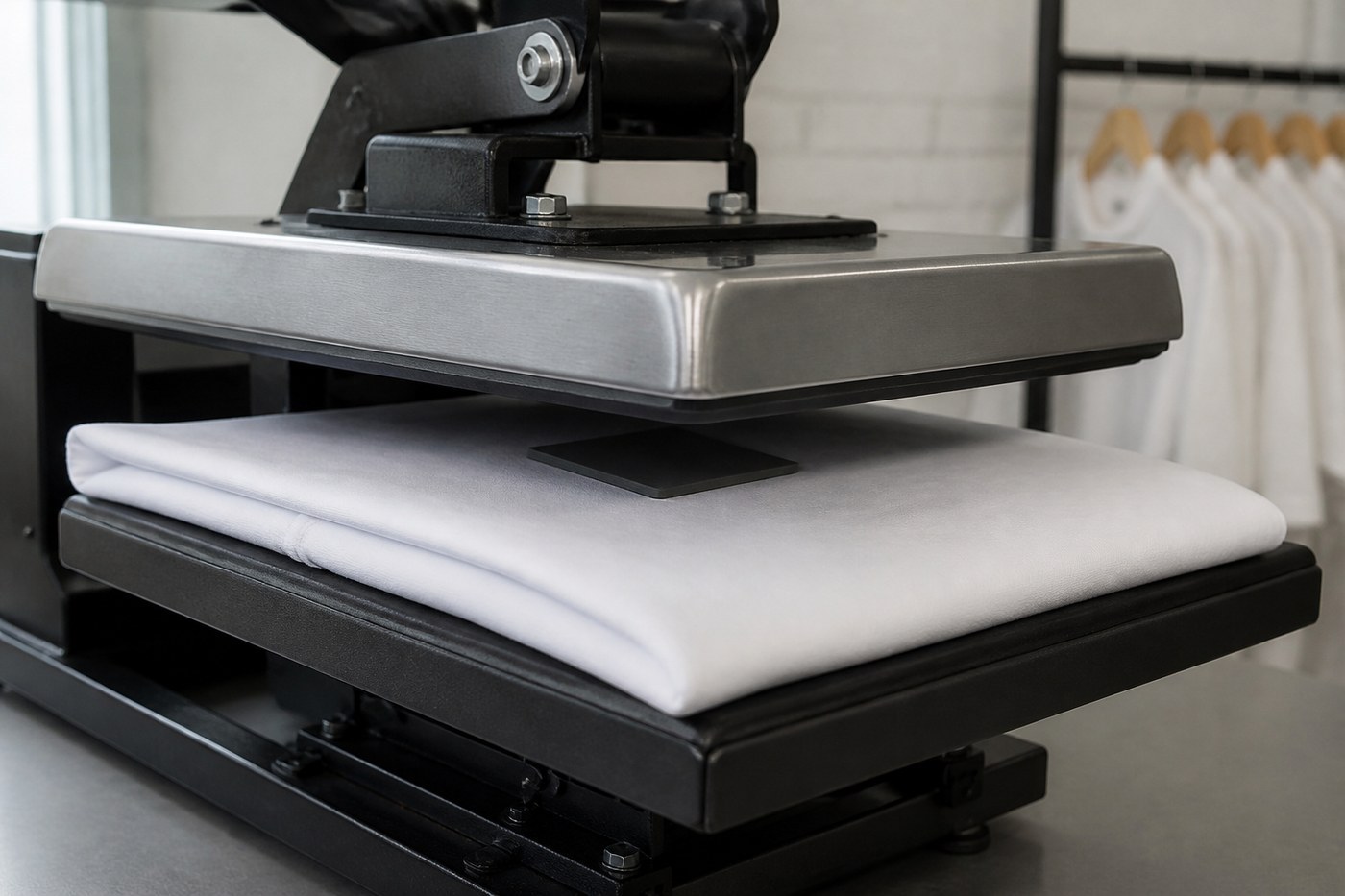
Because the silicone face is not the part that bonds. A heat-applied patch is a system: the visible silicone layer, and behind it a backing arrangement designed to bond to textile. When a patch comes away, the failure is almost always in the backing-to-fabric interface or in the fabric surface itself — not in the silicone.
The settings side is well documented by peer suppliers. Published application guidance for silicone heat-transfer labels commonly sits around 150–170 °C for 15–20 seconds at firm pressure, and another supplier specifies a heat press at 320 °F (about 160 °C) for roughly 15 seconds, followed by complete cooling before the carrier is peeled. These are reference ranges from label makers, not a universal recipe — the working window depends on the backing and the fabric.
Why temperature alone does not explain failures
A bonding layer has a working window rather than a single ideal value. Below it, the adhesive does not fully activate; above it, the fabric can be damaged and the bonding layer itself pushed past the point where it holds properly. Different fabrics sit at different positions in that window, which is why one setting across a garment range produces intermittent failures nobody can explain.
It is also worth separating the display reading from the bond line. Fabric weight, garment thickness, how much material is folded under the platen and the thermal mass of the lower plate all affect how quickly the interface reaches the working range. Two garments pressed at the same setting can meet different conditions at the bond line.
Pressure ensures contact. Time lets the activated adhesive wet out the fibres. Shortening one and increasing another does not compensate predictably.
The fabric side of the bond
Surface chemistry matters as much as the machine settings. Cotton is absorbent with few surface treatments and generally takes a bond well. Polyester presents a smooth filament surface and has limited heat tolerance, so the backing has to suit a low-melt substrate. Nylon has both low heat tolerance and often a finish that resists adhesion. Coated and water-repellent fabrics put the coating between the adhesive and the fibre.
Softener residue is a frequent hidden cause: a patch that bonds reliably before washing and fails after one cycle may not have had a weak bond at all — it may have bonded to a waxy surface layer that later washed away.
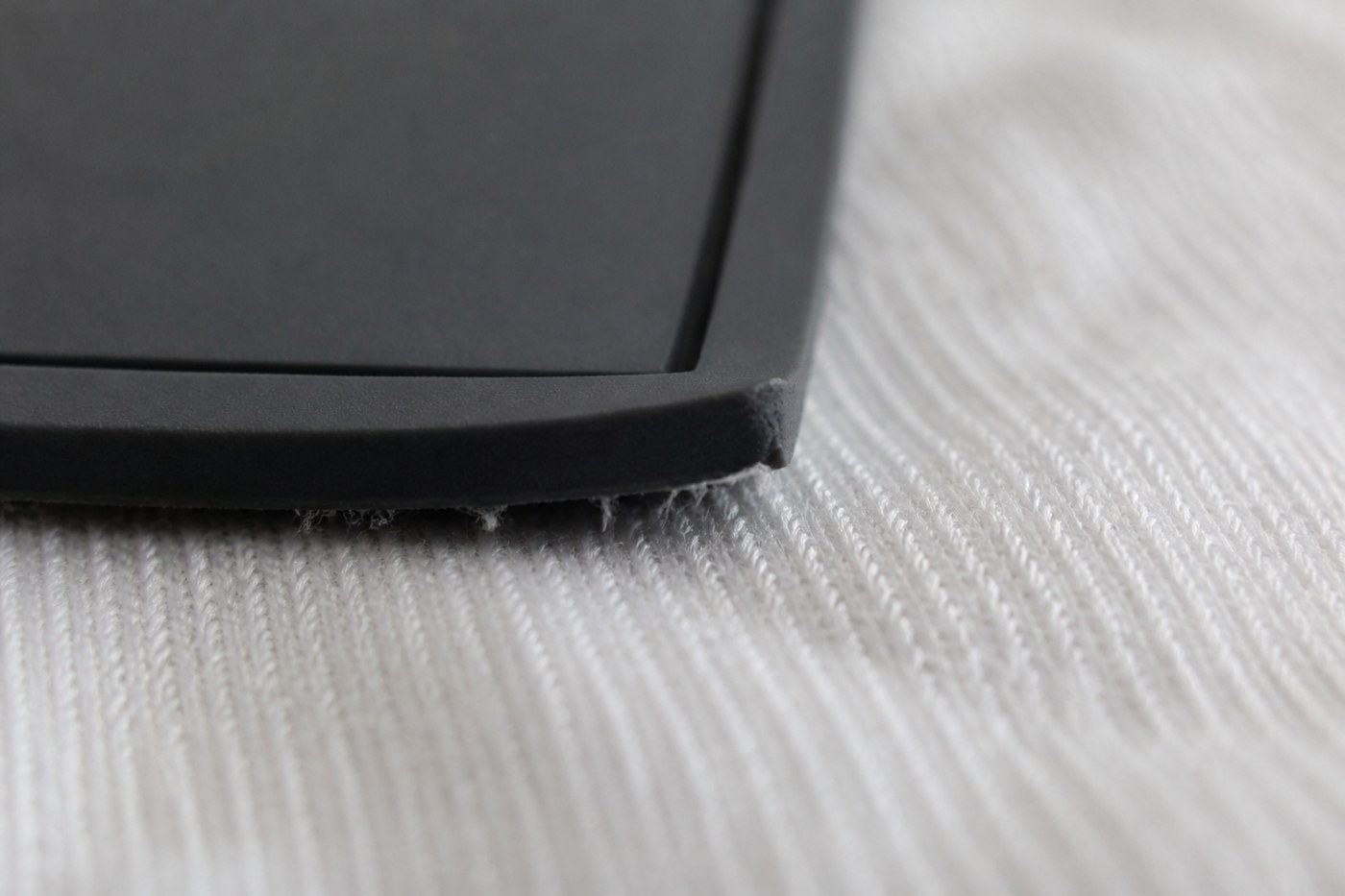
Reading the way it came away
| What you see | What it usually means |
|---|---|
| One corner lifts, the rest holds | Uneven pressure or a pressure gradient across the patch |
| The whole perimeter lifts evenly | The bond never fully formed: activation, contact or fabric finish |
| Separates after the first wash | Bonding to a surface layer rather than to the fibre |
| Lifts while the garment is stretched | Patch and fabric flexibility mismatch loading the edge |
| One side bonds, the opposite side does not | Uneven heat or pressure across the pressing area |
| Clean release, no fibre on the patch | Backing-to-fabric bond failed |
| Fibres torn and clinging to the patch | Fabric surface failed, not the adhesive |
Check sequence before production
- Inspect the whole perimeter, not one point, immediately after cooling.
- Peel test at a corner that is not visually exposed.
- Stretch the panel in the direction the garment stretches.
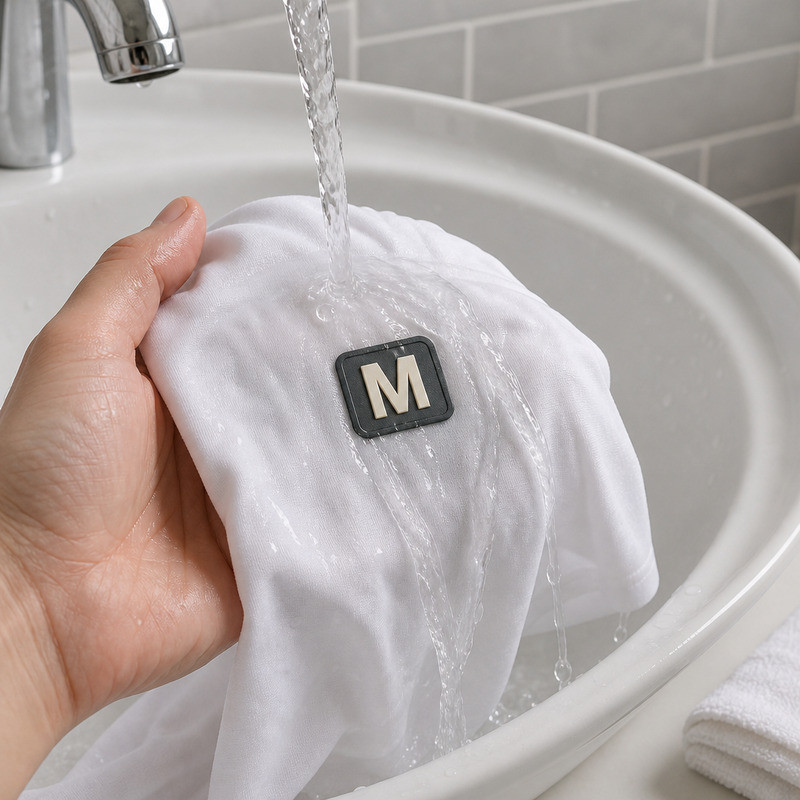
- Wash several cycles before judging the application.
- Fold and bend the panel along and across the patch.
- Inspect again after laundering, looking for edge movement rather than total failure.
Limits and common mistakes
Initial strength and long-term durability are different properties. A bond that survives a peel test on the day of pressing is not necessarily a bond that survives a hundred wear cycles and repeated washing, and an application that tests only the first is testing the easy half. The most frequent mistakes are using one setting across every fabric in a range, ignoring coatings and softener residue, raising temperature to solve a pressure or dwell problem, working with a platen that is not parallel to the lower plate, and removing the garment before the bond has cooled and set.
Chasing patches that peel after washing? FromRubber selects the backing for the actual fabric and verifies it with press trials before production — send the fabric, not just its name: karl@fromrubber.com or nani@fromrubber.com, WeChat and WhatsApp +86 18676210913. Related: backing adhesive selection and custom heat transfer patches.
Sources
- https://newyorkcustomlabels.com/raised-silicone-heat-transfer-labels
- https://qualitywovenlabels.com/silicone-heat-transfer-labels
- https://en.wikipedia.org/wiki/Hot-melt_adhesive
- https://en.wikipedia.org/wiki/Thermoplastic_polyurethane
- https://en.wikipedia.org/wiki/Polyester
- https://www.astm.org/d4966-22.html