What's difference between conductive ink and Contact pill for a Silicone keypad?
- Share
- publisher
- Nani Gui
- Issue Time
- Mar 15,2024
Summary
Conductive ink vs contact pill is decided by drift, not by first-press resistance. How the two contact technologies age, what the PCB finish contributes, and the test that belongs in a first-article report.

Contact technology / selection - reviewed 11 November 2026
The conductive ink vs contact pill decision is usually made on unit price and then regretted on warranty. Ink is cheaper per part and thinner; a pill is more expensive and heavier. The difference that matters is what happens after a hundred thousand presses, and that is a number the specification can capture before the tool is cut.
Both technologies close the same circuit. They age differently, and the ageing is predictable.
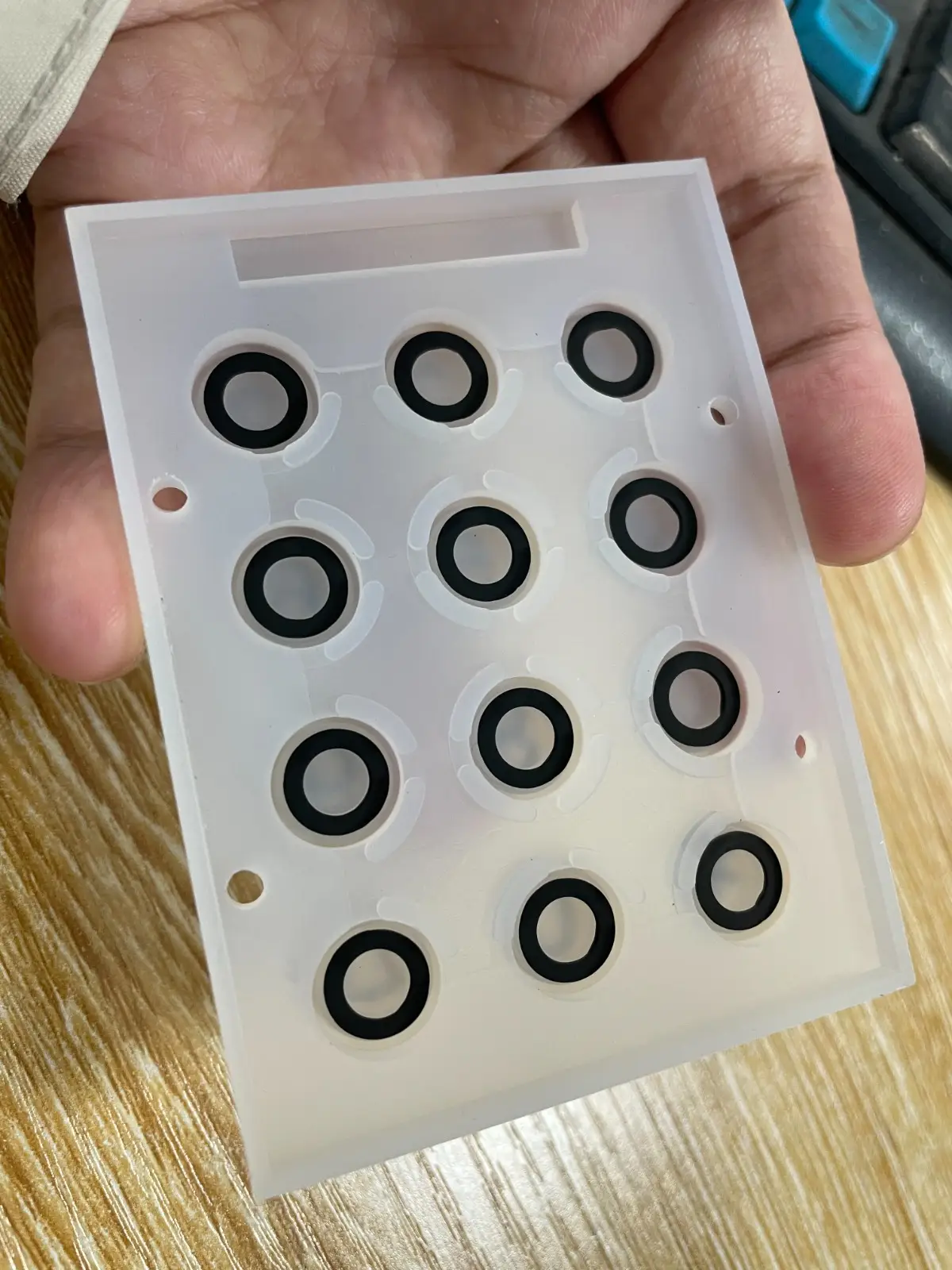
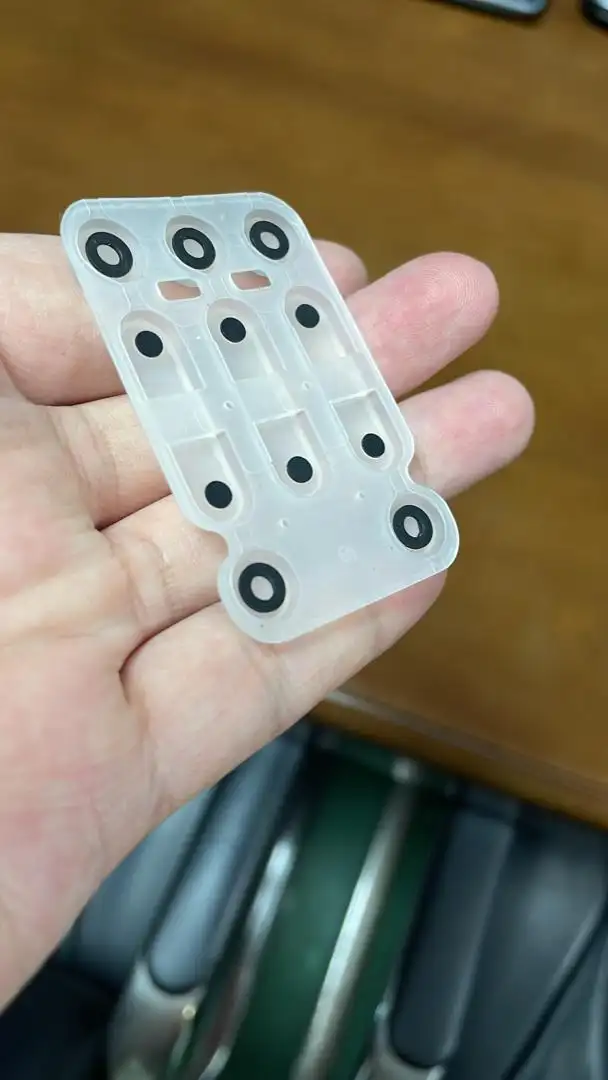
Definitions. Conductive ink is a carbon-loaded coating printed on the underside of a key, typically a few microns thick. A contact pill is a moulded carbon-loaded silicone element, either co-moulded with the key or inserted, that stands proud of the key face. Contact resistance is measured at a defined force; drift is the change in that resistance over the rated cycle count.
What each one is good at
Ink suits short travel, dense layouts and low-to-moderate cycle counts, where its thinness keeps the stack low. A pill suits higher force, longer life and over-press, because the carbon body deforms and recovers instead of wearing through. On a membrane-style keypad with a light press, ink is the natural choice; on a machine panel pressed thousands of times a shift, the pill is.
Drift, not initial resistance
A new ink print and a new pill can both read acceptably. The ink's resistance climbs as the printed layer abrades, and the pill's stays comparatively flat until the contact face is contaminated. A specification that quotes only a first-press value hides the entire difference.
Conductive ink vs contact pill on the numbers that matter
| Criterion | Conductive ink | Contact pill |
|---|---|---|
| Added thickness | Microns | Tenths of a millimetre |
| Layout density | High, print-defined | Limited by pill diameter |
| Over-press tolerance | Low, the layer wears | High, the body recovers |
| Drift over life | Rises with cycles | Stable until contamination |
| Tooling impact | Print step, no cavity change | Cavity or insert change |
| Typical fit | Consumer, thin stacks | Industrial, high cycle counts |
The PCB finish decides half the result
Both technologies depend on the pad they close against. Gold plating resists oxidation; thin or contaminated plating raises resistance regardless of the contact. A keypad that fails after a year in a humid environment is often a pad problem described as a rubber problem.
Testing both the same way
Run the panel to its rated cycles on a press rig, measure resistance at intervals, and repeat after a humidity soak. That curve, not a datasheet number, is what should appear in the first-article report. If a supplier cannot produce it, the choice between ink and pill is being made on opinion.
Where the cost lands
Ink removes a cavity detail and adds a print pass; a pill adds a moulding step or an insert and removes a print pass. On a low-volume part the ink usually wins on tooling; on a high-cycle industrial panel the pill wins on returns. The crossover is not a rule of thumb — it is the point where the expected return rate from drift exceeds the difference in unit cost.
Commissioning a decision
Send the cycle count, the stack height and the PCB finish; the route follows. The silicone keypad manufacturing section covers both contact routes, and the custom silicone rubber keypad page shows a pill-based build.
Is conductive ink less reliable than a pill?
It is a wear layer, so its resistance rises with cycles. Below a certain cycle count that is irrelevant; above it, the pill is the better engineering choice.
Can a keypad have both?
Some designs use a pill with a printed legend, which is a different combination. Ink and pill both carry the circuit, and mixing them on one key brings no benefit.
Drift and cycle life depend on contact force, PCB finish and environment. They should be established on the assembled panel at the rated cycle count.
For a contact selection review, send the cycle count and PCB finish through the custom silicone quotation route.