How to communicate customization needs of silicone rubber keypad/keyboard/parts!!!
- Share
- publisher
- karl
- Issue Time
- Apr 8,2024
Summary
A keypad brief has five sections, and most projects fail in the first email rather than the first mould. What to send about use, interface, feel, legends and volume so two suppliers quote the same thing.

Project communication / keypad briefs - reviewed 11 November 2026
Most keypad projects do not fail in the tool. They fail in the first email, where the buyer sends a photo of an existing part and a sentence about "something similar", and the factory answers with a price for the wrong thing. The fix is a brief with five sections that can be answered before anyone designs anything.
The good news is that a complete brief is short. It is not a specification document; it is a page that lets a supplier quote the same thing twice.
Definitions. A keypad brief is the written definition of what the part must do, sent before a quotation. Force and travel define the press; legend system defines durability; interface defines how the part mounts. A reference sample is a physical part the customer already accepts, and it is more useful than a photograph because it can be measured.
Section one: what the part is for
A device description in two lines tells the supplier more than a page of adjectives: a hand-held meter pressed with a thumb, a wall panel pressed with a glove, a medical device wiped with alcohol. Each of those changes the force target, the legend system and the sealing route, and each is a decision the buyer can make without engineering support.
Section two: the physical interface
The PCB pad layout, the housing drawing and the mounting method. Without these, the web geometry is a guess and the first article will not fit. If the housing is not final, say so, and ask for the pad design to be reviewed against the PCB first.
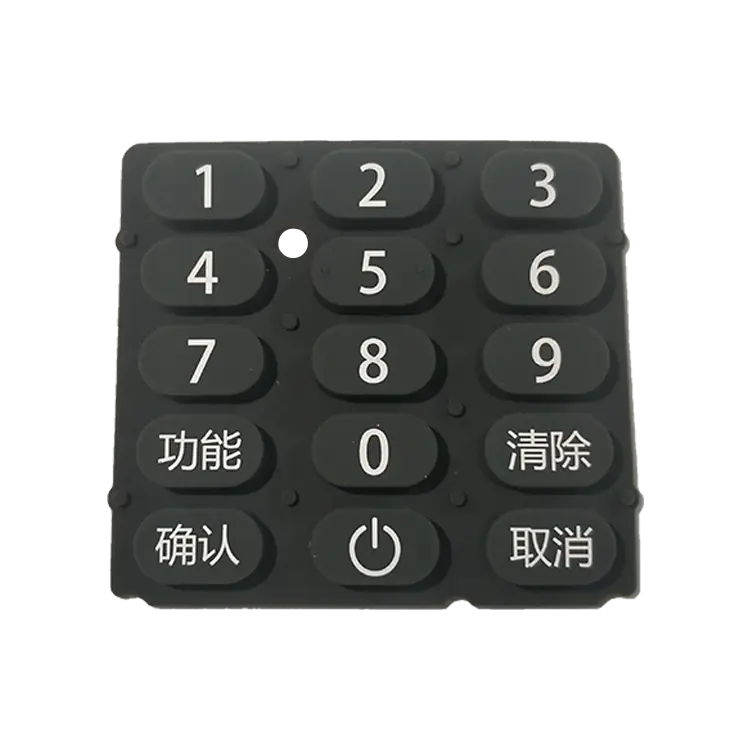
The five sections of a workable keypad brief
| Section | What to send | What it prevents |
|---|---|---|
| Use and environment | Device, hand, cleaning, temperature | A force target that suits nobody |
| Physical interface | PCB layout, housing drawing, mounting | A pad that will not fit |
| Feel | Force and travel, or an approved reference sample | Endless sample rounds |
| Legends | Artwork at final size, colour count, language | Redrawn artwork after tooling |
| Commercial | Annual volume, peak month, target price | A quote built on the wrong cavity count |
Send a sample, not a photograph
A physical reference part can be measured, cut and tested. A photograph cannot be measured, and it invites the supplier to guess at thickness and hardness. If the part is a competitor's, send it without branding or describe the measurements you took yourself; either way, a measured reference shortens the first round.
Be explicit about what is still open
Buyers often hide an unfinished housing decision to avoid looking unprepared, and the supplier then designs around a guess. Marking a dimension as provisional is not a weakness; it tells the supplier which decision to wait for and which to start on.
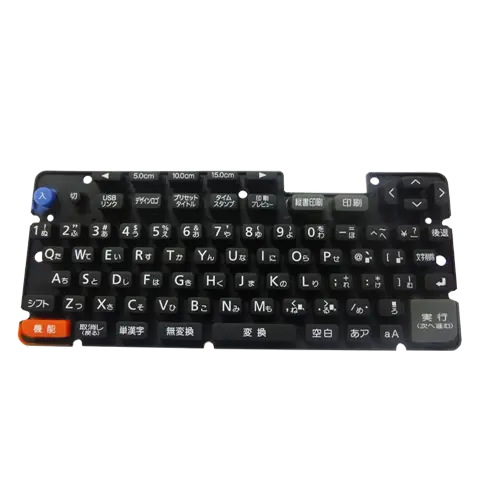
What a good reply looks like
A supplier who has understood the brief replies with questions, not only a price: which keys are most used, whether the legend must survive solvent, whether the housing tolerance is fixed. A reply that contains only a number usually means the assumptions were made silently, and those assumptions surface at the first article.
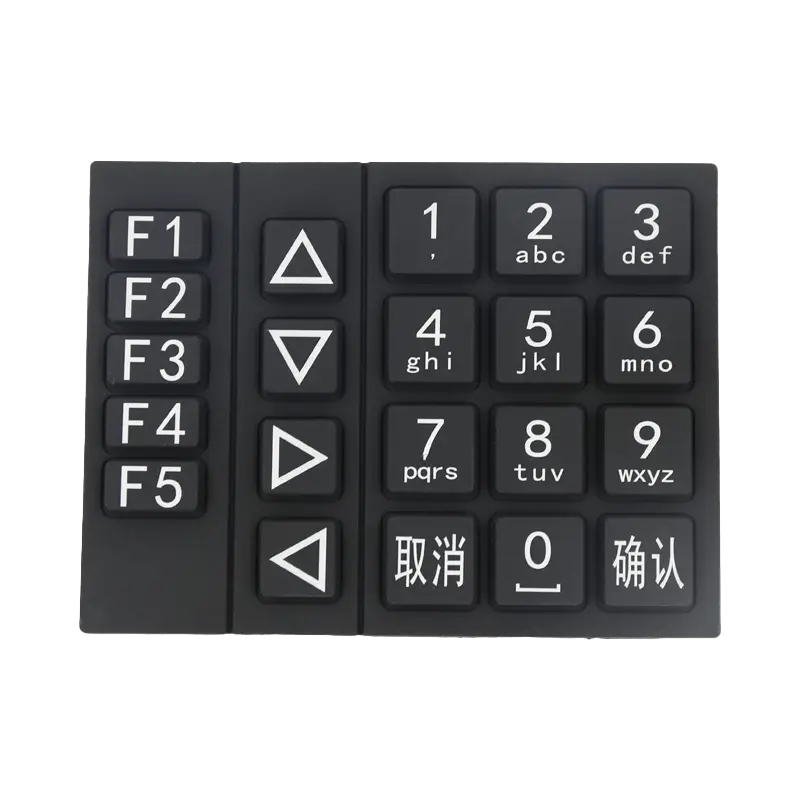
Commissioning a keypad project
Send the five sections in one message, even if some are marked provisional. The silicone keypad manufacturing section shows what the supplier will do with them, and the quotation file checklist lists the files that matter most.
How much detail does a keypad enquiry need?
Enough to quote without assumptions: use, interface, feel, legends and volume. That is usually one page plus a drawing and a PCB layout.
Can I send a photo of an existing keypad?
As a reference, yes, but not as a specification. A photo cannot carry thickness, hardness or force, and those are what the quotation depends on.
The brief structure is a communication tool, not a substitute for a drawing. Functional dimensions still need to be on the drawing that the tool is cut from.
To start a project, send the brief through the custom silicone quotation route.