fromrubber-What you must know, how and what to do with silicone coasters
- Share
- publisher
- karl
- Issue Time
- May 14,2024
Summary
Silicone coasters fail on flatness, rim height and print wear rather than on material. Why large thin parts bow, why the rim is functional, and how to write a flatness tolerance that can be inspected.

Promotional products / coaster design - reviewed 11 November 2026
Silicone coasters look like the simplest moulded product in the catalogue, and they are the one where large, thin parts most often fail: they bow, they slide, they hold a ring of water, or the print wears where a glass sits. Each of those is a design decision rather than a material fault.
The product also sits at an awkward intersection: it is a promotional item judged on print quality and a household item judged on whether it marks a table.
Definitions. A silicone coaster is a moulded disc or square, usually 3 to 5 mm thick, that protects a surface from heat and condensation. Flatness is the deviation of the top face from a plane, and it is what stops a glass rocking. A raised rim is a moulded lip that contains condensation; without it, water runs to the edge and under the coaster.
Thin and large is the hard combination
Silicone shrinks during cure, and on a large thin part the shrinkage is not perfectly even. The result is a slight dish or a slight twist that is invisible on a bench and obvious when a glass is placed on it. Ribs on the underside, a slightly thicker rim and an even wall are the usual controls.
The rim is functional, not decorative
A coaster with no raised edge collects condensation on its face and lets it run onto the table. A shallow rim, a millimetre or two, contains the water where the base can absorb the heat. The rim also stiffens the part, which helps flatness.
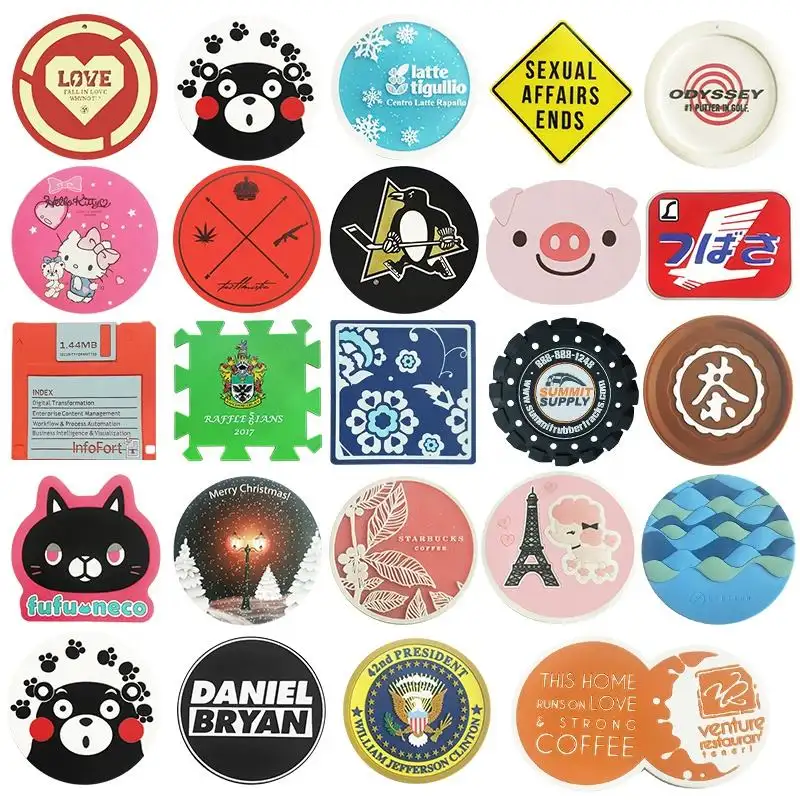
What to specify for silicone coasters
| Parameter | Why it matters |
|---|---|
| Thickness | Heat isolation against flatness; thin parts bow, thick parts feel heavy |
| Rim height | Contains condensation and stiffens the disc |
| Base texture | Grip on glass and on wood; too smooth slides, too rough scratches |
| Print system | Wear under a wet glass, and colour count |
| Hardness | Grip and how the part conforms to an uneven table |
Print under glass is a wear test
A coaster print is rubbed by a wet glass, wiped with a cloth and occasionally washed. Moulded colour survives all three; print needs a protective coat and a test that mimics the actual use. For a promotional run where the graphic is the point, a printed disc with a hard coat and a moulded rim is the usual compromise.
Flatness is measured, not eyeballed
The check is a straight edge and a feeler gauge across the face, or a glass placed on the coaster and tapped. A specification that says "flat" without a number will be argued about at incoming inspection, and the argument always costs more than the measurement.
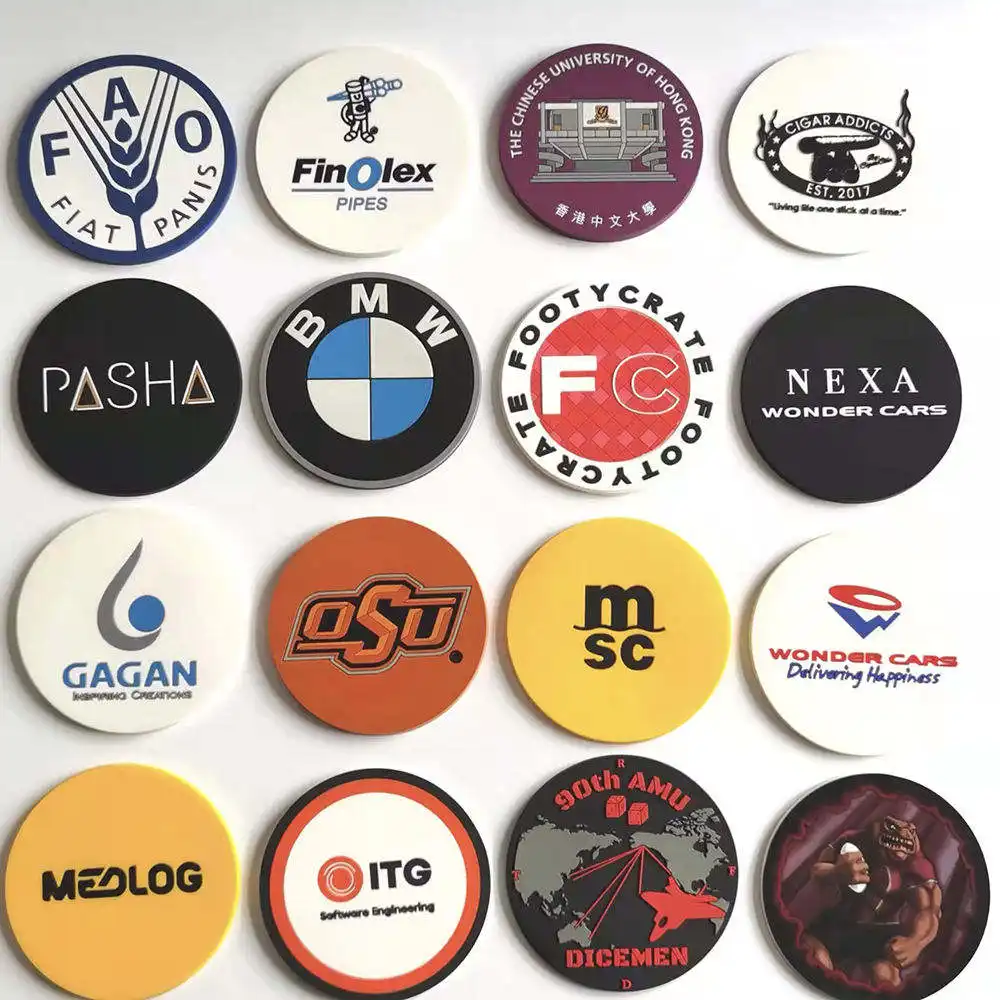
Where coasters go wrong in production
Three defects dominate: a dish from uneven cooling, a print that is off-centre on a round part, and flash on the rim that is visible on a table. The first is a tool and cycle issue, the second is a fixture issue, and the third is a deflashing standard. All three are worth naming in the purchase order, because none of them are caught by a visual check at arm's length.

Commissioning a silicone coaster
Send the artwork at final size, the thickness and the flatness tolerance. The custom silicone rubber parts range covers the format, and the production process overview shows the tooling route.
Why does my coaster rock on the table?
Uneven shrinkage on a large thin part, usually from an uneven wall or a fast cycle. Ribs and a thicker rim reduce it; a flatness tolerance catches it.
Is a printed coaster durable?
With a protective coat, it survives normal use. Moulded colour is more durable but limited to two colours per part.
Flatness, print wear and heat performance depend on thickness, compound and print system together, and should be confirmed on a production sample.
For a coaster programme, send the artwork and thickness through the quotation file checklist.