fromrubber: Conductive pills classification and use you know what are there?
- Share
- publisher
- karl
- Issue Time
- May 20,2024
Summary
Conductive pills set contact resistance, required press force and the life of the panel, and they are usually specified last. Carbon pill, printed ink and metal dome compared at end of life rather than at first press.

Conductive elastomer / contact design - reviewed 11 November 2026
Conductive pills are the part of a keypad that closes the circuit, and they are usually the last thing specified. The pill sets contact resistance, the force needed to make a reliable connection, and the cycle life of the whole panel. Choosing it after the tool is drawn is how a keypad ends up requiring a harder press than the product intended.
Three contact technologies dominate: a moulded carbon pill, a printed conductive layer, and a metal dome. They are not interchangeable, and the difference shows up at end of life rather than on the first press.
Definitions. A conductive pill is a carbon-loaded silicone element on the underside of a key that bridges two tracks on a PCB when pressed. Contact resistance is the measured resistance through that bridge, and it is quoted at a defined force. Carbon loading is the proportion of conductive filler in the pill compound, which trades conductivity against flexibility.
Three types of conductive pills and how they close a circuit
Moulded carbon pill
The pill is formed as part of the key, usually from a carbon-loaded silicone that is co-moulded or inserted into the key body. It gives a stable resistance in the tens of ohms, tolerates over-press, and needs a flat, clean PCB pad. Its weakness is geometry: the pill face has to stay parallel to the board, or contact happens on one edge first and resistance climbs.
Printed conductive layer
Carbon ink printed on the underside is cheaper and suits short travel and dense layouts. It is also a wear layer: the ink abrades with each press, and resistance drifts upward long before the key fails to work. For a panel with a high actuation count, that drift is the specification, and it should be measured at end of life rather than at first press.
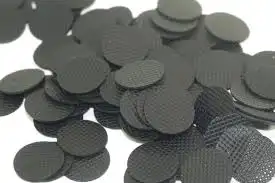
What decides whether the contact is reliable
| Factor | Effect | Symptom |
|---|---|---|
| Pill face flatness | Contact area at the moment of closure | Key works when pressed hard, misses when pressed lightly |
| PCB pad finish | Oxidation and wear of the mating surface | Rising resistance over months in a humid environment |
| Contamination | Insulating film between pill and pad | Intermittent misses that clear when the key is pressed repeatedly |
| Travel to contact | How far the finger moves before closure | Feels late, or bottoms out before contact |
| Over-press | Pill deformation at full stroke | Cracked pill after rough use, or a permanent dent |
The PCB is half the contact
A carbon pill on a thin, contaminated or poorly plated pad will read high resistance no matter how good the pill is. Gold plating, a defined pad area and a solder mask that stays clear of the pad edge are the other half of the design. Dust is the enemy in both directions: it insulates between pill and pad, and it abrades the pad surface over a product's life.
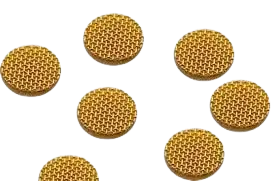
Metal domes where the count is high
A metal dome gives the crispest snap and the longest life, at the cost of an extra component, a taller stack and a different feel. Where the panel is pressed hundreds of thousands of times, the dome is usually the correct answer even though the unit cost is higher.
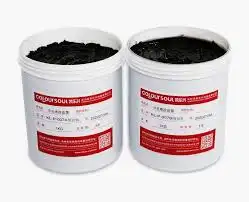
How to specify contact resistance
State the resistance band, the force at which it is measured, the cycle count at which it must still hold, and the PCB finish. Without those four, a resistance figure is a snapshot of a new part on a clean bench. The test that matters runs the panel to its rated cycles, then measures again, ideally after a humidity soak.
Commissioning a conductive keypad
Send the PCB pad layout, the actuation count and the resistance limit. The silicone keypad manufacturing section covers the contact options, and the custom silicone rubber keypad page shows a pill-based construction.

Which is better, a carbon pill or conductive ink?
Pills hold a more stable resistance and tolerate over-press; ink is cheaper and thinner but wears. The actuation count decides which trade is acceptable.
Why does a key need a harder press after a year?
Contact resistance has risen, or the pad has oxidised, so the circuit needs more force to close reliably. Cleaning or re-plating the pad usually restores it.
Can a pill be replaced?
Only by replacing the keypad, since the pill is part of the moulding. That is why the pill specification is a design decision rather than a service part.
Resistance values depend on carbon loading, contact force and PCB finish, and should be established on the assembled panel at end of life rather than on a new sample.
For a conductive keypad, send the PCB layout and cycle count through the quotation file checklist.