How long does it take to customize silicone rubber parts
- Share
- publisher
- karl
- Issue Time
- Jun 3,2024
Summary
Custom silicone lead time is four intervals, and only two belong to the factory. Separating specification, tooling, sampling and approval is what makes a launch date credible rather than optimistic.

Programme planning / lead time - reviewed 11 November 2026
Custom silicone lead time is usually quoted as a single number, and that number is almost always the tooling interval. It leaves out the two stages that actually decide when parts arrive: the specification, which waits on the customer, and the sample approval, which waits on everyone.
A realistic plan separates the four intervals, because only two of them belong to the factory.
Definitions. Custom silicone lead time is the interval between a complete enquiry and the first accepted production lot. Tooling interval is the time to design, machine and trial the mould. Sampling interval covers the trial parts and the measurement round. Approval interval is the time the customer takes to sign the first article or return it with comments.
Four intervals, two owners
The tooling and sampling intervals belong to the supplier. The specification and approval intervals belong to the customer, and they are the ones that slip. A programme planned as "three weeks" usually means three weeks of tooling plus an unplanned fortnight of unanswered emails about the colour standard.
What lengthens the tooling interval
Cavity count, key or feature density, number of colours, and whether the part needs a prototype stage first. A single-cavity trial tool is a different project from a sixteen-cavity production tool, and quoting them under one lead time is how schedules are lost.
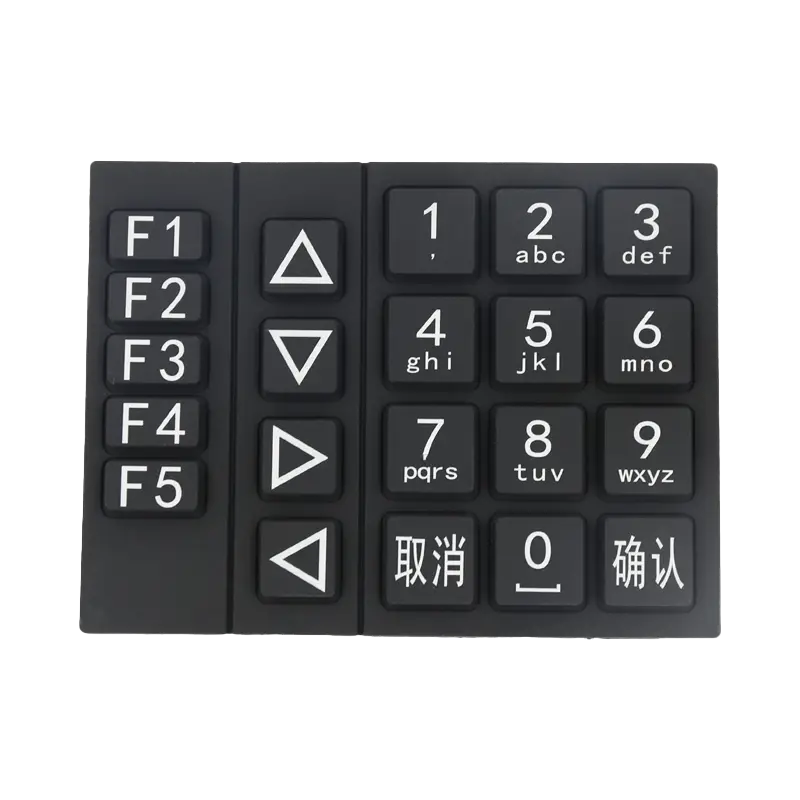
What actually drives custom silicone lead time
| Stage | Owner | What shortens it |
|---|---|---|
| Specification | Customer | A complete drawing with hardness, colour and functional dimensions |
| DFM review | Supplier | Geometry that needs few changes; a single decision-maker on the customer side |
| Tool fabrication | Supplier | Fewer cavities, simpler key shapes, standard plate sizes |
| Sampling | Supplier | Compound and colour settled before the trial |
| Approval | Customer | A named approver and a limit sample agreed in advance |
| Production | Supplier | Material in stock and a confirmed pack format |
Prototype first, or straight to production
A prototype tool adds a stage and removes a risk. For a part with a feel requirement, a seal or a tight fit, the prototype is usually faster overall because it prevents a production tool being re-cut. For a simple gasket in a known compound, going straight to the production cavity is reasonable and saves a cycle.
The colour standard is a schedule item
Moulded colour cannot be approved from a screen. A physical plaque has to travel, be compared under the right light, and be signed. That exchange is often the longest single wait in a programme, and it is entirely avoidable by starting it at the quotation stage rather than at the sample stage.

Planning backwards from a launch date
Work backwards: production lot, then approval, then sampling, then tooling, then specification. Each interval has an owner, and the plan is only credible if the customer-owned intervals have named dates. A supplier who quotes a total lead time without asking who will approve the sample is quoting the easy half.
Commissioning a programme
Send the drawing, the colour reference and the volume, and ask for the four intervals separately. The production process overview shows how the stages connect, and the quotation file checklist lists what the first interval needs.
Why do silicone projects overrun?
Usually because the specification or the sample approval was not owned by a named person. Tooling rarely overruns by weeks; unanswered decisions do.
Can the tooling interval be shortened?
Yes, by reducing cavity count, simplifying key shapes and using standard plate sizes. Each of those trades unit cost against time.
Does a prototype tool delay the project?
It adds a stage but can save a re-cut. For parts with a feel or sealing requirement it is usually the faster route overall.
Actual durations depend on tool complexity, volume and how quickly decisions are made. A supplier should quote the intervals separately rather than a single figure.
For a schedule estimate, send the drawing and volume through the custom silicone quotation route.