How To Customise Silicone Labels | Rubber Patch Company
- Share
- publisher
- karl
- Issue Time
- Sep 2,2024
Summary
Silicone labels hold an edge embroidery cannot, but the mould decides the design: two colours, minimum stroke width and the attachment route. How heat transfer, sew channel and bar tack change what the label can be.

Apparel labelling / custom trim - reviewed 11 November 2026
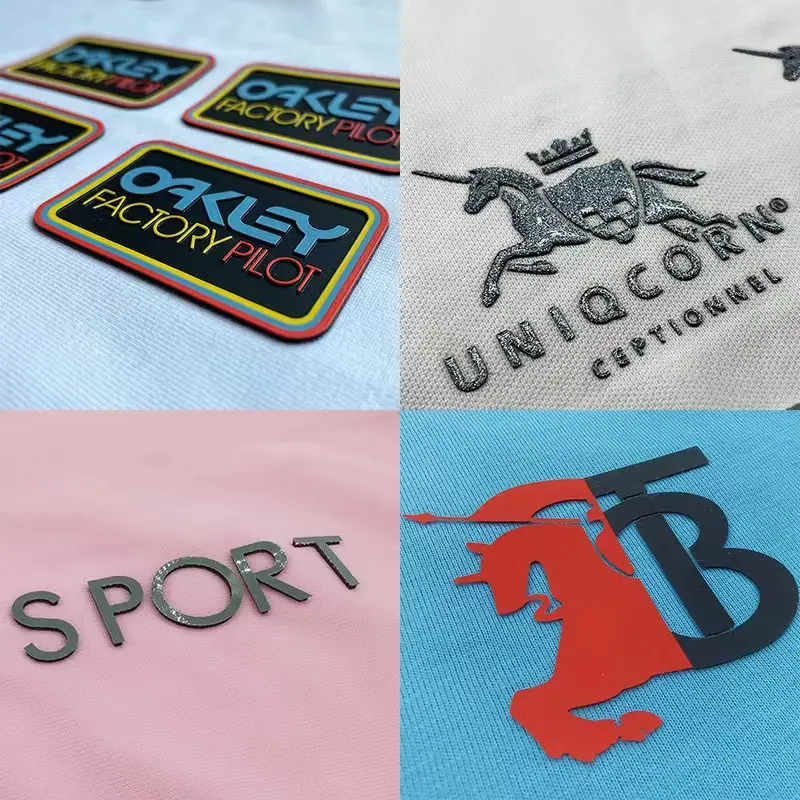
Silicone labels are chosen when a woven label is too soft and embroidery is too slow: they hold a hard edge, they survive abrasion, and they can be moulded in a shape that no needle can follow. The design work is not the logo. It is deciding how the label attaches, how thick it can be before it looks like a plastic tile, and how many colours the mould can actually carry.
Most label programmes fail at the same point: the artwork is approved as a picture, then the first moulded sample arrives with thinner strokes, a shallower relief and one fewer colour. Those changes are not accidents; they are what the process can hold.
Definitions. Silicone labels are moulded rubber labels applied to garments, bags or footwear, either by a heat-transfer adhesive or by sewing through a moulded channel. Relief height is measured from the base plane to the top of the highest element; below about 1.5 mm the label reads as a print, above it the moulded wall and its shadow do the work. Draft is the taper on every vertical wall that lets the part release from the cavity.
Two moulded colours, then print
A moulded label carries two colours per part. A third colour is added by print, which is why multicolour artwork is usually quoted as moulding plus print, and why the print is the part that wears. For a label that sits on a cuff and is rubbed daily, keeping the design to two moulded colours is worth more than the extra hue.
Stroke width decides legibility
Fine type and hairline rules are the first casualty. At label scale, a stroke thinner than the material can fill will either disappear or bridge, and a logo drawn for embroidery almost always needs redrawing for moulding. The redraw should be approved by the brand, not by the factory alone, because it changes the mark.
How silicone labels attach, and what each route costs
| Route | Best for | What to watch |
|---|---|---|
| Heat-transfer adhesive | Flat panels, caps, coated fabrics | Pressure and dwell must match the fabric; stretch fabrics need a flexible adhesive |
| Sew channel | Denim, knits, heavy outerwear | Stitch density and channel width; too narrow puckers the fabric |
| Bar tack or rivet | Small tags, workwear, bag details | Local stress concentration where the tack sits |
| Loop fold | Care labels, hanging tags | Fold radius and the wall thickness at the crease |
Thickness is a comfort decision as much as a look
A label at the back neck touches skin; a label on a cuff touches a wrist. A relief that reads well on a bag can be uncomfortable against a neck, so the same artwork may need two thicknesses for two placements. That is a tooling decision and belongs in the brief, not in a complaint.
The wash test is the real approval
A label approved on a flat swatch has not been tested. The protocol should name the fabric, the wash temperature, the number of cycles and whether tumble drying is included. A heat-transfer label that survives thirty cycles on canvas can lift on a stretch knit at fifteen.
Why the first sample changes the artwork
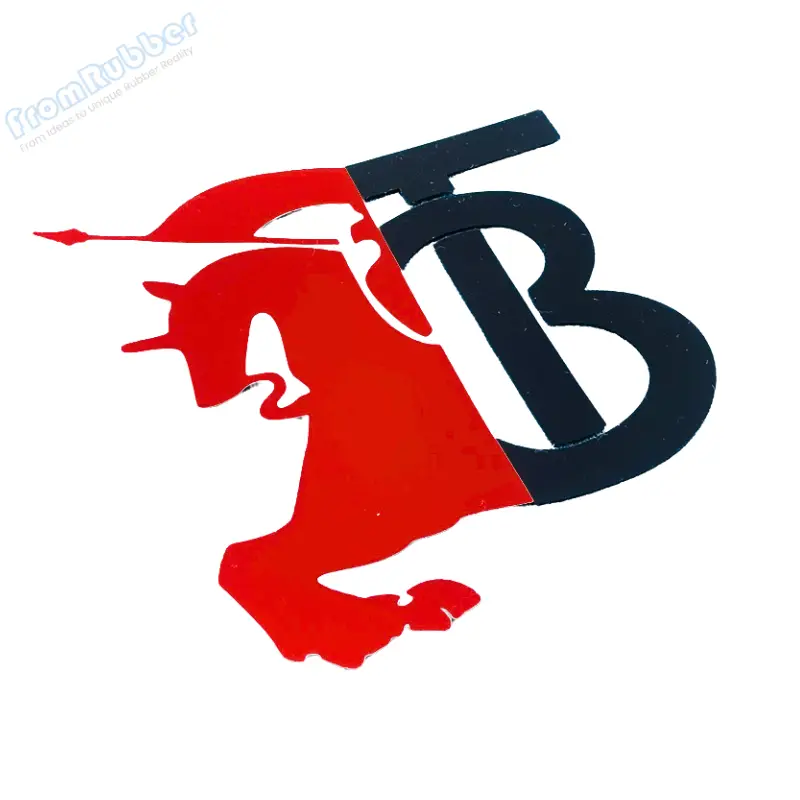
Moulding imposes three constraints that a screen does not: every wall needs draft, every inside corner needs a radius, and every colour is a separate cavity detail. A designer who has not seen a moulded sample usually draws an outline that cannot be released, and the factory silently corrects it. The correction is legitimate, but it should come back as a marked-up drawing for approval rather than as a surprise in the sample bag.

Commissioning a silicone label
Send the artwork at final size, the substrate and the attachment route. The custom rubber patches section covers construction, and the washable silicone labels page shows a sewn-in build.
How many colours can a silicone label have?
Two moulded colours per part, with additional colours added by print. Printed colours are the wear layer, so the moulded colours should carry the essential parts of the mark.
Can a silicone label go through an industrial wash?
The moulded part can; the adhesive and the print are the limiting factors. A sew channel removes the adhesive question entirely.
Why does the sample look thinner than the artwork?
Because fine strokes cannot fill or release at that scale. The artwork should be redrawn at moulding size before the tool is cut, and the redraw approved.
Durability depends on fabric, adhesive, print system and wash protocol. Any figure quoted for a label should be validated on the actual garment before production tooling is released.
For a label programme, send the artwork and garment spec through the quotation file checklist.