Custom Rubber Buttons: The Ideal Choice for Diverse Needs
- Share
- publisher
- karl
- Issue Time
- Sep 23,2024
Summary
Custom rubber buttons cover switch keys, sealing plugs, bumpers and grommets, and each family is governed by a different dimension. Sorting by function, choosing the compound for the environment, and the test that matches the failure.
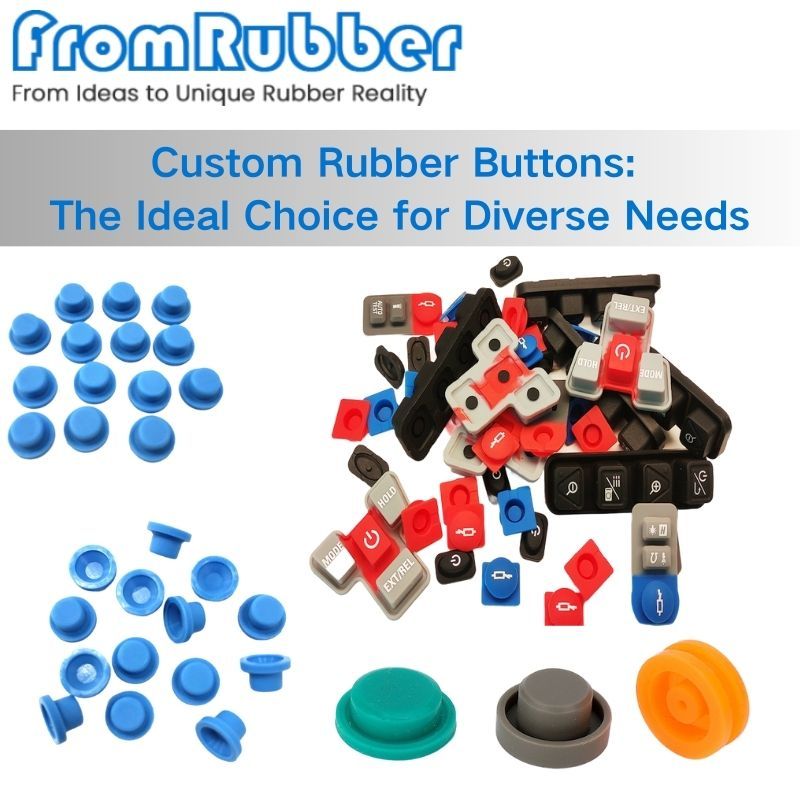
Rubber components / selection - reviewed 11 November 2026
Custom rubber buttons are chosen for what they do not do: they do not rattle, they do not conduct, they do not crack at minus twenty, and they do not need a separate spring. That combination covers plugs, grommets, bumpers and switch boots as much as it covers keypads, which is why the same specification questions apply across all of them.
The category looks broad until it is sorted by function. Once sorted, the material choice and the geometry follow quickly, and the quotation becomes comparable.
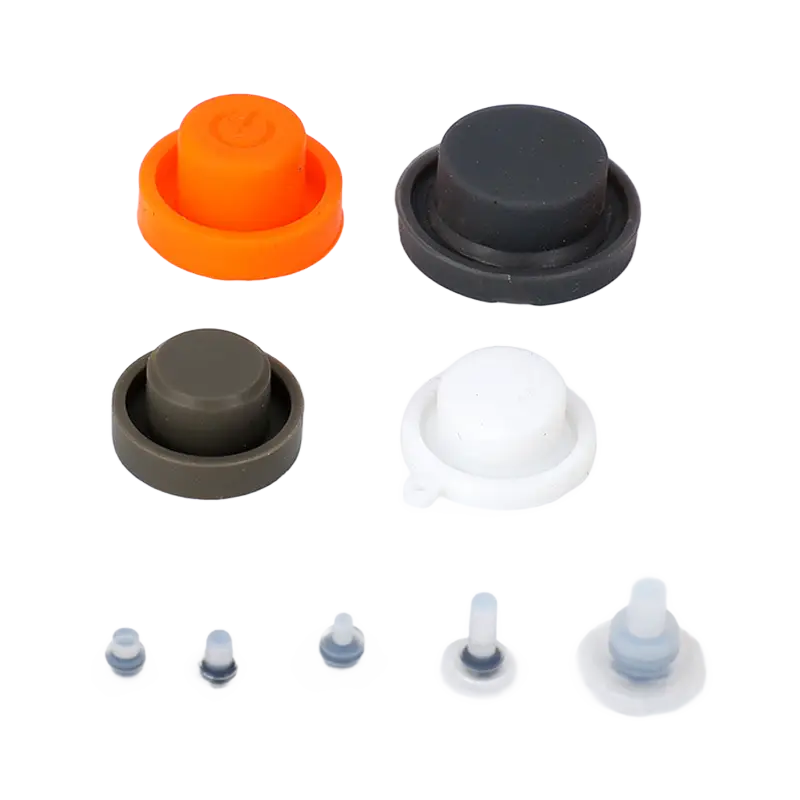
Definitions. Custom rubber buttons are moulded elastomer components that a user presses, or that a cable or panel presses against, and that are made to a customer drawing rather than a catalogue size. A plug or bung is a tapered rubber part that seals a bore by interference. A bumper is a moulded pad that limits travel or protects a surface, and it is specified by the energy it has to absorb rather than by its shape.
Four functional families
Switch buttons close a circuit. Sealing plugs close a bore. Bumpers limit travel or protect a surface. Grommets protect a cable where it passes through a panel. Each family has a different governing dimension: travel, interference, energy or bore size. Writing that dimension into the brief is what separates a working part from a shape that fits.
Material follows the environment, then the function
Silicone covers the widest temperature range and is the default where a button is pressed or a part must stay flexible. EPDM is stronger against weather and water but weaker against oils. Nitrile handles oil and fuel. Neoprene sits between weather and oil resistance. Choosing silicone because it feels nice is fine; choosing it for a part that sits in fuel is not.
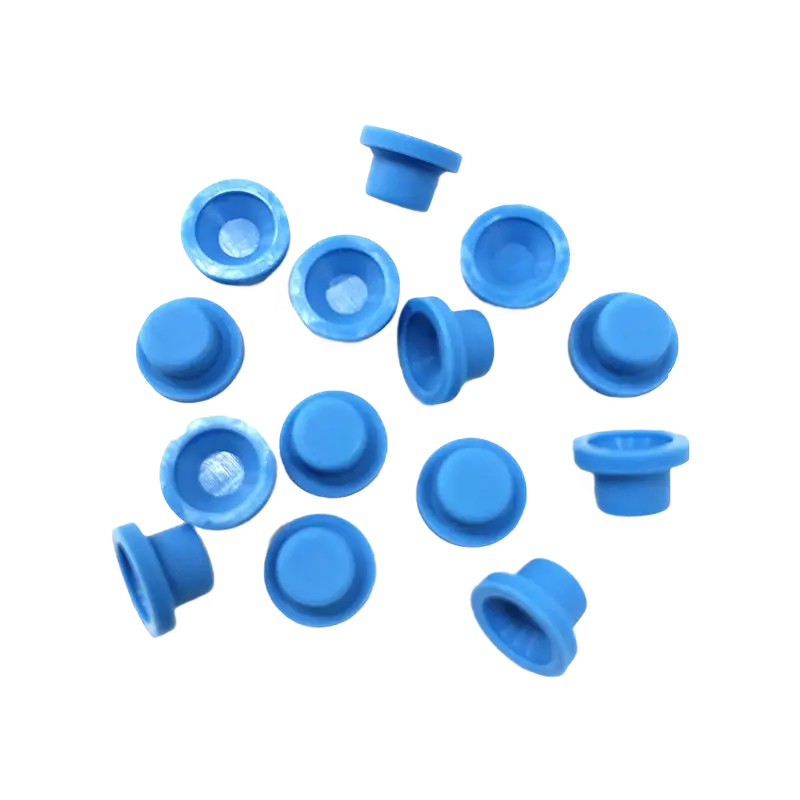
Choosing by function, not by name
| Family | Governing dimension | Typical failure |
|---|---|---|
| Switch button or boot | Travel and force | Boot too stiff to move, or legend worn through print |
| Tapered plug | Bore diameter and taper | Pops out under pressure, or seats too deep and disappears |
| Bumper | Energy and contact area | Compresses flat and stops protecting |
| Grommet | Bore against cable diameter | Cuts the cable, or leaves a gap that passes water |
| Suction or pad | Surface and vacuum | Releases on a textured or dusty surface |
Colour is a material decision
A moulded colour runs through the part and cannot peel, which matters for a button that is pressed with dirty hands. The limit is two colours per moulding, so multi-colour graphics move to print, which then becomes the wear layer. For industrial parts, one moulded colour plus a moulded legend is usually the most durable combination available.
What the drawing must say
Hardness with tolerance, the medium, the temperature range, the interference or travel, and the two or three dimensions that carry function. A part with twenty tolerances and no priorities will be quoted high, because the tool has to chase dimensions nobody needs.
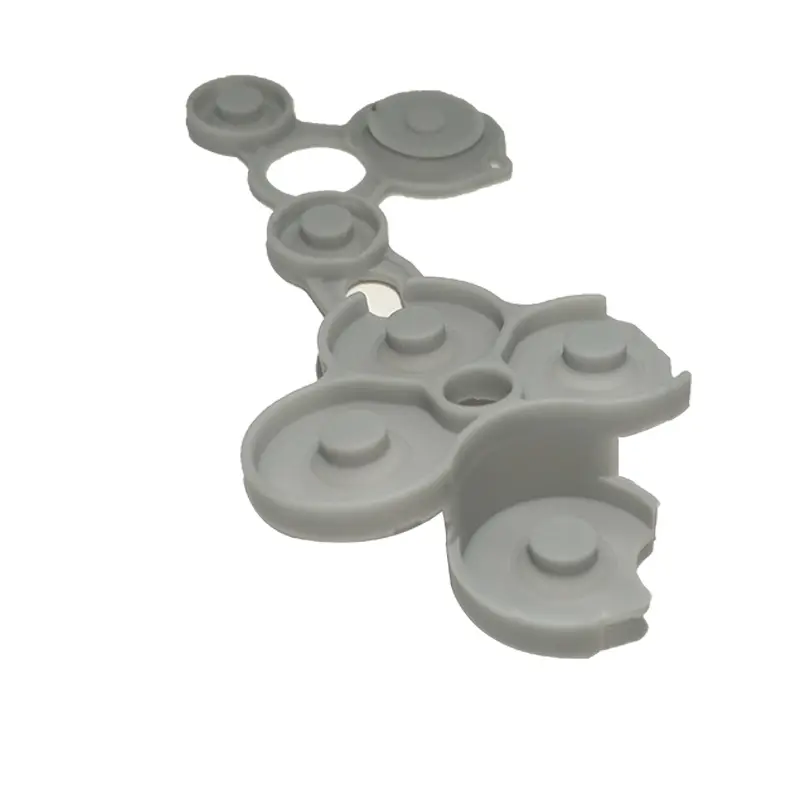
Testing that matches the failure
A plug is tested by pressure and retention, not by appearance. A boot is tested by flex cycles at temperature, not by a single press. A grommet is tested by pulling the cable at the specified force and checking the insulation. A bumper is tested by repeated compression to the load it will actually see. Each test is cheap at the sample stage and expensive after a shipment.
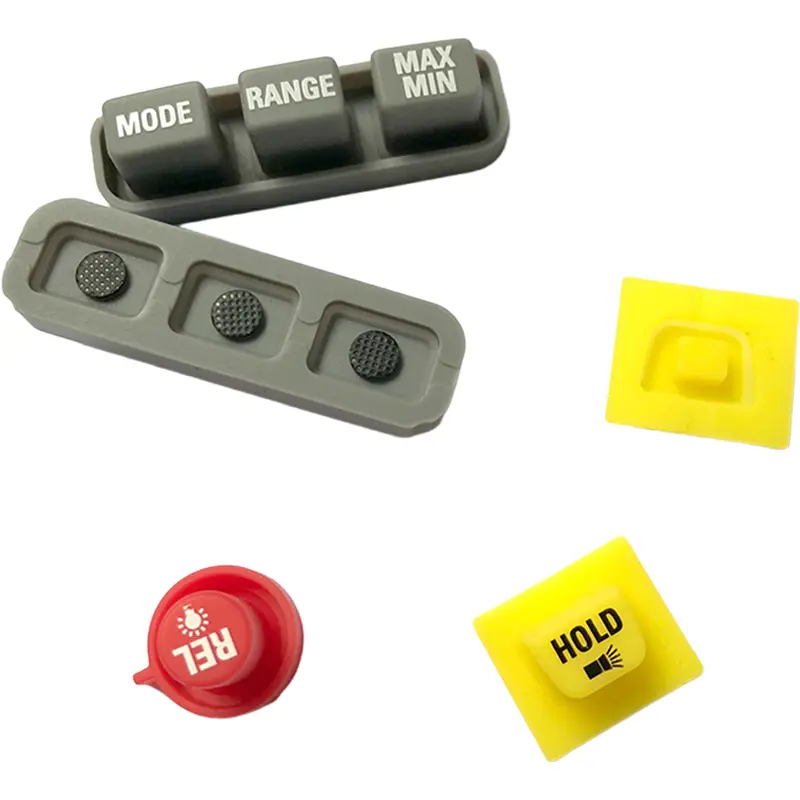
Commissioning custom rubber buttons
Send the mating part dimensions, the function and the environment. The custom silicone rubber parts range covers the formats, and the moulded rubber components page shows typical constructions.
Why does a rubber plug keep popping out?
Usually too little interference or the wrong taper for the bore. A plug seals by compression, so the bore dimension and the taper have to be measured rather than assumed.
Can a rubber button carry a legend?
Yes, moulded or printed. Moulded survives abrasion but limits colour to two; printed carries detail and wears first, which matters on a part pressed with dirty hands.
Which rubber handles both oil and weather?
Nitrile handles oil better, EPDM handles weather better, neoprene sits between them. Silicone covers temperature and flexibility but swells in hydrocarbons.
Material recommendations depend on the medium and temperature together. A compound should be selected against the actual service environment, not against a general description.
For a component programme, send the mating dimensions through the quotation file checklist.