Molded Rubber: The Secret Hero in Our Everyday Lives.
- Share
- publisher
- karl
- Issue Time
- Oct 14,2024
Summary
Molded rubber parts are invisible because they absorb tolerance, seal a moving gap or damp a vibration that a rigid part cannot. Sorting the category by function, and the specification each function needs.

Elastomer applications / component review - reviewed 11 November 2026
Molded rubber is invisible in most products because it is doing a job a rigid part cannot: absorbing a tolerance, sealing a gap that moves, damping a vibration, or holding a cable without cutting it. The parts are cheap individually and expensive when they fail, because the failure usually appears somewhere else in the assembly.
The useful way to look at the category is by function rather than by shape. A grommet, a bellows and a suction cup look unrelated and share the same design question: what has to move, and what has to stay sealed while it moves.
Definitions. Molded rubber parts are components formed in a cavity from a rubber compound, then cured, so the shape and the material properties are set together. Compression set is the permanent deformation left after a part has been squeezed hot for a period, and it is the property that ends most sealing lives. A bellows is a moulded concertina that allows movement in one direction while keeping a barrier intact.
Function first, then shape
Four functions cover most of the category. Sealing keeps two surfaces apart from a medium. Isolation separates a vibration source from a structure. Retention holds a cable, a panel or a trim without damaging it. And tolerance absorption takes up the gap between two parts that were made to different rules. Naming the function decides the compound, the hardness and the section long before a drawing exists.
The cheap part carries the warranty
A grommet that costs a few cents can write off an entire assembly if it cuts a cable or lets water into a connector. That asymmetry is why the small parts deserve the same specification discipline as the visible ones: hardness with tolerance, the medium, the temperature, and the movement the part must allow.
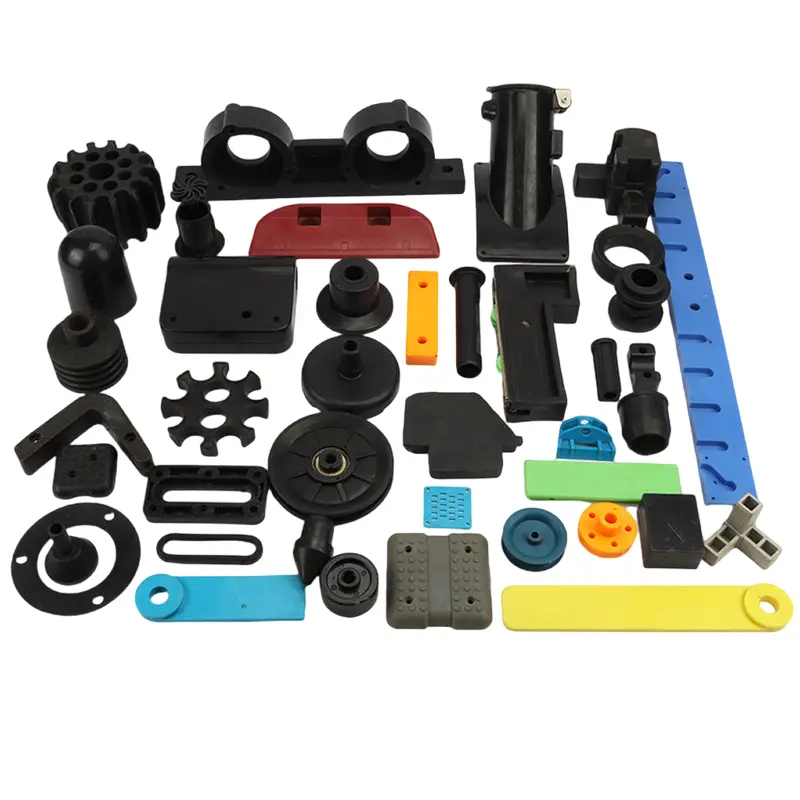
Where molded rubber parts are doing real work
| Function | Typical part | What decides the design |
|---|---|---|
| Sealing a moving joint | Bellows, boot, diaphragm | Wall uniformity and the number of flex cycles required |
| Sealing a static joint | Gasket, O-ring, washer | Compression ratio and compression set |
| Cable protection | Grommet, strain relief | Bore size against the cable, and the edge radius |
| Vibration isolation | Mount, bumper, pad | Hardness and the loaded area |
| Grip and closure | Plug, cap, suction cup | Interference and the surface it seals against |
Hardness is a system choice, not a preference
A 50 Shore A compound seals at low load and conforms to a rough surface; a 70 Shore A compound resists compression set and extrusion but needs more force to seat. Choosing harder to fix a leak often makes it worse, because the part no longer conforms. The number should follow from the compression available in the joint, not from a habit.
The section drawing carries the design
For a sealing part, the section matters more than the outline. Bead height, groove depth, flank angle and the radius at the root are what the part actually does. A 2D outline without a section is a shape, not a specification, and it is the main reason two quotes for the same gasket differ by more than the material cost.
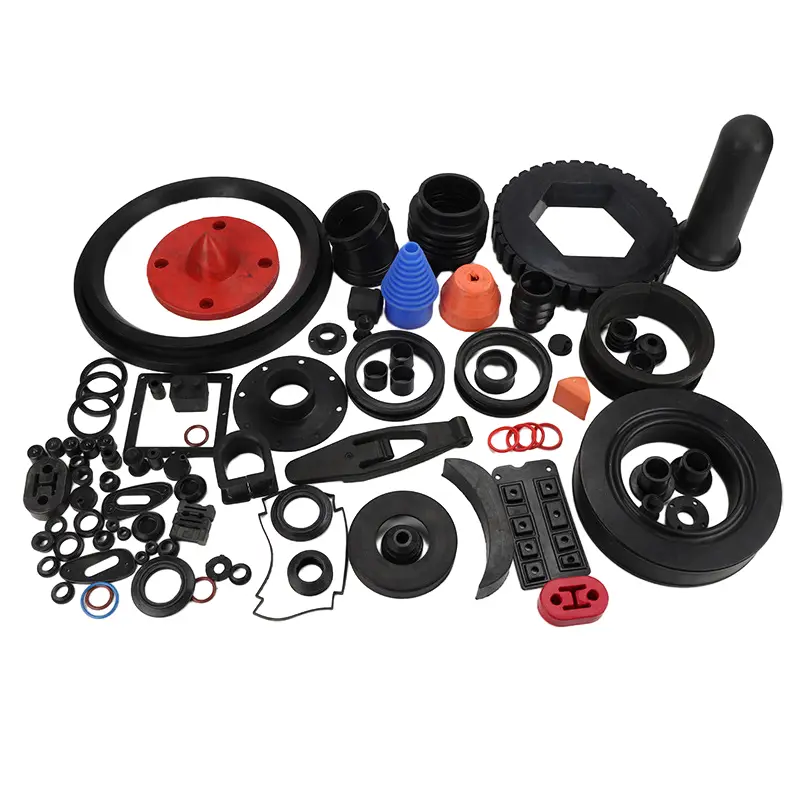
Why the tool route changes the price more than the material
A simple constant-section part can be extruded and cut, which avoids a mould. The moment the part needs a flange, a closed end or a moulded feature, it becomes a compression or injection moulding and the economics change with the plate size and the cavity count. That is why the same drawing can come back at two very different prices: one supplier is quoting a die, the other a mould.
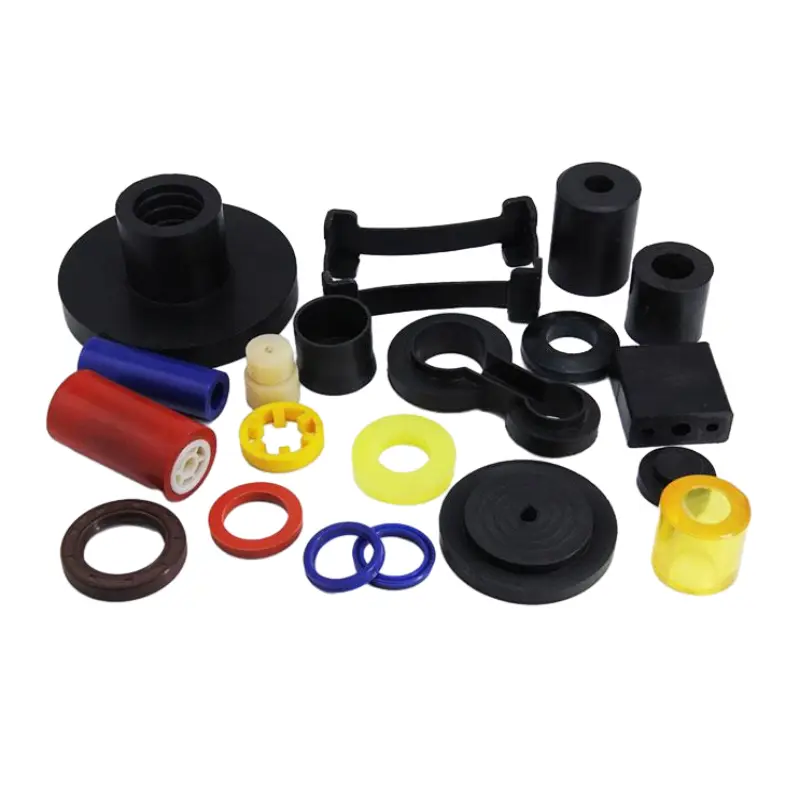
Commissioning a moulded part
Send the section, the function and the environment. The custom silicone rubber parts range covers the formats, and the production process overview explains how the tooling route follows from the geometry.

Why do small rubber parts fail first?
Usually because they were specified last, with a hardness and a shape chosen by habit. Compression set, bore size and edge radius all have to be decided against the assembly.
When is extrusion cheaper than moulding?
When the cross-section is constant and no closed end or flange is needed. Any added feature converts the part to moulding and changes the tool cost.
Does a harder compound seal better?
Only if the joint gives enough compression. A hard part on a light joint leaks, because it cannot conform to the surface.
Material and hardness recommendations depend on the medium, the temperature and the compression available in the joint, and should be confirmed on a trial part.
For a component programme, send the section drawing and the environment through the quotation file checklist.