Plastic Parts Design Guide-Material Selection
- Share
- publisher
- karl
- Issue Time
- May 20,2025
Summary
Plastic parts design is one decision made twice: resin choice and wall geometry. A selection matrix by part type, the rules that prevent sink and warp, and which dimensions deserve a tight tolerance.
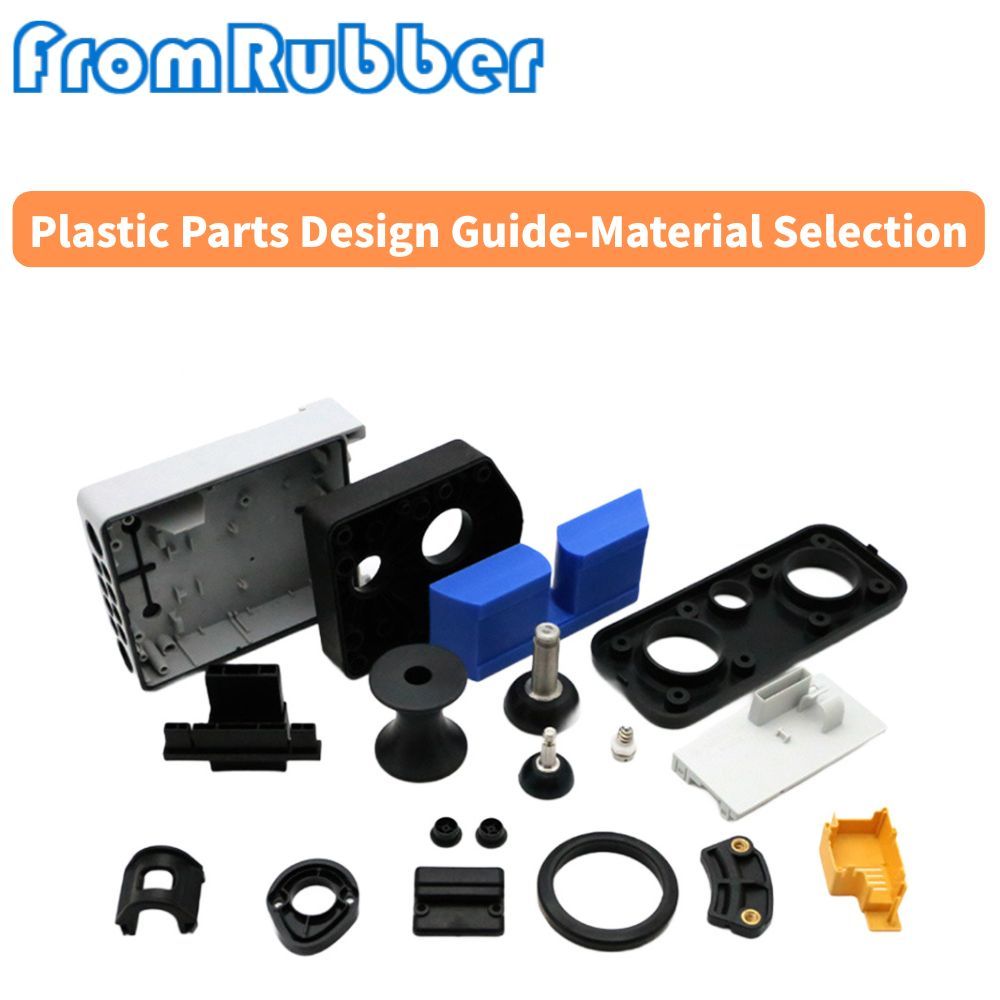
Plastic part design / material selection - reviewed 11 November 2026
Plastic parts design fails in two places that have nothing to do with the drawing's elegance: the resin was chosen for one property and the part is judged on another, and the wall was drawn uniform because uniformity sounds professional while the load is not uniform. Material and geometry are one decision, and they are cheaper to argue about before the tool than after.
This guide covers the selection logic and the design rules that most often decide whether a moulded part is manufacturable at the tolerance the product needs.
Definitions. Plastic parts design is the discipline of specifying resin, wall, ribs, bosses and tolerances together so a part can be moulded, assembled and used without rework. Sink is a surface depression caused by a thick section cooling after the surrounding wall. Warp is the distortion that follows uneven shrinkage, and it is driven by wall thickness variation and gate position more than by the resin alone.
Choose by the failure you are trying to avoid
Most material arguments are actually arguments about which failure matters. If the part will be dropped, impact strength at low temperature leads. If it will sit in the sun, UV stability and colour retention lead. If it carries a thread or a snap, stiffness and creep lead. If it is a housing for a radio, RF transparency rules out filled and metallised grades, which then constrains everything else.
One primary property, two constraints
A workable shortlist names one primary property and two constraints. For a doorbell housing: impact (primary), UV (constraint), RF transparency (constraint) points to ASA or a UV-stabilised PC blend, and rules out glass-filled grades. Writing that sentence down prevents the late substitution that undoes a validation.
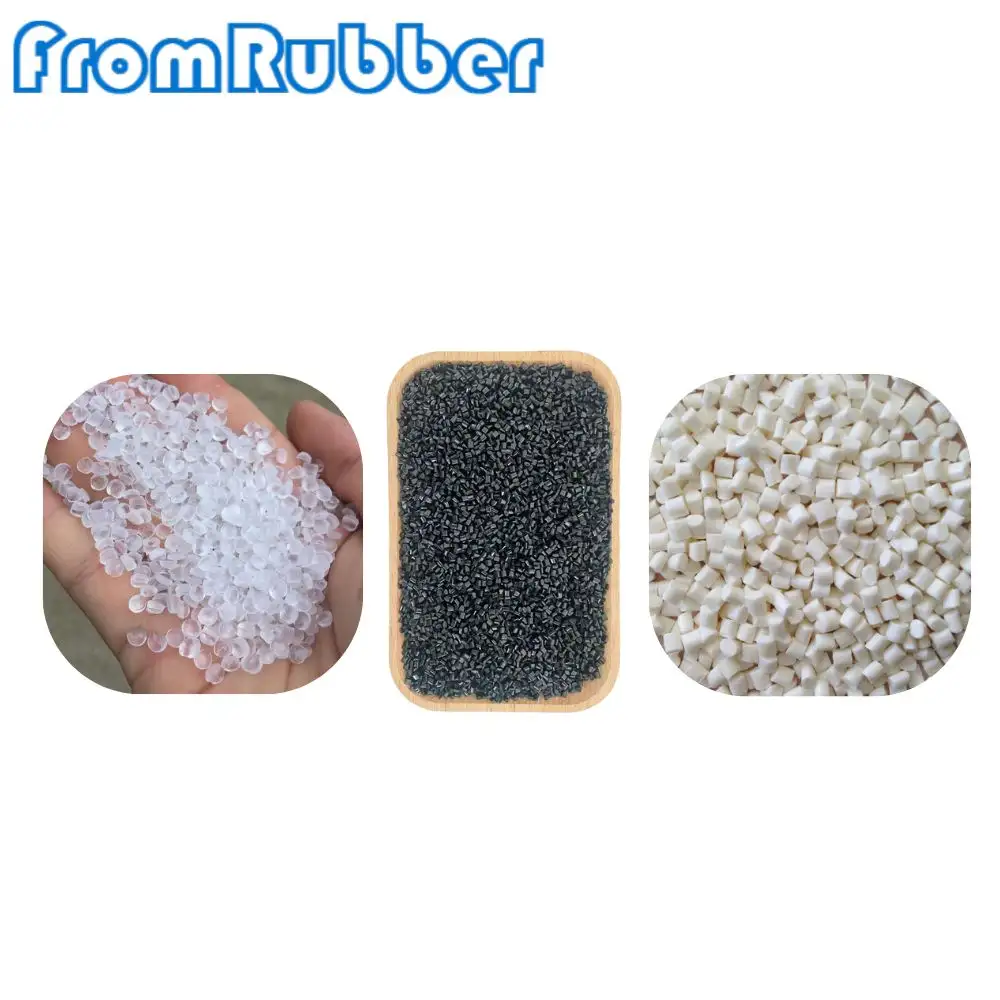
Selection matrix for common part types
| Part type | Usual resin route | Watch out for |
|---|---|---|
| Consumer enclosure | ABS, or PC/ABS where heat or impact is higher | ABS yellows outdoors; PC/ABS is notch-sensitive |
| Outdoor housing | ASA or UV-stabilised PC | Paint hides UV damage until it fails |
| Structural bracket | PA6 or PA66 with 20 to 30 percent glass | Moisture uptake changes dimensions after moulding |
| Gear or sliding part | POM | Poor bonding to anything; design for mechanical fixing |
| Chemical container | PP or HDPE | Low stiffness demands ribs rather than thick walls |
| Soft-touch grip | TPU or TPE overmould | Bond strength depends on the substrate and the gate position |
Wall thickness: uniform is not the same as correct
Uniform walls mould predictably, but a part that needs stiffness in one area and flexibility in another cannot be uniform everywhere. The rule is gradual transition: no step changes, ribs instead of thick blocks, and a section that tapers rather than jumps. A 3 mm wall next to a 6 mm boss will sink on the visible face, and no amount of packing pressure fixes it.
Ribs carry load; bosses carry fasteners
A rib at 50 to 60 percent of the wall thickness stiffens without sinking. A boss needs a wall thin enough to avoid a sink on the outside face and a radius at the root to avoid a stress riser, plus draft for ejection. Both should be placed so the gate fills the thick section last, not first.
Tolerance and the two numbers that matter
Injection-moulded plastics hold a general tolerance band that depends on the resin and the dimension size, and they hold it better in the direction of flow than across it. A drawing that puts a tight tolerance on a dimension measured across flow is asking for a tool modification that may not solve the problem. Mark the two or three dimensions that carry function, and let the rest sit in the class.
Warp deserves its own line because it is measured after the fact. A flat part that bows is usually a wall thickness or cooling problem, not a resin problem, and the fix is a geometry change or a gate move rather than a different material.
Commissioning a plastic parts design review
Send the 3D model with the cosmetic surfaces marked, the load or drop requirement, the environment and the assembly method. The custom plastic enclosure family covers the housing formats, and the custom injection moulded parts section covers brackets, bezels and clips.
Which plastic is best for an outdoor enclosure?
ASA or a UV-stabilised PC blend, unless the part also needs flame retardancy or RF transparency, which changes the shortlist. The requirement list decides, not the resin's reputation.
Why do my parts warp after moulding?
Usually uneven wall thickness or an asymmetric gate. Warp is a shrinkage pattern, and a different resin rarely fixes it without a geometry change.
How thick should a plastic wall be?
Thick enough for the load and thin enough to cool evenly. Most consumer housings sit between 1.5 and 2.5 mm, with ribs supplying stiffness rather than added wall.
Resin recommendations depend on the full requirement set, including certification and environment. Final selection should be confirmed against the supplier's grade data and a moulded trial part.
For a plastic part review, send the 3D model and the requirement list through the quotation file checklist.