2025 The Most Detailed Silicone Product Customization Process On The Internet (Suitable For Beginners)
- Share
- publisher
- karl
- Issue Time
- May 21,2025
Summary
Silicone product customization runs through seven gates, and each asks the customer for a different decision. Where programmes stall, what a real sample approval contains, and why the prototype tool pays for itself.
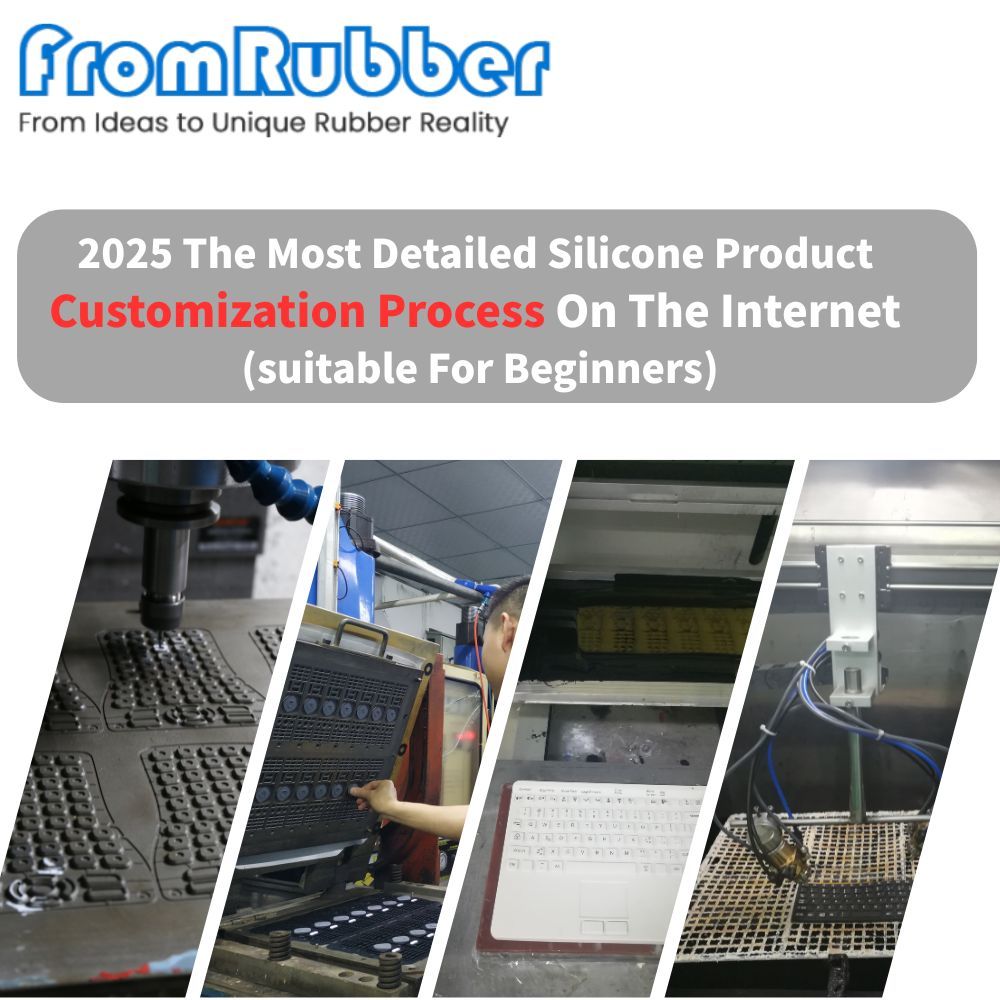
Programme management / custom moulding - reviewed 11 November 2026
Silicone product customization is not a single step called "making the mould". It is seven gates, and each one asks the customer for something different: a drawing, a decision, a sample approval, a volume commitment. Programmes that run late usually missed a gate rather than a machine slot, and the missed gate is almost always a decision the customer did not know was theirs.
The sequence below is the one that produces the fewest surprises on a first build, written from the point of view of what has to be decided before the next step can start.
Definitions. Silicone product customization is the process of turning a drawing into a moulded part with a defined compound, tool and inspection plan. DFM review is the manufacturability check that happens before the tool, where wall sections, radii, draft and parting lines are challenged. A prototype tool is a low-cavity tool used to prove geometry and feel, and it is not the same object as the production tool.
Gate one: the specification, not the picture
A photograph of an existing part is a starting point, not a specification. The first gate produces a document: hardness with tolerance, colour standard, tolerance class, the two or three functional dimensions, and the environment the part lives in. Without it, the quotation is an assumption and the tool is a guess.
Gate two: DFM, where cost is actually decided
Most of a part's cost is fixed before the cavity exists. A thick boss that could be a rib, a sharp internal corner that needs a radius, a parting line drawn where the customer will see it: each of those is cheap to change on screen and expensive to change in steel. The DFM response should come back as marked-up drawings, not as a paragraph of approval.
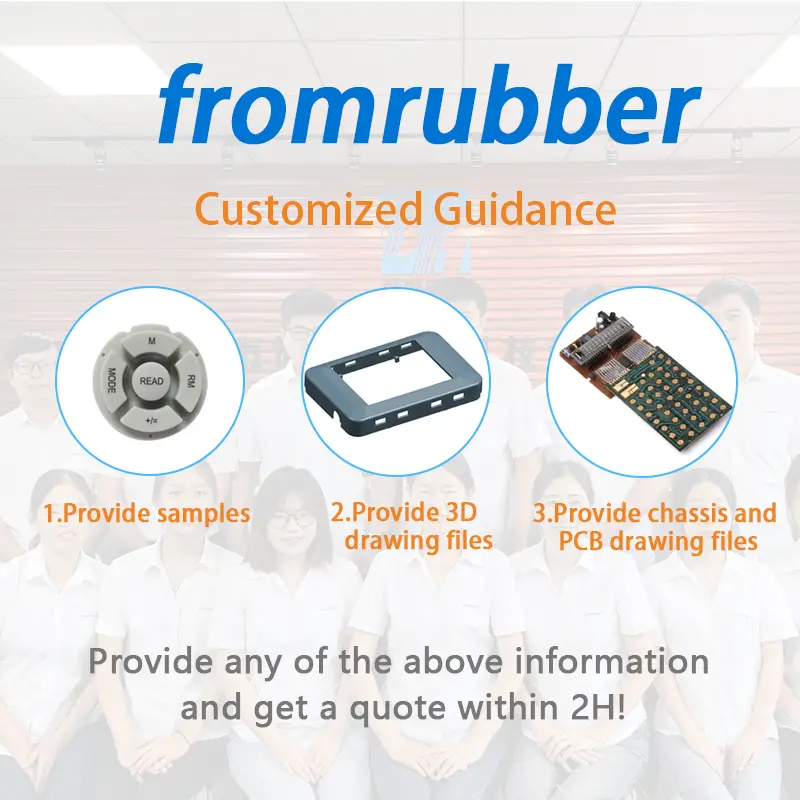
The seven gates of silicone product customization
| Gate | Deliverable | What the customer must decide |
|---|---|---|
| 1. Specification | Written part definition | Hardness, colour, tolerance class, environment |
| 2. DFM review | Marked-up drawing | Accept, or rework the geometry |
| 3. Quotation | Price with cavity count and route | Volume commitment and decoration sequence |
| 4. Prototype tool | Trial parts in the specified compound | Approve fit and feel, not just appearance |
| 5. Production tool | Multi-cavity tool to the frozen drawing | Freeze the drawing, in writing |
| 6. First article | Dimensional and force record | Sign against the drawing, or raise a deviation |
| 7. Production | Lots with inspection records | Accept the packing and AQL that will apply |
Where programmes actually stall
Two gates account for most delays. At gate four, the sample is judged on appearance and the fit is tested later, so a part that looks right and presses wrong moves forward. At gate five, the drawing is not formally frozen, so a small change during tooling re-opens dimensions that were already proven. Both are process problems rather than manufacturing problems, and both are solved by writing down the approval.
What "sample approval" should include
Fit in the real housing, force or compression measured, colour under the intended light, and a wash or wipe cycle if the part will see one. A signature on a photograph is not an approval; it is a hope.
Why the prototype tool pays for itself
A single-cavity tool in a small plate proves geometry, hardness and colour before anyone commits to a multi-cavity production tool. The value is not the sample itself; it is the decision it forces. Once a physical part exists, arguments about wall thickness and feel become measurements, and the production tool is cut against evidence rather than opinion.
Commissioning a custom programme
Start with the specification and the environment, then let the DFM review drive the geometry. The production process overview shows how the gates connect on the factory side, and the quotation file checklist lists what gate one needs.
How long does a custom silicone programme take?
It depends on the number of gates that need a decision from the customer. Tooling and sampling are the short part; specification and sample approval are usually the long part.
Do I need a prototype tool?
Not always. For a simple part in a known compound, a first article from the production tool may be enough. For anything with a feel requirement, the prototype is cheaper than a re-cut.
What freezes at gate five?
The drawing, the compound, the colour standard and the decoration route. A change after that point is a tool change, and it should be quoted as one.
Gate names and sequences here describe a typical programme; specific suppliers may combine or split steps. The decisions listed remain the customer's regardless of how the steps are grouped.
To start a programme, send the specification through the custom silicone quotation route.