Silicone Rubber Cases for Gadget Protection Custom Durable Covers
- Share
- publisher
- karl
- Issue Time
- Sep 16,2025
Summary
A custom silicone gadget case range is a matrix, not a model: every device needs its own cavity set, while the artwork is the only asset that travels. The tooling arithmetic, and when a two-model launch beats sixteen SKUs.

Case programme / variant planning - reviewed 11 November 2026
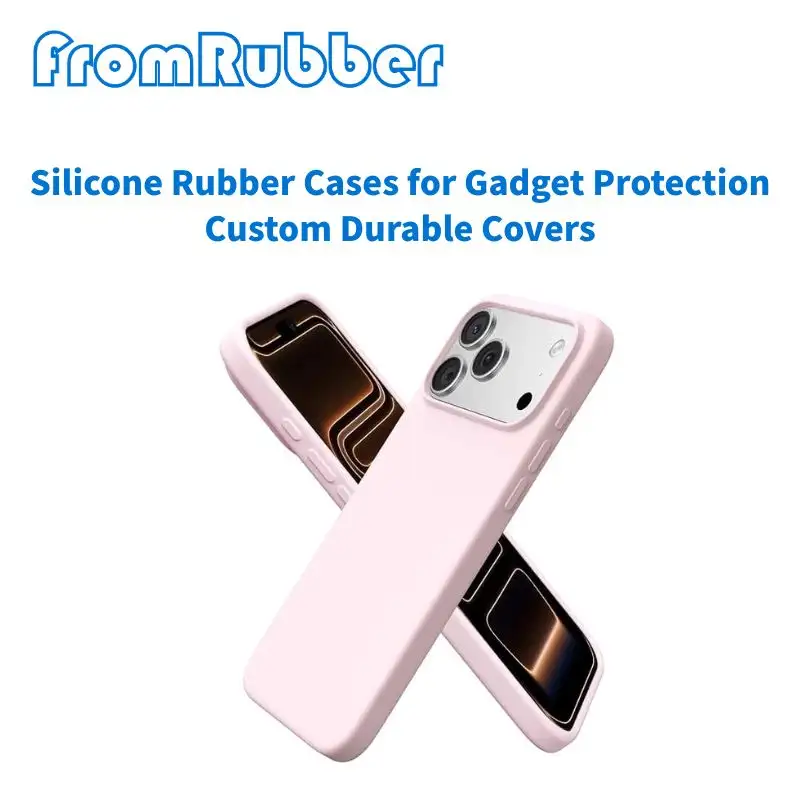
Every custom silicone gadget case programme starts the same way: one hero sample is approved, the buyer is happy, and the range is then described as "the same case in eight models". Those eight models are eight different tools. The artwork is the only asset that travels; the port openings, the split line, the button reliefs and the drop corners all have to be re-cut for each device.
The failure is rarely in the moulding. It happens when the model list arrives after tooling has started, when a port opening is copied from a similar phone, or when a 3 mm relief that reads well on one device swallows the whole wall on a smaller one. Planning the matrix before the first cavity is cut is what keeps a range shippable.
Definitions. A custom silicone gadget case is a moulded shell or sleeve made to a specific device rather than a generic size, so the openings, the split and the button pads are all device-specific. A shell family is a group of devices whose dimensions differ enough to need their own tool but little enough to share one fit logic. Split line is the seam where a two-part shell closes.
Programme reference points
- One cavity set per device model, covering the top and bottom shell.
- Moulded colour up to two per part; printed colour up to six.
- Artwork is re-drawn per model, never scaled from the largest device.
- Programmes are quoted from about 1,000 pieces per design on current case lines.
Why a custom silicone gadget case range is a matrix, not a model
Four features reset with every device
Port openings, split line, button relief depth and corner wall are the four dimensions buyers most often assume will carry over, and none of them do. A connector cut-out is not a hole in the artwork; it is a clearance around a plug shell, and plug shells differ by brand and by cable. A relief that reads as a character detail on a tablet becomes a lump on a phone, because the same 3 mm is a different share of the part width.
The artwork is the only shared asset
What a range really shares is the art direction: palette, character, texture language. The geometry does not travel, and a designer who scales a hero file to fit a smaller device will produce a case whose ports are in the wrong place and whose corners are too thin to protect anything.
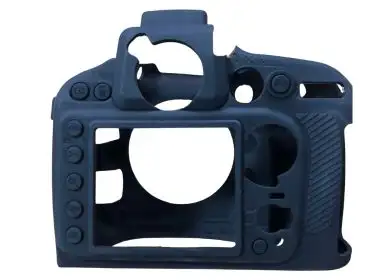
The four features that have to be re-cut
| Feature | What is set per model | Failure if carried over |
|---|---|---|
| Port openings | Position from the device 3D, chamfer on the inside face, no material in the plug envelope | Plug either grips or rattles, lint packs against the port |
| Split line and hinge | Line on a natural device edge, controlled land at the mating face, overlap for peeling | Case looks misaligned even when the fit is correct |
| Button relief depth | Web thickness under the pad, pad height against the wall, hard stop | Button feels dead, or the pad wobbles and triggers |
| Corner wall | Local build-up at four corners, radius carrying load into the side wall | Thick uniform shell: heavy, stiff and still fragile at the corner |
Energy is absorbed at corners, not uniformly
Thickening the whole shell is the reflex answer to a drop specification. It also doubles the weight, stiffens the grip and changes how the case sits in a pocket. Build-up at the four corners, with a radius that carries load into the side wall and a base that stays thin enough to flex, protects better and costs less material.
Colour is a plan, not a tool
When the colour is in the compound, a colourway is a minimum run rather than a new tool. That distinction is most of the programme cost: two core colours at launch, seasonal colours after the range sells through, and two-colour moulding reserved for the hero model only.
When eight models actually makes sense
Range size is a promise about inventory, not about ambition. At a 1,000-piece minimum per design, eight models in two colourways is sixteen minimum runs, and the market only has to under-perform once for half of them to become dead stock. A two-model, three-colour launch that sells through, followed by a second wave, usually beats sixteen thin SKUs, because the art direction has already been validated on a real shelf.
The practical rule is to launch the models that share a shell family first. They use the same fit logic and the same art treatment, so the second and third tools are faster and cheaper to prove than the first. Models that need a genuinely different architecture, a camera body, a wearable band or a foldable, earn their own programme rather than a line in the first one.
What a quotation needs
The four inputs that make a case range quotable are the exact model list with generations, 2D or 3D geometry for each device, the drop specification including surface, and the commercial frame: target retail, launch colourways and packaging format. Reference builds on this site include the multi-colour phone case, the earphone charging case cover and the wider custom multi-colour silicone case range.
Can one case tool cover several phone models?
Only where the devices share a shell family and the port and button positions coincide. In practice that is rare, and attempting it usually produces a case that fits both badly.
Does printed colour cost less than moulded colour?
At low volume, usually yes, because there is no second shot. At high volume the print setup per model and the wear at high-touch edges often make moulded colour the better total cost.
How many colours can a moulded case carry?
Two moulded colours per part is the practical limit. Further colours come from print, which is why complex art is usually quoted as moulding plus print rather than moulding alone.
Minimum quantities, tool counts and colour limits are programme assumptions, not a quotation. They should be confirmed against the specific device list and volume before tooling is released.
To plan a case range, send the model list and the art direction through the quotation file checklist.