How Custom Injection Molding Enclosure the Future of Smart Home Security
- Share
- publisher
- Suey
- Issue Time
- Dec 3,2025
Summary
A custom injection molding enclosure is the antenna window, lens holder, seal and tamper barrier at once. Where those jobs conflict, and which decisions have to be fixed before the cavity is cut.

Smart home hardware / enclosure engineering - reviewed 11 November 2026
A custom injection molding enclosure for a security device is not packaging. It is the antenna window, the lens holder, the seal, the tamper barrier and the mounting bracket at the same time, and every one of those jobs competes with the others. The devices that survive installation are the ones where those conflicts were resolved on the drawing rather than in the field.
Doorbell cameras, motion sensors and alarm keypads all share the same design problem: the housing has to disappear into a hallway while still doing radio, optical and sealing work. That is why the enclosure is now designed in parallel with the electronics rather than after them.
Definitions. A custom injection molding enclosure is a moulded plastic housing built to a specific device rather than a catalogue box, so the wall thickness, the openings and the internal features are all part of the design. An RF window is a region kept free of metal and heavily filled resin so the radio can transmit. A light pipe is a moulded transparent element that carries an LED to the visible surface without an opening in the shell.
Design reference points
- Outdoor units are commonly specified at IP65 or IP67, with the seal checked after thermal cycling rather than at room temperature only.
- PIR sensors need a window that is transparent to infrared, not merely clear to the eye; the two are different materials.
- Wi-Fi, Bluetooth and sub-GHz links each tolerate a different amount of filled resin in the antenna path.
- Flame-retardant grades are specified for mains-powered indoor units, and those grades usually reduce impact strength.
Why a custom injection molding enclosure is a functional part, not a box
The antenna sets the wall, not the designer
A metal backplate, a metallised finish or a glass-filled wall in front of the antenna will absorb the link budget. The usual resolution is to keep the antenna area in unfilled resin and to place the metal where it is needed for structure, which means the RF layout has to exist before the housing is modelled. Retrofitting a window into a finished shell usually means a second tool.
The PIR window is an optical part
Motion sensors do not look through glass; they look through a material that passes the infrared band they detect. A polycarbonate window that looks perfectly clear to the eye can block the wavelength that matters, and the sensor reads short range. The window material and its thickness belong in the same review as the lens geometry.
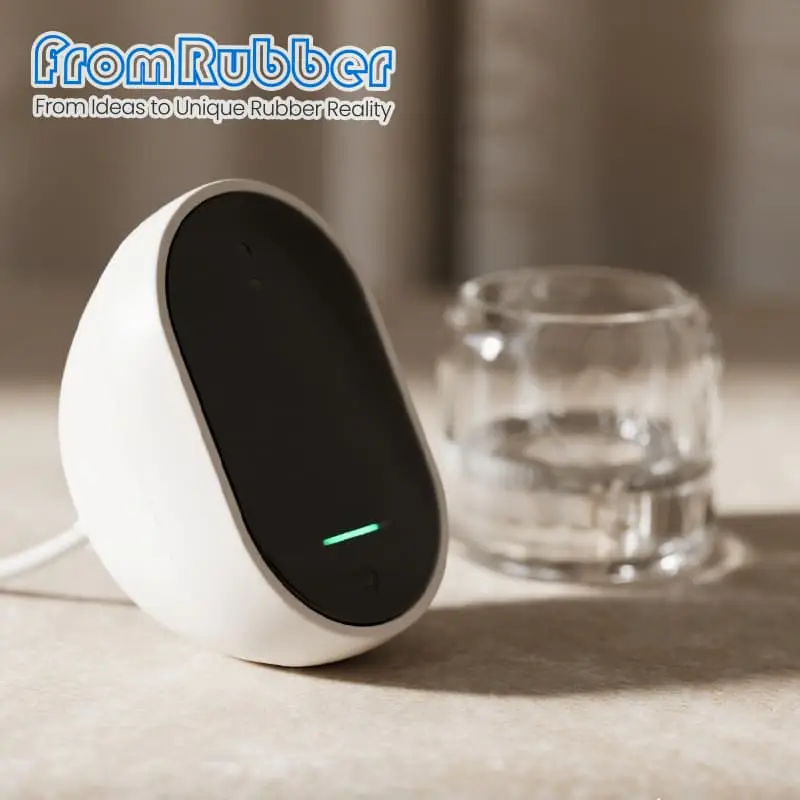
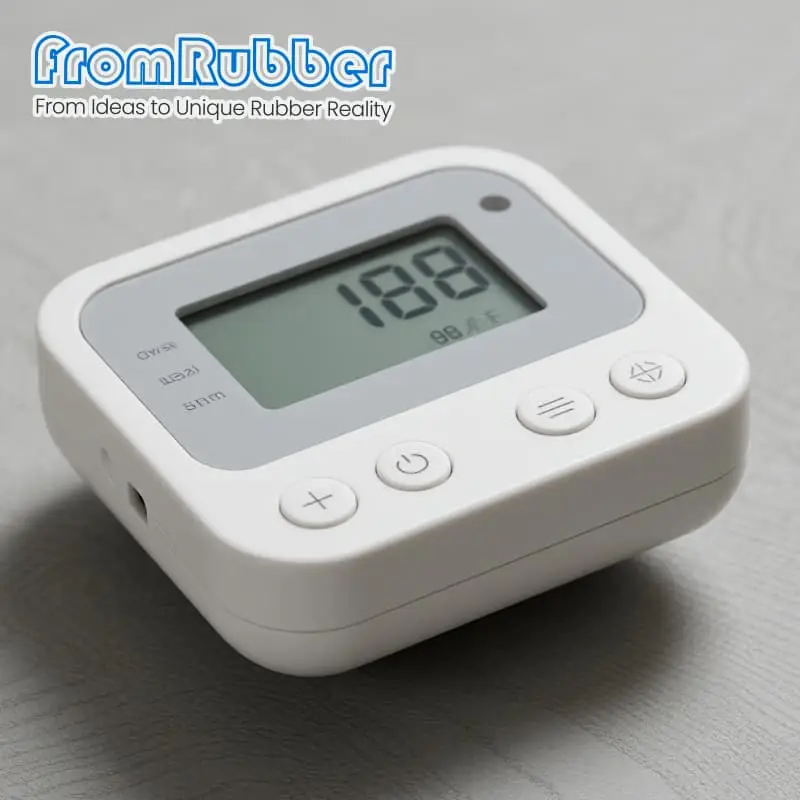
Function-to-feature map
| Function | Housing requirement | Failure if missed |
|---|---|---|
| Wireless link | Unfilled window over the antenna, wall thickness recorded per band | Dropouts at the far end of the house, blamed on the router |
| Motion sensing | IR-transparent window at the correct thickness | Reduced detection range, false triggers through heat sources |
| Camera or LED | Moulded lens or light pipe with a sealed joint | Glare, uneven backlight, water path at the lens edge |
| Ingress | Gasket groove inside the fastener circle, sealed gland | Condensation and corrosion after the first winter |
| Tamper resistance | Ribs at the seam, recessed fasteners, no pry lip | The unit is removed or opened without leaving a mark |
| Service | Internal sled or keyed module bay | Whole fixture replaced to change one board |
Tamper resistance is a wall and screw decision
Most residential security hardware is not attacked with tools; it is unclipped. A seam with a pry lip invites a fingernail, and a screw that is reachable from outside invites a driver. Overlapping the seam, recessing the fasteners and adding a rib behind the joint costs almost nothing in tooling and changes the attack from seconds to minutes.
Serviceability protects the brand more than the warranty
A unit that can be opened and re-sealed on site keeps its ingress rating only if the seal is a serviceable gasket rather than a bead of adhesive. Designing a keyed module bay and a replaceable gasket adds a few grams and removes an entire class of complaint: the customer who replaces a whole fixture because one sensor failed.
Material routes for indoor and outdoor units
ABS is the default for indoor units: easy to mould, good cosmetics, and RF-friendly. It yellows outdoors. ASA holds colour and impact strength in sun, which is why doorbells and outdoor sensors usually move to ASA or a UV-stabilised PC blend. Mains-powered indoor hardware needs a flame-retardant grade, and those grades are notch-sensitive, so ribs and radii have to be designed before the resin is fixed. For units that must dissipate heat from a camera processor, a thermally conductive filler helps, at the cost of radio performance in the same wall.
From drawing to production tool
The sequence that avoids rework is: electrical and RF layout, window and lens decisions, mechanical model, prototype tool, fit and ingress trial, production tool. A prototype tool in the region of a week and production in the region of three to four weeks is the usual rhythm for this product family, and it only holds if the window decisions are made before the cavity is cut. The custom plastic enclosure family covers the housing format, and the custom injection moulded parts section covers the internal sleds, bezels and clips that complete the assembly.
Does the enclosure material affect Wi-Fi range?
Yes. Filled and metallic materials absorb radio energy. Keeping the antenna path in unfilled resin, and keeping metal out of the near field, is the difference between a stable link and an intermittent one.
Can a clear window double as a PIR window?
Not usually. Visual clarity and infrared transmission are different properties, and a window chosen for looks can block the wavelength a motion sensor needs.
Is IP67 enough for a doorbell camera?
It covers dust and temporary immersion, but not a pressure jet or long-term condensation. The seal design, the gasket material and the venting all contribute, and they should be tested together.
Ingress ratings and radio performance apply to the assembled unit, including gaskets, lenses and the installed antenna. Values here are design reference points, not a qualification of any specific product.
For a smart home enclosure programme, send the RF layout and the sensor drawing through the quotation file checklist.