Breaking news! A new breakthrough in the cost of silicone keypads has achieved!
- Share
- publisher
- Suey
- Issue Time
- Dec 25,2025
Summary
Silicone keypad cost is decided by cavity count, cycle time, decoration passes, inspection and yield, not by the price of compound. How to read a quotation line by line and where a redesign can genuinely cut unit cost.

Keypad manufacturing / unit cost analysis - reviewed 11 November 2026
The cost of a silicone keypad is decided by five things, and only one of them is the price of silicone. Cavity count, cycle time, the number of print and coating passes, trimming and inspection labour, and the yield of the tool decide the unit price far more than the compound. A buyer who negotiates on material price alone is negotiating the smallest line in the quotation.
There is a second reason to understand the structure: it shows where a redesign can genuinely cut cost without changing the feel of the key. Sometimes a 15 percent saving is available by consolidating two print passes or by rationalising a tolerance, and no amount of supplier pressure will produce it.
Definitions. Silicone keypad cost is the landed unit price of a moulded keypad, including tooling amortisation, material, moulding, decoration, inspection and packaging. Cavity count is the number of parts a single mould produces per cycle. Yield is the proportion of moulded parts that pass inspection, and it multiplies every other cost in the quotation.
Cost structure this article is built on
- Tooling is a one-off cost that becomes a per-unit cost through the order quantity; doubling the quantity halves its contribution.
- Cycle time is set by the thickest section of the part, because silicone cures from the outside in.
- Each print or coating pass adds a handling step, a cure step and an inspection point.
- Yield acts as a multiplier: a 5 percent scrap rate adds roughly 5 percent to every other cost line.
- Compression moulding and liquid silicone injection have different cost curves, and the crossover depends on volume and geometry.
Where silicone keypad cost actually sits
Cavity count sets the shape of the curve
A single-cavity tool is cheap to build and expensive per part. A 16-cavity tool costs more upfront and spreads the cycle over sixteen parts, which is why the unit price falls sharply between the first and second order. The right cavity count is a function of annual volume and of how long the part will stay in production, not of the quotation that looks lowest today.
Section thickness drives cycle time
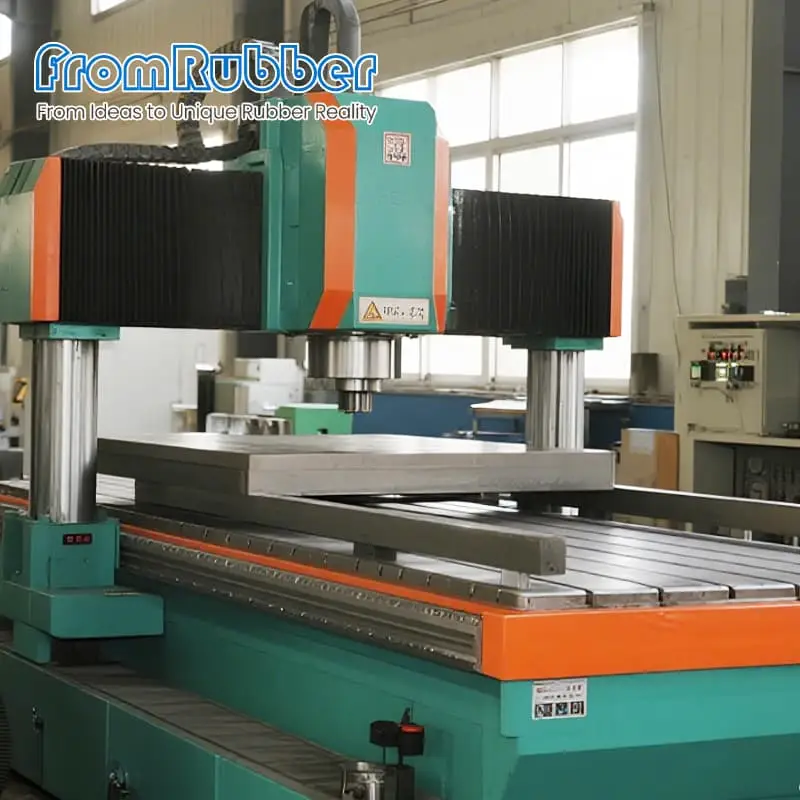
Silicone cures by heat transfer, so a key with a 4 mm boss cures on the boss schedule even if the web is 1 mm. Reducing a local thick section often saves more per part than switching compound, and it usually improves the key's feel at the same time.
The five lines in a keypad quotation
| Cost line | What moves it | Lever a buyer controls |
|---|---|---|
| Tooling amortisation | Cavity count, tool life, order quantity | Commit to a volume, or accept a higher unit price on a cheap tool |
| Material | Compound grade, part weight, flash and runner loss | Remove unnecessary thickness; avoid over-specified compound |
| Moulding | Cycle time, press occupancy, labour per press | Simplify geometry; reduce thick sections; allow a standard platen size |
| Decoration | Number of print passes, coating, laser steps | Consolidate colours; move fine detail into the mould where it belongs |
| Inspection and packing | Inspection plan, cosmetic standard, packaging format | Define a realistic cosmetic standard instead of "no defects" |
Decoration is where quotes diverge most
Two suppliers can quote the same drawing 30 percent apart because one has assumed three print passes and the other has assumed one plus a protective coat. The drawing usually does not say. Before comparing prices, fix the decoration sequence: how many colours, whether a protective coat is required, whether the legend is printed or moulded, and which surface the wear test is judged against.
Cosmetic standards inflate cost quietly
A specification that says "no visible defects" will be inspected against whatever the inspector can see, which is why the same part costs different amounts at different factories. A written cosmetic boundary, with an approved limit sample, is the only way to compare prices on equal terms.
Two processes, two cost curves
Compression moulding is the traditional route for silicone keypads: lower tool cost, longer cycle, and excellent control of flash on a simple part. Liquid silicone injection runs faster cycles with tighter dimensional control and less manual handling, but the tool and the machine time cost more. The crossover sits where volume and tolerance meet: high volume with a tight thickness tolerance favours injection, low volume with a generous tolerance favours compression.
The choice also affects decoration, because a flatter, more consistent surface prints with fewer rejects. That is a cost benefit that never appears as a line item and always appears in the total.
Reading a cost-reduction claim
When a supplier announces a percentage reduction, the useful question is which of the five lines moved. A material reformulation that cures faster shows up in cycle time; an automation investment shows up in inspection and trimming; a scrap reduction shows up as yield. Without that mapping, a headline percentage is a marketing number, and it should be validated against a quotation for the buyer's own part rather than accepted as a market price.
Commissioning a keypad cost review
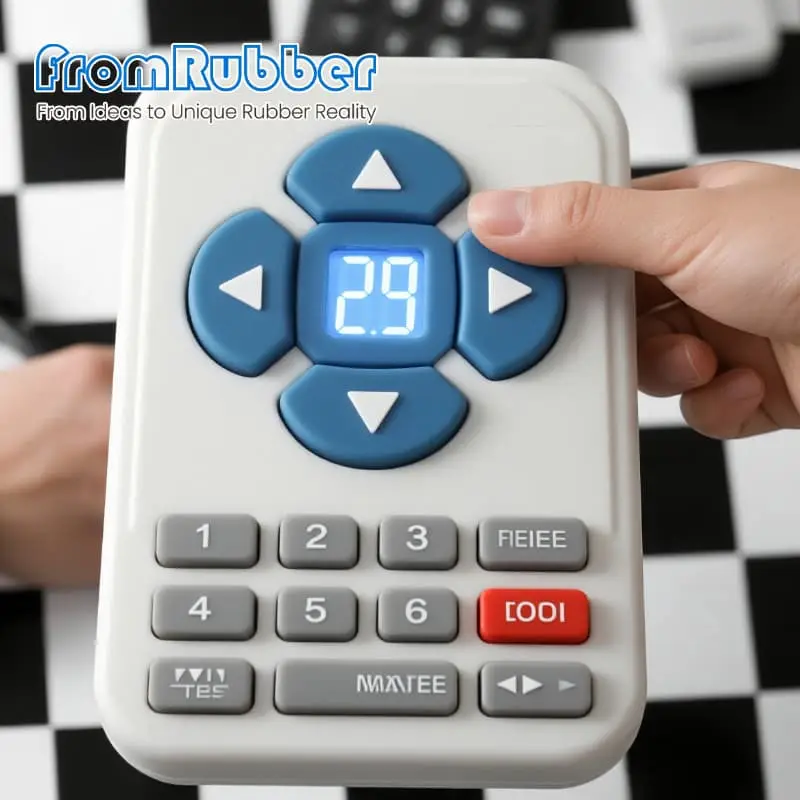
The brief that produces a comparable quotation contains the drawing, the annual volume, the decoration sequence, the cosmetic standard and the actuation target. The silicone keypad manufacturing section covers the formats, and the custom silicone rubber keypad page shows the standard construction. For a full file list, use the quotation checklist.
What is the biggest cost driver in a silicone keypad?
Usually the tooling amortisation at low volume and the moulding cycle at high volume. Material is rarely the dominant line unless the part is large or the compound is over-specified.
Does a higher cavity count always reduce unit cost?
Only if the volume fills the tool. A 16-cavity tool that runs twice a year carries the same tooling cost with less benefit than a 4-cavity tool that runs monthly.
Can print be replaced by moulding to cut cost?
Often, yes. Moving a legend into the mould removes a print pass and a wear point, at the cost of a more complex cavity and a colour limitation of two moulded colours per part.
This article describes cost structure, not a specific price list. Any percentage saving quoted by a supplier should be mapped to a cost line and validated against a quotation for the buyer's own part.
For a cost review, send the drawing, volume and decoration sequence through the custom silicone quotation route.