Upgrade Your Styling Game: Why You Need a Hair Dryer Silicone Blowpipe
- Share
- publisher
- Suey
- Issue Time
- Mar 16,2026
Summary
A hair dryer silicone blowpipe is an airflow part, not a colour accessory. Outlet open area, sleeve interference, wall thickness at the grip and surface temperature under load decide whether the nozzle stays on and stays touchable.

Beauty tools / accessory engineering - reviewed 11 November 2026
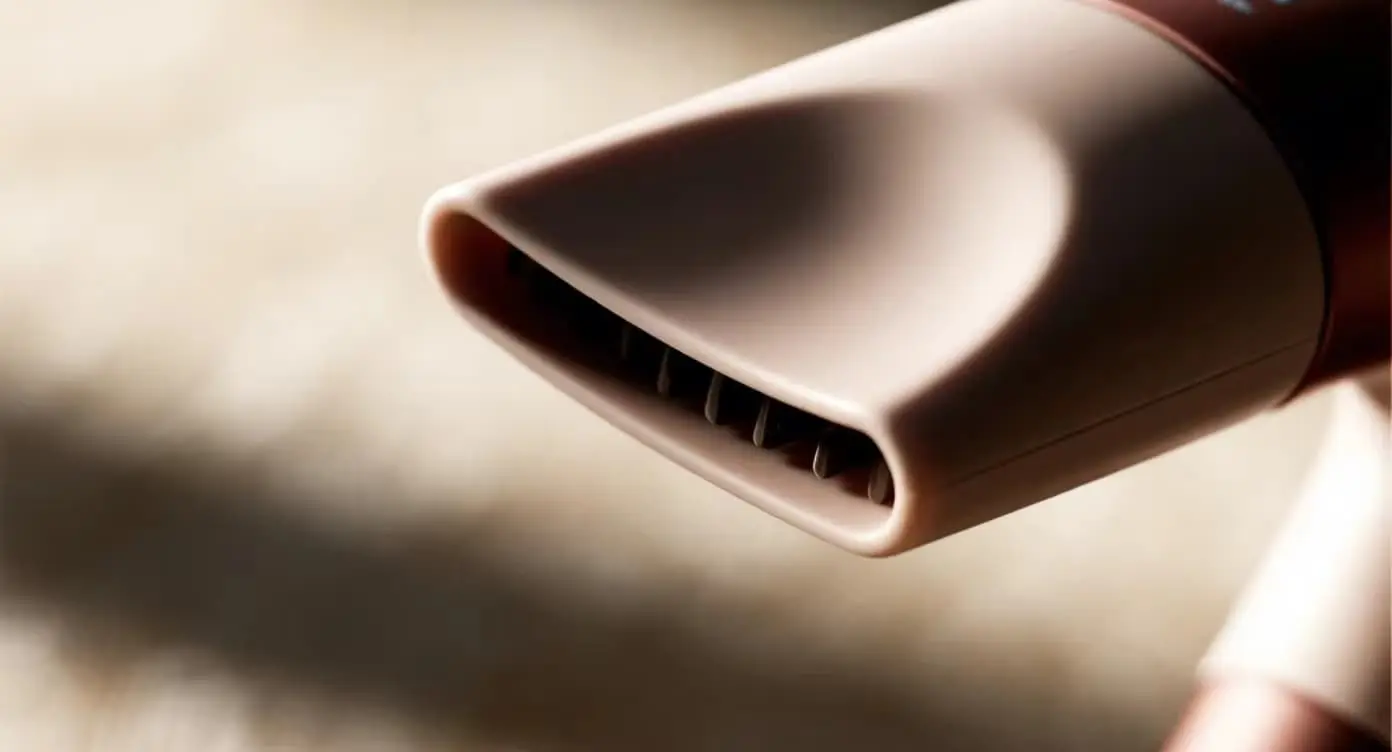
A hair dryer silicone blowpipe is a small part with an oversized job: it has to push hot air through a narrow slot without restricting the airflow enough to overheat the dryer, hold onto a nozzle it does not own, and stay cool enough to touch. The colour is the easy part. The fit and the airflow path are what decide whether the accessory is used or left in a drawer.
Concentrator nozzles are the most common aftermarket accessory in the hair tool category, and the least engineered. Silicone offers two real advantages over rigid plastic: a sleeve that conforms to slightly different nozzle diameters, and an outer surface that stays comfortable while the air inside is hot. Both advantages disappear if the wall is too thick or the outlet too narrow.
Definitions. A hair dryer silicone blowpipe is a moulded silicone nozzle that fits over the dryer outlet and narrows the airflow into a directional stream. The outlet slot is the narrow opening that shapes the stream, and its total open area, not its width alone, determines the back pressure. A retaining sleeve is the part of the nozzle that grips the dryer outlet and keeps the accessory in place under airflow.
Design values used in this article
- Platinum-cured silicone for this application is specified for continuous service well above the air temperature a domestic dryer produces, with short excursions higher still.
- Wall thickness over the grip area is kept low enough that the surface stays touchable while the air inside is hot.
- The outlet slot is sized by open area rather than by width, because a narrow slot with the same area as a wider one behaves similarly.
- Retaining sleeves are moulded with a slight interference on the dryer outlet, so the nozzle stays on without a clip.
Why airflow, not heat resistance, is the hard requirement
A narrow slot raises back pressure
Restricting the outlet reduces the mass of air moving past the heating element, and a dryer with a thermal cut-out will cycle or shut down. That is the failure mode buyers never see in a sample room, because it only appears on the highest heat setting after several minutes. The slot should be sized so the accessory does not reduce the dryer's airflow by more than a modest margin, and the open area should be checked against the dryer's own outlet rather than against a cosmetic target.
Fit is a range, not a diameter
Dryer outlets vary in diameter and in taper, and some have a locating tab. A silicone sleeve can absorb a millimetre or two of variation, which is exactly why it works as an aftermarket part, but it cannot absorb a tab that has nowhere to go. The sleeve should be drafted to match the common tapers, with a rib that stops it sliding on too far.
What to specify before a tool is cut
| Parameter | Why it matters | How to set it |
|---|---|---|
| Outlet open area | Controls back pressure and dryer behaviour | Match the dryer outlet area, then narrow the shape rather than the total area |
| Sleeve interference | Holds the nozzle on under airflow | About a millimetre of compression on the measured outlet diameter |
| Wall thickness | Touch temperature at the grip | Thin at the grip, thicker at the outlet where the air is fastest |
| Hardness | Sleeve stretch versus shape retention | Softer for a wide fit range, firmer for a slot that must not deform |
| Locating feature | Stops the nozzle rotating or over-seating | A moulded rib or shoulder matched to the dryer outlet |
The touch-temperature claim needs a test, not an adjective
"Stays cool to the touch" is a claim about the outer surface after a defined run time on a defined setting. It should be measured at the grip area with a contact probe after the dryer has run for several minutes, because the surface temperature depends on wall thickness and on how much air is moving behind it. Without that test, the claim is a description of the material, not of the product.
Cleaning and the seam that collects product
Hair product residue builds up on the inside of any nozzle. A moulded part with a smooth internal bore and a radius at the slot cleans in seconds; a part with a step or a sharp internal corner does not. The parting line should sit outside the airflow path where possible, because flash on an internal edge disturbs the stream and collects residue.
Colour, branding and the retail set
Moulded colour is durable and matches the dryer family; print on a nozzle wears at the slot where fingers grip. A debossed logo on the sleeve is the practical branding route, kept away from the sealing interference so it does not change the fit. For salon programmes, a colour-coded set by slot width is more useful than a decorative range, because it lets a stylist pick the nozzle by function rather than by appearance.
Commissioning a hair dryer silicone blowpipe
The brief needs the dryer outlet diameter and taper, the airflow the dryer must retain, the slot width the brand wants to sell, and the surface-temperature target at the grip. The wider custom silicone rubber parts range covers adjacent beauty tools, and the production process overview explains the tooling route.
Does a silicone nozzle fit any hair dryer?
It fits a range, not every dryer. Silicone absorbs a millimetre or two of diameter variation, but a locating tab or a very different taper needs its own tool.
Can a narrow nozzle damage a hair dryer?
It can trigger a thermal cut-out if it restricts airflow too much on a high heat setting. The outlet area should be sized against the dryer's own outlet, and the combination tested rather than assumed.
Is silicone better than plastic for a concentrator?
For touch comfort and fit tolerance, yes. For a rigid, thin, precisely defined slot, a moulded plastic nozzle can hold shape better, which is why some professional dryers still use one.
Temperature and airflow behaviour depend on the dryer, the setting and the nozzle geometry together. Values here are design reference points and should be confirmed by testing the actual combination.
For a beauty tool programme, send the dryer outlet drawing and the target slot through the custom silicone quotation route.