13.4% Annual Growth: Silicone Writing Tablet Cases Evolve from Protective Shells to Stylish Accessories
- Share
- publisher
- Suey
- Issue Time
- Apr 9,2026
Summary
A silicone writing tablet case is a thin-wall frame around a rigid panel: wall uniformity, corner sections, stylus storage and the decoration route decide whether it survives a school term. Tooling and order options for a first season.

Consumer electronics accessories / thin-wall moulding - reviewed 11 November 2026
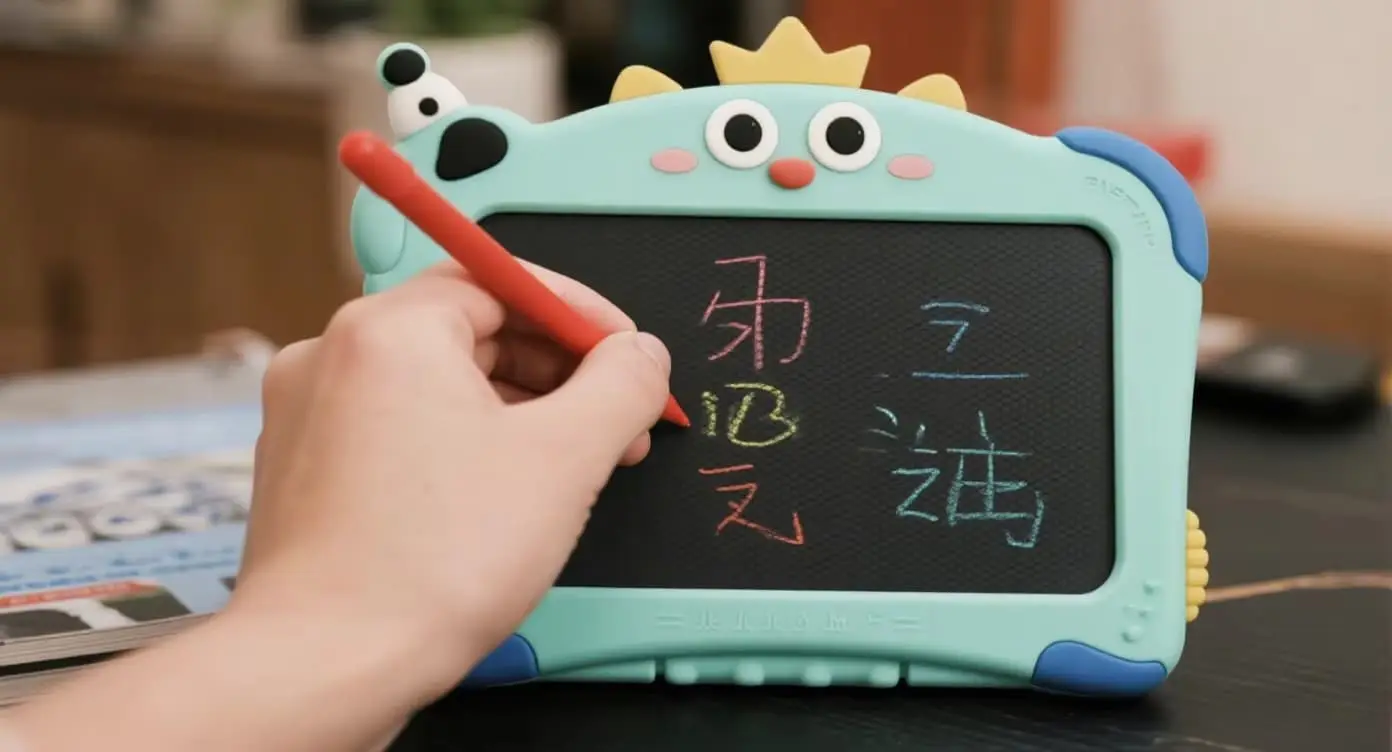
A silicone writing tablet case is a thin-wall moulding wrapped around a screen. The frame has to hold the LCD without loading it, the corners have to absorb a drop onto a tiled floor, and the whole thing has to look like a character without the decoration interfering with the writing surface. Those three requirements meet at the same wall, and that is where the tool design is decided.
Writing tablets have moved from a stationery curiosity into a school and gifting category, and the case has become the part that carries the design. Growth figures in this segment are widely quoted from third-party analyses and are not re-verified here; what can be described precisely is what a brand has to decide to make a case that survives a school term.
Definitions. A silicone writing tablet case is a moulded frame, usually with a rear shell, that surrounds an LCD writing panel and protects its edges and back. Wall uniformity is the consistency of thickness around the frame, and it matters because thin spots cool faster and shrink differently, which produces warping next to a rigid panel. In-mould decoration means the colour or graphic is formed with the part rather than applied afterwards.
Design values used in this article
- Frames are moulded in liquid silicone rubber, commonly at Shore A 50 to 70, which gives a flexible edge that will not chip.
- Wall sections around the panel opening are typically kept within a narrow band, because a thick-to-thin step next to a rigid LCD is where warping starts.
- Decoration routes are solid moulded colour, a two-colour shot, in-mould print, or a soft-touch coating, in ascending order of tool complexity.
- Low-volume programmes can start around 1,000 pieces on an existing shape, with a new character tool taking about 10 days.
Why a silicone writing tablet case is a thin-wall problem
Wall uniformity around the window
The frame is a picture frame, and a picture frame warps when one side cools before the other. Keeping the section even around the opening, and adding a small rib at the corners rather than thickening the whole side, is what keeps the case flat enough to sit on a desk without rocking over the screen.
Drop protection lives in the corners
A tablet dropped from a school desk lands on a corner far more often than on a face. The corner is also where a thin frame has the least material. A local increase in section at the four corners, with the exterior rounded so the load spreads, does more for survival than a thicker back panel. The screen must not be the load path, so the frame has to stand slightly proud of the LCD face.
Decoration routes and what each costs
| Route | Durability | Tool impact |
|---|---|---|
| Solid moulded colour | Highest; colour runs through the part | None beyond the base tool |
| Two-colour shot | High; both colours are moulded | Second shot tool or insert, higher cost |
| In-mould print or film | Good; graphic is encapsulated | Print tooling plus registration control |
| Soft-touch coating | Moderate; wears at edges with heavy use | No tool change, but a process step and a cure check |
| Pad print on the surface | Lowest for a child's product | Cheapest, and the first thing to wear |
Stylus storage decides the opening geometry
Most writing tablets lose their stylus before they lose their screen. A moulded slot or tether point has to be placed where the stylus cannot press on the panel, and where a child can reach it without turning the case over. That single feature changes the frame outline, so it belongs in the first sketch rather than in a revision.
Sampling an existing shape first
Brands entering this category usually get further, faster by private-labelling an existing case shape for the first season and saving the character tool for the second. It tests the channel and the price point with a real product, and it produces the sales data that justifies a dedicated tool.
Material, cleaning and the school environment
Silicone survives the cleaning regime in a classroom better than most alternatives: it tolerates alcohol wipes, does not craze, and does not develop the sticky surface that plasticised PVC does after a summer in a warm room. The practical requirement is that the compound is fully cured and free of low-molecular residue, because an under-cured part will smell and will mark the panel it touches.
Commissioning a silicone writing tablet case
The brief needs the panel dimensions and thickness, the drop height the product must survive, the number of colours, and the stylus arrangement. Colour and character are the last decisions, because they depend on the tool route rather than the other way round. Adjacent formats are covered under custom silicone rubber parts and custom silicone cases, and the tooling sequence is set out in the production process overview.
Is silicone good for a writing tablet case?
It is good for the frame: flexible at the edges, quiet, grippy and resistant to cleaning agents. It is not transparent enough to protect the panel as a cover, so most designs use an open frame rather than a full enclosure.
How thick should the frame be?
Thick enough at the corners to absorb a desk-height drop, and even around the opening so the case does not warp against the rigid panel. The exact section depends on the panel size and the silicone hardness.
Can a character be added to an existing case?
Usually as a new tool built around the proven frame, or as an insert if the frame was designed with a pad for it. Retrofitting a character to a frame that was not designed for one tends to thin the wall behind it.
Market growth figures for this category are quoted from third-party analyses and are not independently verified in this article. Tooling and lead times quoted are the manufacturer's standard values and vary with complexity.
For a case programme, send the panel drawing, the drop target and the decoration route through the quotation file checklist.