The Growing Demand for Car Interior Protection Accessories: A Market Opportunity for Car Silicone Cup Holders
- Share
- publisher
- Suey
- Issue Time
- Apr 20,2026
Summary
A car silicone cup holder is a tolerance problem before it is a colour sample. Well taper, base radius, anti-rattle ribs and material stability at cabin temperature decide whether a liner seats properly or rattles loose.
Automotive accessories / fit engineering - reviewed 11 November 2026
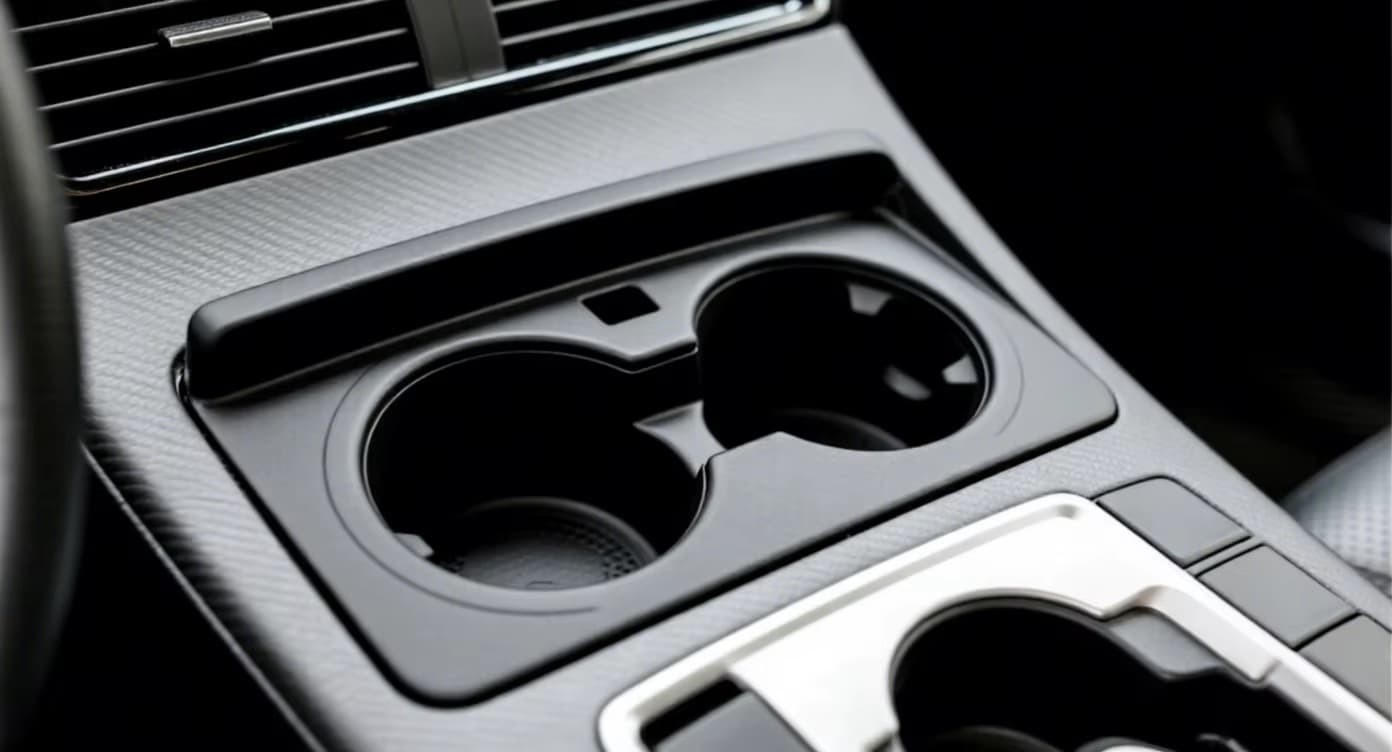
A car silicone cup holder lives or dies on two millimetres. The console well is tapered, the diameter varies between models by more than most buyers expect, and a liner that fits one vehicle rattles in the next. The brands that win this category are the ones that treat the insert as a tolerance problem rather than a colour sample, and that build a small number of tools around measured wells instead of guessing at a universal size.
The accessory category around car interior protection keeps expanding because interiors are expensive to repair and cheap to protect. Within it, the cup holder liner is the most universal item, which is also why it is the most crowded. Differentiation comes from fit, material stability and branding that does not require a new tool per model.
Definitions. A car silicone cup holder is a moulded silicone insert that drops into the console well to absorb vibration, catch spills and protect the console surface. The well is the recess in the console, usually tapered and often with a locating notch. Anti-rattle ribs are the small moulded features on the outer wall that take up the gap between the insert and the well.
Design values used in this article
- Cup holder wells in passenger cars commonly fall in a diameter band of roughly 65 mm to 90 mm, with a taper of a few degrees from top to base.
- Inserts are moulded in platinum-cured silicone, chosen for odour control and for stability at cabin temperatures that can exceed 70 degrees Celsius in sun.
- Logo work typically starts at around 500 units, which is the threshold that makes a branded insert viable for a smaller brand.
- Sample turnaround for an existing shape runs in the region of two weeks, with production following at three to four weeks.
What makes a car silicone cup holder fit
Taper beats diameter
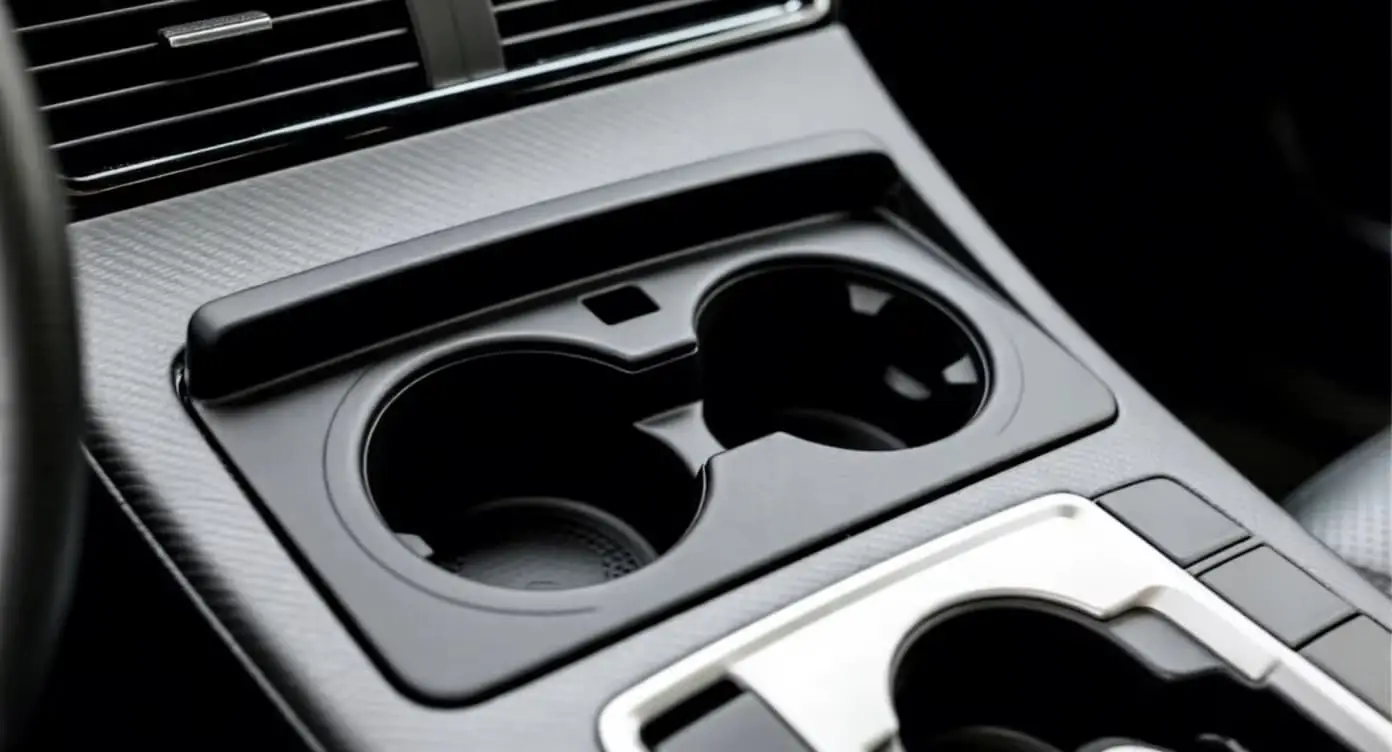
Two wells measuring the same at the rim can differ by several millimetres at the base, and it is the base that decides whether the insert sits flat or rides up. Measuring the taper, not only the opening, is the difference between a liner that seats and one that tilts when a bottle is pressed into it. A moulded wall that follows the taper also grips along its full height instead of pinching at the top.
Ribs do three jobs
Anti-rattle ribs centre the insert, allow air to escape as it is pressed in, and give the wall somewhere to deflect when a cup is pushed down. Ribs that are too tall make insertion difficult; ribs that are too shallow leave the liner loose. Two or three shallow ribs per side is usually enough, placed below the rim so they do not interfere with the console trim.
What to measure before a tool is cut
| Dimension | Why it matters | How to capture it |
|---|---|---|
| Rim diameter | Sets the top lip and how the insert hides the console edge | Callipers across the widest point, three readings |
| Base diameter | Determines whether the insert seats or rides up | Measure at the lowest usable point of the well |
| Well depth | Controls how much wall is in contact, and the extraction grip | Depth gauge to the flat base, not to the drain hole |
| Base radius | A sharp internal corner traps the moulded wall and lifts the insert | Radius gauge or a silicone putty impression |
| Notch or locating feature | Prevents rotation where the console has a keyed recess | Photograph with a scale, then confirm on a physical sample |
Material stability in a cabin
A dark console in direct sun can reach temperatures that soften cheap elastomers and drive out plasticiser, which is why liners smell and go tacky in their second summer. Platinum-cured silicone holds its properties across that range and does not plasticise, so the insert stays matte and odour-free. The cost is a higher unit price, and that is the trade a brand has to make visible in its listing.
Cleanability is a selling point, not an afterthought
Spilled coffee dries into a sticky film that a shallow rib pattern will hold. A liner with a smooth interior, a radius at the base and no undercut pockets can be rinsed and wiped in seconds. Deep decorative grooves that look good in a photograph become the reason a customer leaves a one-star review.
Fit ranges and the universal-liner trap
A genuinely universal liner is a compromise: soft enough to compress into a small well, stiff enough not to fold in a large one. That compromise is acceptable for a low-price impulse item and unacceptable for a branded accessory sold on fit. The middle route, and the one most established programmes take, is two or three shell sizes covering measured clusters of vehicles, with the vehicle list published on the packaging.
Commissioning a car silicone cup holder programme
Start with the vehicle list and a physical measurement of each well, then choose the number of shell sizes. Colour, logo and packaging follow the tool decision, not the other way round. The wider custom silicone rubber parts range covers the adjacent interior items such as mats, tray liners and cable organisers, and the production process overview sets out the tooling sequence.
Will one size fit most cars?
It will fit many and rattle in some. Wells range across roughly 65 mm to 90 mm with different tapers, so a single soft liner is a compromise. Two or three shell sizes cover the common clusters far better.
Why does a cheap liner smell?
Usually because the compound contains plasticiser or filler that migrates at cabin temperatures. Platinum-cured silicone does not plasticise, which is why it stays odour-free and matte.
Can the liner be dishwasher washed?
Yes for silicone, and that is worth stating on the packaging. It should still be removed before a hot cycle if the liner carries an adhesive pad, since the adhesive is the part that fails first.
Fit ranges quoted here are working values from accessory programmes, not a guarantee for a specific vehicle. Each shell size should be checked against a physical console before the tool is cut.
For an interior accessory programme, send the vehicle list and console measurements through the custom silicone quotation route.