The Future of Smart Parking: Detector Plastic Enclosures with Integrated IoT and Real-Time Monitoring Capabilities
- Share
- publisher
- Suey
- Issue Time
- Apr 27,2026
Summary
A smart parking detector enclosure is a compromise between radio transparency and mechanical protection. RF windows, two-shot construction, breathable vents, thermal paths and serviceable battery doors decide whether the link stays stable in a wet car park.
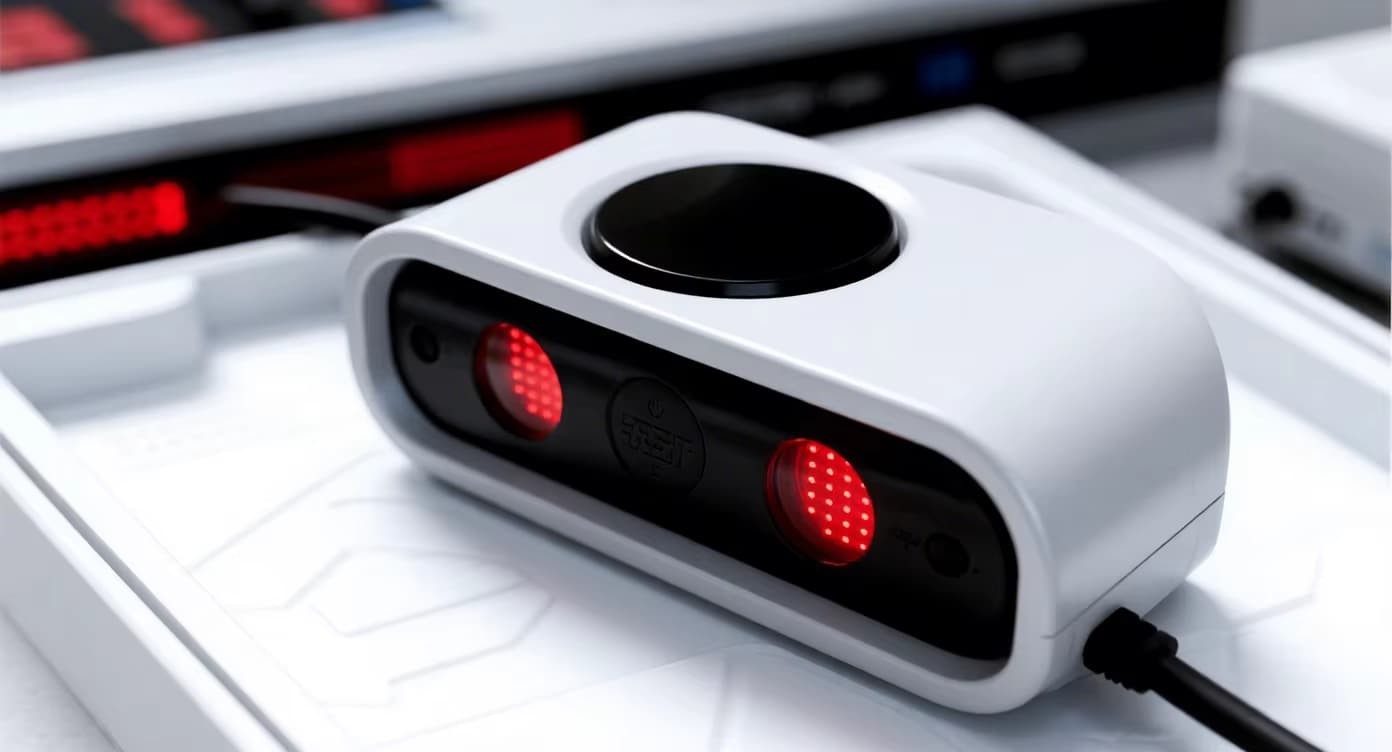
Smart city hardware / enclosure design - reviewed 11 November 2026
A smart parking detector enclosure is a compromise between two requirements that pull in opposite directions: radio transparency and mechanical protection. Every millimetre of glass-filled resin added for strength removes signal, and every millimetre removed for signal weakens the wall that has to survive a pressure washer, a kerb strike and four summers of UV. The design work is deciding where each compromise lands.
Ultrasonic parking detectors have moved from dumb presence sensors to edge devices with a radio, a battery or a solar input, and sometimes a second sensor. That change moved the housing from a box to a platform, and the enclosure is now the part that decides whether the radio link is stable in a wet car park.
Definitions. A smart parking detector enclosure is the moulded housing that carries an ultrasonic transducer, its control board and a radio module, and that is installed on a slab, a ceiling or a post in an outdoor or semi-outdoor car park. An RF window is a region of the housing kept free of conductive or heavily filled material so that radio energy can pass. A breathable vent is a membrane that equalises pressure without admitting liquid water.
Design reference points
- Outdoor parking hardware is normally specified at IP65 or IP67, with the seal assessed after thermal cycling rather than only at room temperature.
- Radio modules used in this segment include LoRaWAN, NB-IoT, Bluetooth mesh and sub-GHz proprietary links, each with a different sensitivity to housing material and wall thickness.
- Transducer beam angle is fixed by the mechanical alignment of the sensor face against the slab, so the housing sets the measurement geometry.
- Battery and solar variants need a serviceable compartment that keeps the same ingress rating after it has been opened and closed.
Why a smart parking detector enclosure is a conflict of requirements
RF window versus wall strength
Mineral-filled and glass-filled resins give stiffness and dimensional stability, and both reduce radio range. The usual resolution is a two-shot or an insert design: a structural frame in filled resin, and an unfilled window in the area the antenna faces. The window has to be sized against the antenna's near field, not against the cosmetic outline, which is why the radio layout should be available at the enclosure design review.
Condensation kills more units than water ingress
A housing that seals perfectly still breathes internally as temperature swings. Moisture condensed on a transducer face changes the acoustic path and shows up as false occupancy readings long before the unit fails outright. A breathable vent placed away from the spray path solves most of it; a desiccant pack alone treats the symptom.
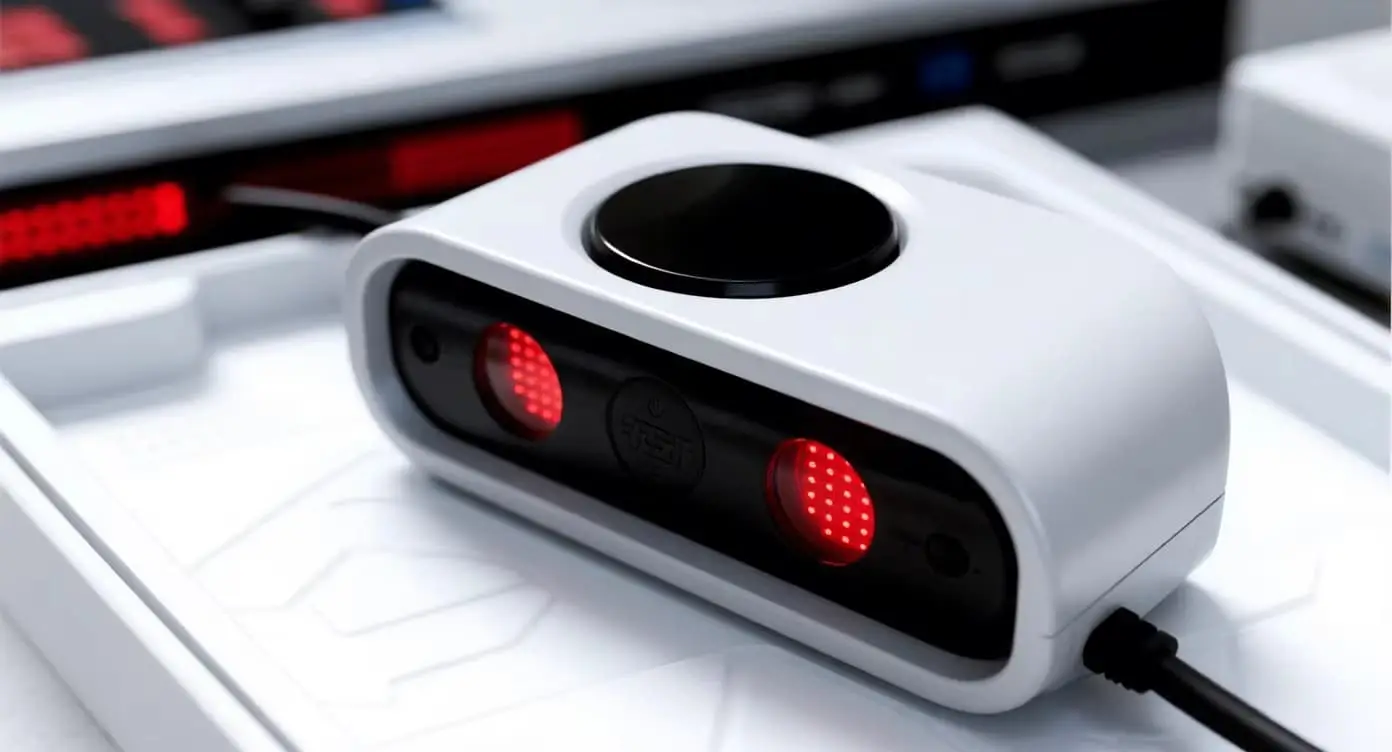
Design checklist by function
| Function | What the housing has to provide | Common mistake |
|---|---|---|
| Radio | Unfilled window over the antenna, wall thickness recorded per band | Window sized to the logo rather than to the antenna near field |
| Sealing | Gasket groove inside the fastener circle, gland with strain relief | Seal outside the screws, so lid stiffness sets the compression |
| Thermal | Air path from the processor to a vented or conductive region | Sealed dead volume around a 5G module |
| Alignment | Datums that fix the transducer normal to the slab | Mounting slots that allow the beam to tilt after installation |
| Service | Battery door that reseats to the same compression | Door seal compressed once and never recovered |
Pressure washing sets the real ingress target
Car park maintenance is not a laboratory immersion test. A jet directed at a gland from half a metre is a different load case from still water at one metre for thirty minutes, and a housing can pass the second and fail the first. If the site is washed down, the jet angle and pressure belong in the specification, and the gland, vent and lid joint should be tested in that configuration.
Battery doors are the weakest serviceable joint
Every open and close cycle takes a set out of the seal. A door with a moulded lip that compresses about a millimetre, and a latch that cannot be over-tightened, keeps the rating through the service life. A screw-down door with a foam gasket does not, and the failure appears as corrosion on the contacts rather than as water in the housing.
Material routes for an outdoor housing
ASA and UV-stabilised PC are the usual starting points for a housing that spends its life outdoors, because colour retention and impact strength both survive sun exposure. ABS is cheaper and easier to mould but yellows. Glass-filled PA6 brings stiffness for thin walls and moulded clips, at the cost of RF performance and moisture uptake. The practical answer for a connected detector is usually a mixed build: structural resin where the loads are, unfilled resin where the antenna is, and a vent where the pressure differential is.
Commissioning a smart parking detector enclosure
The brief that shortens this programme most is the one that includes the radio layout, the transducer drawing and the site's cleaning routine. The custom plastic enclosure family covers the housing format, and the custom injection moulded parts section covers clips, glands and bezels that complete the assembly.
Does a metal enclosure block the radio?
Yes, substantially, and it also removes the option of an internal antenna. Metal housings need an external antenna or a dedicated radome, which is why most parking detectors use a polymer housing with an RF window.
Is IP67 enough for an outdoor car park?
It covers dust and temporary immersion. It does not automatically cover a pressure jet, so the wash-down method should be stated separately and the seal tested against it.
Why does the housing matter for occupancy accuracy?
An ultrasonic detector measures a fixed cone. If the housing allows the transducer to tilt, or if condensation films the face, the cone moves or the echo weakens, and the sensor reports the wrong state.
Ingress ratings and radio performance depend on the complete assembly, including gaskets, glands and the installed antenna. Values quoted here are design reference points, not a qualification of any specific product.
For an enclosure programme, send the radio layout and the site conditions through the quotation file checklist.