Cartoon Animal Silicone Cup Lids for Travel Mugs: The Growing Niche of Fun, Leak-Proof Accessories
- Share
- publisher
- Suey
- Issue Time
- May 5,2026
Summary
A silicone cup lid is judged on its seal, not its character. Dual-lip rim geometry, spout slit tolerance, relief limits for animal shapes and the sampling sequence that keeps a novelty lid from leaking in a bag.
Drinkware accessories / lid engineering - reviewed 11 November 2026
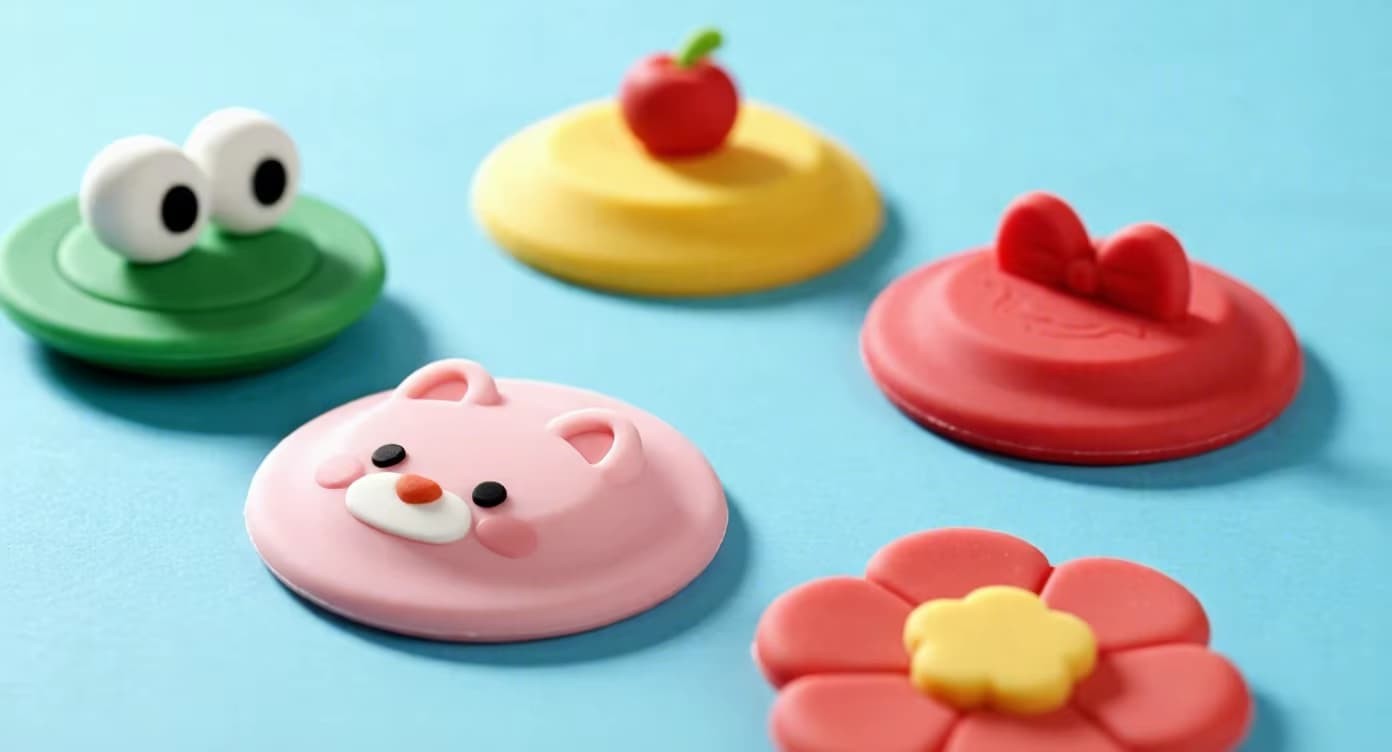
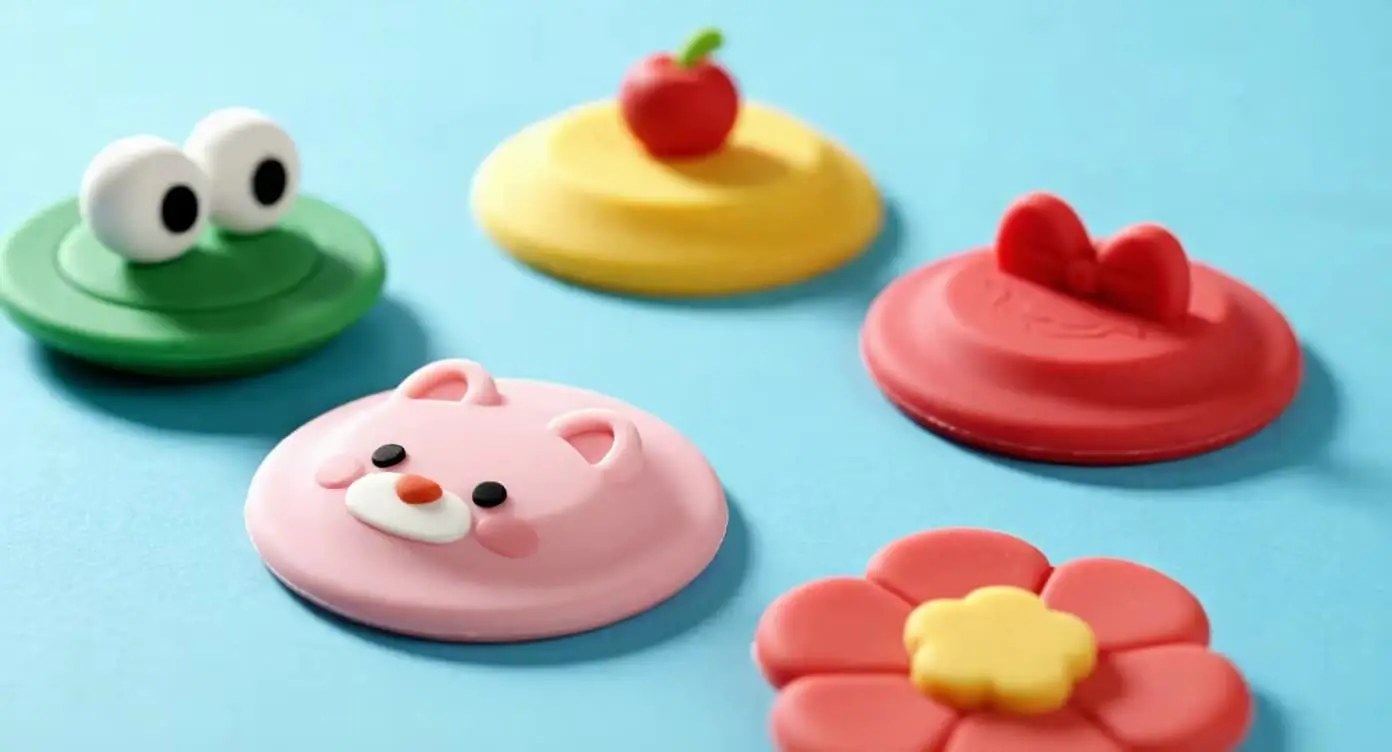
The animal shape is what makes a shopper pick a silicone cup lid up. The seal is what makes them keep using it. Those two requirements pull in opposite directions: ears and snouts want relief, and every millimetre of relief competes with the flat lip that has to sit against the mug rim. A lid designed as a character first and a seal second will leak in a bag within a week.
Travel mug accessories have become a merchandising category in their own right, and the lids are the cheapest point of differentiation in the set. That is also why the category is crowded with products that photograph well and seal badly. The difference is almost entirely in the rim geometry and the spout, neither of which is visible in a product photo.
Definitions. A dual-lip rim is an inner and outer sealing lip on the underside of the lid that traps air between them and holds against the mug wall in two places. A spout slit is a moulded cut that stays closed at rest and opens under suction or pressure. Relief is the height of the decorative feature above the lid's flat top plane, measured in millimetres and limited by the draft needed to release the part from the cavity.
Design values used in this article
- The standard programme covers lids for 8 oz to 20 oz travel mugs, with the rim diameter set per mug family rather than per character.
- Sealing relies on a dual-lip inner rim plus a self-closing spout slit, both moulded in the same part.
- Liquid silicone rubber for drinkware is specified for a working range of about -40 degrees Celsius to 230 degrees Celsius.
- Food-contact compliance is referenced to 21 CFR 177.2600, LFGB and REACH for the compound used.
- Sampling typically runs a prototype tool in about 12 days, with production at 20 to 25 business days for orders between 5,000 and 200,000 units.
How a silicone cup lid actually seals
Two lips, not one
A single lip relies on the compound's memory to press against the mug wall, and it loses that pressure as soon as the lid is washed in hot water or stretched over a slightly different rim. A dual lip creates a pocket between the two contact lines: pressure inside the mug pushes the inner lip outward, which increases the seal instead of breaking it. The second lip also tolerates the diameter variation between mug suppliers, which is the real reason lids leak in mixed sets.
The spout slit is a one-way valve
A slit that is moulded too long stays open and drips; too short and the drink will not flow. The tolerance is a fraction of a millimetre, and it is cut in the tool rather than by hand. That is why the spout should be the last feature approved on a sample, after the rim seal is confirmed, because changing the spout changes the local wall stiffness and can pull the rim out of contact.
Four ways a character lid fails, and what causes each
| Failure | Usual cause | Design fix |
|---|---|---|
| Leaks when tilted | Single lip, or a rim diameter that only matches one mug family | Dual-lip rim, with the inner lip sized to compress about 1 mm on the nominal diameter |
| Lid lifts off in a bag | Spout slit too long, or relief mass tilting the lid | Shorten the slit, keep the decorative mass inside the sealing ring footprint |
| Tears at the ear or snout | Zero draft on a deep feature, thin root section | Add draft, radius the root, thicken the base of the feature |
| Smells after a week | Milk residue trapped in a recess, or under-cured compound | Radius every internal corner, confirm post-cure, specify top-rack washing |
Relief, draft and the ears
An ear is a deep, narrow feature, and deep narrow features are where silicone moulding gets difficult. The wall needs draft, the root needs a radius, and the height has to be consistent with the wall thickness or the tip will tear on ejection. The practical rule is that decorative elements sit on a base thick enough to carry them, and the total relief stays modest relative to the lid diameter. A design that needs 10 mm of ear on a 90 mm lid is a different product, not a variation.
Two colours, then print
Moulded colour is the durable route and it caps at two colours per part. Eyes, cheeks and small marks that need a third colour are usually pad printed or added as a second moulded insert, and both options should be tested against the wash routine before the range is signed off.
Material and compliance for a hot drink
A lid that sits on coffee at 90 degrees Celsius and then goes through a dishwasher is a food-contact part, not a novelty. The compound should be specified as liquid silicone rubber with a documented food-contact reference, and the colourants should be chosen from the same compliance family as the base. Silicone is odour-neutral and does not support bacterial growth, but that only holds if the part is fully cured and free of undercut recesses where residue can sit.
Staining is the complaint that follows compliance in real use. Coffee and tea leave a film on a matte surface faster than on a gloss one, and tomato-based drinks are worse. A slight gloss on the sealing ring and a matte finish on the character is a reasonable compromise: the ring wipes clean, and the character keeps the soft look that sells it.
From concept to production
The sequence that avoids rework is: rim and spout geometry first, character modelling second, prototype tool third, fit and leak trial fourth, production tool last. The prototype stage is where a brand learns whether the mug it intends to pair with actually matches the lid, and it is much cheaper to learn that before the production cavity exists.
Will a cartoon animal silicone cup lid fit any travel mug?
No. Silicone stretches, but the seal depends on the rim diameter and the wall angle of the mug. A lid moulded for one mug family will seal on a near match and leak on a loose one, so the mug should be specified with the lid.
Are silicone cup lids dishwasher safe?
Top-rack washing is the normal recommendation for moulded silicone drinkware. High heat on a lower rack combined with a heavy load can distort a thin lid, and distortion is permanent.
Can the lid carry a brand logo as well as a character?
Yes, as a deboss or a printed mark on the flat top area, provided it stays clear of the sealing ring. Deep engraving close to the rim changes local stiffness and is best avoided.
Lead times and temperature values quoted here are the manufacturer's standard figures for this product family. They shift with tool complexity, colour count and order volume, and should be confirmed in the quotation.
Lid programmes start with the mug drawing and the character concept: custom silicone rubber parts, the production process, or send the files directly through the quotation checklist.