Eco-Friendly Recycled Silicone Dog Chew Toy – Sustainable Pet Product Trend
- Share
- publisher
- Suey
- Issue Time
- Jun 4,2026
Summary
A recycled silicone dog chew toy is a materials decision before it is a claim: regrind changes colour, surface and tear strength. What 65 percent post-industrial content costs in design freedom, how to test it, and where the recycled route ends.
Materials / pet product manufacturing - reviewed 11 November 2026
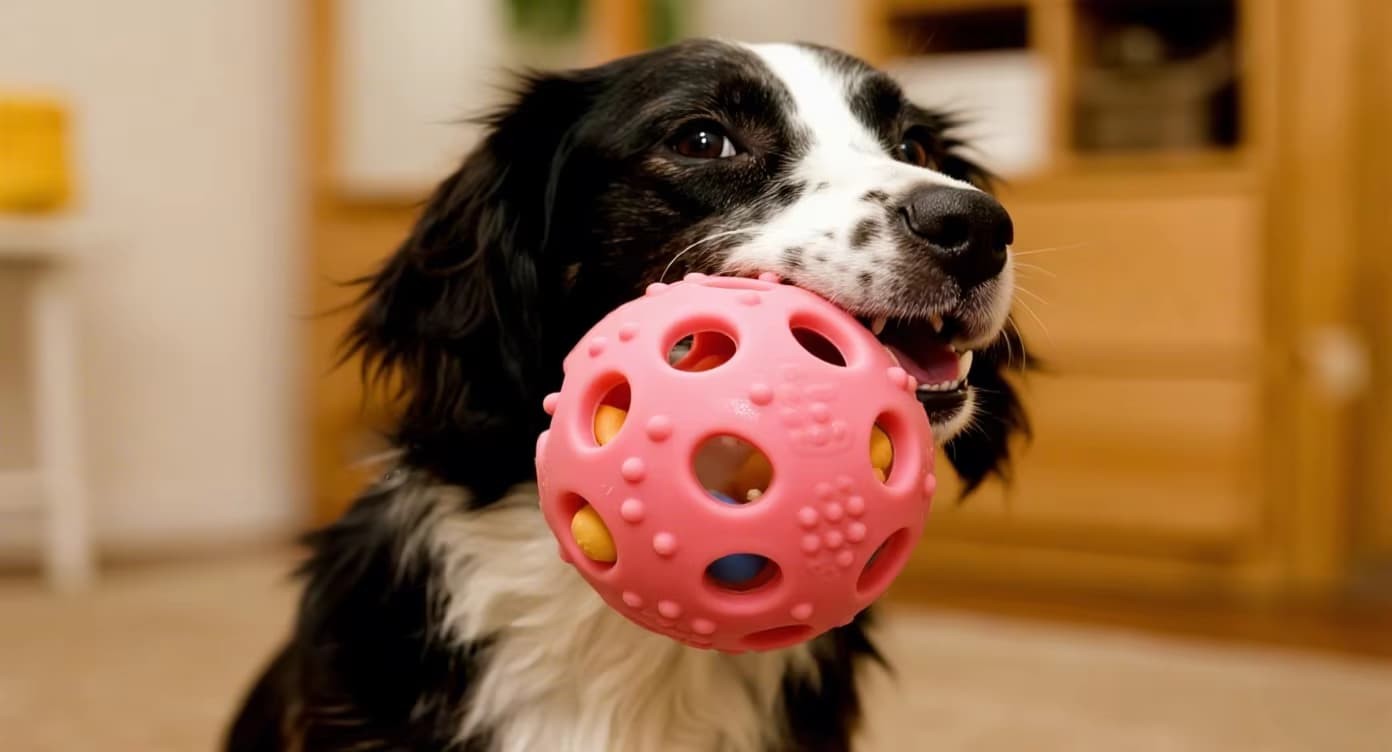
A recycled silicone dog chew toy is a materials decision before it is a sustainability claim. Grinding cured silicone and bonding it back into a mouldable compound changes colour, tear strength and surface finish, and those changes have to be designed around. Brands that treat recycled content as a label on an unchanged drawing usually end up with a chew that looks tired after a month and tears at the same wall thickness that worked in virgin silicone.
The reason silicone is interesting here is that it is one of the few elastomers that can be mechanically reprocessed into a usable compound rather than downcycled into a filler for low-grade matting. The reason to be careful is that reprocessing is not free of trade-offs, and the honest version of the story is more useful to a buyer than the marketing version.
Definitions. Post-industrial silicone is trim, rejects and offcuts generated inside a moulding plant before the part reaches a consumer. Mechanical recycling grinds that material to a controlled particle size and disperses it into a silicone base, which is then catalysed and cured again. Recycled content share is the mass fraction of that regrind in the finished compound, verified per batch rather than per marketing claim.
Design values used in this article
- The recycled compound used for chew toys is specified at a minimum of 65 percent post-industrial silicone, blended with virgin material for consistency.
- Programmes can be quoted across a 30 percent to 80 percent recycled content range, with the upper end carrying a measurable tear-strength penalty.
- Tear strength target for the recycled compound is 22 kN/m minimum, with elongation at break above 400 percent.
- Food-contact compliance is referenced to 21 CFR 177.2600 for rubber articles intended for repeated use.
- End-of-life take-back is offered so worn parts can be ground and re-entered the same stream.
What mechanical recycling does to a silicone compound
Grind size and dispersion decide the surface
Regrind is not a powder; it is a distribution of particle sizes, and that distribution shows up on the surface of the moulded part. Coarse regrind produces a slightly mottled face and a matte finish that reads as rubber rather than as gel. Fine, well-dispersed regrind gives a smoother surface but costs more energy to produce. A chew toy with a heavily textured surface hides the difference; a glossy toy does not, which is why recycled programmes usually start with a textured or opaque design.
What is lost: colour freedom and a little tear strength
Regrind carries the colour of whatever it came from, so light and translucent shades are impractical without over-pigmenting, which then affects cure. Tear strength also drops as recycled content rises, because the bond between regrind particles is not identical to the bond inside virgin material. The design response is not to argue with the number; it is to thicken the sections that take bite load and to remove thin fins that would become the tear initiation point.

Where the specification changes when the compound changes
| Property | Virgin silicone | Recycled compound | Design response |
|---|---|---|---|
| Colour | Any Pantone, including translucent | Opaque and darker; light shades need over-pigmenting | Choose opaque colourways, or a two-tone design that uses colour as a feature |
| Tear strength | Higher, more forgiving at thin walls | 22 kN/m target at the working recycled share | Thicken bite zones, radius every internal corner, delete thin fins |
| Surface | Smooth or textured at will | Slightly mottled at coarse grind | Specify a texture that reads as intentional, or a matte finish |
| Odour | Neutral | Depends on the feedstock and the post-cure | Control feedstock by source, and post-cure before packing |
Traceability is the product, not the paperwork
A recycled claim is only worth the record behind it. For each batch, the chain that matters runs from feedstock source, through grind lot and blend ratio, to the cure record of the parts made from it. Without that chain, a certificate of recycled content is a statement about intent. With it, a brand can answer a retail buyer's question about where the material came from without escalating to the factory.
Feedstock choice sets the safety case
Post-industrial trim from a controlled moulding plant is a very different feedstock from post-consumer silicone of unknown history. The first has a known compound, a known cure state and no food or medical contact history; the second may carry residues that no grinding process removes. Chew toys belong in the first category, and the specification should say so explicitly.
How a recycled silicone dog chew toy should be tested
Four tests carry most of the risk. Tensile and tear testing establishes whether the compound meets the drawing at the specified recycled share. Elongation at break catches over-filling with regrind. Migration testing against the food-contact reference covers the safety case for a product a dog holds in its mouth for hours. And a chew simulation, whether a mechanical rig or a documented field trial, is the only test that reports on the geometry rather than the material.
Odour deserves its own line, because it is the failure consumers report first and the one least covered by mechanical testing. A post-cure step and a controlled feedstock source solve most of it; masking it with fragrance does not.
What recycled silicone cannot fix
Recycled content does not make a chew biodegradable, and it does not remove the need for a take-back route. What it does is keep technical silicone in a technical stream instead of a landfill, provided the part can be collected, identified and ground again. A brand that sells a recycled toy without an end-of-life path has moved the material problem one step downstream, not solved it.
Is recycled silicone safe for a dog to chew?
Safety depends on feedstock and testing, not on the word recycled. Post-industrial silicone with a known compound, tested for migration against the food-contact reference, is the defensible route. Unknown post-consumer feedstock is not.
Does recycled content make the toy weaker?
It reduces tear strength as the recycled share rises. At a 22 kN/m target and with thicker bite zones, the part can still meet a chew specification; the drawing has to change with the compound.
Can the toy be recycled again?
Yes, through the same grind-and-rebond route, which is why a take-back programme matters. Each cycle adds filler and shortens the chain, so the material is not infinitely recyclable.
Values quoted here are the manufacturer's working specifications and standard references. They are not a substitute for batch test reports, which should be requested for the specific compound and the specific part.
For a recycled-content pet programme, send the concept, the target recycled share and the retail channel through the custom silicone quotation route. Adjacent formats are listed under silicone pet supplies.