FromRubber on Instrumentation Silicone Keypads: Full‑Chain Process and Precision Standards – An Exclusive Interview
- Share
- publisher
- Suey
- Issue Time
- Jul 23,2026
Summary
Full chain is the most used and least defined phrase in keypad sales. An interview with FromRubber's sales director, unpacked into the steps that move the tolerance, the variance subcontracting creates, and the evidence a buyer can check.

Supply chain / instrumentation interfaces - reviewed 11 November 2026
"Full chain" is the phrase most often used and least often defined in silicone keypad sales. In an interview with FromRubber sales director Wu Xin, the useful part was not the phrase but the list behind it: which steps sit inside one plant, which ones move the tolerance, and what a buyer can ask to see before trusting either claim.
The reason the question matters is structural. An instrumentation keypad is rarely a plain moulded mat. It carries a legend, often a backlight, sometimes a sprayed coating and a punched adhesive backing, and each of those steps changes a dimension that the housing was toleranced against. When those steps are spread across four suppliers, the tolerance stack grows at every handover, and the failure that reaches the customer is usually blamed on the moulding.
Definitions. Full-chain production means design support, tooling, moulding, printing, laser engraving, coating, punching and inspection are performed on one site under one quality system. A secondary moulded light guide is a translucent silicone or plastic element moulded into the keypad to carry LED light to a legend. AOI, automated optical inspection, compares each part against a reference image to catch missing print, misalignment and surface contamination that a manual check would pass.
What the interview established, and what it did not
- FromRubber describes itself as a sixteen-year silicone keypad maker that moved from consumer remote-control keypads into instrumentation and industrial work.
- The company states that tooling, moulding, screen printing, laser engraving, spray coating, punching and inspection all run in its own plants, with ISO 9001 and ISO 14001 certification.
- It states that incoming compound is inspected for hardness, tear strength and yellowing before release to production.
- It states that key-life, force-displacement and abrasion testing are used on production batches, with AOI for cosmetic defects.
- The interview did not produce third-party field data, so this article does not quote any. The statements above are the supplier's own account and are labelled as such.
What full chain actually covers
The value of the list is that every step has a measurable effect on the part, and every handover between steps is a place where the tolerance resets. The table below is the version a buyer can walk through in a factory.
| Step | What it decides | What goes wrong when it is subcontracted |
|---|---|---|
| Design support and tool review | Web thickness, key travel, seal compression, gate position | DFM feedback arrives after the tool is cut, so the fix becomes a new cavity |
| Tooling | Key height, wall draft, flash allowance | A second shop works to a different steel and a different shrinkage assumption |
| Moulding | Hardness, flash, dimensional repeatability | Batch-to-batch force drift that nobody owns |
| Screen printing or laser engraving | Legend position, depth, colour density | Registration error accumulates against a datum the moulder never saw |
| Spray coating | Abrasion resistance, gloss, chemical resistance | Coating thickness varies, so wear life varies between lots |
| Punching and adhesive | Outline, hole positions, bond strength | Trim tolerance eats the clearance the housing allowed |
| Inspection | What ships and what is scrapped | Each supplier inspects to its own standard, and nobody inspects the assembly |
Why subcontracting shows up as variance rather than as defects
The part still passes, it just passes differently
Subcontracted steps rarely produce an obvious reject. They produce a part that is within tolerance on every individual dimension and still feels different from the last batch, because the force depends on web thickness and coating thickness together, and those two came from two companies that never compared notes. On an instrument, that variance is felt by the operator as a keypad that is "not as good as the old one".
Traceability is the second casualty
When a field complaint arrives, the investigation needs to know which compound lot, which print screen and which coating batch produced the part. In a single plant, that is one record. Across four suppliers, it is four records that use four part numbers, and the investigation usually ends in a material change that was never announced.

The claim worth testing on the shop floor
Wu's central claim in the interview was that every process happens under one roof, and that this is what separates the factory from the traders who quote the same drawing. That claim is easy to verify and worth verifying, because a supplier that subcontracts printing will still describe itself as a keypad manufacturer.
The test is a walk. Ask to see the printing table and the laser cell, then ask what happens to a part that fails AOI, then ask who signs the first-article report. A plant that performs all three steps can answer in sequence without leaving the building. A trader answers with a name and a lead time.
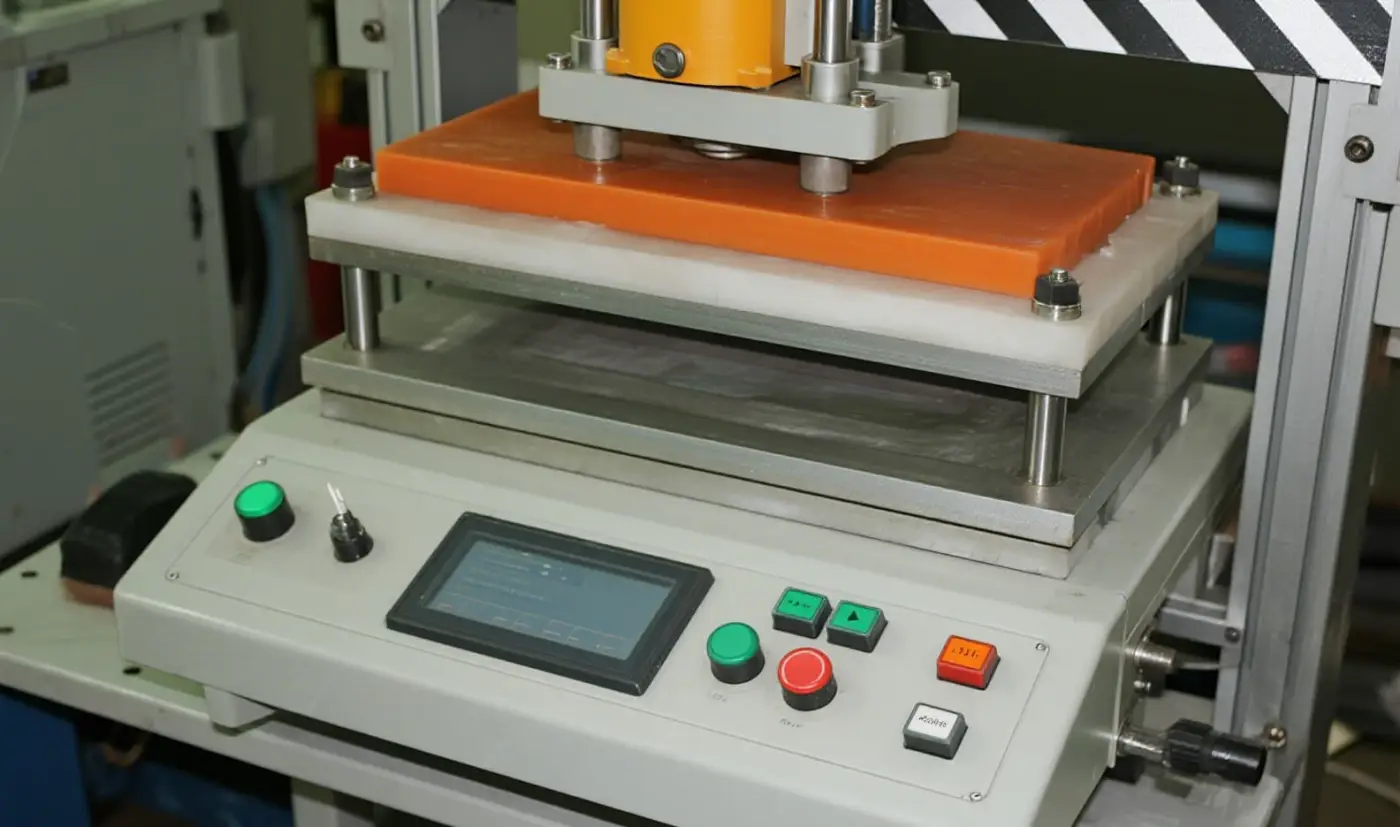
Evidence to ask for during a factory audit
Process evidence
Ask for the tool register with the cavity count and the last repair date, the print screen log, and the coating batch record. These three documents show whether the process chain is real and whether it is being maintained, and none of them can be produced convincingly by a company that outsources the work.
Measurement evidence
Ask which instrument measures actuation force, how often it is calibrated, and what the acceptance band is on the drawing. A force-displacement curve from the current batch, compared with the first-article curve, answers more about process control than any certificate.
Change evidence
Ask what triggers a change notification and how many days notice the customer gets. Compound substitutions, pigment lot changes and coating reformulations are the three changes that reach the field as unexplained failures, and all three are avoidable with a written rule.
Where an instrumentation silicone keypad manufacturer adds the most value
The answer is not in the moulding, which is a mature process, but in the two ends of the chain. At the front end, design support decides whether the seal, the web and the legend can all be produced in one tool, which is the difference between a two-part panel and a one-part panel. At the back end, inspection and change control decide whether the thousandth part matches the first.
Instruments are also a low-volume, high-mix business, which punishes any supplier set up for a single long run. A factory that runs many small tools has to be organised differently from one that runs a few large ones, and the question to ask is not how many presses it has but how many changeovers it does in a week.
The instrument keypad format itself is described on the meter instrument keypad page, and the wider keypad range on the silicone rubber keypad manufacturing section. Buyers preparing a first enquiry can use the silicone moulding quote guide to assemble the file set.
What should an instrumentation silicone keypad manufacturer be asked first?
Which steps are performed in-house and which are subcontracted, followed by the tool register and the change-notification rule. Those three answers establish whether the supplier controls the tolerance stack that the instrument's housing depends on.
Does in-house production cost more than a subcontracting chain?
It often costs more per part at low volume, because one plant carries the tooling, the print screens and the coating line. It usually costs less over a programme, because the variance, the scrap and the field returns that a fragmented chain produces are not itemised on the quotation.
How does a small instrumentation order fit a factory built for volume?
It fits if the factory runs many small tools. The question to ask is the number of changeovers per week and the minimum tool size it will cut, not the total press count, because a plant organised around long runs will quote a small order and then schedule it last.
Scope note: process statements in this article are attributed to FromRubber as the supplier's own account given during the interview. No third-party audit, field data or comparative ranking is presented. Buyers should verify each claim against their own audit and first-article results.
To review an instrument keypad programme, send the drawing, the housing tolerance, the legend requirement and the annual volume through the custom silicone quotation route.