$95 Billion Automation Instrumentation Market by 2031 – The Unsung Role of Silicone Keypads in Factory Floor HMI
- Share
- publisher
- Suey
- Issue Time
- Aug 18,2026
Summary
The $95B automation market relies on silicone keypads for durable factory HMI. They provide tactile feedback, ingress protection, and extreme temperature resistance—essential for gloved and harsh industrial operations.
$95 Billion Automation Instrumentation Market by 2031
The Unsung Role of Silicone Keypads in Factory Floor HMI
The global automation instrumentation market is on a trajectory that few analysts predicted a decade ago. With a valuation of approximately US$81.1 billion in 2026, the sector is projected to reach $95 billion to $105 billion by 2031, driven by the relentless expansion of industrial automation, smart factory initiatives, and the digitisation of process industries. Underpinning this growth is a surge in demand for human-machine interface (HMI) solutions—the critical link between operators and complex control systems.
Yet, amidst the excitement around IIoT, AI-driven analytics, and edge computing, one component remains conspicuously under-discussed: the physical interface through which operators actually command these sophisticated systems. While touchscreens and web-based HMIs dominate industry headlines, silicone keypads continue to serve as the backbone of factory floor interaction in some of the most demanding industrial environments.
HMI Silicone Keypads market dynamics: beyond the touchscreen narrative
The industrial HMI terminal market, a key segment within automation instrumentation, was valued at US$5.52 billion in 2025 and is forecast to reach $9.93 billion by 2034, growing at a CAGR of 6.75%. Panel HMIs—the traditional workhorses of factory automation—accounted for the largest share at 42.18% in 2025, underscoring the continued reliance on physical interfaces in production environments.
However, the narrative that touchscreens are universally replacing physical controls oversimplifies a more nuanced reality. In process automation—particularly in sectors like oil and gas, chemicals, and energy—operators often work in challenging conditions. Gloves, moisture, dust, and chemical exposure render capacitive touchscreens unreliable or inoperable. This is where silicone keypads offer a compelling value proposition.
Why silicone keypads persist in the age of touch
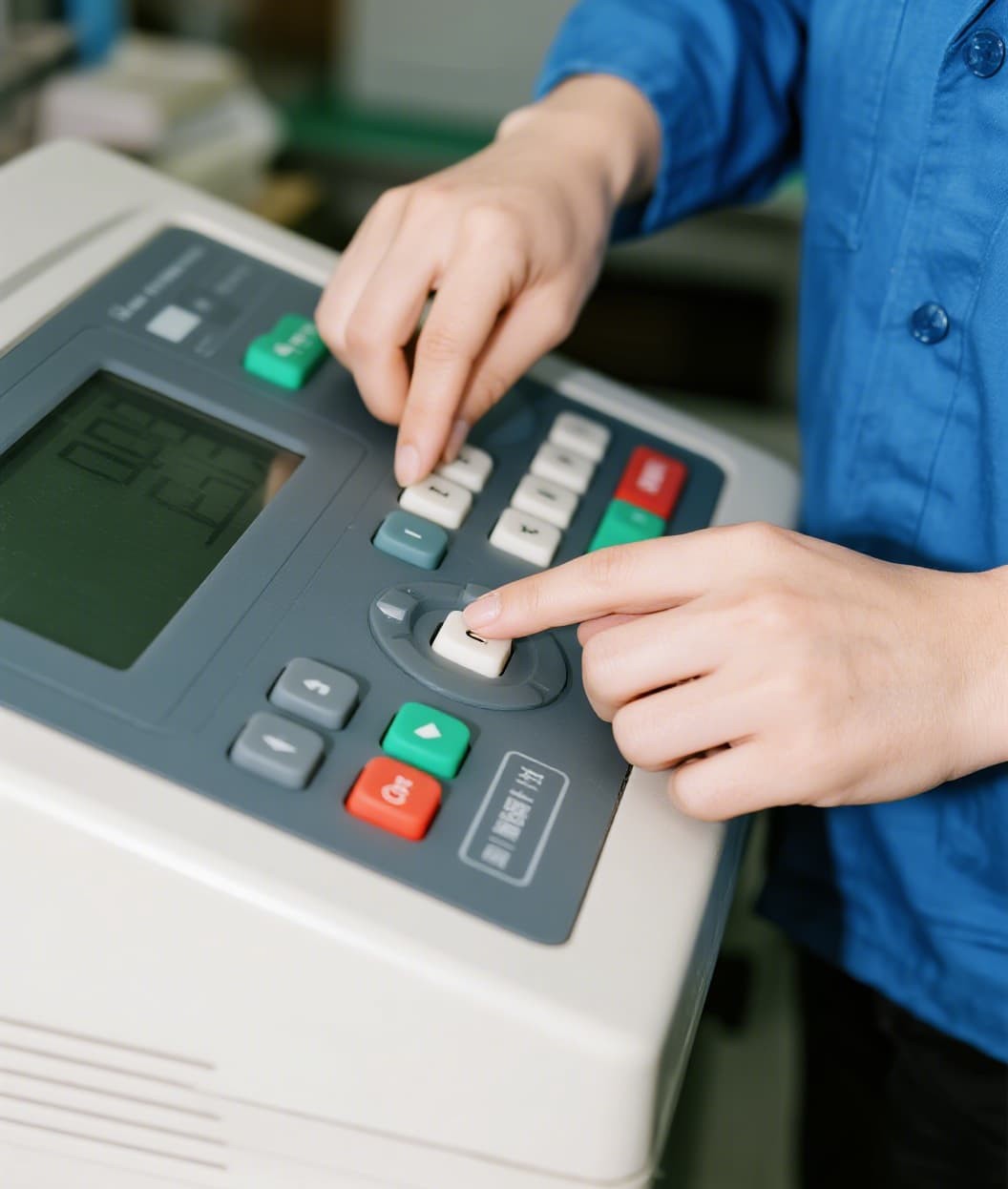
Silicone elastomer keypads offer a combination of properties that touchscreens cannot replicate. They provide tactile feedback—the physical "click" that confirms a successful press—which is essential when operators cannot divert visual attention to a screen. They are inherently sealed against ingress, with IP66 to IP69K ratings available, protecting sensitive electronics from dust, washdowns, and corrosive atmospheres.
Moreover, silicone keypads can withstand extreme temperature ranges from -55°C to +250°C, and maintain their elastic properties over millions of actuations. This durability translates directly to lower total cost of ownership—a critical consideration for plant operators managing maintenance budgets.
Regional growth and the silicone interface factor
Asia-Pacific dominates the automation instrumentation market, accounting for 37% of global revenue. This is driven by rapid industrialisation in China, India, and Southeast Asia, coupled with government initiatives such as China's "Made in China 2025" strategy, which encourages extensive adoption of IoT-based automation. As factories across the region upgrade their control systems, the choice of HMI technology becomes a strategic decision.
Industry observers note a subtle but significant trend: while new installations often feature large-format touchscreens for data visualisation, critical control functions—emergency stops, mode selection, setpoint adjustments—are frequently delegated to silicone keypad modules positioned alongside the display. This "hybrid HMI" approach acknowledges that touchscreens excel at presenting information, but physical buttons excel at commanding action.
A 2024 report from Diamond HMI, a UK-based custom interface manufacturer, noted an "unprecedented rise" in new projects involving custom keypad solutions utilising silicone rubber and membrane technologies. This suggests that, far from declining, the demand for physical interfaces is experiencing a resurgence as manufacturers recalibrate their HMI strategies.
Technical advantages: engineered reliability
At the core of a silicone keypad is the conductive carbon pill—a carbon-black-loaded elastomer that bridges PCB contacts when pressed. Unlike metal dome switches that rely on exposed contacts, the silicone keypad encapsulates the switching element within the elastomeric matrix, protecting it from corrosion caused by sulphur dioxide, chlorine, and other industrial gases.
This design eliminates one of the most common failure modes in factory instrumentation: contact degradation. Metal contacts can oxidise or sulphidise, increasing electrical resistance until the switch ceases to function. Silicone keypads, with their sealed contact geometry, maintain stable resistance throughout their service life—a key advantage in high-reliability applications such as chemical plant controls, gas analysers, and offshore platform instrumentation.
Furthermore, silicone keypads can be customised with precise actuation forces (typically 150 to 450 grams) and tactile snap ratios, enabling manufacturers to tune the feel of the interface to operator preferences and safety requirements. Backlighting via LED or electroluminescent layers, laser-engraved legends, and EMI shielding can all be integrated into the silicone moulding process.
Process automation and the reliability imperative
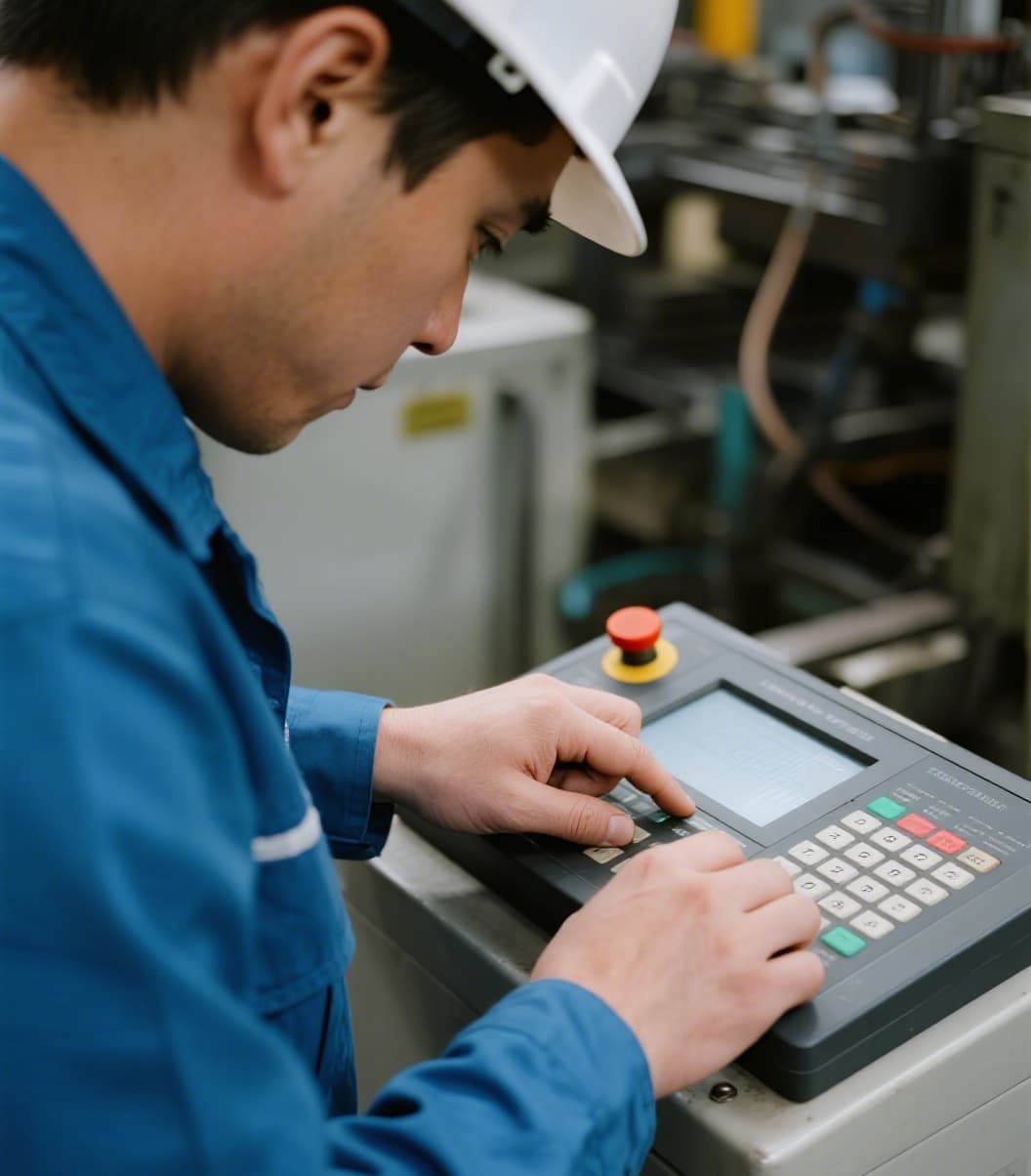
In continuous process industries—chemicals, petrochemicals, pharmaceuticals—unplanned downtime can cost millions per hour. Every component of the control loop must deliver the highest possible reliability. This explains why many process automation engineers specify silicone keypads for mission-critical interfaces, even when touchscreen alternatives are available.
Keypads from specialist manufacturers are often designed as complete systems, integrating the silicone mat with the PCB, housing, and actuator to ensure consistent switching characteristics and long-term stability. This system-level approach contrasts with standardised keypads that may not be optimised for specific installation conditions or environmental challenges.
Market outlook: balancing innovation with practicality
As the automation instrumentation market expands toward the $95–105 billion mark by 2031, the role of physical interfaces will continue to evolve. While innovations such as voice recognition, gesture control, and augmented reality HMIs are emerging, their adoption in heavy industry remains limited by technical constraints and operator resistance.
Industry experts suggest that the future HMI landscape will be hybrid: touchscreens for rich data visualisation and configuration, complemented by rugged physical interfaces for safety-critical and frequently used functions. Silicone keypads, with their proven durability, tactile clarity, and environmental resilience, are likely to remain a core component of this hybrid approach.
Manufacturers such as FromRubber, along with established European firms like Sateco and Diamond HMI, continue to invest in silicone keypad technologies—not as a legacy product, but as a forward-looking solution for the next generation of industrial controls. The numbers tell the story: the market's growth, while dominated by digital solutions, relies on physical interfaces that have been quietly perfected over decades.
About the data: Market estimates cited in this article draw from industry reports including Mordor Intelligence, Straits Research, 6Wresearch, and Research and Markets. Figures reflect the market conditions as of 2025–2026 and projections through 2031–2034.