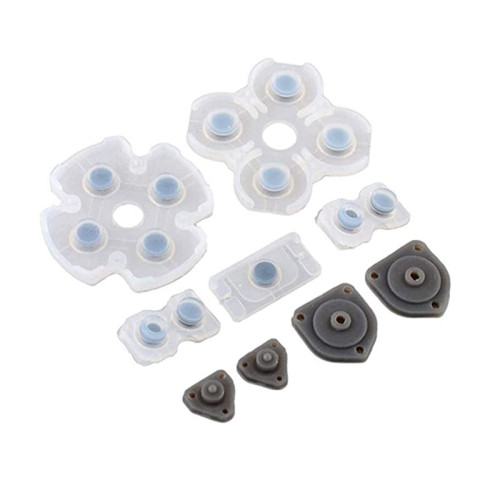
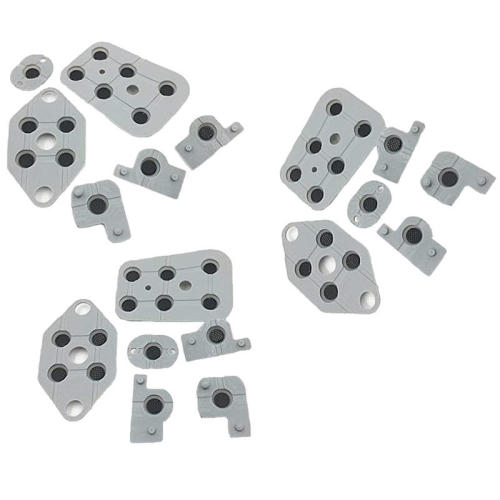
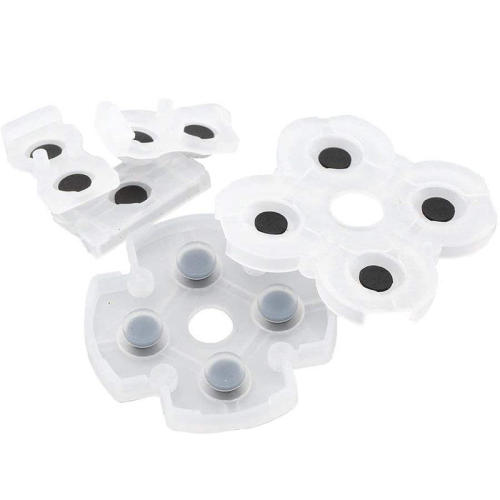
FromRubber 5 Million Presses Silicone Conductive Button Pad For PSP Game Console
Item specifics
- Design
- Follow 3D Drawing Or Physical Object
- Printing
- Silk Screen Printing
- Conduction Mode
- Conductive Carbon Pills
- MOQ
- 1000pcs
- Application
- PSP Game Console
Review
Description
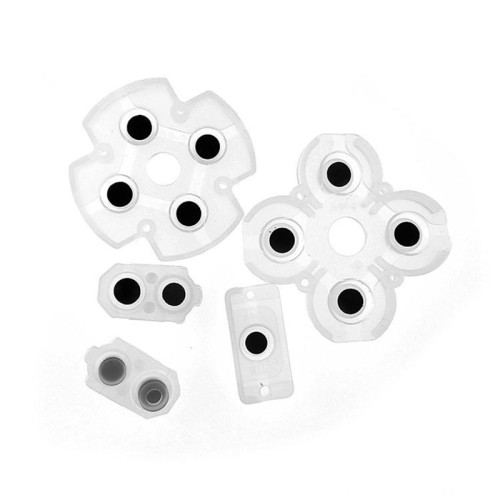
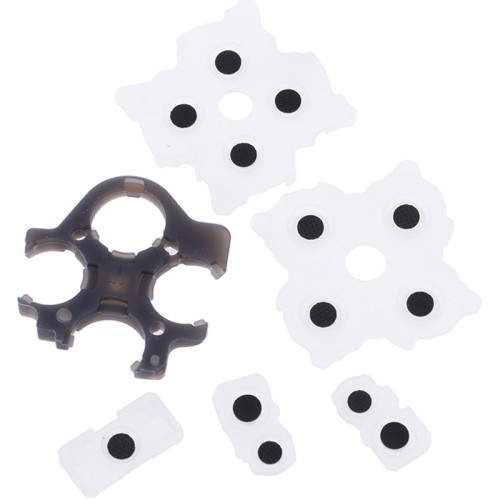
A five-million-press rating is a claim about wear, not about strength. It means the pad survived five million actuations with contact resistance still inside the console's detection window and the return force still inside the feel window. Two different mechanisms decide that: the carbon pill wearing against the pad, and the silicone web losing force through fatigue. A pad that ignores either one passes a short test and fails in the second year of use. Console buttons are pressed hard and fast, often by children, and the pad is usually the lowest-cost part in the assembly. That combination is why the life claim has to be engineered rather than asserted. Three mechanisms account for nearly all life-test failures on this component, and they progress at different rates. Each press burnishes the pill face and transfers a little carbon to the pad. Resistance usually falls slightly at first, then rises as the pill face flattens and the contact area spreads. A pill with a flat, parallel face wears more evenly than a domed one, whose contact starts as a point and grows. The useful measurement is the trend across the test, not the value at the end. Silicone webs relax. Return force drops slowly, and the key starts to feel soft before it stops working. Web thickness, the radius at the root and the compound's compression set all affect the rate. A design that starts at the top of the force window has room to lose force; one designed at the bottom of the window has none. The general relationship between cycle count and design is discussed in How many actuation cycles should an industrial-grade silicone. Dust and skin oil build a film on the pad. In a sealed console this is slow; in a user-serviceable device it is fast. A raised ring around the contact area, or a light recess, reduces the amount that reaches the contact. Where the design allows it, a thin protective coating over the pad except at the contact points is effective. The envelope is a starting point for a handheld console button pad. The console's contact geometry and feel target set the final values. Values describe a typical design envelope. Cycle life depends on the test conditions, and the acceptance criteria are agreed before testing rather than after. The number is only meaningful with the test conditions attached. Stroke, force, rate, environment and acceptance criteria all change the result by large factors. A life test rig presses each key to a defined stroke at a defined force and rate, and logs cycles. Pressing faster than real use generates more heat at the contact and can either accelerate or mask wear depending on the failure mode, so the rate is chosen to match the application. A test that presses at ten times human speed proves durability but not representativeness. Resistance and force are sampled at intervals - typically every hundred thousand cycles plus a denser sample early on where the fastest change happens. Acceptance is normally an absolute resistance limit plus a permitted drift, and a force retention limit expressed as a percentage of the initial value. A pass on the final sample alone hides a pad that was out of specification for most of the test. Heat, humidity and a contamination cycle are applied before and during the test. A pad tested dry at room temperature can show a much better result than the same pad in a warm, humid device. The gap between a bench cycle test and real service is the same problem described for instrumentation in The Instrument Silicone Keypad Passed 1M Cycle Tests – So Why, and it is worth designing the test around the field condition rather than the bench. A replacement button pad has to match the housing, the contact pattern and the feel of the device it goes into. Small errors here are felt immediately by the user. The pill positions must match the PCB pads within a fraction of a millimetre, and the circuit side has to allow for the housing's locating features. Where the original design used printed conductive traces rather than carbon pills, the resistance range is different and the electronics may not accept a pill-based pad without a change on the board. Moulded-in legends survive; printed legends on a gaming pad wear quickly at the highest-contact keys. The surface finish should be matte enough to hide fingerprints without being so rough that it collects dust in the gaps between keys. Because the pad is small, prototype tooling is inexpensive and several force iterations can be tried before production steel. Resistance data on prototypes informs the final pill specification. A comparison of pill and pad constructions is set out in How many press cycles can a conductive silicone inner keypad. That the pad passed a defined test at a defined stroke, force, rate and environment with resistance and force inside set limits. Without those conditions the number is not comparable between suppliers. The silicone web relaxes and return force drops. The contact still closes, so the function works while the feel degrades. Designing the initial force at the upper part of the window leaves room for that loss. We work from a sample or a contact drawing. The pill positions, contact pattern and web geometry are measured, and prototypes are used to confirm feel and resistance before production tooling. Send an original pad or the contact drawing, the console's detection threshold and the cycle target. We will propose pill geometry and web design, and quote a prototype for press testing. Related: why cycle tests and field life diverge and press-cycle expectations. FromRubber moulds conductive silicone pads for OEM console and controller programmes. We do not sell retail.Silicone Conductive Button Pad for Handheld Consoles: What Five Million Presses Actually Tests
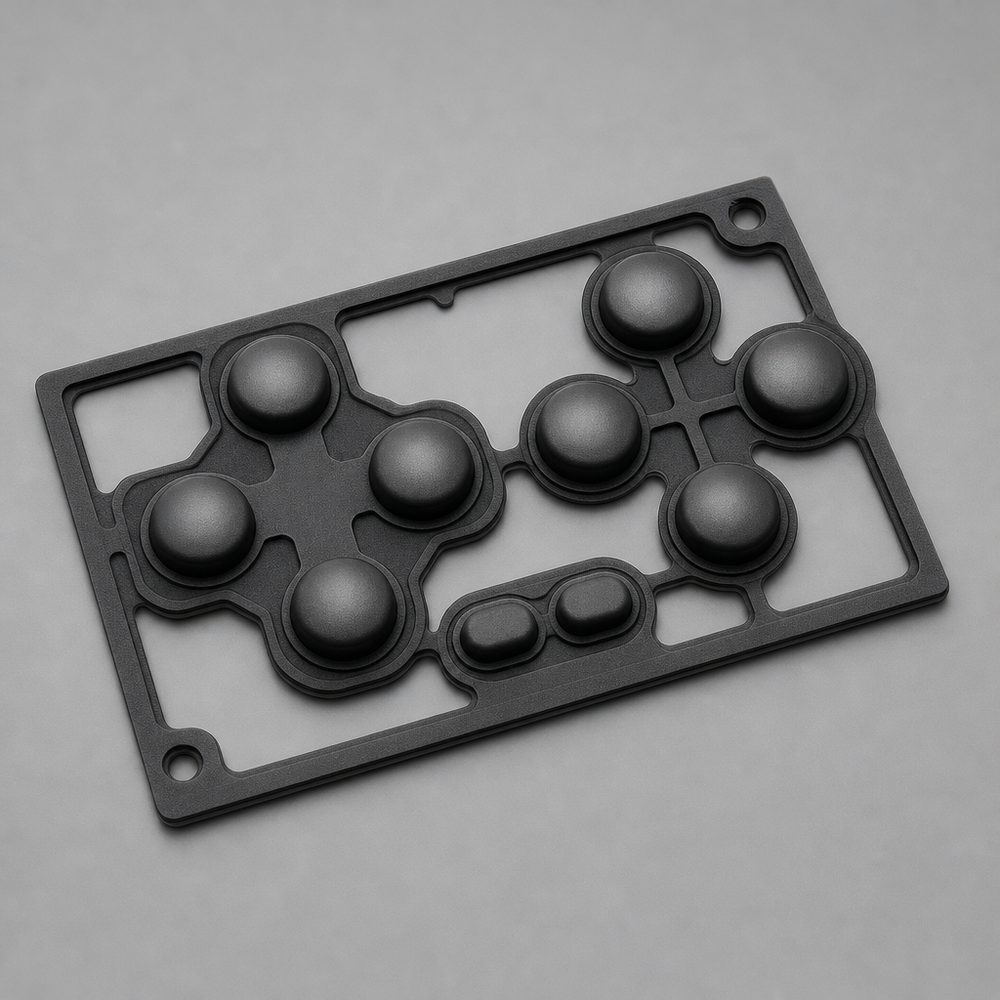
What Actually Wears Out
Carbon Pill Wear and Resistance Drift
Web Fatigue and Force Loss
Contact Contamination
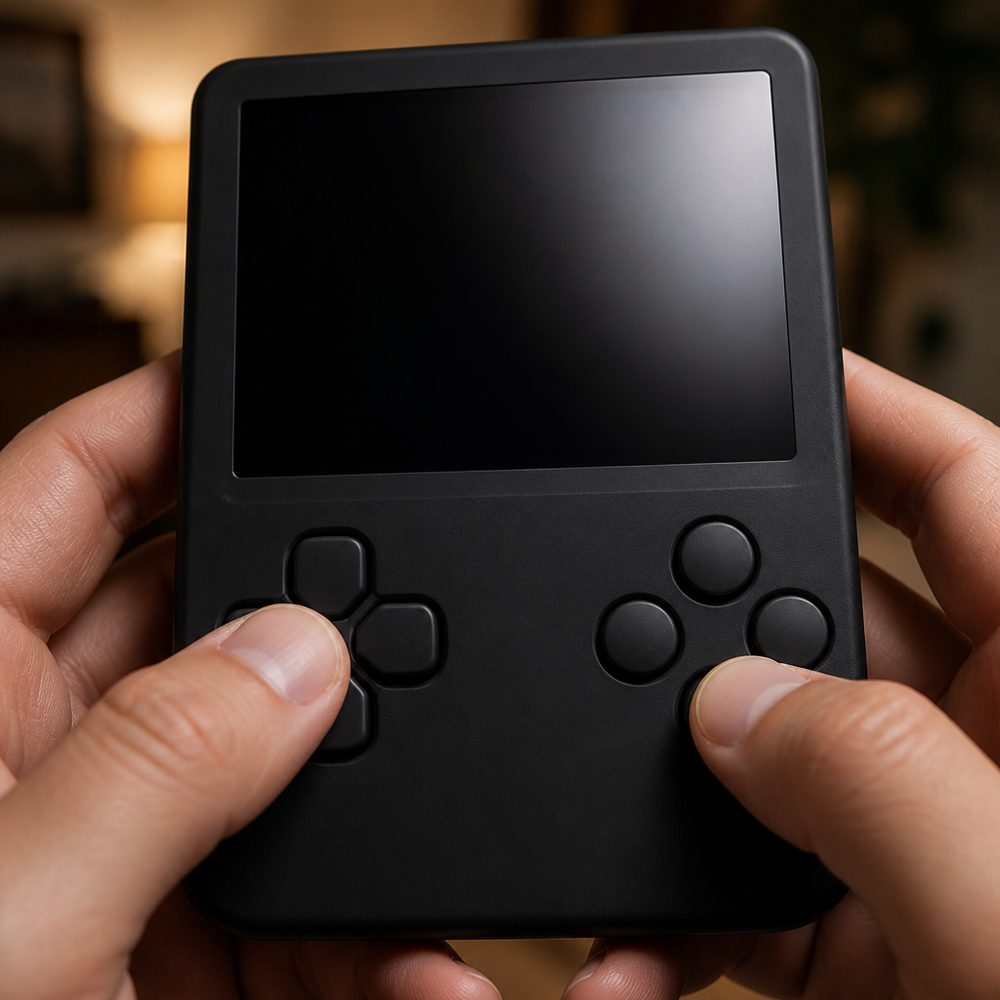
Specification Envelope for a Console Button Pad
Parameter Typical envelope Why it drives the result Material Silicone with carbon-loaded pills Pill compound sets resistance and wear Pill face Flat and parallel to the pad Even wear instead of point contact growth Actuation force Per console feel target, typically 120-250 gf Set by web geometry and root radius Contact resistance Within the console's detection window at rated force Drives whether a press registers Web thickness 0.4-0.8 mm at the root Controls force retention over cycles Life target Defined cycles with resistance and force limits The claim is only valid with the test conditions Legend Moulded-in preferred Printed legends wear at high-traffic keys How a Five Million Press Claim Is Built
Rig, Stroke and Rate
What Is Measured, and When
Environment and Preconditioning
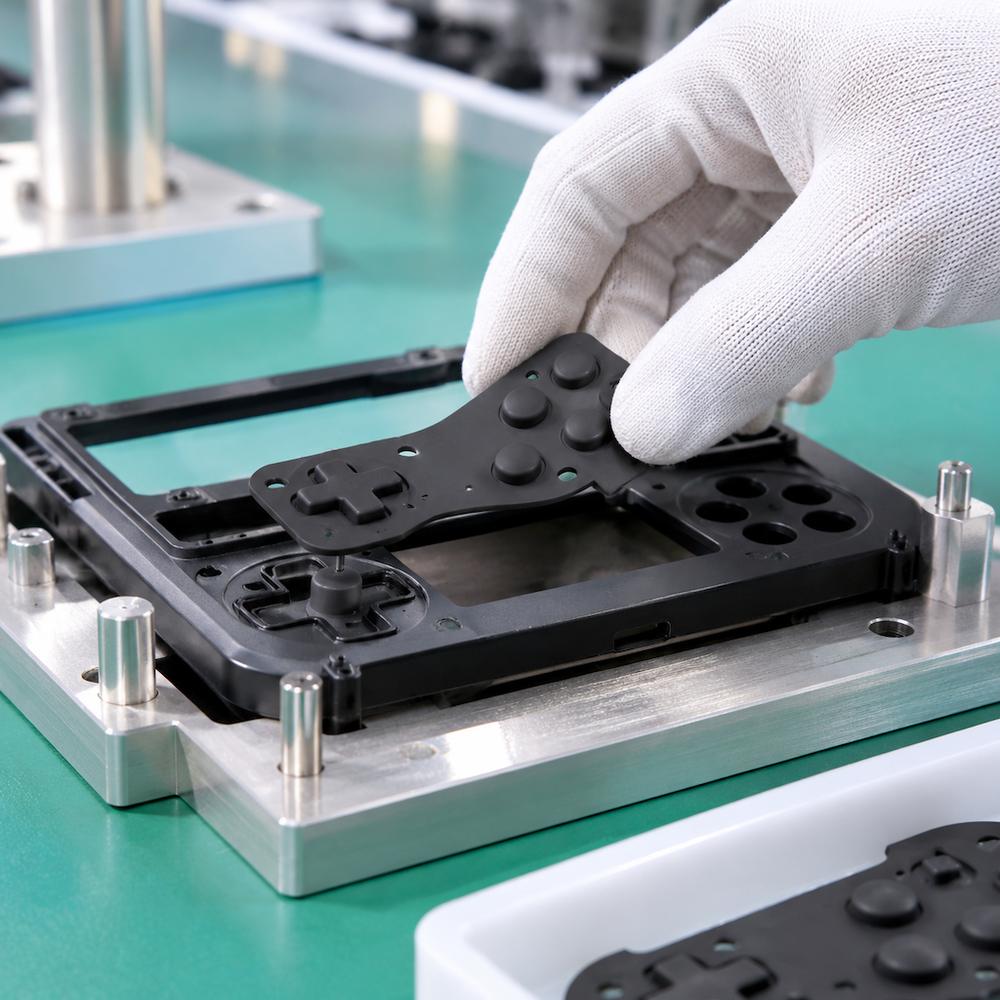
Matching the Console's Original Geometry
Contact Pattern Alignment
Legends and Surface
Prototype Iteration
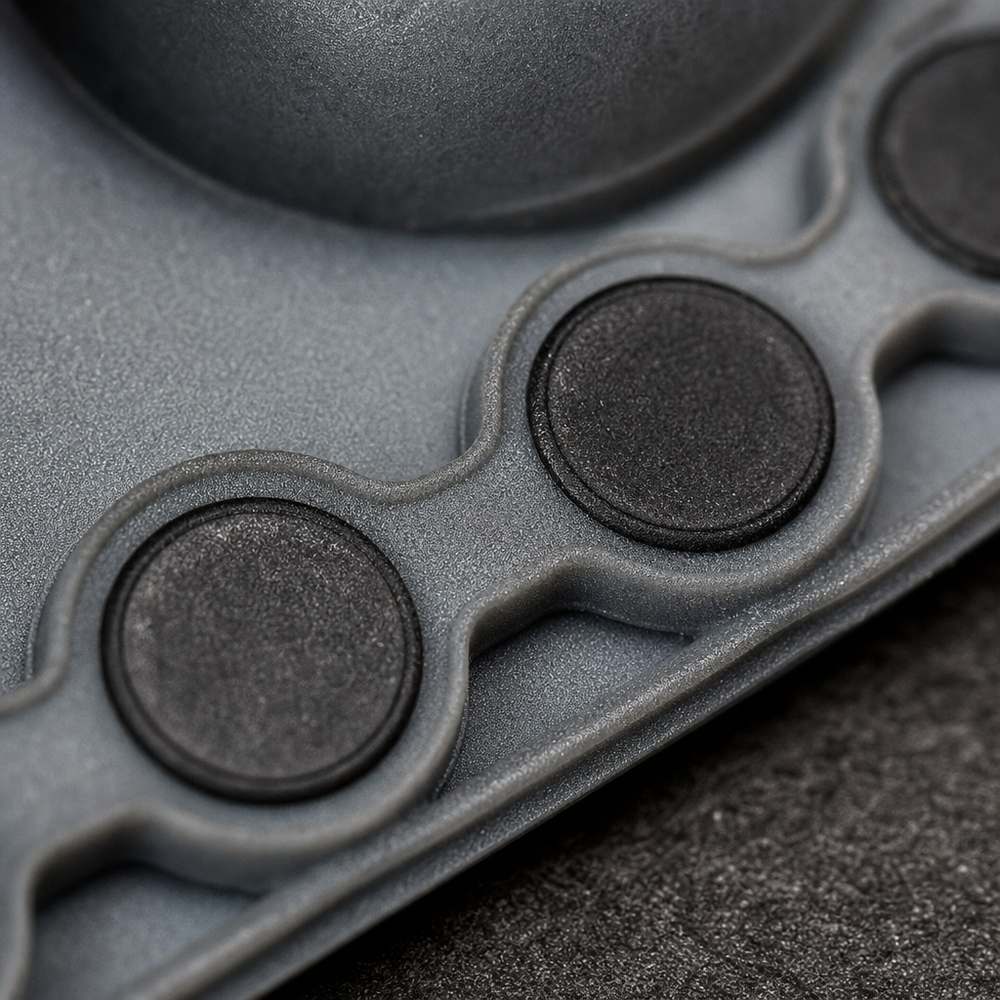
Console Button Pad Questions From Buyers
What does a five-million-press rating actually guarantee?
Why do buttons feel soft before they stop working?
Can you match an original console pad?
Send a Sample Pad and the Cycle Target