FromRubber Conductive Silicone Keypad Solution for Electric Massage Chair
Item specifics
- Design
- 3D Drawings or Objects
- Printing
- Laser Etching
- Conduction Mode
- Backlit
- MOQ
- 1000pcs
- Application
- Live Streaming Equipment
Review
Description
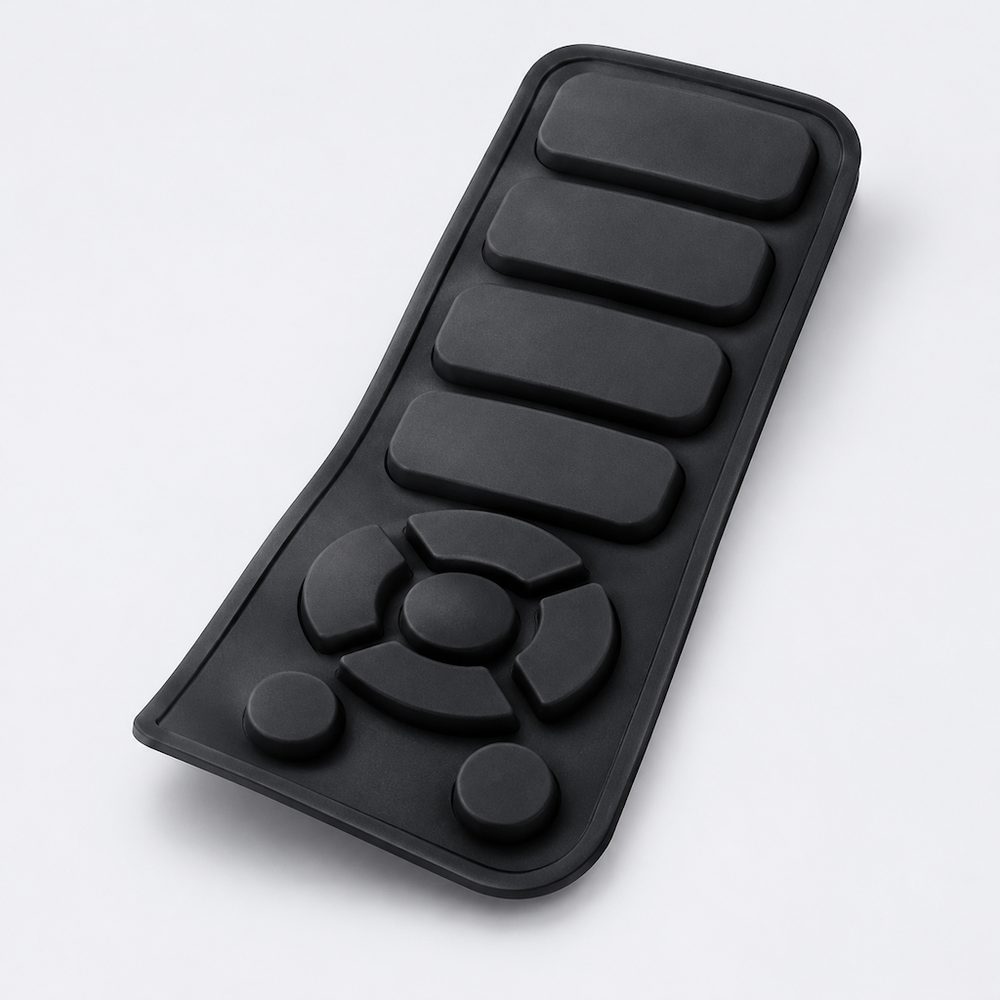
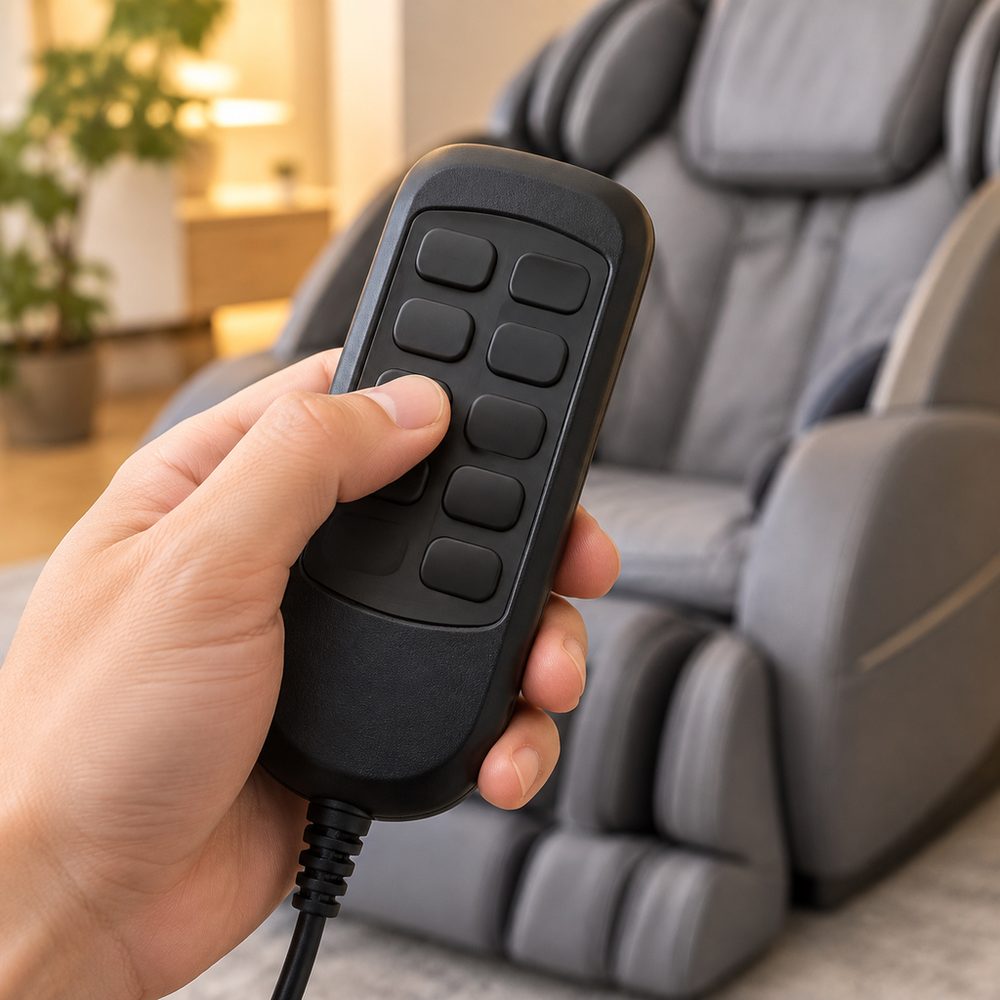
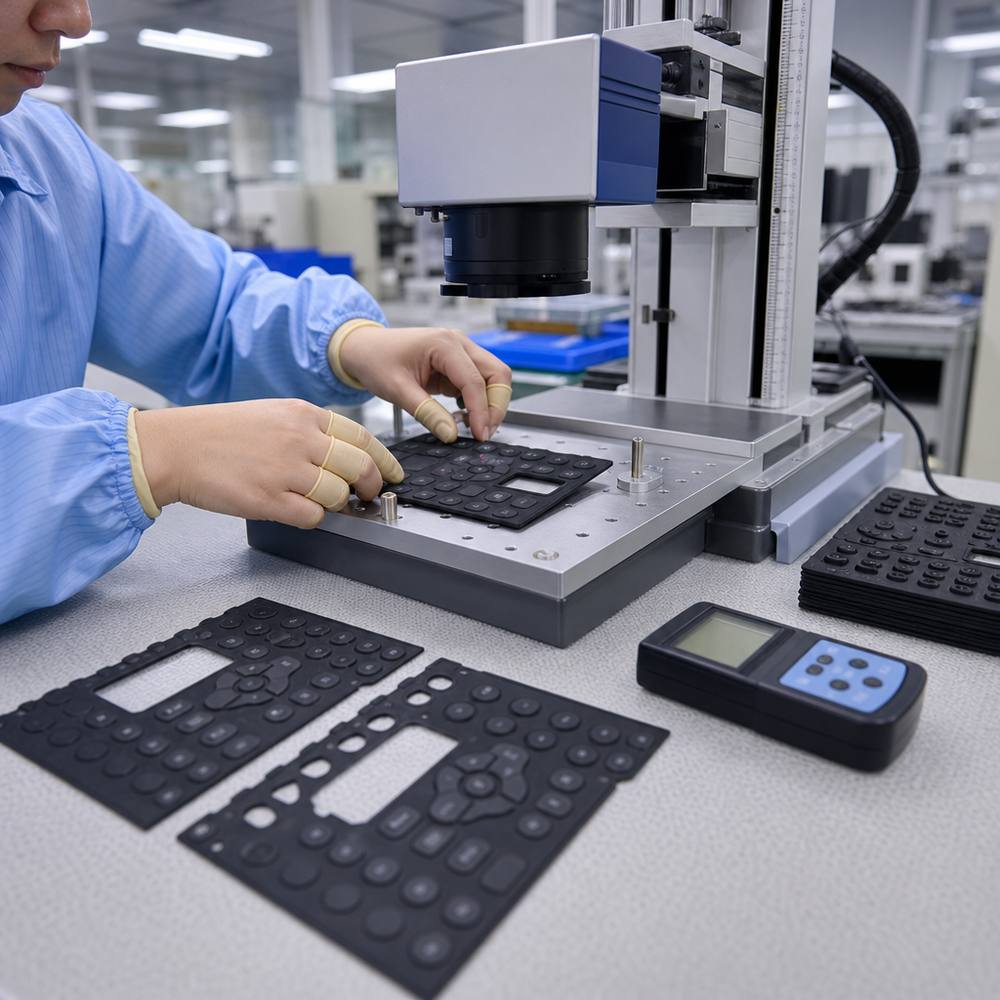
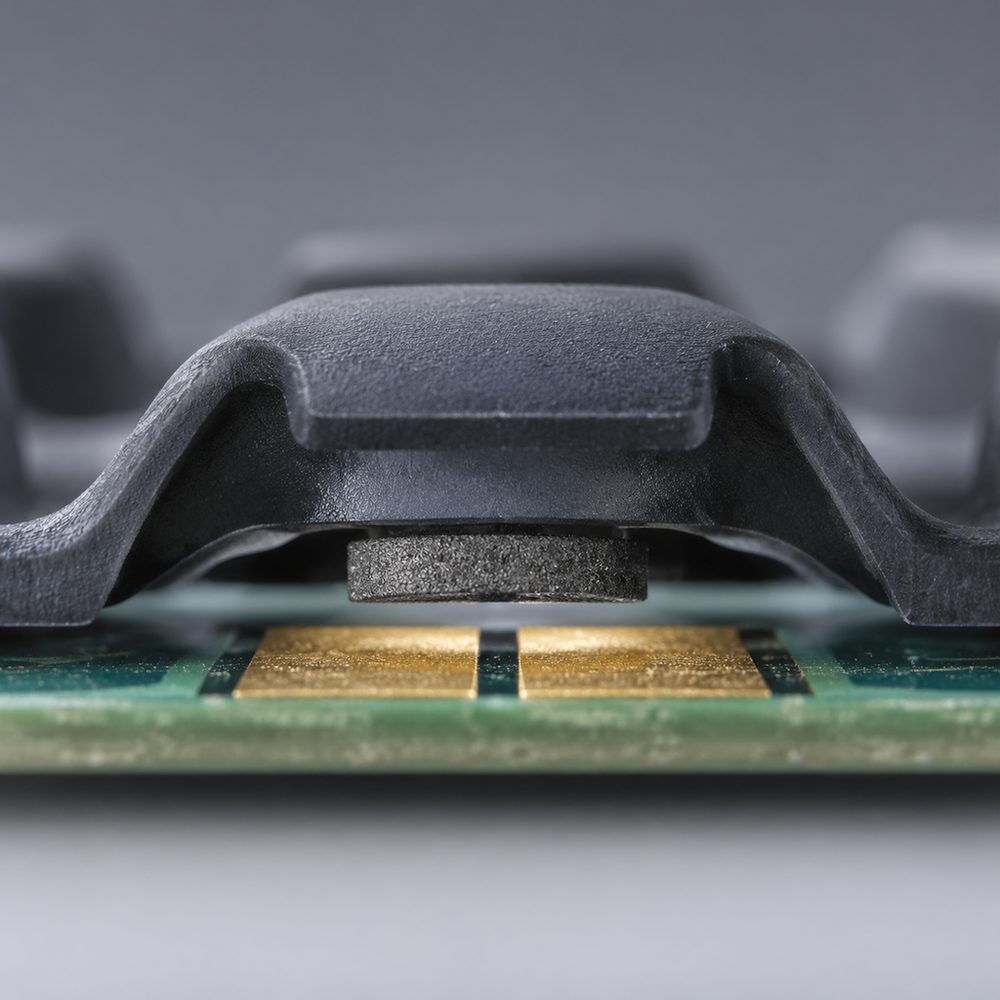
A massage chair hand controller is a high-use, hand-held interface that lives in skin contact. Its conductive silicone keypad fails not because the carbon pill wears through, but because the resistance budget is spent before the part reaches the customer: a pill that is slightly small, a PCB pad that oxidises, and a film of body oil on the contact all add up. Design the budget with margin and the keypad stays reliable for the life of the chair. The budget has four contributors - pill geometry, contact force, PCB pad finish and surface contamination. Each can be measured, and each has a design lever. Treating them as one vague requirement is why some chairs need a second press to change mode after a year. Conductive silicone switches work by pressing a carbon-loaded pill onto an interdigitated PCB pad. Everything that affects that interface affects the resistance the controller sees. A pill that is too small concentrates force and wears quickly; one that is too large bridges the pad before the key is fully pressed. Height sets the pre-travel and therefore how much force is available at contact. A flat, parallel pill face makes contact across the whole pad instead of at one edge - the difference between a crisp press and a press that needs to be repeated. Carbon distribution through the compound is covered in Uneven Carbon Pill Distribution in Industrial Remote Silicone. The force curve has to give a perceptible snap without making the controller tiring to hold. Heavier keys feel deliberate but wear the operator; lighter keys feel vague. Where the chair's functions are used while the user is reclined, a slightly firmer key with a clear detent is usually the better choice than a soft one. Gold over nickel (ENIG) gives the most stable contact resistance over time. Bare copper or a thin organic finish oxidises in a humid, warm environment - exactly what a chair's controller sees. The pad geometry should also be interdigitated rather than a single pair of tracks, so a small lateral shift does not open the circuit. The difference between conductive pill and carbon pad inner keypads is set out in What is the difference between conductive pill and carbon pad. These ranges are the starting envelope for a hand-held massage chair controller. The electronics define the acceptable resistance; the feel requirement defines the force. Values describe a normal design envelope and are not a published product specification. Final force, resistance and life targets are agreed against the controller electronics and the customer's test standard. Field returns from massage chairs cluster around three mechanisms, and two of them are surface chemistry rather than electronics. Hands carry sebum that migrates into silicone and forms a tacky film on and around the keys. The film traps dust and increases the contact resistance at the pill face. A coating or a harder, drier surface slows the process; the deeper chemistry is analysed in sebum penetration in chair keypads, which is the reference to read before choosing a coating. Frequent use wears the highest-traffic legends first - power, mode and intensity. Laser-etched legends in a two-layer construction outlast surface printing, because the legend is exposed by removing material rather than sitting on top of it. Where the design uses printing, a protective clear coat over the legend is not optional. The cable entry is the second most common failure point after the key surface. A strain relief that is moulded into the keypad body, with a defined bend radius, keeps the conductors from work-hardening. A separate rubber boot clamped over the cable is a cheaper fix but adds an assembly step and a leak path. A force-deflection curve and a resistance-versus-cycle plot answer more questions than a visual inspection, and both are cheap to produce on a small sample. The curve shows actuation force, contact point, release force and the snap ratio between them. A key with a snap ratio near 1 feels dead; a key with a very high ratio feels harsh. Agreement on the curve at prototype stage avoids a subjective argument at first article. Contact resistance is logged at intervals through an actuation test, not only at the start and end. A rising trend from the first thousand cycles predicts an early field failure even if the final number still passes. Acceptance is usually set as an absolute limit plus a permitted drift. Heat, humidity and repeated wiping with a household cleaner are applied before the resistance test, not after. A controller that passes dry and fails wet has a design problem in the contact interface, not a cleaning problem. Keypad and enclosure sealing practice is covered in Silicone Keypad and Plastic Enclosure Waterproof Sealing. Low enough to sit well inside the controller's detection threshold with margin for ageing. Many designs target under 100-200 ohm at rated force, but the correct number comes from the electronics, not from a generic figure. Usually a combination of a rising contact resistance and sebum build-up on the pill or pad. It is prevented at design stage by pad finish, pill flatness and an oil-resistant surface - not by asking the field to press harder. Yes, and it is common on premium chairs. Backlight adds a light guide layer and changes the wall thickness at the legend, so the force curve is re-checked after the light path is added rather than assumed unchanged. Send the key layout, the controller's detection threshold and the feel requirement. We will propose pill geometry, force curve and surface treatment, and quote a prototype keypad for press testing. Related: sebum and coating behaviour and conductive pill versus carbon pad construction. FromRubber produces custom conductive silicone keypads for OEM equipment makers. We do not sell retail.Conductive Silicone Keypad for Electric Massage Chairs: Managing the Contact Resistance Budget
Pill Geometry, Force and Pad Finish
Pill Diameter, Height and Flatness
Actuation Force and Travel
PCB Pad Finish
Specification Envelope for a Conductive Chair Keypad
Parameter Typical envelope Why it drives the result Material Silicone with conductive carbon pill Pill compound sets resistance and wear behaviour Pill diameter 2.0-3.5 mm, flat face Contact area and wear rate at the pad Actuation force 180-350 gf depending on key size Feel versus fatigue in long sessions Contact resistance Typically under 100-200 ohm at rated force Must sit well inside the controller's detection threshold PCB finish ENIG over nickel Stable resistance in humid, warm service Legend Laser-etched two-layer or protected print High-traffic keys wear first Coating Oil-resistant surface treatment Slows sebum film build-up Why Hand Controllers Fail in Service
Body Oil and Sebum Film
Legend Wear
Flex and Cable Fatigue
Verifying a Keypad Before It Ships
Force-Deflection and Snap Ratio
Contact Resistance Over Cycles
Environment and Cleaning
Conductive Keypad Questions From Buyers
What contact resistance should a chair keypad target?
Why do keys need two presses after a year?
Can the keypad be backlit as well as conductive?
Send the Key Layout and the Resistance Target