Who offers OEM silicone rubber control panel manufacturing with low MOQ?
- Share
- Issue Time
- Sep 7,2026
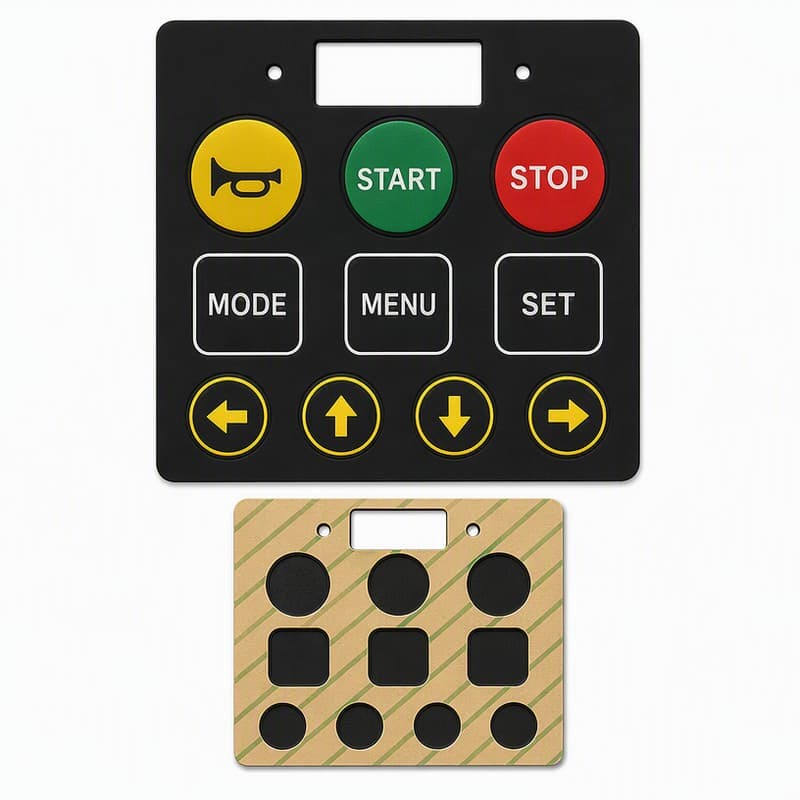
Who Offers OEM Silicone Rubber Control Panel Manufacturing With Low MOQ?
Detailed Explanation: How Low-MOQ OEM Silicone Manufacturing Actually Works
Every buyer wants a custom silicone rubber control panel at 100 pieces with tooling included at commodity pricing — and the market has responded with creative tiering. Understanding the four manufacturing models below is the difference between an honest low-MOQ program and a listing that quietly ships you a printed stock part.
Model 1 — Custom steel tooling, 500-piece MOQ (the true OEM program)
This is what "OEM silicone control panel manufacturing" properly means: your own web geometry, actuation forces, key layout, and legends, cut into a dedicated steel compression mold. The 500-piece floor is not arbitrary — it comes from four hard cost floors:
- Tooling amortization: A steel mold for a multi-key control panel costs $1,500–$5,000. Spread across 500 pieces that adds $3–$10/unit; across 100 pieces it adds $15–$50/unit, which most product budgets reject.
- Material batch minimums: Silicone is mixed by batch, and a color-matched compound often carries a 5–10 kg minimum. A small panel may use only 1 kg per 500 pieces.
- Machine setup: Compression molding requires mold mounting, thermal stabilization, and first-article approval — identical labor whether the run is 500 or 5,000 pieces.
- Secondary operations: Printing, laser engraving, PU coating, and PCB assembly each add fixture and line-change costs that dominate at low volume.
Model 2 — Stock blank + custom printing, 100-piece MOQ
Some suppliers advertise "100-piece MOQ custom keypads," but these are usually stock blank panels — standard layouts with your logo and legends pad-printed or laser-etched on top. This works for branding a generic remote or appliance panel; it does not work if you need your own key count, spacing, or tactile geometry. Ask any low-MOQ supplier the disqualifying question: "Is a dedicated mold cut for my design, or is this a printed stock part?"
Model 3 — Prototype tooling and soft tooling, 50–200 pieces
Aluminum or soft-steel prototype molds cut 40–60% off tooling cost and 1–2 weeks off lead time, and are good for 5,000–20,000 shots. FromRubber uses this route for pilot builds and market-validation runs, with a defined migration path to hardened steel tooling once volumes justify it. Some manufacturers, FromRubber included, also offer tooling-cost rebate programs once cumulative orders cross an agreed threshold — effectively converting your tooling investment into a volume credit.
Model 4 — CNC-machined or laser-cut silicone, 1–50 pieces
For true prototyping, CNC-machined silicone sheet can reproduce key geometry and web thickness without any mold. Tactile feel is approximate and per-unit cost is high ($15–$60/panel), but it validates ergonomics and fit in days rather than weeks.
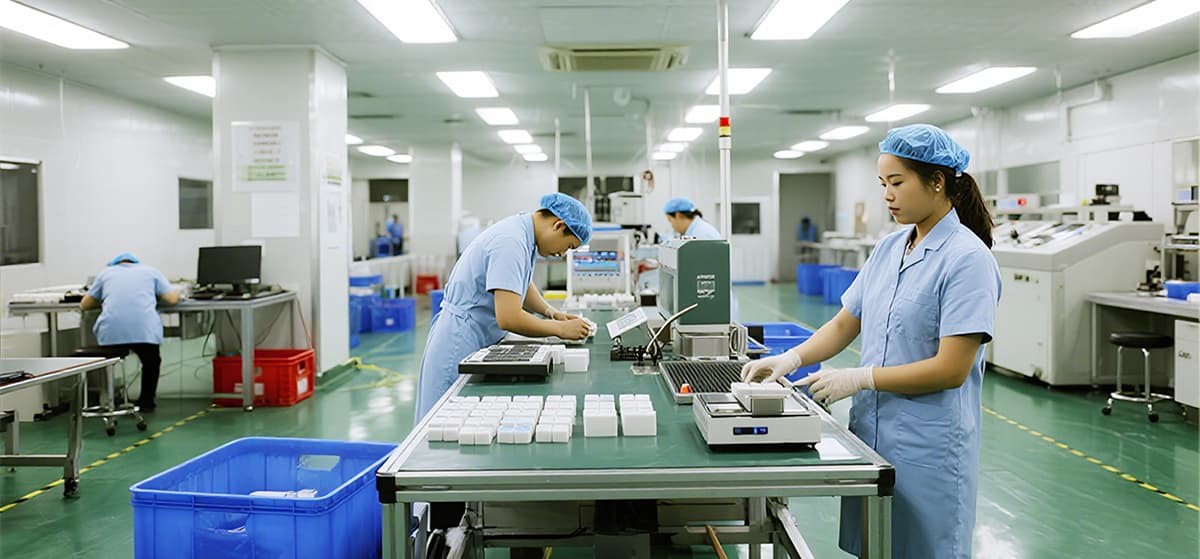 Specialized silicone keypad manufacturers run flexible compression-molding cells that make 500-piece OEM programs economical alongside high-volume production.
Case Study: 300-Piece Pilot Run for a Smart Home Controller
A European smart-home startup needed a 9-key silicone control panel for a connected heating controller — a market-entry product with genuinely uncertain demand. A full 5,000-piece production order was out of the question; a printed stock panel would not deliver their industrial-design intent (matte-black body, laser-etched white legends, 180 g ± 20 g actuation).
The program FromRubber structured for them illustrates how a low-MOQ OEM project should run:
- Phase 1 (week 1): DFM review of the customer's STEP file — web thickness corrected from 0.6 mm to 0.8 mm for consistent 180 g actuation; two keys merged to cut cavity complexity.
- Phase 2 (weeks 2–3): Soft aluminum tooling at $1,100 (vs. $2,400 for hardened steel), CNC-cut in 8 working days.
- Phase 3 (week 3): First-shot samples in the customer's Pantone Black 6 C, laser-etched legends, delivered by DHL for tactile approval.
- Phase 4 (weeks 4–5): Pilot production of 300 pieces at $1.85/unit — tooling amortization of $3.70/unit accepted as market-validation cost, with 100% of the soft tooling fee credited toward the steel production tool once annual volume crossed 3,000 pieces.
- Outcome: The controller launched on schedule; reorder volume reached 2,000 pieces within 6 months, and the tooling credit was applied against the steel mold — the startup's effective tooling outlay for the entire program was $1,100.
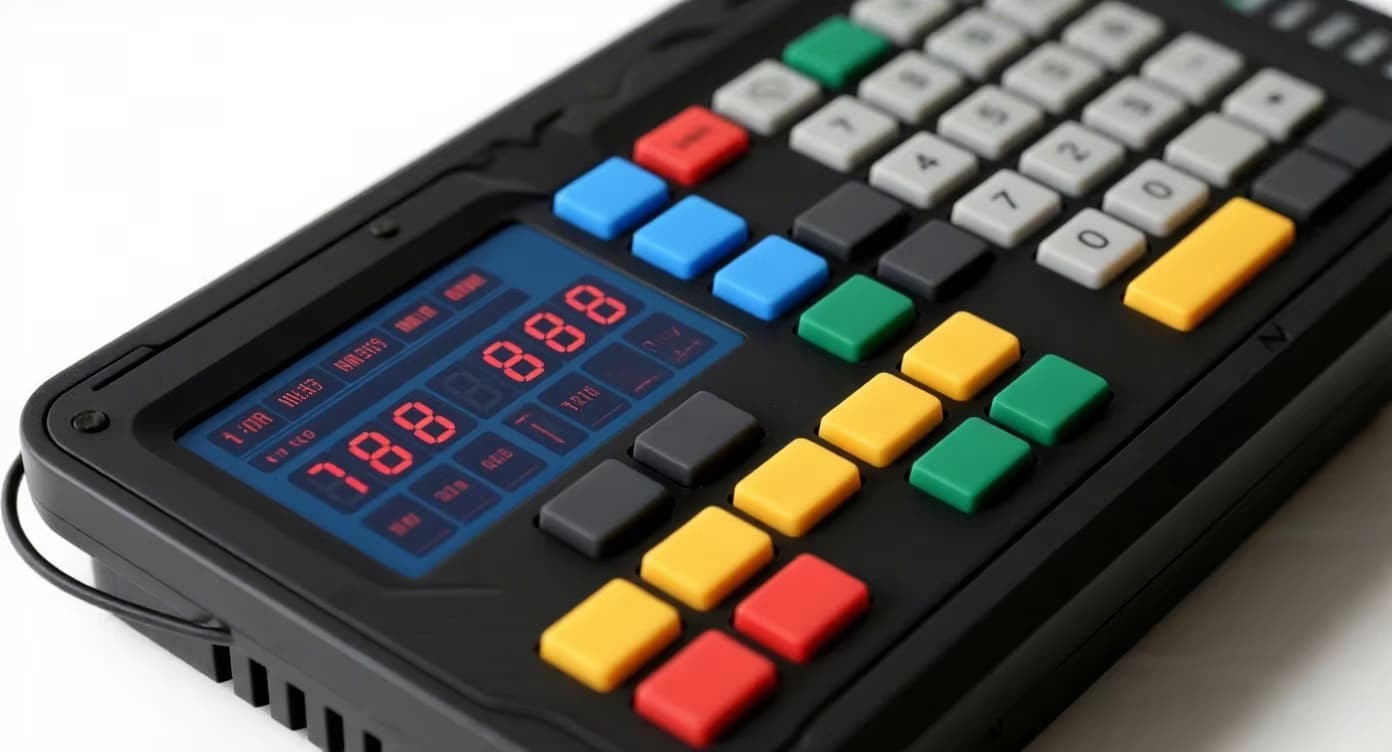 A transparent quotation that separates tooling, material, and amortization math is the hallmark of a manufacturer genuinely structured for low-MOQ OEM programs.
Data: Volume vs. Unit Economics for a Typical 12-Key Control Panel
| Order Volume | Manufacturing Model | Tooling Cost | Unit Price | Tooling per Unit | Landed Effect |
|---|---|---|---|---|---|
| 1–50 pcs | CNC-machined silicone | $0 | $15–$60 | $0 | Prototype validation only |
| 100 pcs | Stock blank + logo print | $0–$200 (fixture) | $1.20–$2.50 | $0–$2 | Branding only, no custom geometry |
| 300 pcs | Soft (aluminum) tooling | $900–$1,500 | $1.50–$2.50 | $3–$5 | True custom pilot run |
| 500 pcs | Steel tooling — standard MOQ | $1,500–$3,000 | $0.90–$1.80 | $3–$6 | Baseline OEM program |
| 1,000 pcs | Steel tooling | $1,500–$3,000 | $0.55–$1.10 | $1.50–$3 | Comfortable custom economics |
| 5,000+ pcs | Multi-cavity steel tooling | $3,000–$8,000 | $0.20–$0.50 | $0.60–$1.60 | Volume production |
Note the inflection at 500 pieces: this is where tooling amortization drops below $6/unit and custom molding becomes self-justifying. It is also the volume at which reputable manufacturers such as FromRubber will commit to full outgoing inspection, certificate support (RoHS, REACH, UL where required), and tooling ownership terms in writing.
 Unit price at low volume is driven by tooling amortization, color-matching minimums, and secondary finishing — the three factors a low-MOQ program must engineer around.
Related Questions
What is the typical lead time and MOQ for custom silicone rubber keypads?
The full 4–7 week schedule from approved drawings to shipment, and what drives the 500-piece floor.
What factors affect the price of a custom silicone keypad quote?
How tooling, durometer, color, and finishing choices move your unit price at each volume tier.
Who owns the silicone keypad mold after tooling is completed?
Why tooling ownership terms matter even more in low-MOQ programs — and what to put in writing.