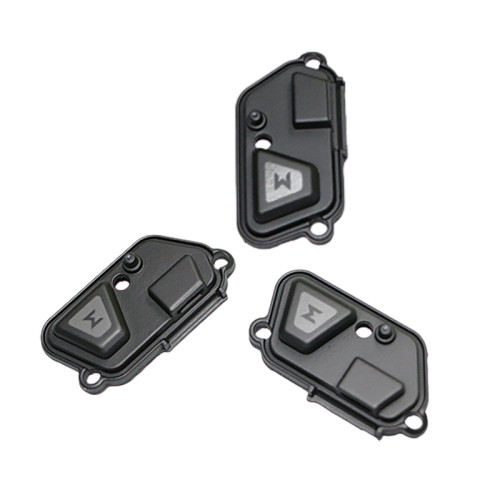
Custom Silicone Rubber Keypads Engineered to Your Specification
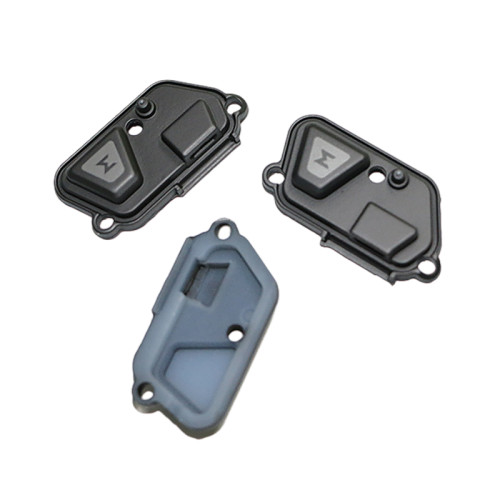
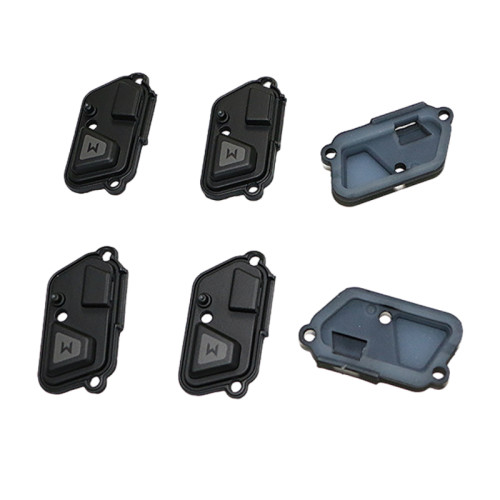
A custom silicone keypad is a compression molded rubber assembly that combines key domes, tactile webs, conductive contacts and a pressure sensitive adhesive backing into one sealed interface. FromRubber engineers each layer against your enclosure, PCB contact pattern and operating environment, so the finished part drops into your assembly without redesign.
We have delivered 6532 custom projects and keep 7254 molds in stock, and we can start from a 3D file or from a physical sample when no drawing exists. Explore our full range of custom silicone keypads or send your requirement for an engineering review.
Full In-House Process
Tooling, molding, printing, etching and final inspection are completed inside our own two factories, with no outsourced steps between design and shipment.
Built Around Your Enclosure
Wall thickness, key height, travel and sealing are set to your housing and PCB layout, not chosen from a fixed catalogue of standard shapes.
Start From a Sample
Many suppliers require a 3D drawing before quoting tooling. We can reverse engineer tooling from a physical sample and adjust key parameters to fit your housing.
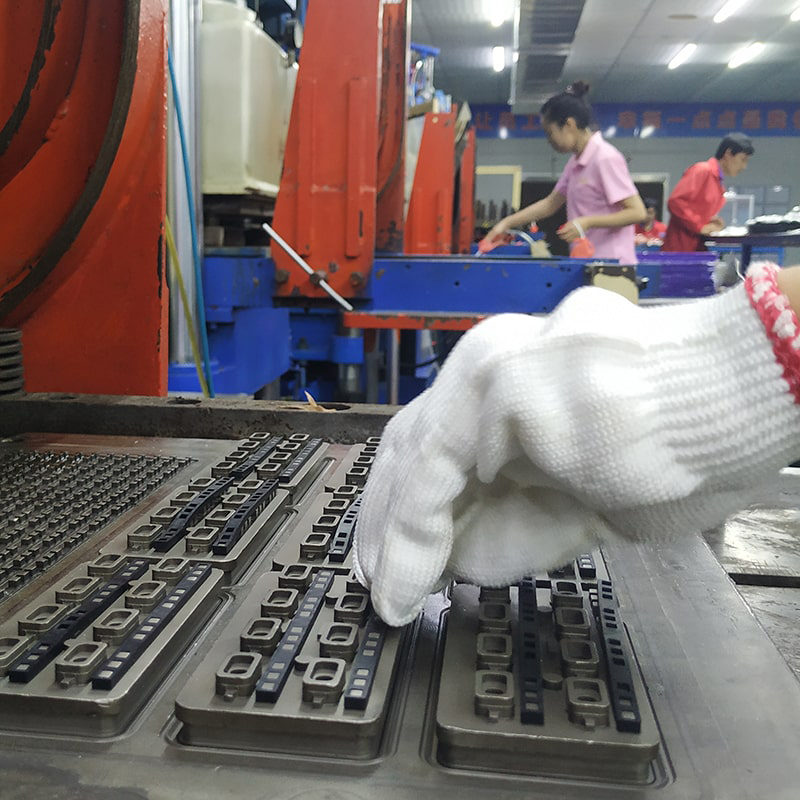
Compression molding in progress at our Dongguan factory.
Design Specifications You Can Set
Every keypad we quote is defined by a small set of engineering parameters. Give us your target values and our engineers confirm what is achievable before tooling starts.
Parameter
Production Range
Why It Matters
Hardness (Shore A)
30 - 80
Controls tactile feel, rebound and sealing pressure
Actuation Force
150 - 400 g
Balances accidental activation against operator fatigue
Key Travel
0.8 - 1.5 mm
Trade-off between tactile feedback and assembly thickness
Snap Ratio
Engineered to target feel
Defines how clearly the operator feels the switch close
Keypad Life Cycle
1 - 5 million actuations
Sets service life for high-use equipment
Contact Resistance
Matched to your PCB contact pattern
Determines the detection margin of your circuit
Operating Temperature
Standard, high-temperature or low-temperature grades
Defines the environment the keypad can serve
Minimum Order Quantity
1000 pcs
Entry threshold for a custom tooled part
Tighter tolerances and dual-durometer constructions are reviewed case by case. Send us your drawing and running conditions and we will confirm the achievable window in the quotation.
Conductive Contact Options
The contact layer decides switching reliability. We produce four conductive options in house and select them by operating environment and reliability level rather than by unit cost alone.
Conductive Ink
Screen printed directly onto the keypad underside. Suited to thin structures and irregular key layouts where a printed contact layer keeps the assembly flat.
Carbon Pills
A carbon loaded silicone pellet bonded under each key. The standard choice for remote controls, instruments and control panels where contacts must stay stable over years of use.
Nickel and Gold Pills
Used where contact resistance must stay low and repeatable. Automotive and high-reliability programmes are specified with nickel or gold pills.
If you are comparing the main conductive methods of silicone keypads for a new design, send us your PCB contact pattern and our engineers will match the contact type, pill diameter and alignment tolerance to it.
In-House Manufacturing Capabilities
Keypad quality depends on how many steps leave the building. At FromRubber the entire chain runs inside our own plants, from tooling to final inspection, which keeps tolerances under one owner and removes the handover losses common to subcontracted production.
Drawing Review
Material Mixing
Compression Molding
Deflashing
Post Curing
Ink Spraying
Spray Inspection
Silkscreen Printing
Conductive Printing
Molding Inspection
Print Inspection
Full Inspection
Packing
2Factories
220Staff
12,000 m²Workshop
32Molding Presses
7254Molds In Stock
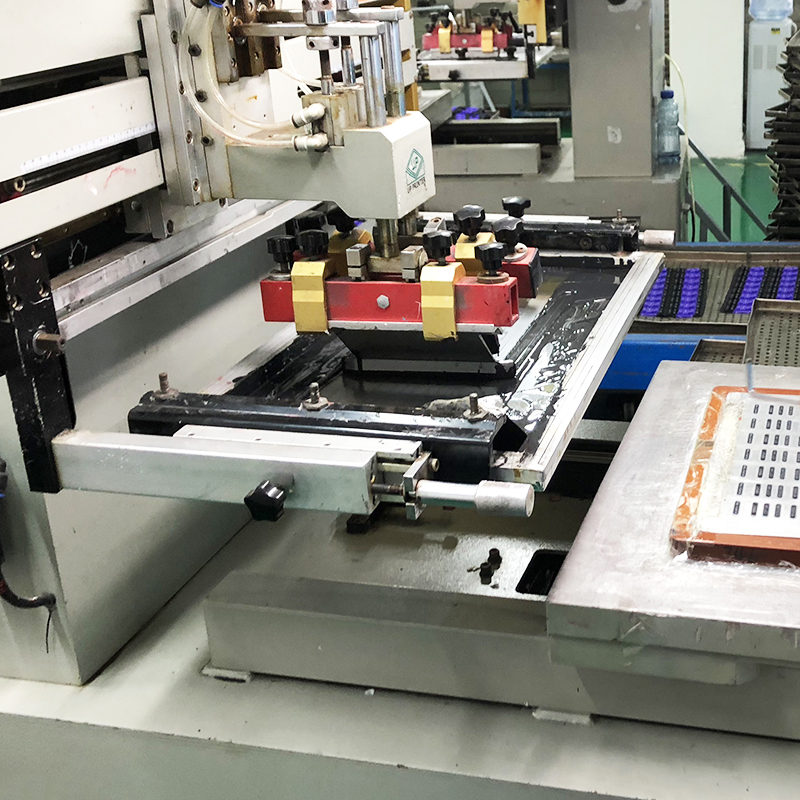
Silkscreen printing station for keypad legends and conductive layers.
Tooling Held In House
Our own mold shop runs CNC machining for both silicone and plastic tooling. Sample molds are typically ready in 3 to 5 days and production molds in 10 to 12 days, which is why our development cycle runs about 30 percent faster than the usual lead time for the same scope.
Finishing decides how the keypad looks after two years of use. Choose the treatment to match the cleaning agents, UV exposure and abrasion the part will actually meet in service.
Process
Result
Typical Use
Silkscreen Printing
Flat printed legends in multi colours
Standard non-backlit keypads
Ink Spraying + Laser Etching
Light transmitting legends with blocked background
Backlit keypads
Epoxy Dripping
Raised wear resistant surface
Control panels in harsh environments
Multi-Color Molding
Colour separation with clean joints
Remote controls and consumer devices
Electroplating / Silver Ink
Metallic appearance
P+R keys and premium enclosures
3M Backing Adhesive
Ready to mount assembly
Electronics assembly lines
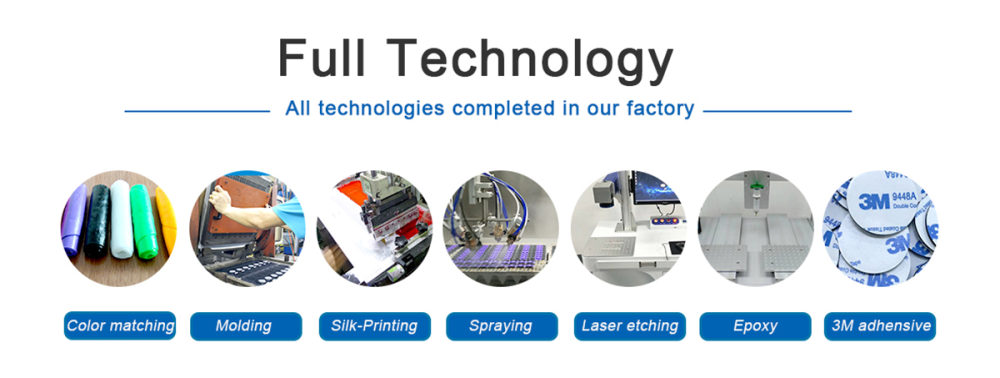
Finishing technologies completed in our own factories.
Legend Durability Is Tested, Not Claimed
Printed legends are checked on our own abrasion equipment. A typical acceptance criterion is no breakthrough after 300 rubbing cycles with a 1 kg load, with 250 cycles applied at corner positions. Every batch is inspected against it before packing, and the results are documented per project and can be shared together with the quotation.
Send these five items and our engineering team can return a quotation and a manufacturability review rather than a generic price list.
3D CAD file in STEP or IGES, or a physical sample if no drawing exists
2D drawing with critical dimensions and tolerance notes
Estimated annual volume and first order quantity
Operating environment, cleaning agents and required service life
Assembly method: adhesive backing, plastic caps, brackets or over molding
Within 3 hoursQuotation returned
3 - 5 daysSample mold
10 - 12 daysProduction mold
92%First-pass yield
Not ready to commit to production tooling? Ask for our custom silicone samples and we will quote a sample mold alongside the production quotation, so you can test fit and feel before the full tooling investment.
Two files is enough to get a real answer — a drawing or a photo of your sample.
Silicone handles most sealed tactile interfaces well, but it is not the right construction for every case. We would rather say so before tooling than after.
Very high cycle counts with a crisp metal click
If the interface must survive tens of millions of actuations and the operator expects a sharp metal snap, a metal dome or a mechanical switch assembly will outlast and out-feel a silicone web.
Flat panels with little or no key travel
Where the front panel has to stay very thin and the keys barely move, a membrane switch printed on polyester can be a better fit than a molded silicone layer.
Legends that change per unit or per language
Silicone legends are fixed at the moment of molding. If the interface needs different symbols per variant, or content that changes, a display or a replaceable overlay is more practical.
Continuous sealing across the whole enclosure
A silicone keypad seals its own key field. Where the full enclosure joint must be sealed, a separate gasket design is normally needed alongside the keypad.
Naming the constraint does not end the conversation. In most of these cases we still supply the silicone part, the gasket or the plastic housing next to it, and we will tell you which construction actually serves your product.
Why Buyers Choose FromRubber
FromRubber has manufactured custom silicone and plastic parts since 2010, supplying OEM and ODM programmes from two factories in Dongguan, Guangdong.
6532 custom projects developed and 7254 molds held in stock
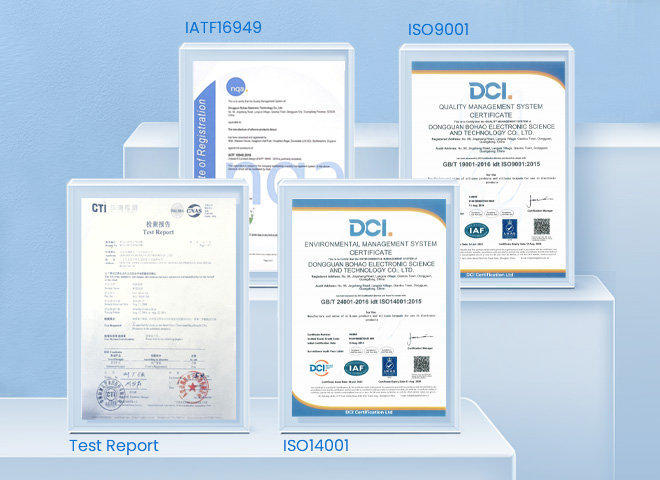
IATF 16949:2016 certified by NQA, plus ISO 9001:2015 quality and ISO 14001:2015 environmental management systems
5 registered utility patents covering keypad fatigue testing, surface abrasion testing, hot press mold opening, forming equipment and multi-station deflashing
Silicone raw material sourced from Shin-Etsu, Dow Corning and Toshiba
In-house abrasion, actuation fatigue and key force testing, documented per batch
Four inspection gates: incoming, in-process, printing and final
One long running programme is a Bluetooth game controller supplied to a consumer brand we have served for several years. The customer's feedback centred on the tactile feel of the keys, and a second controller manufacturer later approached us asking for the same key feel.
IATF 16949, ISO 9001 and ISO 14001 certificates with our abrasion test report.
Frequently Asked Questions
What is the minimum order quantity for custom silicone keypads?
The standard minimum is 1000 pcs for a custom tooled keypad. Lower trial quantities can be discussed together with the sample mold, and the cost of tooling is quoted separately from the part price.
What design files do you need to start a project?
A 3D CAD file in STEP or IGES plus a 2D drawing is the fastest route. If you can also share the enclosure drawing and PCB contact layout, we can check wall clearance and contact alignment before tooling is cut.
What if I only have a sample and no 3D drawing?
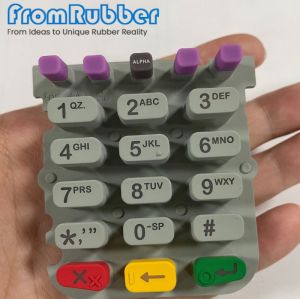
Send the sample. Our engineers measure it, rebuild the drawing and adjust key parameters where the original has fit or feel problems. This is how we handled a Malaysian POS terminal project that other suppliers declined for lack of a 3D file.
How long do tooling, sampling and production take?
Quotation within 3 hours of receiving your files. Sample mold typically 3 to 5 days, production mold 10 to 12 days, with mass production scheduled after your sample approval.
Can you match custom colours, legends and backlighting?
Yes. Colour matching to your reference, multi-colour molding, silkscreen printing, epoxy dripping and laser etched legends for backlit keypads are all produced in house, together with 3M backing adhesive where the keypad is mounted directly to the housing.
Which conductive contact should I choose?
Conductive ink suits thin and irregular layouts, carbon pills are the general purpose choice for control panels and instruments, and nickel or gold pills are used where resistance must stay low and repeatable. Send your PCB contact pattern and we will recommend the contact type and pill size.
Start Your Keypad Project
Not sure which hardness, actuation force or contact type your design needs? Send a drawing, or simply a photo of the sample you are working from.
Our engineers will tell you what is achievable, what the tooling costs and how long it takes, before anything is committed to a production mold. If the honest answer is that your current design should stay as it is, we will say so.