The Gap Between Silicone Keypad Spec Sheet and Real-World Handheld Meter Use
- Share
- publisher
- Suey
- Issue Time
- Aug 25,2026
Summary
Why the silicone keypad spec sheet diverges from real handheld meter use: actuation force drift, backlight reality, chemical exposure and how to close the gap.
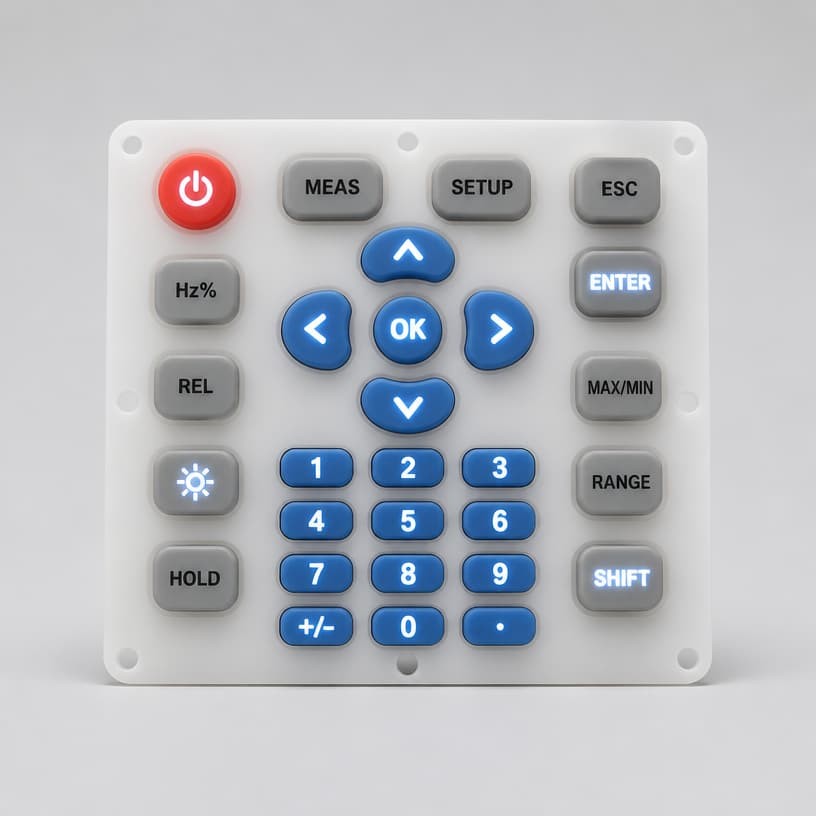
Specification Reality Check
The specification sheet for a silicone keypad is written in a lab at 23°C, on a test bench with fresh fingers and clean air. The field is 45°C with gloves, sweat, toolbox dust and a lifetime of presses. Between the two sits a gap that shows up as "the meter doesn't feel like the sample did" - and it is a gap you can close by writing specifications that describe the real world, not the lab. This article identifies the four widest gaps between the silicone keypad spec sheet and real-world handheld meter use, and what to do about each.
1. Why the Handheld Meter Silicone Keypad Spec Sheet and Field Reality Diverge
Every keypad spec sheet makes the same implicit assumptions: constant temperature, clean fingers, dry air, and a fresh part. Real handheld meter use violates all four, and each violation moves the keypad away from its datasheet behavior. The divergence is not a defect - it is physics - but it becomes a product problem when the spec sheet is treated as a promise of field behavior. The engineering fix is to specify the keypad at the field conditions, or at least to measure the gap between lab and field and declare it.
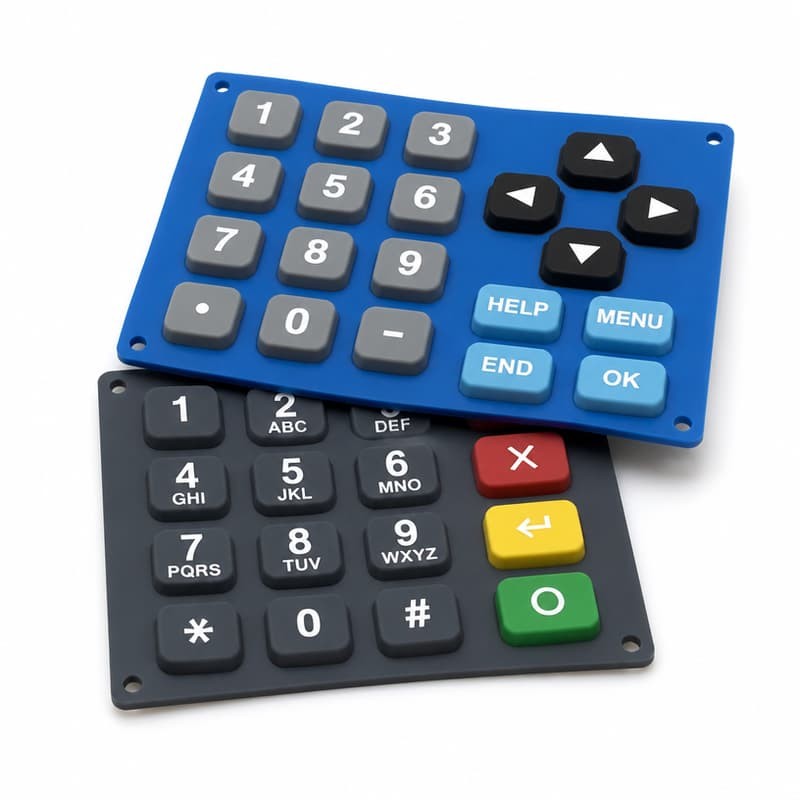
Four gaps dominate instrument programs: actuation force drift with temperature and batch; backlight performance under real ambient light; chemical and moisture exposure the spec never lists; and the difference between a fresh sample and a two-year-old part. Each has a specification answer, and none of them requires exotic testing - just honest conditions.
2. The Gap Between Rated and Real Actuation Force in Silicone Keypads
The datasheet says 180 gF at 23°C. The field says: 260 gF at -20°C, 150 gF at +60°C, and anywhere from 160 to 210 gF across production batches at room temperature. Temperature shifts the modulus of the elastomer; batch variation shifts the compound and the molding conditions. Both are normal. The gap becomes a complaint when the specification quotes a single number with no tolerance and no temperature reference, because then every field condition is "out of spec" and nobody knows what "in spec" means.
The fix is a three-part force specification: nominal force with a ±20% band; the temperature reference (and ideally a cold-limit value); and the batch-to-batch control target (±30 gF or better). The batch force variation study documents how a ±30 gF swing across batches quietly erodes the "premium feel" that sells the instrument.
3. Backlight Performance: Spec Numbers vs. Real Handheld Meter Visibility
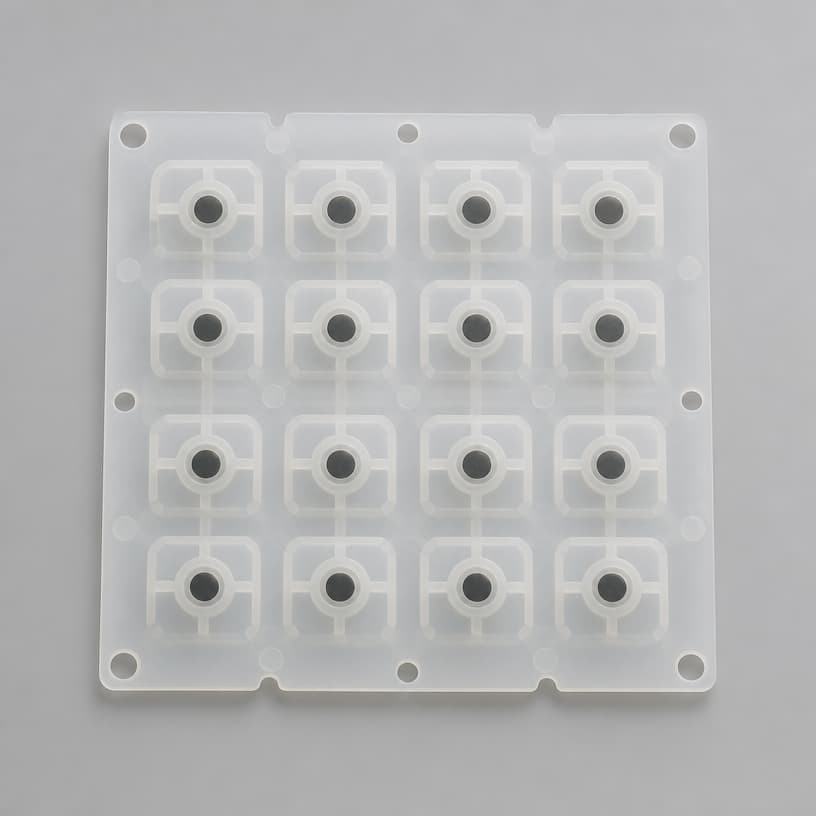
Backlit keypads are specified in lux and luminance - and used in sunlight, shade, and a truck cab at night. A legend that is perfectly legible in a dark lab can disappear in direct sunlight, or bloom and wash out in the dark after the LED ages. The gap has three components: LED flux and aging, light guide and silicone transmission losses, and ambient light contrast. The backlit keypad brightness guide covers material selection for transmission; the practical point here is that the acceptance test should be performed under the field's worst lighting condition, not in a dim room.
Specify backlight as a system: LED flux at rated current, keypad transmission (a high-transparency grade where backlit), legend contrast ratio, and an aging allowance. Then validate the assembled unit under direct sunlight and in darkness, not just on the bench.
4. Chemical and Moisture Exposure the Spec Sheet Never Mentions
No keypad datasheet lists "alcohol wipes, sunscreen, diesel, or sweaty gloves" - but those are the chemistries a handheld meter meets in a working life. Each one interacts with the keypad differently: alcohol attacks surface legends and can soften certain ink systems; oils and greases swell some elastomer formulations and leave tacky surfaces; moisture carries contaminants into the contact zone. The alcohol wipe case is the classic example: a cleaning habit specified nowhere in the product manual defeated a legend process specified everywhere in the drawing.
The specification answer is an exposure matrix: list the chemicals the meter will realistically meet, add a rub/soak test for each at the expected frequency, and pick material, legend and coating accordingly. For instruments that meet oils and solvents daily, the oil and alcohol resistant keypad guide lists the formulation choices that survive. If the exposure list is empty because "nobody knows", that is the finding - and the honest specification says so instead of pretending the field is clean.
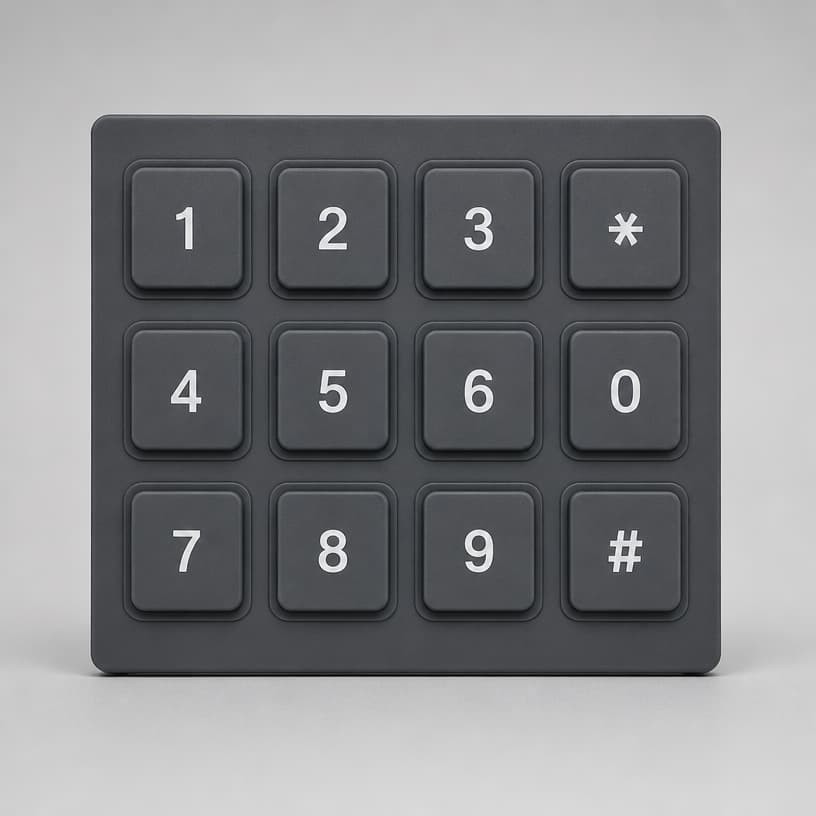
5. Case Study: Bridging the Spec-Use Gap for a Field Data Logger
A field data logger's keypad passed every factory acceptance test and still drew a steady stream of "hard to read in daylight" and "keys feel different in winter" comments. The investigation found the gap was fully in the specification: backlight luminance was measured on the bench in a dark room, actuation force was quoted at 23°C with no temperature reference, and the chemical exposure list was empty even though the logger was sold for utility inspections.
The fix was a spec rewrite, not a redesign: force specified at -20°C and +60°C with a ±20% band; backlight acceptance moved to a 50,000 lux ambient test with a contrast target; and an exposure matrix added with alcohol-wipe and moisture tests. Production cost barely moved. Field complaint volume dropped by 80% within two quarters, and the revised spec sheet became the template for the company's instrument line - a reminder that the gap between spec and reality is closed with honest conditions, not heroics.
6. Closing the Gap: A Realistic Silicone Keypad Specification Approach
Quote actuation force with a tolerance band and a temperature reference - add cold and hot limit values
Validate backlit legends under the worst field ambient, not a dark bench
Build a chemical exposure matrix from real use and test against it
Specify batch-to-batch control targets for force and feel
Test assembled units after environmental conditioning, not only fresh parts
Declare what the spec does not cover - the honest gap is the starting point
Sources and Further Reading
Technical background draws on published material from Xometry - liquid silicone rubber molding design guide, UL Prospector material database, and Diamond HMI - rubber keypad resources. Field data in the case study reflects FromRubber project records for instrument keypad programs.
Write a Spec That Survives Contact With the Field
FromRubber reviews keypad specifications against real field conditions and returns a gap list with revised acceptance criteria. Send your current spec sheet for review.
About FromRubber - FromRubber is a full-process silicone keypad manufacturer for handheld instruments, with in-house environmental testing, backlight engineering and specification review services.