


FromRubber Quick Proofing Silicone Keypad Pad With Plastic Button Cap For Cars
Item specifics
- Design
- Follow 3D Drawing Or Physical Object
- Process
- Molding-Spraying-Plastic Injection-Assmble
- Assemble
- Silicone Rubber Keypad Pad+Plastic Button Cap
- MOQ
- 3000pcs
- Application
- Car
Review
Description
A P+R keypad pairs a plastic button cap with a silicone pad, and the reason to pay for it is the cap, not the pad. The cap holds a crisp legend that cannot wear off, stands up to fingernails and cleaning chemicals, and gives the key a hard, precise top face. The silicone underneath supplies the seal and the return force. Where the design fails is at the joint between the two - so the joint, not the material data sheet, is what deserves the engineering attention. Buyers often ask for P+R when the real requirement is a durable legend or a hard key feel. It is worth checking that first, because a two-layer silicone key solves a legend problem at lower cost, while a genuinely hard key face needs the plastic cap. There are two ways to hold a plastic cap on a silicone pad, and they fail differently. Choosing between them is a volume and service-life decision. A mechanical interlock - a flange or a dovetail on the cap captured by the moulded silicone - is the more robust option in service because it cannot debond, but it adds tooling complexity and a little height. Adhesive bonding is simpler and lower profile, but the bond line is sensitive to surface treatment, cure and heat. For a control used with gloves or in a warm enclosure, the interlock is usually worth the extra tooling. A cap that floats in its silicone seat rocks under a finger and eventually works the silicone loose. Cap moulding tolerance, the silicone seat depth and the clearance between them decide how much play the user feels. Play is a quality perception problem before it is a functional one, and it is fixed by tightening the seat rather than the cap. The web under the cap sets the force curve. The cap adds mass and a flat contact face, which changes how the press feels but not where the contact closes. Preload from the cap's weight is negligible; preload from an over-thick seat is not, and it shows up as a key that sits high and needs extra force to start moving. These are the ranges we start from for a plastic-cap-on-silicone keypad. The cap material and the required service life set the joint type. Ranges describe a typical design envelope. Final cap material, interlock geometry and force targets are fixed on the approved drawing after prototype assembly. Failures on this construction are almost always at an interface: cap to silicone, legend to cap, or silicone to housing. A cap that comes off in a customer's hand is the most visible failure and the most damaging to the brand. It follows from insufficient interlock engagement or from adhesive that was not cured to the specified cycle. A pull test on production samples, not only on prototypes, is the control that catches it. Moulded-in legends on the cap are effectively permanent. Printed legends on the cap are better than printed legends on silicone, but they still wear at the highest point of contact. If the product is used with gloves or cleaned with solvent, specify a moulded legend and accept the tooling cost. Under sustained compression, the silicone seat around the cap relaxes and the cap sits lower over time. Hardness and compression set of the seat material decide how much. A slightly harder seat compound with good set resistance keeps the cap at its designed height for the life of the part. A P+R keypad has two tools - one for the caps, one for the silicone - and they have to fit each other. Proofing both before production tooling is the lowest-cost way to de-risk the programme. Prototype caps from a short-run tool, combined with a prototype silicone pad, let the interlock, play and force curve be measured on the real assembly. Doing one without the other produces a fit that only works on paper. Design rules for keypad and enclosure integration are set out in 7 Golden DFM Rules for Silicone Keypad & Enclosure Integrated. Caps are seated by hand or in a fixture. Hand seating introduces variation, so the design should make correct seating obvious - a shoulder that stops the cap at the right depth. Where volume justifies it, a seating fixture with a force limit prevents over-pressing one side. First article covers cap height above the bezel, key-to-bezel gap, travel and force. The gap is the measurement most often missed and the one users notice, because an uneven gap reads as poor assembly. Fit clearance principles are covered in The Complete Guide to Silicone Keypad and Plastic Enclosure, and a comparable tactile dome construction is described in Tactile Feedback Silicone Rubber Keypad. When the key needs a genuinely hard top face, a legend that cannot wear, or resistance to aggressive cleaning. If the only requirement is a durable legend, a two-layer silicone key usually costs less. Interlock for service life and for warm or gloved use; adhesive for low profile and simple assembly. The interlock needs more tooling but removes the debonding failure mode entirely. Yes, and we recommend it. Prototype caps plus a prototype silicone pad let interlock engagement, play and force be measured on the assembly before either production tool is cut. Send the key layout, the required cap height and the cleaning or glove environment. We will propose cap material, interlock geometry and seat compound, and quote prototype caps and pads as a pair. Related: keypad and enclosure DFM rules and fit clearance. FromRubber moulds P+R keypads for OEM and automotive-adjacent programmes. We do not sell retail.Silicone Keypad Pad With Plastic Button Caps: The Cap Is the Engineering Point
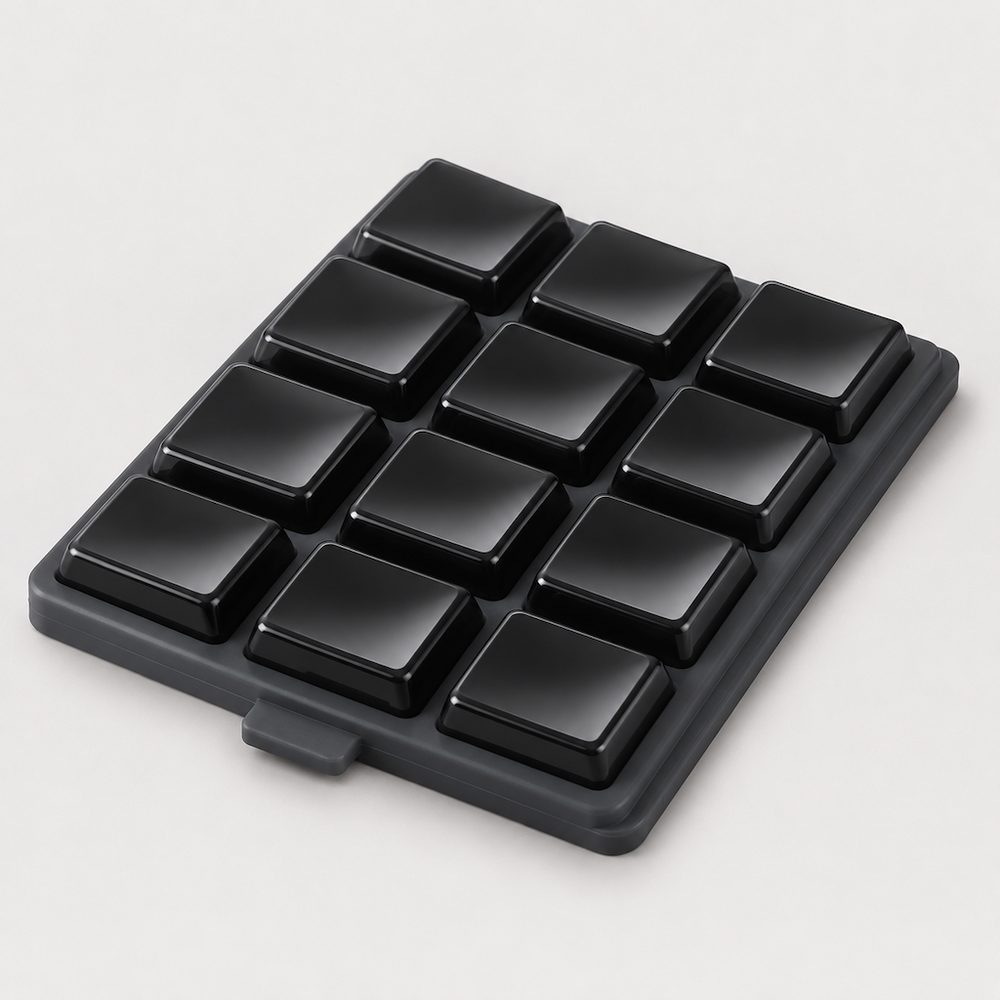
How the Cap Stays On
Mechanical Interlock Versus Adhesive
Cap Tolerance and Side Play
Travel, Preload and Click Ratio
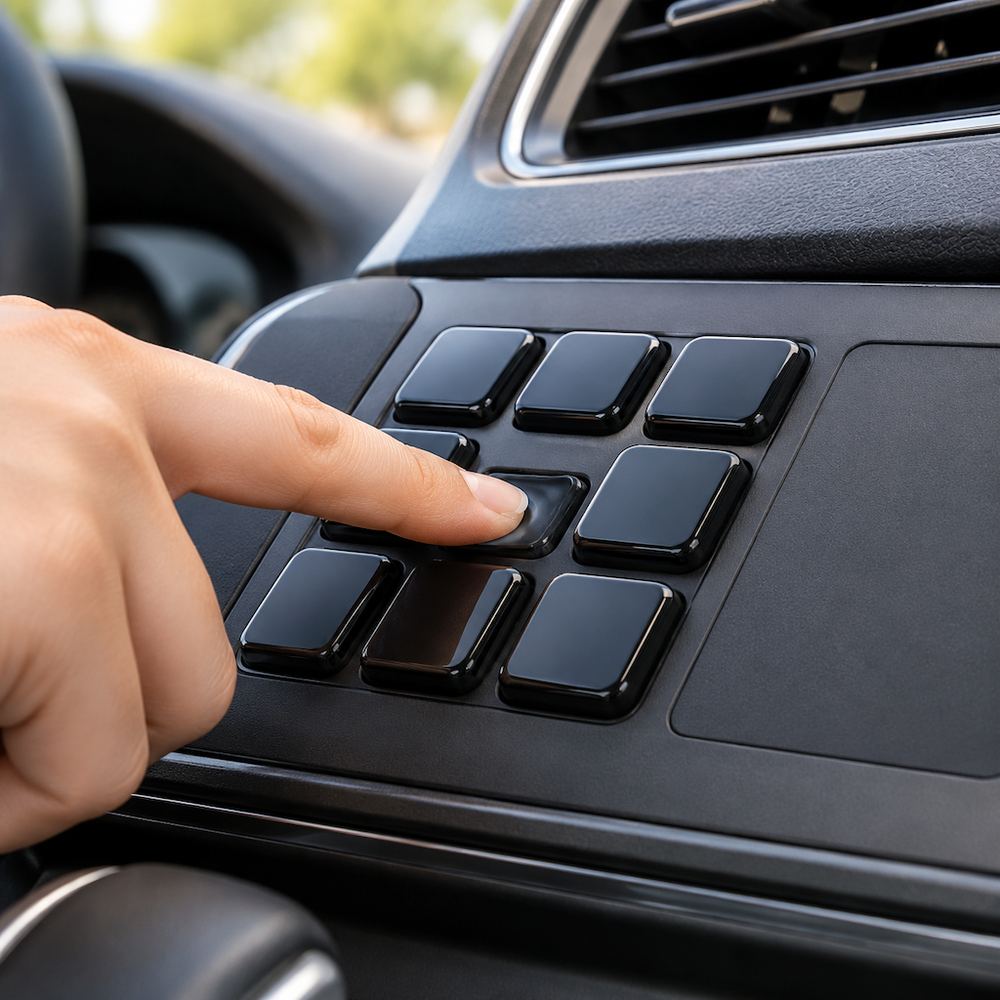
Specification Envelope for a P+R Keypad
Parameter Typical envelope Why it drives the result Cap material ABS, PC or PMMA, moulded legend Hard face and permanent legend Cap retention Mechanical interlock preferred above adhesive Interlock cannot debond in service Seat compound Silicone 50-70 Shore A, low compression set Keeps cap height stable over time Travel 0.6-1.5 mm depending on feel target Set by the web, changed by the seat Cap above bezel 0.5-1.5 mm, uniform across keys Uneven height reads as poor assembly Force Set by web geometry and contact design The cap does not create the click Pull test Defined limit on production samples Catches incomplete interlock or cure Where P+R Keypads Fail
Cap Loss
Legend Wear on the Cap
Creep in the Silicone Seat
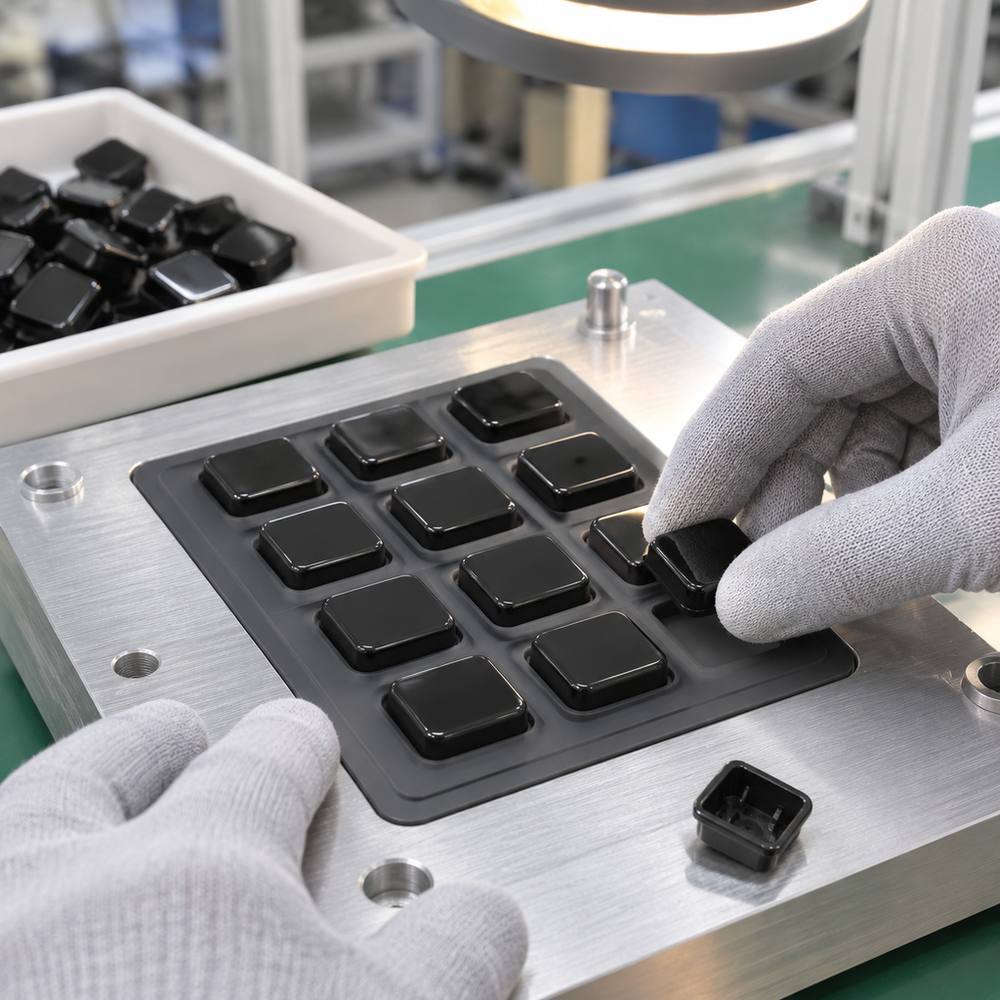
Proofing Before Production Steel
Prototype Cap and Pad Together
Assembly Method
First Article and Fit to Housing
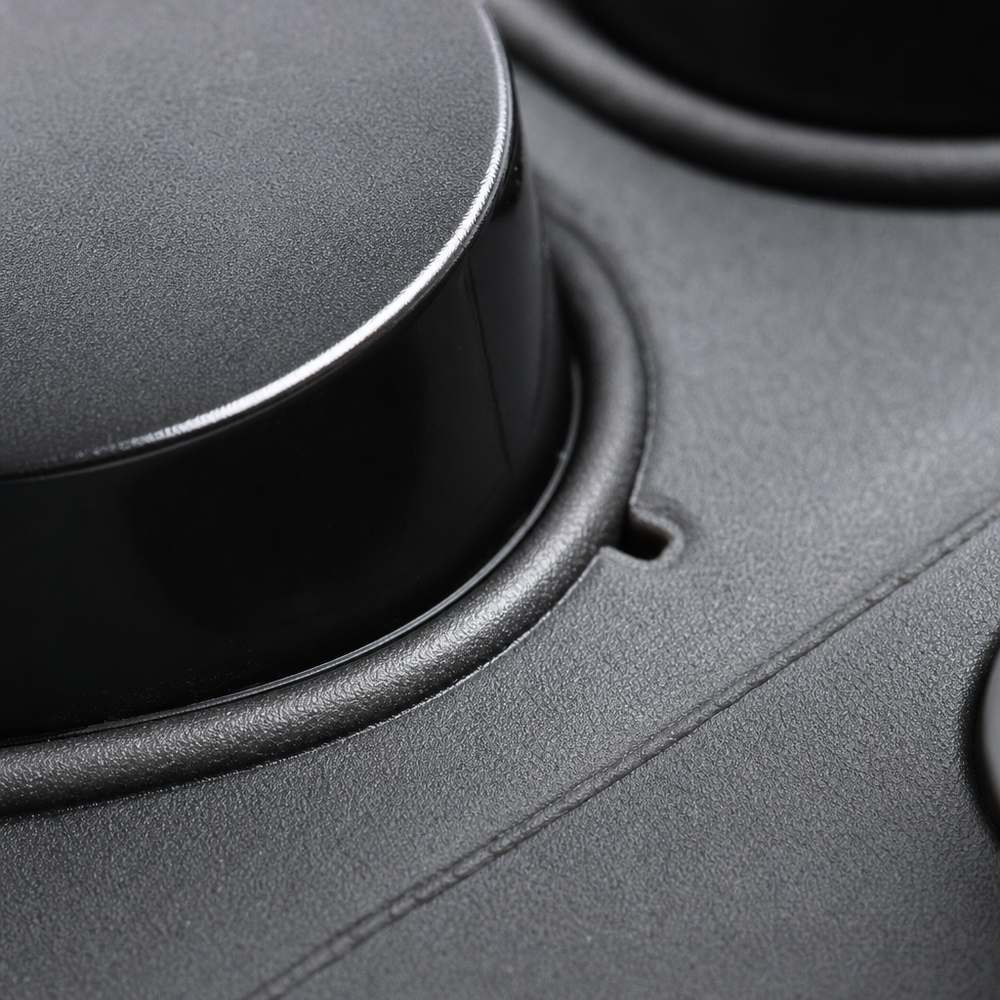
P+R Keypad Questions From Buyers
When should I choose P+R instead of a silicone key?
Is adhesive or interlock better for the cap?
Can you proof caps and pads together?
Send the Key Layout and the Feel Target


