


FromRubber Design Waterproof Plastic Rubber Keypad For Scanning Machine
Item specifics
- Design
- Follow 3D Drawing Or Physical Object
- Process
- Molding-Spraying-Plastic Injection-Assmble
- Assemble
- Silicone Rubber Keypad Pad+Plastic Button Cap
- MOQ
- 3000pcs
- Application
- Car
Review
Description
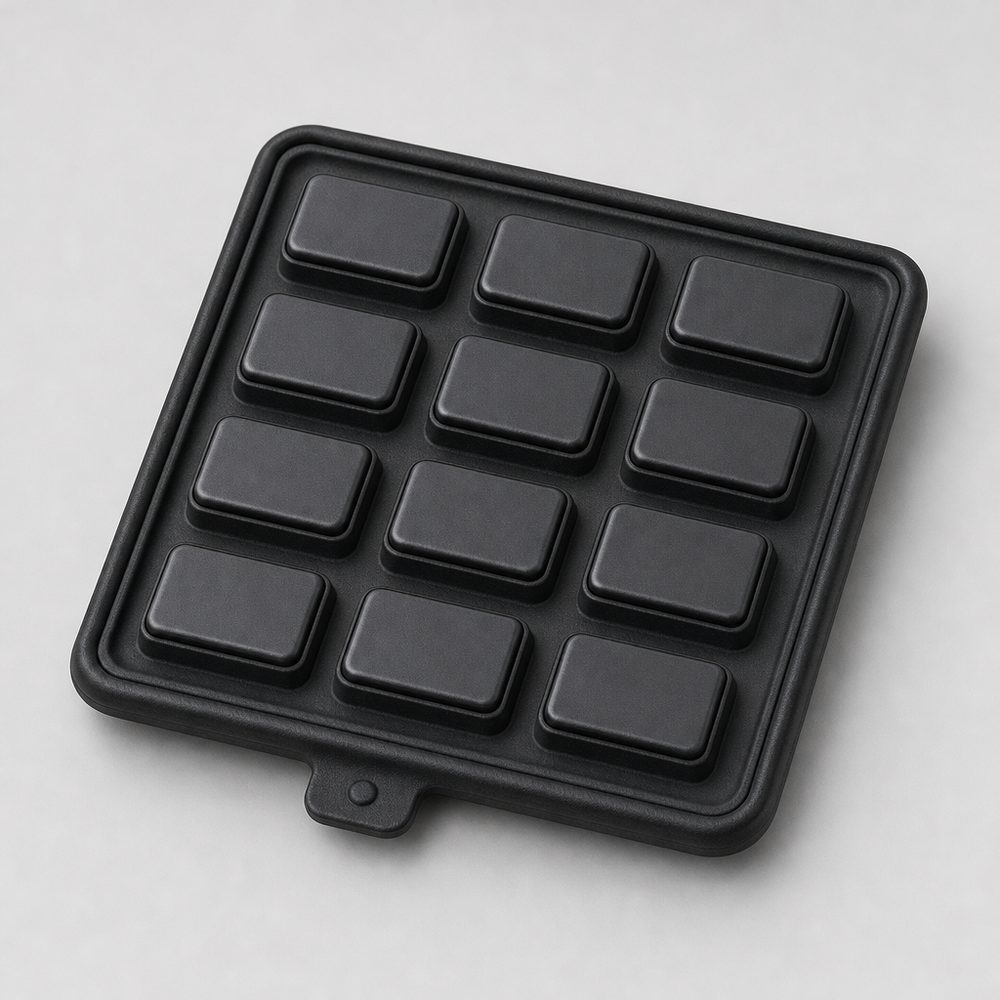
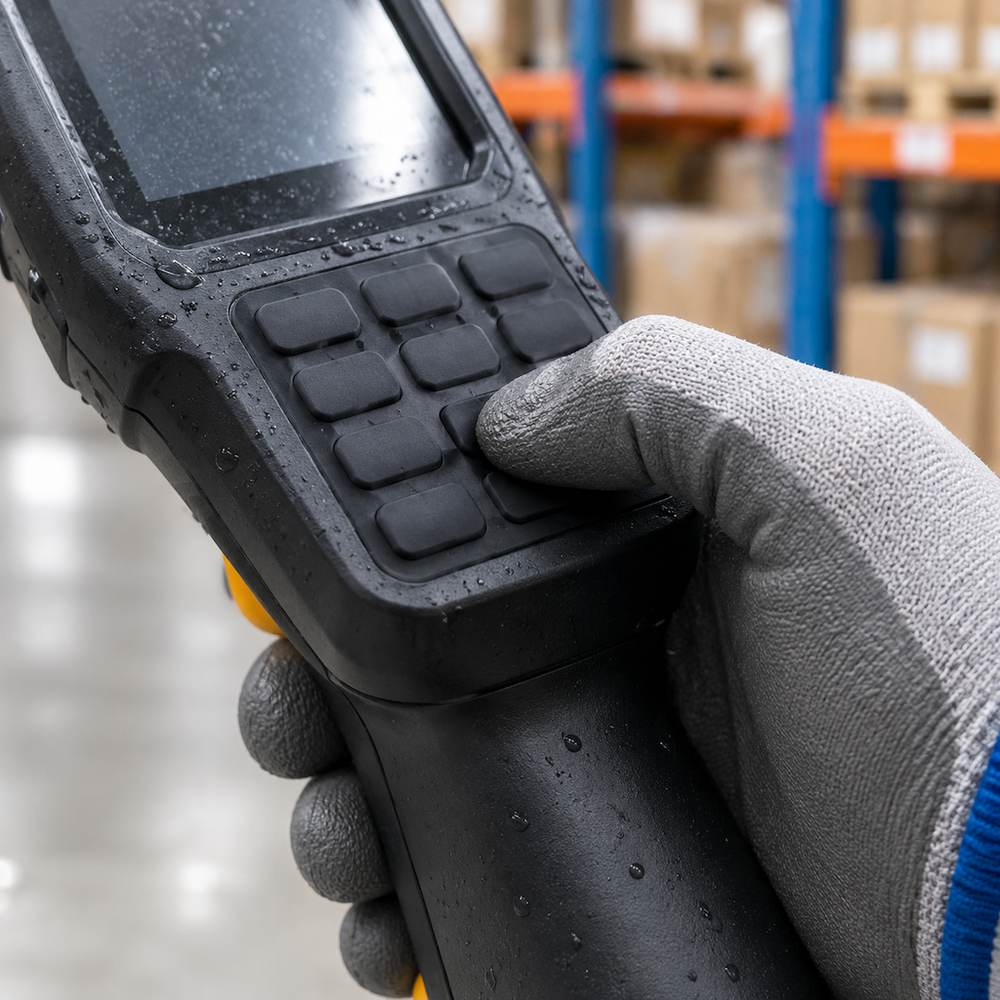
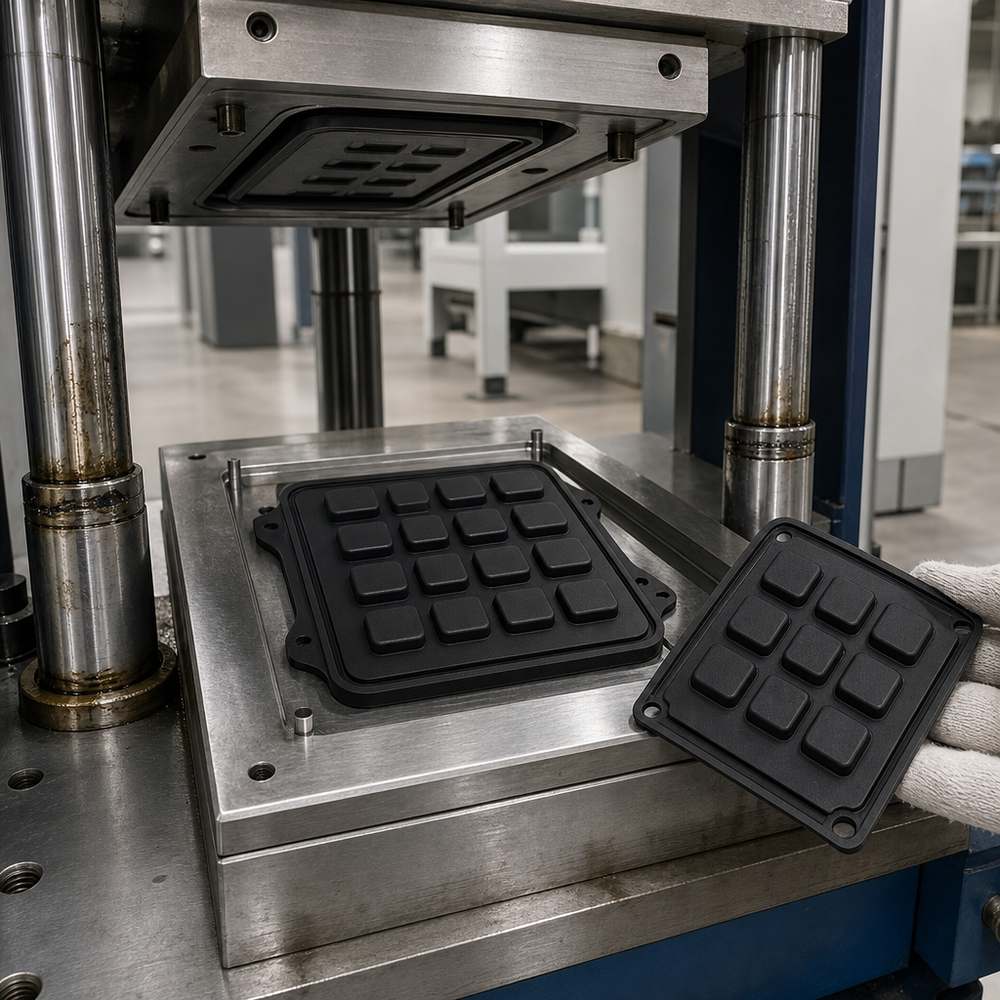
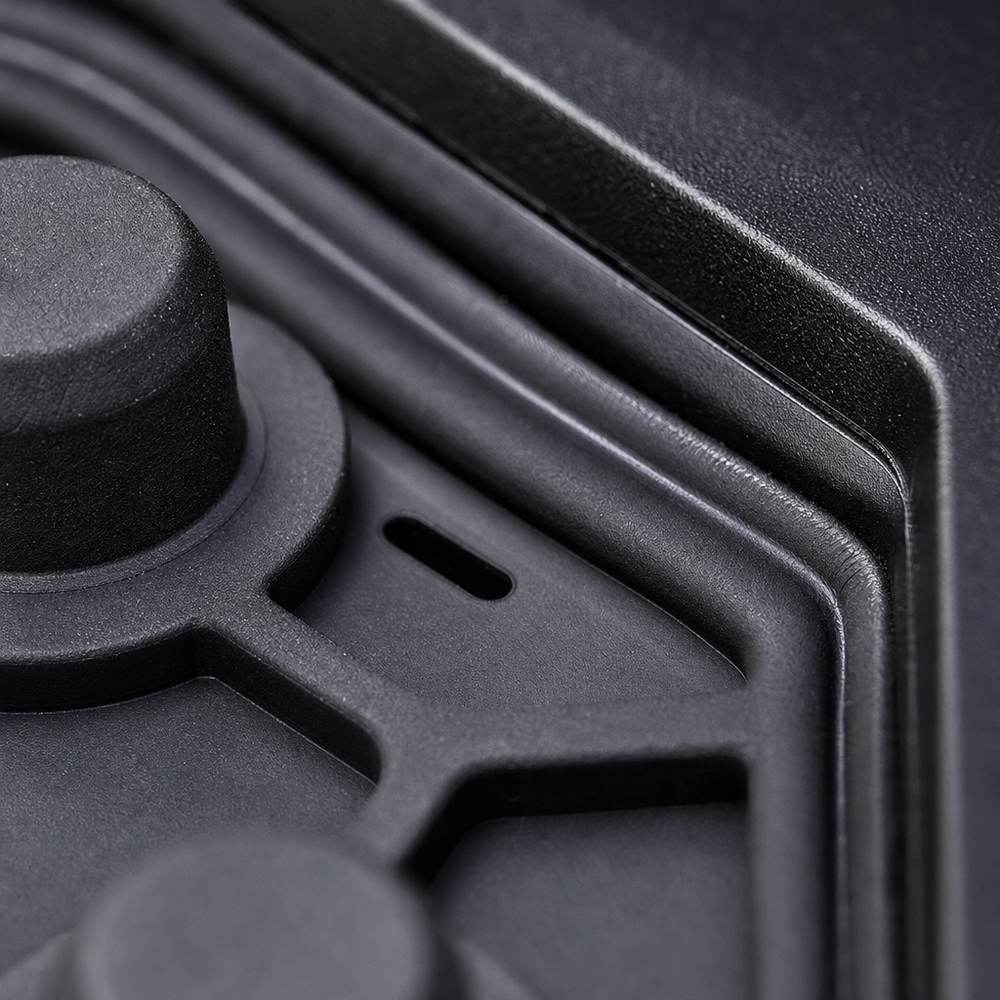
On a handheld scanner, the keypad is the largest opening in the housing, so the seal lives or dies at the key-to-bezel interface rather than at the gasket around the housing. A waterproof keypad therefore has to do two jobs at once: each key must move freely, and the perimeter of the key field must clamp against the housing with enough and evenly distributed load that no water reaches the PCB. Most failures we see are not membrane failures. They are uneven clamp load, a perimeter that is interrupted by a light pipe or a screw boss, or an adhesive that was chosen for assembly speed rather than for wet service. Water enters a keypad assembly through three paths. They are independent, and sealing two of them is not enough. Each key sits in an opening. If the key is a separate cap on a silicone web, water passes around the cap unless the web seals against the bezel behind it. A single-piece keypad with an integral web and a raised perimeter rib is easier to seal than a cap-on-web construction, because there is one continuous sealing line rather than one per key. Key travel has to be checked at the extremes, since a key pressed at full travel can pull the web away from the bezel. The perimeter seal is a pressure boundary, so clamp load must be even. Screw bosses, light pipes and connector cut-outs interrupt the load path. A moulded rib that follows the perimeter, carried across those interruptions, keeps the compression continuous. Pressure-sensitive adhesive is convenient but creeps under heat; a structural acrylic or a mechanical clamp is more reliable where the device is used outdoors. A sealed housing that heats and cools will draw water past the weakest seal unless it can equalise pressure. A small membrane vent solves this without admitting liquid. Scanners that are used between a cold truck and a warm warehouse see this cycle daily, and it is often the true root cause behind a keypad leak complaint. The envelope below is the starting point for a handheld scanner keypad. The housing design and the required IP rating set the final seal geometry. Values describe a typical design envelope. Final seal geometry, force and test criteria are agreed against the scanner housing and the customer's ingress-protection requirement. A scanner is operated faster and more roughly than most equipment. The keypad has to work for a gloved hand and survive being cleaned and dropped. A key tuned for a bare fingertip feels unresponsive through a work glove. The force and travel need to be raised, and the key top made large enough that a glove does not press two keys at once. This is a specification that has to be stated at the design stage - it changes the web geometry, not just the legend. Warehouse and clinical environments wipe scanners with alcohol or quaternary ammonium disinfectants. Silicone resists both better than most TPEs, but repeated wiping attacks legends and any protective coating first. Two-layer legends and a compatible clear coat extend life; surface printing does not. The keypad sits proud of the housing, so it takes the impact when the device falls face down. A recessed key field, or a raised bumper around it, moves the load to the housing. Where the keypad is a P+R construction, the plastic cap also protects the silicone web at the point of impact - which is one reason scanners often use that construction. For scanners, the plastic-rubber construction is usually the right answer: plastic caps give wear resistance and crisp legends, the silicone web gives the seal and the tactile response. Plastic caps resist the abrasion of constant gloved use and hold a moulded legend that cannot wear off. The silicone web provides the sealing membrane and the return force. The two are bonded or mechanically interlocked, and the bond is the part of the design that needs validating - not the individual components. Construction choices are compared in Silicone Keypad and Plastic Enclosure Waterproof Sealing. The tool has to produce a clean perimeter rib and a web with no thin spots at the key roots. Web thickness variation is what causes a key to tear after a few hundred thousand presses, and it is controlled by cavity finish and by where the material enters. A prototype tool is worth it for a part this size before committing to multi-cavity steel. Verification runs in the order the failures appear: actuation force at extremes of travel, perimeter seal under pressure, chemical wipe, thermal cycling, then a final seal check. Cycle life is measured on the web and the legend, not only on the contact. Reference figures for press cycles are in How many press cycles can a conductive silicone inner keypad, and the edge-thinning failure mode is documented in Case Study: 22% Conductive Silicone Keypad Failure from Edge. No. The keypad is one part of the boundary. The housing joint, the connector gasket and the pressure equalisation all take part, and the assembly has to be validated as a system. For outdoor and wet service, mechanical clamping or a structural adhesive is more reliable than pressure-sensitive tape, which creeps when warm. Tape is fast to assemble, but it is the first thing to fail in a thermal cycle. Yes. A single-cavity prototype tool in the production compound lets force, travel and perimeter seal be measured before multi-cavity tooling. For a sealed part that is cheaper than a rework. Send the key layout, the housing interface drawing and the target IP rating. We will review perimeter rib continuity, web thickness at the key roots and the adhesive or clamp method. Related: keypad and enclosure sealing and press-cycle expectations. FromRubber produces sealed keypads for OEM scanner and instrument programmes. We do not sell retail.Waterproof Plastic Rubber Keypad for Scanning Machines: Sealing Happens at the Key Interface
Where Water Gets In, and Where to Stop It
The Key-to-Bezel Interface
The Perimeter and Adhesive Channel
Vent and Pressure Equalisation
Specification Envelope for a Sealed Scanner Keypad
Parameter Typical envelope Why it drives the result Construction P+R caps over an integral silicone web Abrasion resistance with a continuous sealing membrane Perimeter rib Continuous, carried across interruptions Clamp load must not be broken by bosses or light pipes Web thickness 0.5-0.9 mm at the key root Thin roots tear early, thick roots stiffen the key Actuation force Raised for gloved operation Feel through a glove is not the same as bare finger Adhesive or clamp Structural acrylic or mechanical clamp PSA creeps under heat and wet service Pressure vent Membrane vent where the housing is sealed Thermal cycling otherwise pulls water past the seal Legend Moulded or two-layer, chemical resistant Surface print wears first under wiping Gloves, Wipes and Drop Impacts
Actuation Force With Gloves
Chemical Wipe Resistance
Drop and Knocks
P+R Construction, Tooling and Test
Why P+R Suits a Scanner
Tooling for a Sealed Keypad
Test Sequence
Scanner Keypad Questions From Buyers
Can a keypad alone make a scanner waterproof?
Is adhesive or a mechanical clamp better?
Do you quote prototype keypads?
Send the Housing Interface, Not Only the Key Layout


