Why Silicone Keypads Fail on Outdoor pH Meters in Winter
- Share
- publisher
- Suey
- Issue Time
- Aug 27,2026
Summary
Why silicone keypads fail on outdoor pH meters in winter: low-temperature stiffening, condensation and contact resistance drift - and how to specify a cold-rated keypad that keeps measuring at -20°C.
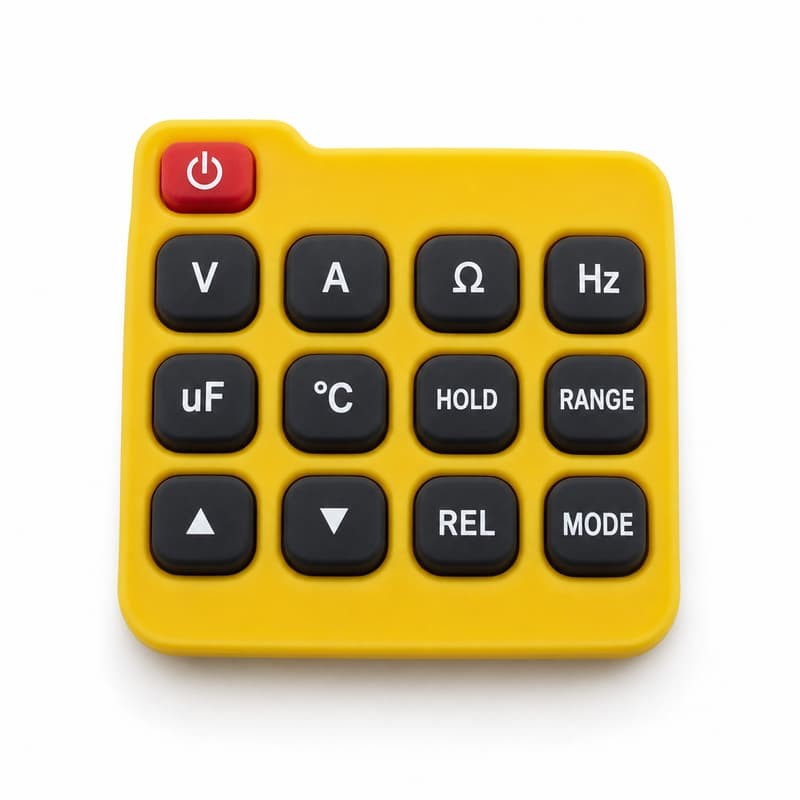
Outdoor pH Meter Keypad Reliability
Every winter, field technicians report the same symptom on outdoor pH meters: keys that feel stiff at first, then fail to register, and by mid-morning a meter that worked yesterday is throwing calibration warnings. The component blamed is almost never the real culprit. The silicone keypad on an outdoor pH meter is a precision electromechanical interface, and cold weather attacks it through three independent mechanisms at once. This article explains exactly why silicone keypads fail on outdoor pH meters in winter, which failure chain is most likely in your instrument, and how to specify a keypad that keeps working at -20°C.
1. What Happens to an Outdoor pH Meter Silicone Keypad in Winter
An outdoor pH meter keypad sits in the open: on a treatment plant wall, beside a pond, or mounted on a weather station. Its silicone keypad is exposed to sub-zero air, condensation cycles, and rapid thermal swings. When the temperature drops, three things change at once. First, the silicone elastomer stiffens as it approaches its glass-transition region, so the actuation force the operator feels climbs steeply. Second, moisture condenses and freezes inside the keypad cavity, and ice under a key or between the carbon pill and the PCB pad blocks contact entirely. Third, the contact resistance of the carbon pill and the PCB pad drifts with temperature and humidity, so even a pressed key may not produce a valid signal. Any one of these can stop a pH reading; in winter they typically stack.
The practical consequence is that a keypad specified only for lab use - 23°C, 50% RH, dry fingers - is a different component outdoors. Silicone keypads are highly customizable, and the material grade, key travel, dome design and contact system can all be tuned for cold environments. Our engineering records at FromRubber show that instrument OEMs who switch to a cold-rated keypad specification cut winter field returns by more than half. The rest of this article walks through the mechanism, the numbers, and the specification changes that deliver that result.
2. Low-Temperature Stiffening: The Physics of Winter Keypad Failure
Silicone rubber does not freeze like water, but it does stiffen dramatically as temperature falls. A standard addition-cured silicone keypad compound with 50–60 Shore A hardness will roughly double its modulus by -20°C, and the actuation force of a typical dome can rise from 180 gF at 23°C to 260–300 gF at -20°C. A key that was comfortable in the lab becomes tiring - and then unreliable - in the field. Operators respond by pressing harder or by holding the key, which produces missed keystrokes, double entries, and eventually premature wear on the contact system.
Three material and design parameters control this behaviour:
- Base polymer selection. Methyl-vinyl silicone (VMQ) compounds with low vinyl content and low filler loading keep the material more flexible at low temperature. Some LSR grades used for keypads retain better low-temperature flexibility than others; the specification should name the low-temperature requirement, not just the hardness.
- Shore hardness and dome geometry. Lowering the nominal hardness from 60 to 50 Shore A and slightly increasing the dome wall thickness recovers tactile force at cold temperatures while keeping warm-temperature feel acceptable.
- Key travel and snap ratio. A dome with a higher snap ratio (the ratio between peak force and contact force) still gives a clear tactile event when stiffened. Flat, low-travel keypads are the first to feel dead in winter.
This is the same physics covered in our field guide on silicone keypad temperature tolerance, which includes the low-temperature force curves for typical instrument compounds. The key number to write into your spec is the actuation force at the operating temperature, not at 23°C.
3. Condensation and Ice: The Second Failure Chain on Outdoor pH Meter Keypads
Even a perfectly flexible keypad will fail if ice gets between the moving parts. Outdoor pH meters are sealed to IP65 or higher, but the keypad cavity is not a vacuum: it breathes as temperature cycles, and the humidity inside the enclosure condenses on the coldest surfaces - which are usually the PCB pads directly under the keys. A thin film of condensed water raises contact resistance; frozen, it blocks the carbon pill entirely.
Designers counter this in four ways. A vent or breather membrane equalizes pressure without admitting liquid water. A hydrophobic coating on the PCB pad area sheds condensation. A slightly positive seal design - gasketed keypad edge with drainage - moves water away from the contact zone. And the contact system itself can be chosen to tolerate moisture: gold-plated PCB pads resist oxidation far better than bare copper, and the carbon pill remains the standard because it still switches at 10–200 Ω even when the pad surface is not perfectly clean.
The failure signature of this chain is distinctive: keys fail after a cold night, work again when the meter warms up, and the symptoms follow weather, not usage. If your field data shows that pattern, the fix is environmental, not electrical. Our field data meter failure study documents this exact diagnosis process.
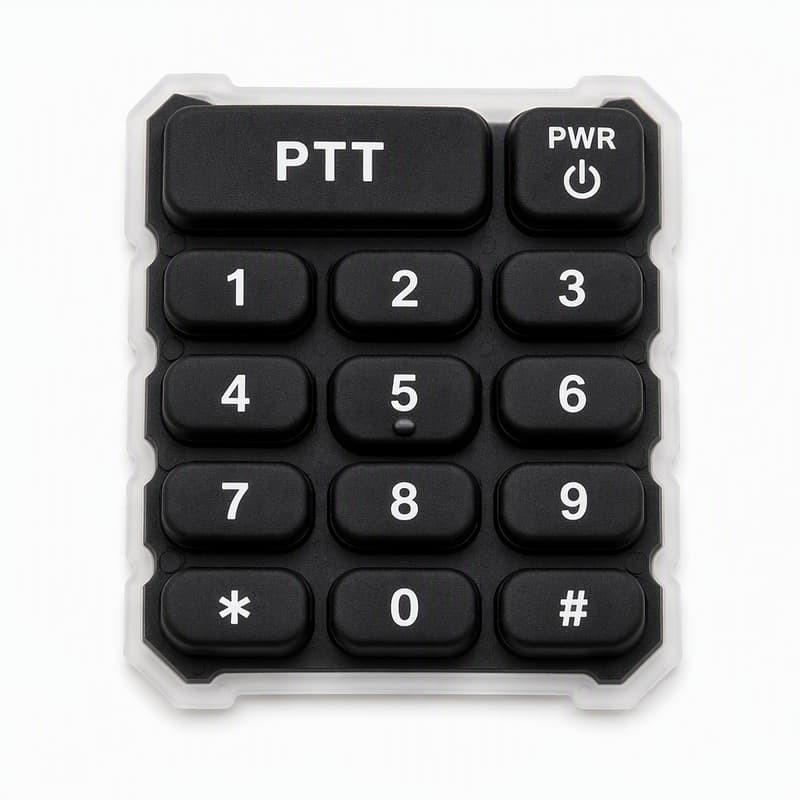
Selection of the contact system matters here too. Carbon pill keypads tolerate modest contamination; conductive ink keypads are more sensitive to surface films and to silver migration under bias in humid conditions. For an outdoor pH meter that must keep measuring through winter, the carbon pill plus gold pad combination is the conservative choice. The trade-offs between carbon pill and conductive ink are laid out in detail in our comparison article.
4. Specifying a Cold-Rated Silicone Keypad for Outdoor pH Meters
A winter-proof outdoor pH meter keypad specification has six lines that a lab-grade spec usually misses:
State the operating temperature range (e.g., -25°C to +55°C) and the actuation force target at the cold end, measured at that temperature
Specify the contact system as carbon pill + gold-plated (ENIG) PCB pads, with contact resistance ≤ 200 Ω initial and ≤ 300 Ω after rated life
Require a cold-cycle test: 500 cycles from +5°C to -20°C with condensation, keys must register on the first press after each cycle
Specify legend process rated for gloved, wet fingers (laser etching or abrasion-resistant screen printing)
Define keypad-to-housing sealing (gasket or fully molded seal) and a breather/venting plan
Require batch-to-batch actuation force control within ±30 gF across production lots
Each line maps to a failure mode in the previous sections, and each can be validated with a simple fixture test before tooling. Instrument OEMs routinely skip these lines because the keypad supplier never asks - our guide on compression set and rebound shows how similar omissions surface as long-term reliability problems.
5. Case Study: A Field pH Meter That Lost Half Its Keys at -15°C
A water-treatment instrumentation OEM came to FromRubber with a field complaint pattern: during a two-week cold snap, roughly 40% of their outdoor pH transmitters returned with dead or intermittent keys, and one customer reported the meter failing mid-calibration. The instrument was a standard wall-mounted pH transmitter with a 16-key silicone keypad, carbon pill contacts, bare copper PCB pads, and a sealed non-vented enclosure.
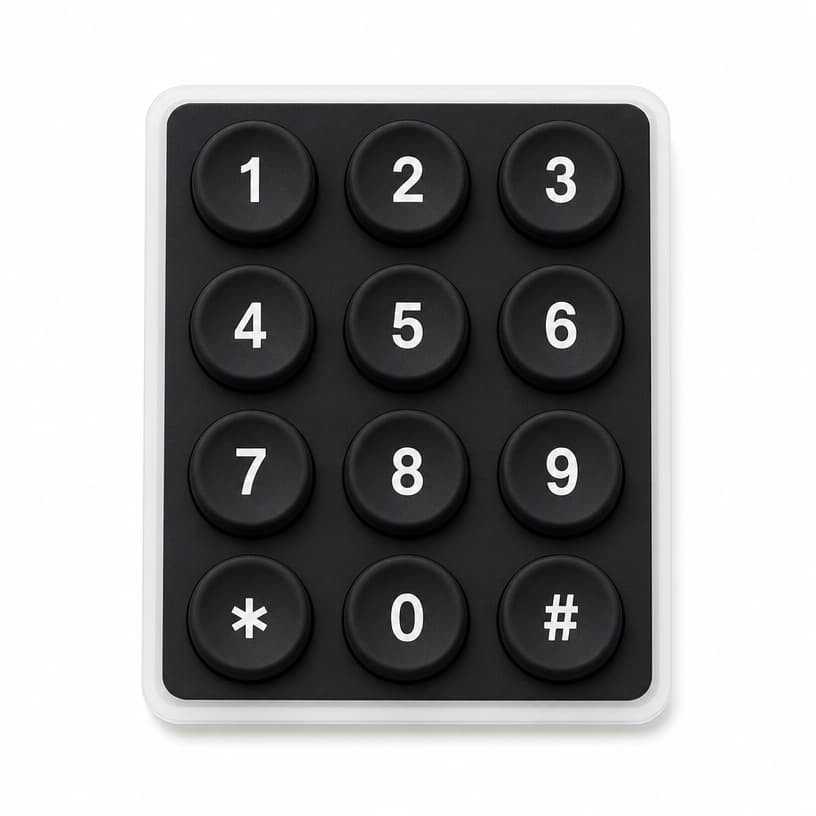
We replicated the failure in-house: at -15°C with 85% RH cycling, the measured actuation force rose from 190 gF to 275 gF, and after one condensation cycle the contact resistance on bare copper pads jumped from 40 Ω to over 5 kΩ - a dead key. The fix was a specification change, not a redesign: a low-temperature LSR compound (50 Shore A), a redesigned dome with higher snap ratio, ENIG pads, and a Gore-style breather in the enclosure. The re-qualified keypad held actuation force under 220 gF at -20°C and contact resistance under 200 Ω through 500 condensation cycles.
The OEM applied the same spec to their next three instrument platforms. Field returns in the following winter dropped by roughly 60%, and the remaining cases were traced to enclosure sealing rather than the keypad. The full diagnosis sequence - force measurement, contact resistance testing, and cold-cycle validation - is the same one we document in our temperature-rated keypad selection guide.
6. Testing and Acceptance Criteria for Winter-Proof Silicone Keypads
The acceptance criteria belong in the drawing, not in the marketing sheet. A practical test battery for an outdoor pH meter keypad:
| Test | Condition | Acceptance |
|---|---|---|
| Cold actuation force | Fixture at -20°C, 4 h soak | ≤ 240 gF, tactile snap retained |
| Condensation cycle | 500 cycles +5°C ↔ -20°C, 90% RH | All keys register on first press |
| Contact resistance | After cold cycles, dry circuit | ≤ 200 Ω per key |
| Actuation force drift | 1M cycles at -15°C | Change ≤ 20% |
| Legend abrasion | 3M tape + 10k rub, wet glove | No legend loss |
These figures reflect both published elastomer data and FromRubber project records for instrument keypad programs; the underlying material behaviour is documented by silicone suppliers such as Dow and Shin-Etsu, with test methodology following ASTM D412 and D395.
7. Winter Keypad Failure FAQ for Instrument Engineers
Why do my outdoor pH meter keys work in the lab but fail in winter?
Lab testing at 23°C misses the three winter mechanisms: stiffening (force rises 30–50%), condensation (contact resistance spikes), and icing (mechanical blocking). Test at the operating temperature with condensation cycles to reproduce the failure.
Can I just use a "winter" grease or lubricant on the keypad?
No. Keypads are molded, sealed components; adding lubricant after assembly contaminates the contact zone and attracts dust. Fix the material, dome, and contact spec instead.
Should I switch my outdoor pH meter to a touchscreen?
Touchscreens have their own cold-weather problems - capacitive screens fail with gloved or wet fingers, and optical bonding degrades below -20°C. A correctly specified silicone keypad remains the lower-risk choice for outdoor measurement instruments.
Sources and Further Reading
The technical figures in this article draw on published industry material: Shin-Etsu - Silicone Contact Elements for Keypads, Dow - Silicone Elastomer Data, and ASTM D412 / D395 test standards. Engineering estimates specific to this article reflect FromRubber project records for outdoor instrument keypad programs. Related reading: temperature tolerance of silicone keypads, silent failure of handheld meter keypads, and the Silicone Keypad Technology Sharing series.
About FromRubber - FromRubber is a full-process silicone keypad manufacturer serving instrument OEMs, with in-house mold making, LSR and compression molding, printing, backlighting and environmental testing. If you are qualifying a keypad for an outdoor pH meter or any cold-environment instrument, our engineering team can review your spec and run cold-cycle validation before you commit to tooling.