Straw Plug Fit Is the Whole Product
Inner diameter, outer diameter and wall thickness decide retention. A plug that is 0.2 mm loose leaks; one that is tight splits at the rim.


A silicone straw plug is a small molded grommet that closes the gap between a straw and a drink-through lid. Its job is dimensional: hold the straw upright, stop splash and leak at the lid, and release without splitting when the straw is pulled. Inner diameter, outer diameter and wall thickness decide retention. A plug that is 0.2 mm loose leaks; one that is tight splits at the rim. A flat flange with a slight crown compresses against the lid opening, which is what stops liquid escaping around the plug rather than through the straw. Multi-color plugs let a cup line be merchandised as a set, and let a brand carry its palette down to a component that is otherwise invisible. Straws are sold in nominal sizes but made to their own tolerances, and reusable straws vary more than disposable ones because wall thickness differs between steel, glass and tritan. A plug specified only as "fits 8 mm straws" will be loose on a thin-wall steel straw and tight on a thick-wall glass one. The practical fix is to specify an interference range rather than a diameter: the plug should grip across a band of straw sizes, using a short flexible lip that deflects as the straw enters. That lip is a tool feature, and it is what separates a plug that works across a supplier change from one that only works with the straw it was sampled against. The lip is dimensioned to compress across a straw range, so a supplier change does not turn into a leak complaint. The rim has to resist tearing when a straw is pushed in at an angle. Wall thickness is set against insertion force, not only against sealing. Flange thickness and crown determine how much the plug compresses against the lid. Too little and it leaks; too much and the lid will not close. Standard options for drink-through lids. The final fit is confirmed against the actual straw and lid, not against a nominal size. Send the straw outer diameter range and a lid sample. Fit is confirmed by inserting the actual straws, because nominal sizes across suppliers do not align. Nominal bore does not define wall thickness across suppliers. Cup brands usually buy the plug as one component in a set: cup, lid, straw, plug, sleeve. That makes color matching a commercial requirement rather than a cosmetic one, and it makes packing the real engineering constraint, because a plug that is packed loose will be lost before the cup is used. Where the plug is part of a gift or retail set, it is often molded in the same color family as the lid and packed onto the straw. Our <a href="https://www.fromrubber.com/products2132323/Custom-Silicone-Case.htm">custom silicone case</a> work uses the same color-matching discipline for molded consumer parts. Plug, lid gasket and sleeve are matched to one approved standard so the set does not read as assembled from different suppliers. Threading the plug onto the straw or clipping it into the lid keeps the set complete at retail. A plug is a low-cost replacement part, which makes a multi-pack a practical aftermarket item. Small parts fail on fit, so the process starts with the physical interface rather than with a drawing. We measure the actual straw range and lid opening, then define the interference band the plug has to cover. A prototype is inserted and pulled repeatedly to check force, sealing and rim integrity. The production tool is cut to the validated lip geometry, with the flange crown included in the same cavity. Parts are checked for flash at the sealing lip and packed in the agreed set format. No. Steel, glass and tritan straws differ in wall thickness even at the same nominal bore. We size the lip to a range and confirm it on the straws you actually use. Food-contact silicone tolerates hot liquid, but the lid and cup assembly is the limiting factor. Tell us the service temperature and the plug is specified to match the rest of the set. At this size only a simple symbol or a single letter reads. A brand is usually carried on the lid or the sleeve instead, and we will say so before a tool is cut. Send the straw diameter range, lid sample and target color set. We will size the sealing lip, confirm insertion force and quote the set packing. Related capabilities: Custom silicone case · Silicone molding · Multi-color molding
Reusable Silicone Straw Plugs: ID Tolerance, Retention and Cup Fit
Straw Plug Fit Is the Whole Product
Silicone Straw Plug Sealed Against the Lid
Multi-Color Straw Plugs as a Product Feature
Why Inner Diameter Tolerance Decides Whether the Plug Works
Interference Rather Than Nominal Fit
Wall Thickness and Rim Strength
Flange Compression at the Lid
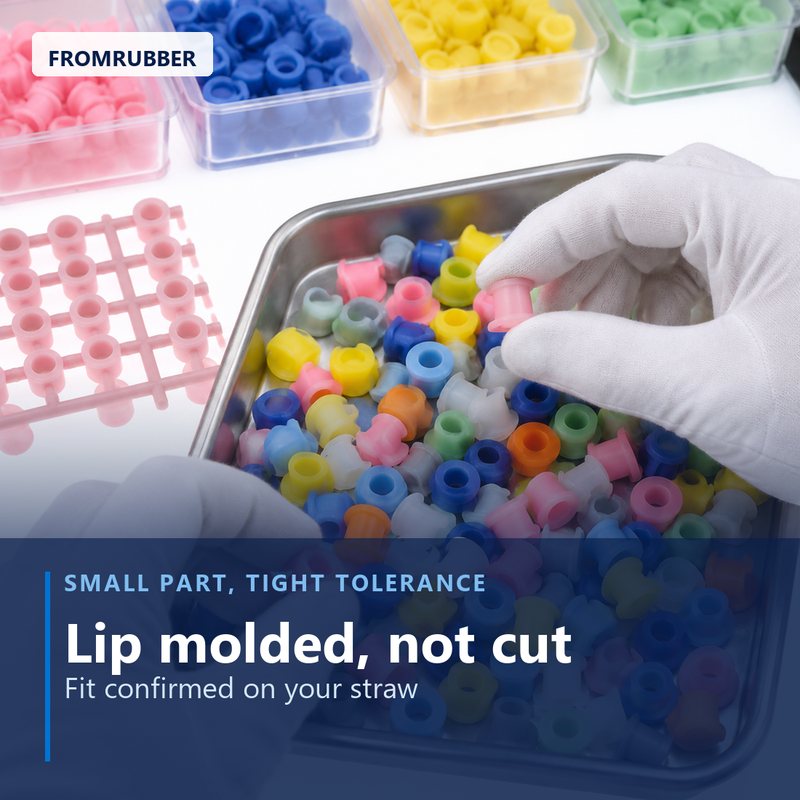
Silicone Straw Plug Specification Envelope
Material Food-contact silicone Inner fit Sized to a straw range with a flexible sealing lip Outer fit Matched to the lid opening, with flange compression Hardness Soft to medium, selected for insertion force Color Solid colors, multi-color sets and custom matching Cleaning Dishwasher tolerant where the grade allows Packing Bulk, poly bag or retail set with the cup Documentation Material datasheet on request
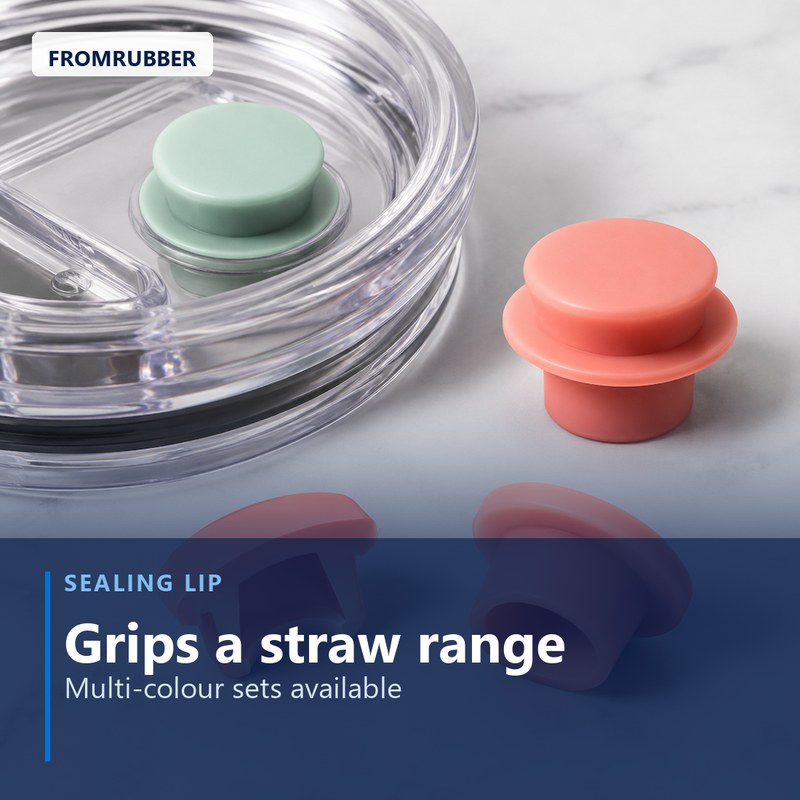
Fit checked on your straw
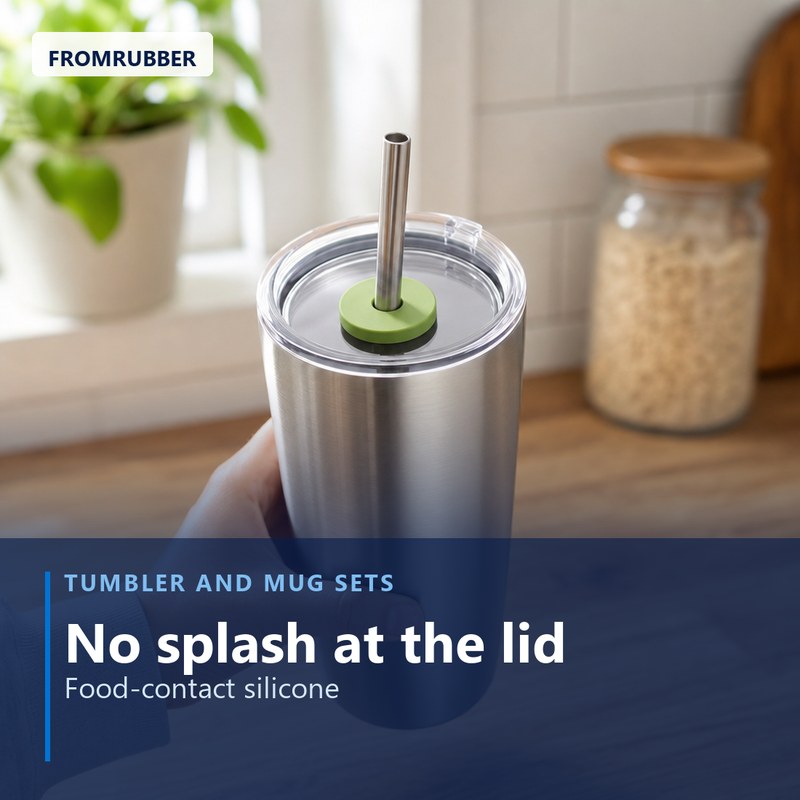
Matching the Plug to a Cup Program and a Retail Set
Color Matching Across Components
Packing and Loss Prevention
Replacement Sales
How a Straw Plug Project Runs
Collect Straw and Lid Samples
Prototype the Lip
Tool and Mold
Sort and Pack
Silicone Straw Plug Questions Buyers Ask
Will one plug size fit every reusable straw?
Is the plug safe for hot drinks?
Can the plug be molded with a logo?
Adding a Straw Plug to a Cup or Bottle Program?


