


Fashionable Personalized Custom Logo Lipstick Silicone Case – Durable & Compact
- Model
- BH-silicone case
Item specifics
- Design
- Follow 3D Drawing Or Physical Object
- Process
- Molding
- Feature
- Colorful,Floating
- MOQ
- 1000pcs
- Application
- Lipstick
- Color
- Pantone No.
- Packing
- Common/Custom
Review
Description
Branding on silicone Once the case is chosen, the mark is the part the buyer is actually paying for — and the only version that survives a handbag is the one cut into the tool. This page is about the three ways a logo can go onto a silicone lipstick case, what each does to tooling cost, and how small a feature each one will hold. They are not interchangeable. Each one has a different failure mode, and the failure shows up at a different time: in the tool, in the print cure, or three weeks later on the customer's desk. A moulded mark has to release from the tool, so every wall of the letterform needs draft and every counter — the inside of an A or an O — needs a pin that can be cut and polished. Ask for a hairline stroke in a mould and it will either fill or tear on ejection. The same hairline printed will sit on the surface for a while and then rub, because silicone is a low-energy substrate that needs a primer most decorators skip. The practical consequence: a moulded logo is a tooling commitment with a minimum feature size, and a printed logo is a per-unit cost with a wear risk. Fine script type is usually printed. A monogram, a wordmark in a solid sans, or a mark inside a shape is usually moulded. Cap engagement, cavity clearance against the bullet and the choice between covering and replacing the cap are set out in the OEM lipstick case programme. This page stays on the mark. Tone-on-tone embossing reads as expensive and photographs badly on a shelf. A contrast fill reads at retail and adds a second process to the part. Where the case is translucent, the mark can be moulded on the inside face so it is visible but not touchable — a solution that only exists because the material allows it. Colour itself is quoted against a Pantone reference or a physical standard. On a soft-touch silicone the same Pantone will read a shade lighter than it does on a printed card, so we send a moulded colour chip rather than a paper swatch. Four approvals, in this order: a 3D render for shape, a T1 moulding for colour and feel, a print proof for a printed mark, and a limit sample for the surface. Skipping the limit sample is how a batch gets rejected for a sheen difference that nobody wrote down. The mark and the mould are decided together. Send the vector logo and the tube you intend to fill and the reply is a method recommendation with the tooling cost for each route — we quote for brands, distributors and promotional programmes from 1,000 pcs per colour. Dongguan Bohao Electronic Technology Co., Ltd. IATF 16949:2016 / ISO 9001:2015 certified. Values are typical for the compound or platform described; the approved drawing and sample govern production.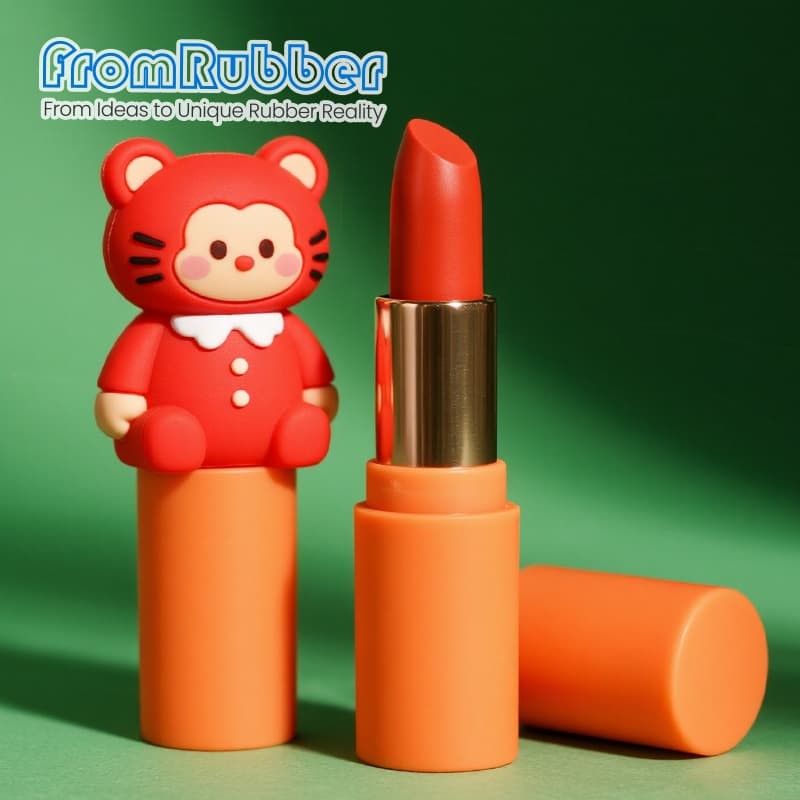
A logo on a silicone case is a tooling decision before it is a print file
Three ways to put a mark on silicone
Method How it reads Tooling impact What it survives Embossed (raised) Catches light, tone-on-tone, premium in the hand Engraved insert in the mould Handbag life — the mark is part of the part Debossed (recessed) Crisp on a matte surface, holds a colour fill well Engraved insert in the mould Handbag life; a fill can wear before the recess does Pad print Any colour, fine detail, cheapest to change None Wears first; depends entirely on priming and cure UV print Sharper edge, thicker ink film, good opacity None Better than pad print, still an ink layer on a low-energy surface Stroke width is the real constraint
The case body and cap fit are specified elsewhere
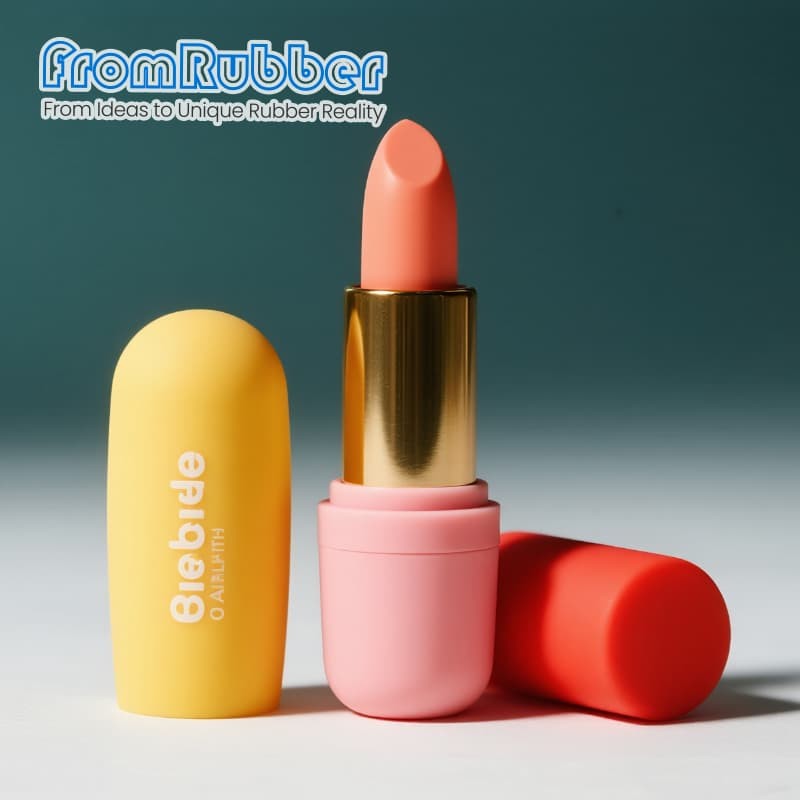
Colour and mark, decided together
The channel decides the packaging
What a brand actually signs off
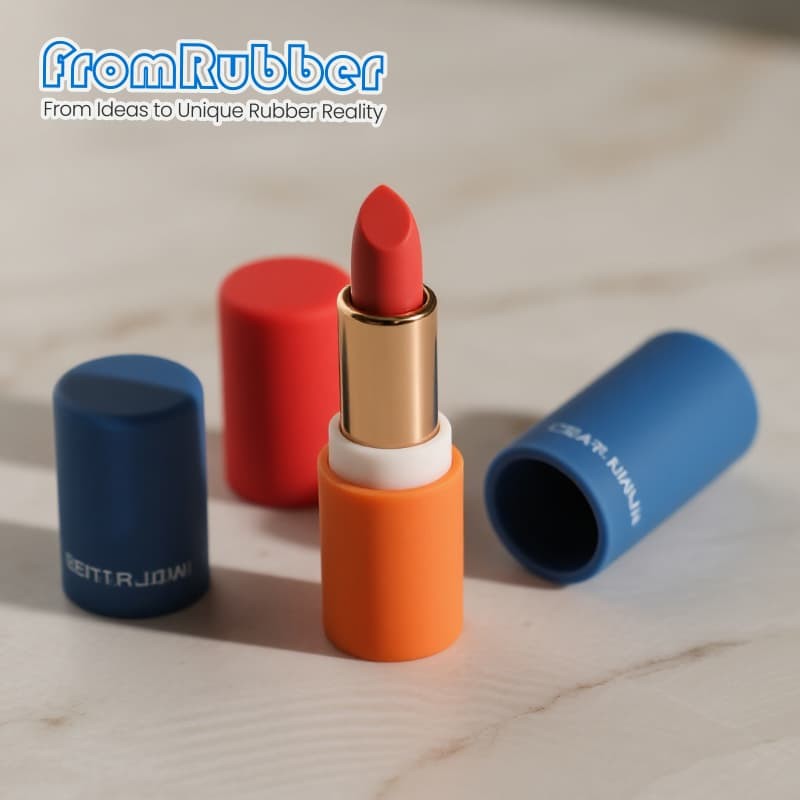
What we need to quote
What comes back
Send the artwork with the tube drawing
fromrubber.com
+86 18926836960


