Custom 3D Silicone Phone Case Manufacturer
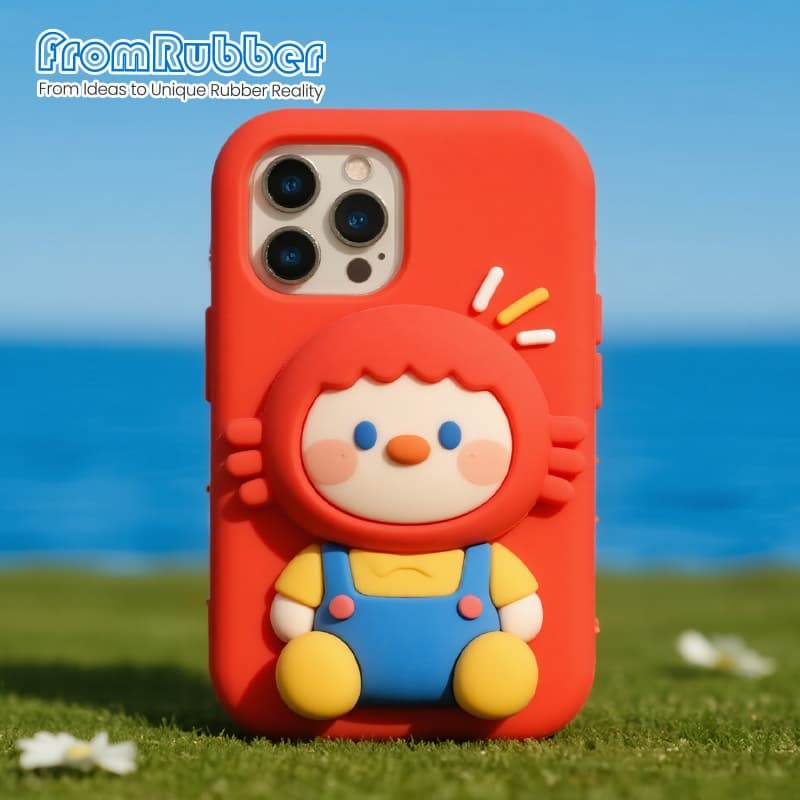
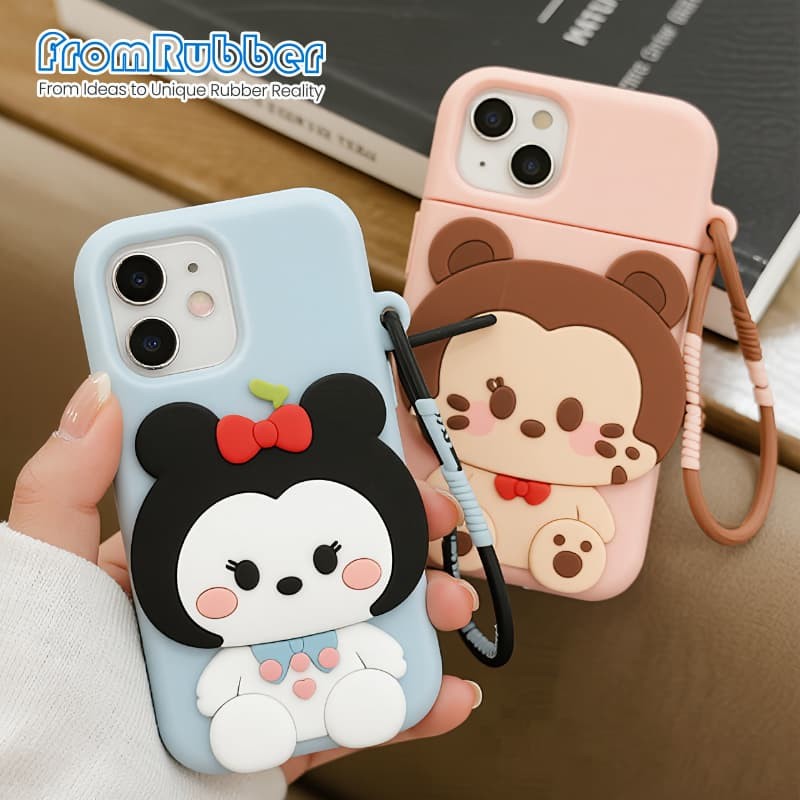
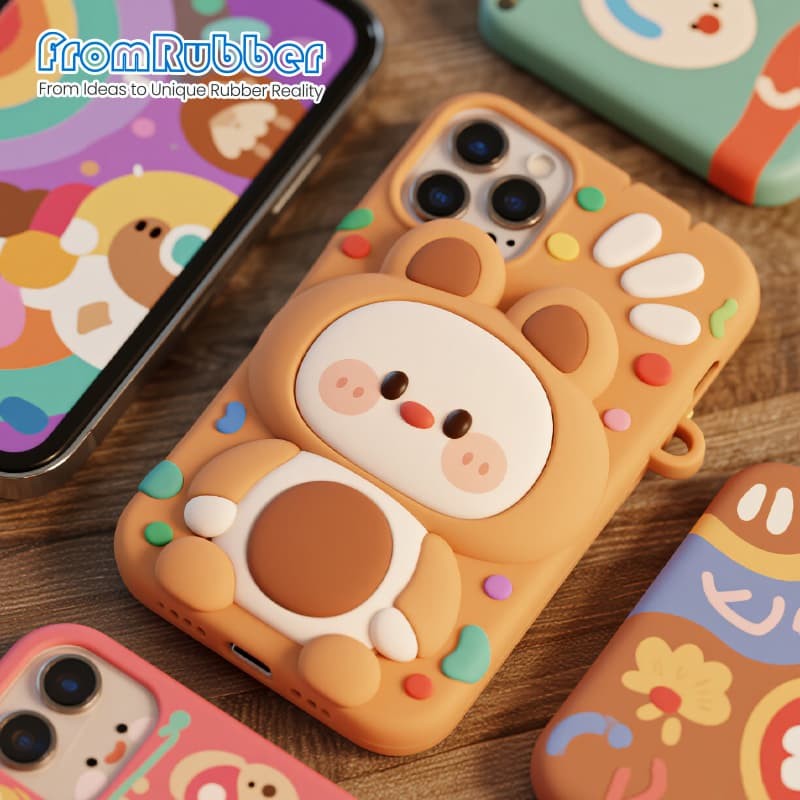
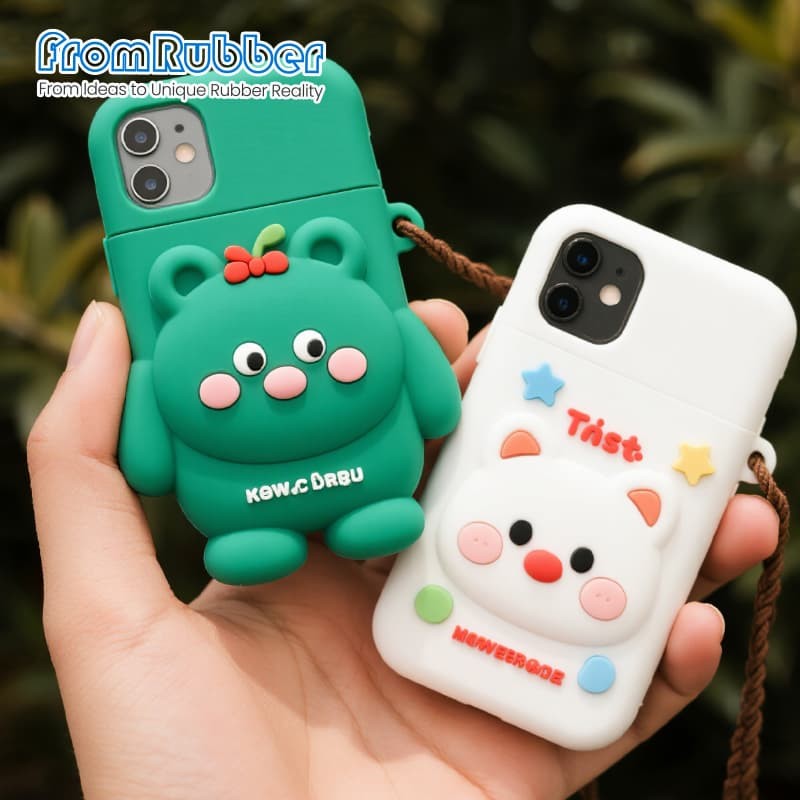
FromRubber molds 3D cartoon and multi-color silicone phone cases to your drawing or your physical sample. We do not sell stock cases. Every run is tooled for your device model, your artwork, your retail packaging.
Three things decide whether a 3D case is worth making: the shape has to survive demolding, the colors have to hold across batches, and the cost has to work at your volume. We quote all three before any tooling starts.
Every case we ship carries your logo, your colorway and your retail box. That is why we ask for the device model and the Pantone numbers before quoting. A shape that looks right on a render is easy. A shape that fits your housing and still holds color at 10,000 pcs takes planning.
1,000 pcsMOQ per design
3-5 daysSample mold
10-12 daysProduction mold
3 hoursQuotation
Specifications You Can Set Before Tooling
| Parameter | What you can set |
|---|
| Material | Liquid silicone (LSR) or solid silicone |
| Hardness | 30-80 Shore A, chosen against your wall thickness |
| Dimensional tolerance | ISO 3302-1 M2 class |
| 3D shape | Raised characters, figures and edges molded in one shot |
| Colors | Pantone matched, several colors in one part |
| Printing | Screen printing, laser etching, spray coating |
| Decoration | Multi-layer drip glue, two-shot molding |
| Design input | STEP or IGES, DWG or DXF or PDF, or a physical sample |
| MOQ | 1,000 pcs per design, trial runs from 100 pcs by approval |
| Sample mold | 3-5 working days |
| Production mold | 10-12 working days |
| Bulk delivery | 7-10 working days after order confirmation |
| Mold ownership | 100 percent yours after full payment |
| Packing | PE bag, color box, A=A five-ply export carton |
Three Ways to Build the 3D Shape
Many suppliers treat "3D" as a printed sheet glued to a flat back. Real three-dimensional detail comes from the mold, and in practice there are three routes. They differ in look, tooling cost and minimum volume.
Molded in One Shot
The shape and the shell share one mold and cure in a single cycle. There is no seam between body and figure. Of the three routes this is the most durable, and the one that survives repeated removal.
Tooling cost: highest. Any design change needs a new mold.
Multi-Layer Drip Glue
Each layer is dispensed and cured before the next one goes on. Servo dispensing holds plus or minus 0.01 g per shot, so the height builds evenly and the surface stays glossy. Our multi-color drip glue line runs 15 dispensing machines.
Tooling cost: lower. Labor share is higher.
Two-Shot Molding
A base color is molded first, then the part moves into a second cavity that injects the second color. The two colors are separated physically, so they cannot bleed into each other.
Tooling cost: two mold sets. Longer development, highest repeatability of the three.
Color Control and Surface Finishes
- Precision screen printing with registration held to plus or minus 0.05 mm. Character edges stay sharp and the ink resists rubbing.
- Spray coating at 10-25 micrometre film. Full matte, anti-fingerprint PU, or scratch-resistant finishes.
- Laser etching with a 0.015 mm spot. Layer by layer, the coating is removed to expose the base for light-transmitting characters.
- Drip glue metered to plus or minus 0.01 g. The surface comes out full and glossy with a natural arc.
Colors stay separate because they are separated physically, not by over-printing. Two-shot molding keeps each color in its own cavity, drip glue cures each layer before the next, and screen printing relies on registration accuracy. That difference is why a multi-color molded part holds up in the field and a printed one wears at the edges.
Liquid Silicone or Solid Silicone
| Point | Liquid silicone (LSR) | Solid silicone (compression) |
|---|
| Feel | Dense, close to skin, picks up less dust | Softer and springier, wraps the body more |
| Tooling | Injection mold, higher investment | Compression mold, lower investment |
| Best for | Thin walls, tight tolerance, high volume | Thick 3D shapes, small to mid volume |
| Coloring | Color paste metered into each shot | Compound tinted during mixing |
| Surface | Smooth and even | Slightly matte, takes a texture well |
Protection, Feel, and What We Advise Against
Wall thickness, hardness and hand feel pull against each other. Go too soft and the edge deforms after repeated removal. Go too hard and it stops feeling like silicone. The working range is 30-80 Shore A, and where your case lands in it depends on your body curve and how often buyers take the case off. We advise before we cut steel.
Three things we tell clients not to do:
- Chasing a bare-phone feel. At very thin walls the edge will not hold shape. TPU is the right material for that.
- Asking for a rigid snap frame. Silicone has elasticity, not stiffness. Use a PC shell overmolded with silicone instead.
- Expecting mirror-grade plating. Silicone will not take a plastic-grade mirror finish. That job belongs to a plastic part.
How an Order Runs
| Step | What happens | Timing |
|---|
| 1 | You send a drawing or a sample. Engineering reviews the shape and quotes. | 3 hours for a clear drawing |
| 2 | Sample mold is cut and trialed. | 3-5 working days |
| 3 | We ship 5-10 pcs by courier for your fit test. | By SF Express or DHL |
| 4 | After your written approval, the production mold is built. | 10-12 working days |
| 5 | Mass production with in-line inspection and final inspection. | Scheduled after order |
| 6 | Bulk goods delivered. | 7-10 working days after order confirmation |
Paying attention to the sequence saves a week. The seven-step custom service process exists so nobody starts tooling on an unapproved sample. If your schedule is tight, the quick proofing service shortens the front end of the project.
What We Need From You
- 3D file in STEP or IGES, or a 2D drawing in DWG, DXF or PDF. No file at all is workable too, send the physical sample and we reverse-engineer it.
- Phone model and body dimensions.
- Hardness requirement and Pantone color numbers.
- Surface finish: matte, anti-fingerprint, or light-transmitting.
- First order quantity and estimated annual usage.
Who These Cases Are Made For
Phone Accessory Brands
You need a shelf-different look and a repeat order you can trust. The mold is the asset, so we build it to run for years.
Corporate and Promotional Gifting
One design, one colorway, your logo, a fixed delivery date. Volume is the constraint, not the artwork.
Consumer Electronics ODM
The case is an accessory to your device, so fit and cutouts matter more than decoration. Send the housing and we match it.
Kids Device Brands
Rounded shapes, no small detachable parts, materials that pass environmental requirements. Fun look, safe build.
The Factory Behind the Case
| Staff | 220 |
| Workshop | 12,000 sqm and above |
| Molding machines | 32, of which 30 vacuum hydraulic |
| Molds in storage | 7,254 sets |
| Custom projects delivered | 6,532 |
| First-pass yield | 92 percent |
| In-house mold shop | 7 CNC machines |
| Certification | IATF 16949:2016, ISO 9001:2015, ISO 14001:2015 |
Frequently Asked Questions
Can you work from a physical sample instead of a 3D file?
Yes. Send the sample and we reverse-engineer the geometry. A large share of our projects start exactly this way, including cases where the client only has a worn-out original.
What is the minimum order?
1,000 pcs per design. Trial runs from 100 pcs are possible with sales approval. The floor exists because the mold and the machine setup cost the same whether you run 100 or 10,000.
Will the colors bleed into each other?
Not when they are separated physically. Two-shot molding keeps each color in its own cavity and drip glue cures one layer before the next. Screen-printed colors are thinner and rely on registration accuracy of plus or minus 0.05 mm.
How tall can the 3D shape be?
It depends on the shape and how it releases from the mold. Undercuts and deep narrow cavities are the usual limit, not height itself. Send the 3D file and we will tell you what is practical before quoting.
Do I get samples before mass production?
Yes. The sample mold takes 3-5 working days and we ship 5-10 pcs for your fit test. Mass production only starts after your written approval.
What can you not make?
Ultra-thin bare-feel cases, rigid snap-fit frames, and mirror-grade electroplated surfaces. Those need TPU, PC, or plastic parts, and we will say so rather than quote for something the material cannot deliver.
How fast is the quotation?
3 hours for a single product with a clear drawing. Complex multi-process assemblies take up to 24 hours.
Send Your Drawing, Get a Quoted 3D Silicone Case
- Send a STEP or IGES file, a 2D drawing, or a physical sample
- Get a 3-hour quotation with tooling cost and unit price
- Free DFM review before any tooling starts
- NDA on request, and the mold stays yours
The inquiry form accepts .zip, .rar, .pdf, .jpg, .png, .doc and .xls up to 20 MB. Put STEP or DWG files inside a .zip.