


Colorful Silicone Water Play Toys – Floating Silicone Bath Toys
- Model
- BH-silicone toys
Item specifics
- Design
- Follow 3D Drawing Or Physical Object
- Process
- Molding
- Feature
- Colorful,Floating
- MOQ
- 1000pcs
- Application
- Fun Water Play Toys
Review
Description
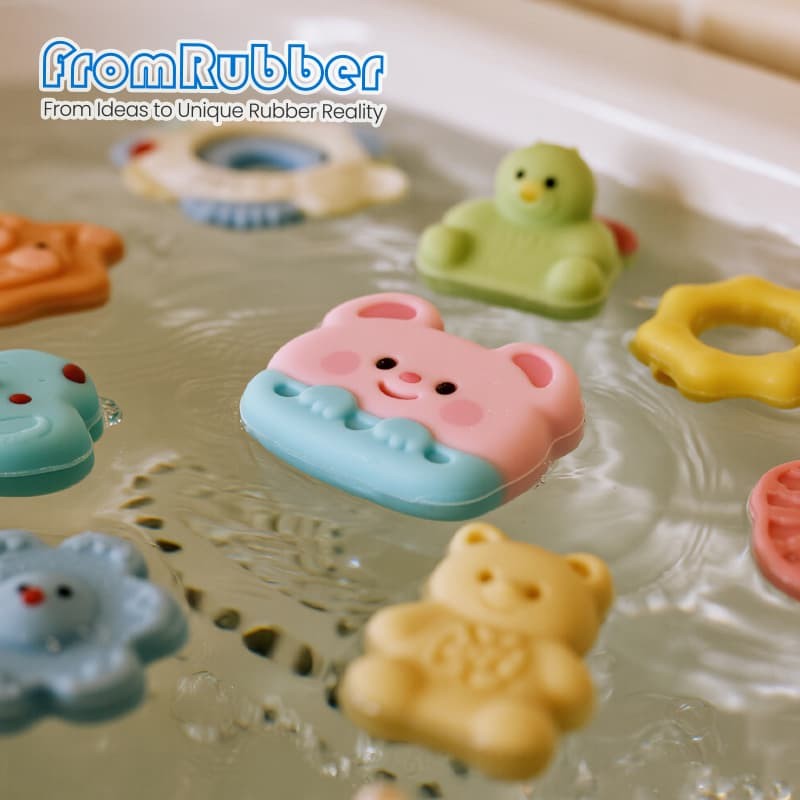
Buoyancy and moulding A bath toy either floats the way a child expects or it fills and sinks on the second bath. The difference is where the air is, how thick the wall is and whether the body has a hole — and all three are settled in the mould, long before the character design is approved. Silicone is denser than water, so a solid figure sinks. A toy floats because it traps air, and the only stable way to trap air in a moulded silicone part is a closed chamber formed by the tool — not a hollow shell with a plug pushed in afterwards, which is where the failures come from. Wall thickness then sets two things at once: how much buoyancy margin the toy has when a child pushes it under, and how it feels in the hand. A thin wall floats well and feels cheap; a thick wall feels substantial and sits low in the water. The right answer depends on the shape, which is why we check the float line on a T1 moulding rather than in a render. Almost every complaint about bath toys traces back to one decision: does the body have an opening? A squirter needs a nozzle and therefore needs a drain path and an air path, or it holds water and becomes a hygiene problem. A sealed figure has no path at all, which is why it survives a dishwasher and a bathroom shelf. A set is judged as a set. That means the six colours have to look deliberate next to each other, not six separate approvals — which is a pigment and matching exercise rather than a moulding one. Colour fastness matters too: chlorinated water, sunlight through a bathroom window and repeated hot washing all move a pigment, and not every food-grade pigment family moves at the same rate. A one-piece body with no cavity can be rinsed and left to dry without a drain hole, and it can go through a dishwasher cycle — but only if the compound is rated for it and the shape does not trap water in a rib or a foot. Those shapes exist on purpose: a decorative groove that holds 2 ml of water is a mould problem, not a user problem. What you should not claim without testing is anything about microbial resistance. “Mould-free” on a sealed body is a design statement; an antimicrobial claim needs a treated compound and its own evidence. Broader selection criteria for this category — sizes, age grading and what to check before ordering — are covered in the silicone bath toy buying guide. The infant-safe variant of this set is specified on its own page. Whether a toy floats upright or rolls over is a design input, not a surprise. Send the character sketch with the size and behaviour you want and the reply is a cavity and wall proposal — we quote for toy brands and distributors from 1,000 pcs per design. Dongguan Bohao Electronic Technology Co., Ltd. IATF 16949:2016 / ISO 9001:2015 certified. Values are typical for the compound or platform described; the approved drawing and sample govern production.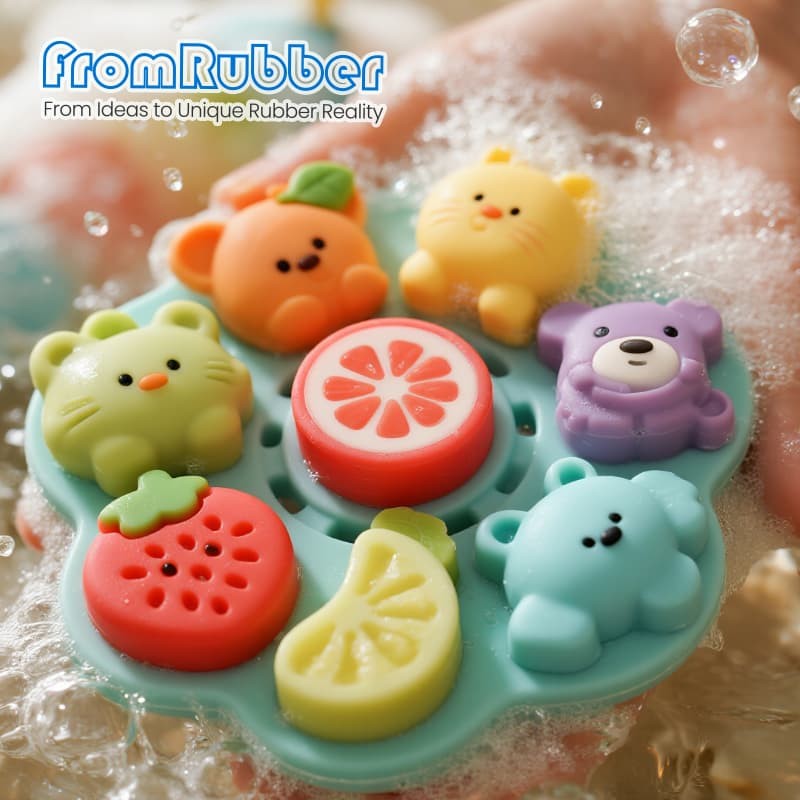
A floating bath toy is a buoyancy problem, not a shape problem
Where the air sits decides everything
The hole question
Body type How it is moulded Floats Water inside Best for Solid figure One-piece, no cavity Only if the shape traps air None Pouring and stacking play Closed chamber Two halves moulded closed in the tool Yes, reliably None — sealed Floating sets Squirter with nozzle One-piece with a moulded nozzle Yes when emptied Yes — needs a drain and air path Spray and pour play Flat shapes Single-cavity sheet No — these are for sticking to tiles and stacking None Sensory sets 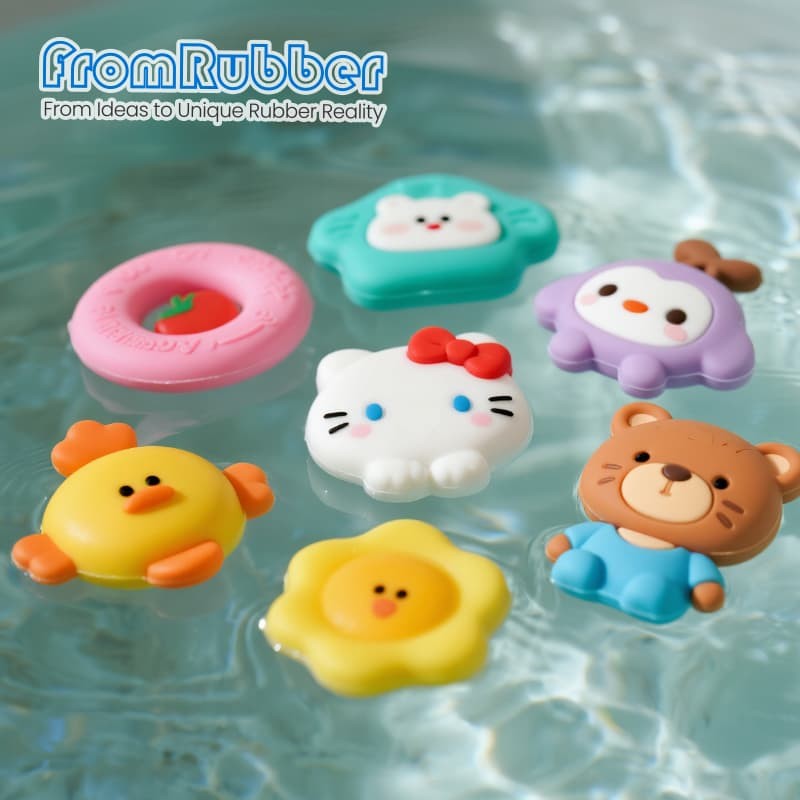
Colour across a set
Cleaning, and what you can claim
From character sketch to floating sample
What we need to quote
What comes back
Send the sketch and the float you expect
fromrubber.com
+86 18926836960


