Rubber Keypad: The Most Underestimated Component in Handheld Instrument Design
- Share
- publisher
- Suey
- Issue Time
- Aug 25,2026
Summary
Why the rubber keypad is the most underestimated component in handheld instrument design - and how tactile feel, sealing and reliability make or break the product.
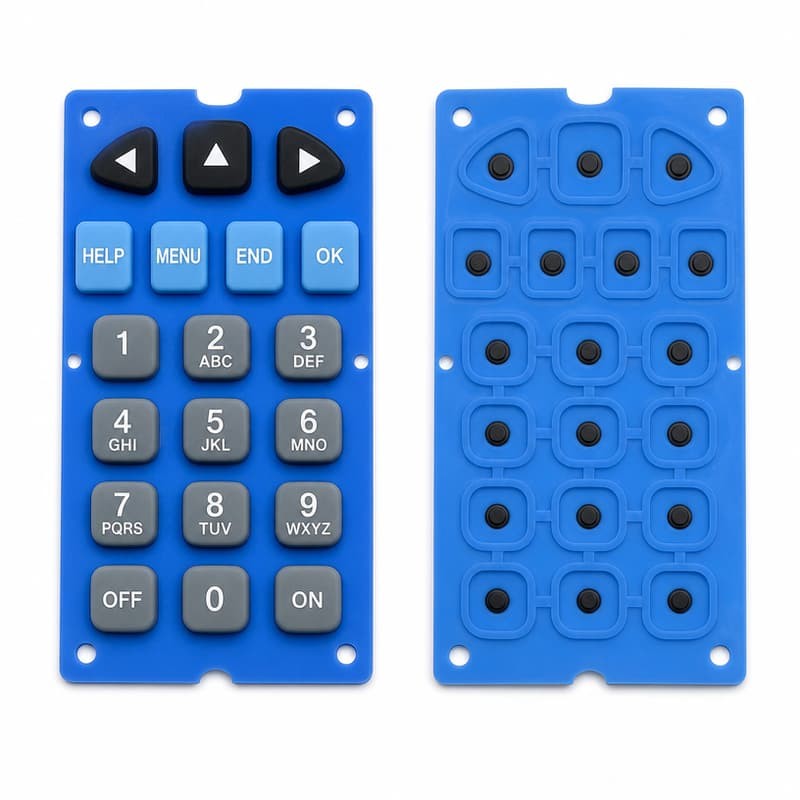
Component Strategy
Handheld instruments get their budgets spent on sensors, boards and screens; the rubber keypad is usually the last component specified and the first one blamed. It is also the component the user touches on every single interaction - the physical interface that carries the product's feel, seals the enclosure, and survives the harshest abuse of the device's life. This article makes the case that the rubber keypad is the most underestimated component in handheld instrument design, and what changes when you treat it as a strategic part.
1. Why the Rubber Keypad Is the Most Underestimated Part of a Handheld Instrument
Estimate how much engineering attention a handheld instrument's keypad receives versus its display, and you have the answer before reading further: the display gets a spec, a supplier qualification and a UI team; the keypad gets "the supplier's standard". Yet the keypad is the only component that mediates every user action, the only soft part in a rigid assembly, and the only interface that must seal, feel, and survive for the product's entire life. Underestimation is not a cost saving - it is a deferred expense that returns as returns, repairs and reputation damage.
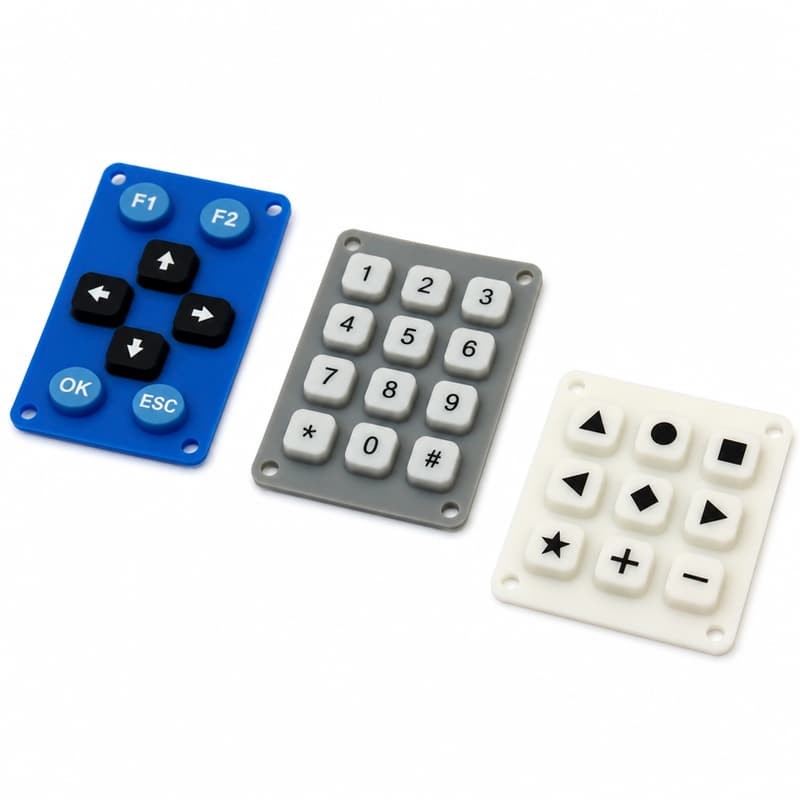
The numbers tell the story: a keypad costs a small fraction of the instrument's BOM, yet a keypad failure drives the highest-frequency field returns of any mechanical component. Instruments built with commodity keypads run the same failure patterns as instruments built with engineered keypads - until they don't. The difference is specification discipline, and it costs almost nothing at the drawing stage. Our guide to the five critical considerations for keypad buyers starts exactly here: treat the keypad as engineered, and the instrument behaves like it.
2. What a Rubber Keypad Actually Does for a Handheld Instrument
Count the jobs a rubber keypad performs and it reads like a multi-part system: electrical switching (via carbon pills or conductive ink), tactile feedback engineering (force, travel, snap), environmental sealing (IP-rated gasket functions), cosmetic branding (legends, colors, finish), and mechanical protection (impact absorption, debris exclusion). No other component in the instrument does five jobs at once. Remove it and the instrument needs a switch matrix, a gasket, a fascia, and a branding surface - four parts where one engineered part did the work.
That is why the material selection question (silicone vs rubber vs elastomer) is really a system question: the material choice cascades into contact compatibility, sealing behavior, legend process and cost. The ultimate silicone rubber keypad guide maps the full manufacturing process that delivers all five functions in one molded part.
3. The Cost and Lead-Time Reality of Rubber Keypads
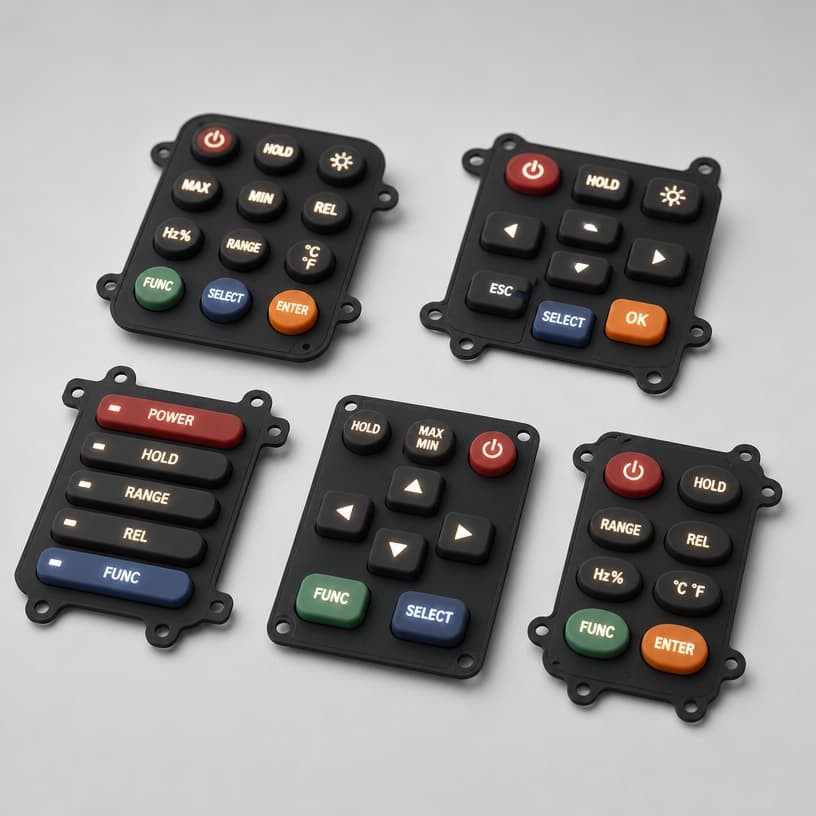
Underestimation often begins with a cost surprise: the quote for an engineered keypad with laser-etched legends and a validated tool is higher than the "standard" part the buyer imagined. The honest comparison includes the total cost of ownership: the engineered keypad's tooling is amortized over the program, its field return rate is a fraction of the commodity part's, and its feel sells the instrument's quality on every demo. Conversely, the commodity part's savings disappear the first time a batch of meters comes back with dead keys - the keypad cost breakdown shows where the money actually goes and where real savings live.
Lead time follows the same logic. An engineered keypad with a validated mold runs in weeks; a commodity part from a distant supplier can stall on the first quality problem. For a product launch, the keypad's tooling and validation schedule is often the critical path - and planning for it beats discovering it.
4. When a Rubber Keypad Becomes the Critical Path
Three moments in a handheld instrument's life turn the rubber keypad into the critical path. At launch: the tooling and first-article validation sits on the schedule, and a late keypad delays the whole product. In the field: a keypad complaint spike drives the warranty budget and the distributor's confidence. At refresh: a keypad that has aged out of spec forces a re-qualification of a part everyone assumed was permanent. Instruments that treat the keypad as strategic have answers for all three - a validated tool, a spec with margin, and a supplier with full-process control. The buyer's considerations guide and our manufacturer selection guidelines list the qualification questions that separate the two kinds of suppliers.
The touchscreen debate belongs here too. As instruments add screens, the physical keypad is sometimes assumed obsolete - a view the field rejects: when touchscreens fail on the factory floor and the older analysis of why a touchscreen cannot replace a silicone keypad both arrive at the same place: gloved hands, wet environments and blind operation keep physical keys essential. The rubber keypad is not legacy - it is the instrument's fail-safe interface.
5. Case Study: How a Rubber Keypad Upgrade Fixed a Handheld Instrument's Reputation
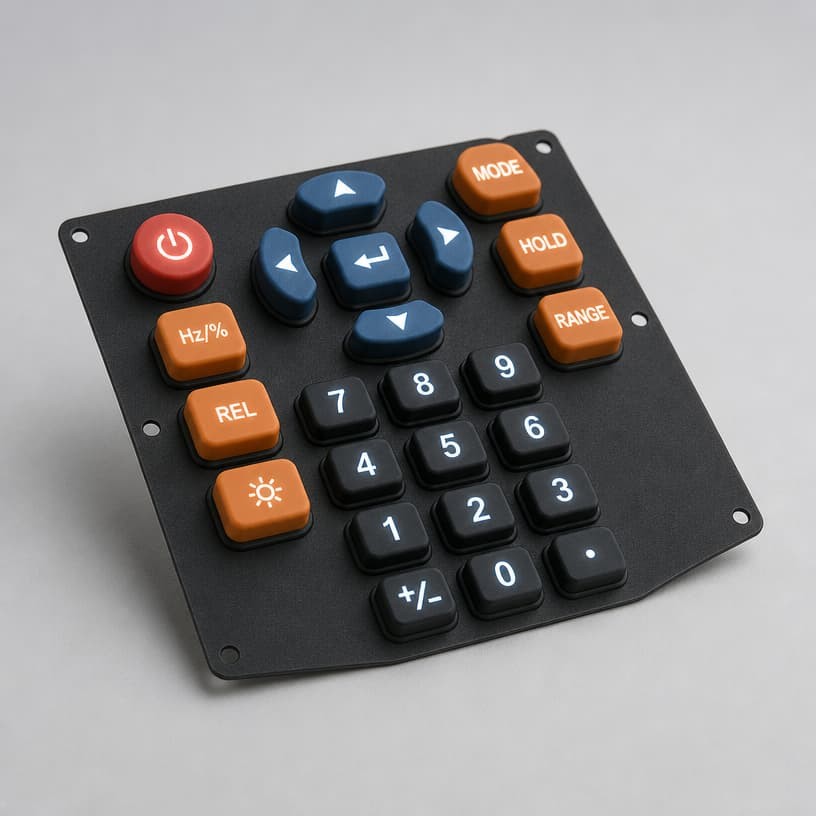
A handheld vibration analyzer was technically excellent and commercially struggling - distributors reported that customers loved the measurements and disliked the meter. The complaints were all keypad-adjacent: mushy keys, legends that faded within a year, and a case that creaked at the keypad seam. The OEM had specified the keypad as "supplier standard" to save cost on a part they considered trivial.
FromRubber's upgrade addressed the interface as a system: a 50 Shore A instrument-grade compound with compression set under 15%, a dome design with a crisp snap ratio, laser-etched legends on the high-use keys, and a gasket feature that eliminated the creak. The per-unit cost rose a few percent. Distributor feedback within two quarters called out the "premium feel" unprompted; field returns for keypad symptoms dropped to near zero. The same keypad architecture became the company's standard across its instrument line - a reminder that the component users touch every day is the component they remember.
6. Getting the Most From Your Handheld Instrument Rubber Keypad
Specify the keypad as a system: switching, feel, sealing, branding and protection together
Compare cost at total-ownership level, including returns and re-qualification
Plan tooling and validation lead time into the product schedule
Verify the supplier's full-process control, from compound to final inspection
Keep physical keys where gloved, wet or blind operation matters
Treat the keypad's feel as a brand asset - it is the part users touch every day
Sources and Further Reading
Technical background draws on published material from LuphiTouch - Electrical Contact Mechanisms in Silicone Rubber Keypads, Diamond HMI - rubber keypad technical resources, Dow silicone materials, and Google Patents - keypad designs. Program data in the case study reflects FromRubber project records.
Treat Your Keypad as the Interface It Is
FromRubber engineers keypads as part of the instrument system - material, feel, sealing and legend engineered together, with full-process production. Start with a drawing review or a sample program.
About FromRubber - FromRubber is a full-process silicone keypad and rubber button pad manufacturer serving handheld instrument and electronics OEMs worldwide, from mold making to mass production.